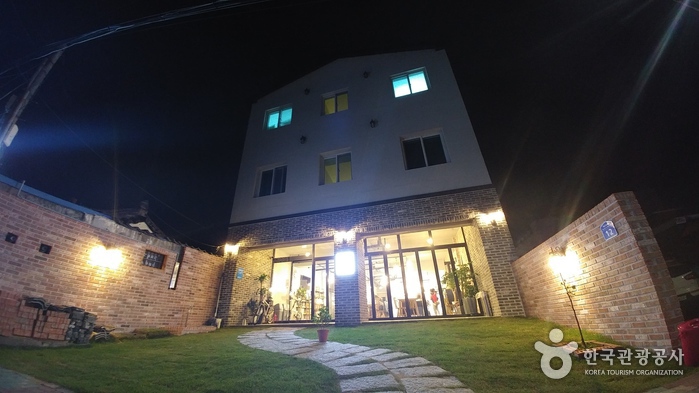
ALLEY HOSTEL & GUESTHOUSE (앨리게스트하우스)
6.3Km 2024-12-19
12 , Gyerim-ro 106beon-gil, Gyeongju-si, Gyeongsangbuk-do
The Alley Guest House in central Gyeongju, Gyeongsangbuk-do, is a 3-minute walk from Gyeongju Station, and is popular with hikers. Guestrooms range from single and twin rooms to family rooms and dormitories with bunk beds. There’s no parking lot, but parking can be arranged for family room customers. All rooms have AC, a bathroom and shower, and lockable doors. A simple free breakfast and a luggage storage service are provided. Nearby must-see places include Daereungwon, Cheomseongdae, Donggung Palace and Wolji Pond.
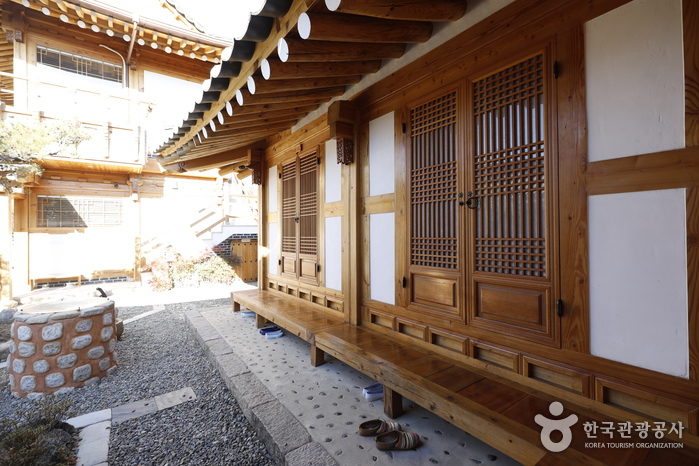
SOSEOLJAE (소설재(첨성대점))
6.4Km 2024-08-01
46 , Poseok-ro 1050beon-gil, Gyeongju-si, Gyeongsangbuk-do
Located on a side street in Cheomseongdae in Gyeongju, Gyeongsangbuk-do, Soseoljae is a hanok stay combining traditional charm with modern facilities.The larger stand-alone guestroom has its own tea room, while 11 other rooms accomodate 2 or 3 people. All rooms are equipped with a toilet/bathroom and air conditioning/heating, and there is a small cafe at the hanok entrance. Soseoljae is close to Gyeongju Station and Gyeongju Express Bus Terminal and tourist attractions such as Cheomseongdae, Daereungwon, and Hwangnyongsaji are also nearby.
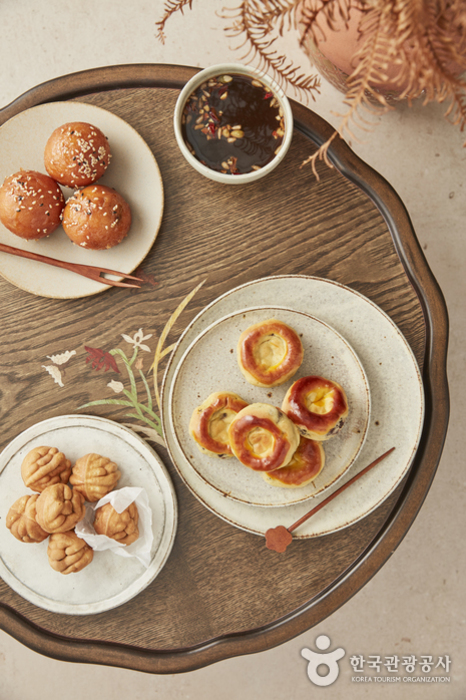
Hwangnambbang (황남빵)
6.4Km 2025-03-24
783 Taejong-ro, Gyeongju-si, Gyeongsangbuk-do
Hwangnamppang, which literally means Hwangnam bread, was created in Hwangnam-dong, Gyeongju, in 1939, and the name was popularized among people who came to Gyeongju to buy this bread. Now branded as "Hwangnambbang," the late Choi Yeong-hwa, the founder of Hwangnam Bread, was a scion of the Gyeongju Choi family who came up with this masterpiece when he was 21 years old after much trial and error. Choi’s creation is based on the tradition of rice cakes and bread made with sweet red beans, passed down throughout the generations in his family. Even today, 80 years after the creation of the bread, it is only flavored with red beans. Another defining feature of Hwangnambbang is the delicate comb pattern inspired by the aesthetics of the Silla period.

Gyeongju Gyochon Traditional Village (경주 교촌마을)
6.5Km 2025-05-21
39-2 Gyochon-gil, Gyeongju-si, Gyeongsangbuk-do
At Gyeongju Gyochon Village, visitors can see the House of the Gyeongju Choi Clan (Important Folklore Material No. 27) and try some Gyeongju Gyodong Beopju Liquor (Important Intangible Cultural Asset No. 86-3). The village centers around the Gyeongju Choi Clan, a family known to have maintained their wealth for over 12 generations, producing many important people. Visitors can learn about the lifestyle and spending habits that enabled the family to do this. The village is also home to the site of Yoseokgung, the house of Silla Princess Yoseok. Nearby attractions include Gyerim Forest, Naemulwangneung Royal Tomb, and Gyeongjuhyanggyo Local Confucian School.
Woljeonggyo Bridge (월정교)
6.5Km 2025-06-13
274 Gyo-dong, Gyeongju-si, Gyeongsangbuk-do
Woljeonggyo Bridge, located in Gyo-dong, Gyeongju, was built during the Unified Silla period (AD 676-935), but was burnt down during the Joseon dynasty. Through historical research, the bridge was rebuilt in April 2018 to become the largest wooden bridge in Korea. According to Samguk Sagi (History of the Three Kingdoms), the bridge was built during the 19th year of King Gyeongdeok’s reign (AD 760), connecting Wolseong and Namsan together. The historical research to rebuild the bridge lasted from November 26, 1984 to September 8, 1986, finding that the bridge was made with wood for the first time. The first rebuilding of the bridge was from 2008 to 2013 and the finishing touches were added from April 2016 to April 2018. Through this research and rebuilding process, future restoration of historical buildings have a better reference to use.
![Gyeongju Historic Area [UNESCO World Heritage] (경주역사유적지구 [유네스코 세계문화유산])](http://tong.visitkorea.or.kr/cms/resource/03/2656603_image2_1.jpg)
Gyeongju Historic Area [UNESCO World Heritage] (경주역사유적지구 [유네스코 세계문화유산])
6.6Km 2025-03-24
757 Taejong-ro, Gyeongju-si, Gyeongsangbuk-do
The Gyeongju Historic Area, registered as a UNESCO World Cultural Heritage on November 2000, is an area that embodies the time-honored history and culture of Gyeongju, the ancient capital of the Silla Kingdom (57 BC-AD 935).
The Gyeongju Historic Area can be divided into 5 major sections. The first section is the Namsan Area, a treasure trove of Buddhist art masterpieces dating back to the Silla Kingdom. Gyeongju Namsan Mountain (often referred to as an ‘outdoor museum’) is home to many historical heritage sites from the Silla Kingdom. Major attractions include: Poseokjeong Pavilion Site (Historic Site), Rock-carved Buddhas in Tapgok Valley (Treasure), Three-story Stone Pagoda in Cheollyongsa Temple Site (Treasure), Rock-carved Buddhas at Chilburam Hermitage (Treasure), Rock-carved Seated Buddha in Bulgok Valley (Treasure), and 37 other Buddhist relics
The second section is the Wolseong Area, one of the former palace sites of the Silla Kingdom. The area consists of Gyerim Forest (Historic Site); Donggung Palace and Wolji Pond (Historic Site), a Silla Royal Palace site; and Cheomseongdae Observatory (National Treasure), the oldest observatory in Asia.
Daereungwon Ancient Tomb Complex, the third area, features a cluster of the royal graves of the kings and queens of Silla. Also in the same area are Ancient Tombs in Nodong-ri (Historic Site), Ancient Tombs in Noseo-ri (Historic Site), Ancient Tombs in Hwangnam-ri (Historic Site), and Five Royal Tombs (Historic Site), among others. Archaeologists have discovered a number of invaluable relics and historic items in this area such as Geumgwan (golden crown), Cheonmado (a painting of flying horses), and numerous pottery pieces. These finds are perhaps the greatest clues into the life of the people of the Silla dynasty.
Area number four, the Hwangnyongsa Temple Site, is where the former site of the Hwangnyongsa Temple (Historic Site) and Bunhwangsa Stone Pagoda are located. Last is the Sanseong Area, housing remnants of the major defense system for the capital city. The site consists of Myeonghwalsanseong Fortress (Historic Site) which is estimated to be around 400 years old.
The Gyeongju Historic Area has a total of 52 designated cultural assets that are registered as World Cultural Heritages.
Hwangseong Park (황성공원)
6.6Km 2025-06-19
431-12 Wonhwa-ro, Gyeongju-si, Gyeongsangbuk-do
Situated near the Gyeongju Municipal Library and Gyeongju Arena, Hwangseong Park is notable for its dense forest populated with stunning pine trees and centuries-old trees. During summer, it becomes a haven for blooming Lilyturfs, while in autumn, ancient trees such as zelkova and oak showcase vibrant colors, enhancing the natural beauty of the area. Within the park, visitors can find the Statue of General Kim Yusin, a Korean archery range, and a Ssireum (Korean traditional wrestling) ring. Nearby attractions include Gyeongjueupseong Walled Town, Cheonmachong Tomb, Daereungwon Ancient Tombs, and Hwangnidan Street.
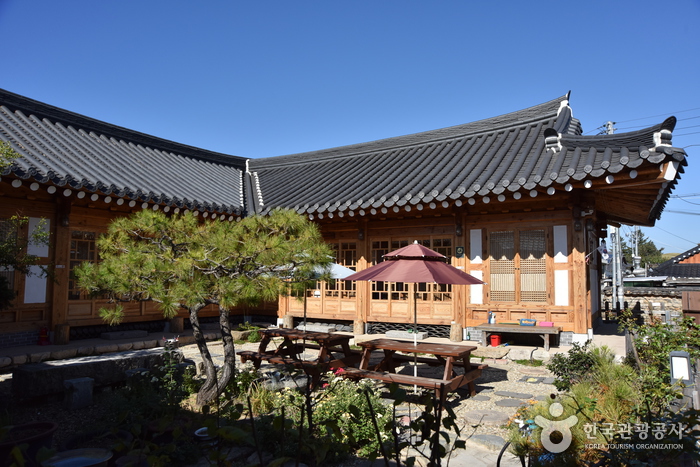
Gyeongju Soohojeong (경주수호정)
6.7Km 2024-12-19
15-15 , Poseok-ro 1068beon-gil, Gyeongju-si, Gyeongsangbuk-do
Suhojeong hanok guesthouse stands right in front of the Daereungwon Silla tombs, in Gyeongju, Gyeongsangbuk-do. The house is constructed of traditional materials - pinewood, red clay and straw - and each guestroom has a bathroom with toilet. In the spacious yard is a stone table where visitors can rest and chat. Transport links are excellent, with Gyeongju Station and Intercity Bus Terminal just 5 minutes away on foot. Nearby tourist attractions include Cheomseongdae, Banwol Fort, and Anapji Pond.
Hanokinn (한옥人(한옥인))
6.7Km 2024-12-19
19 , Poseok-ro 1050beon-gil, Gyeongju-si, Gyeongsangbuk-do
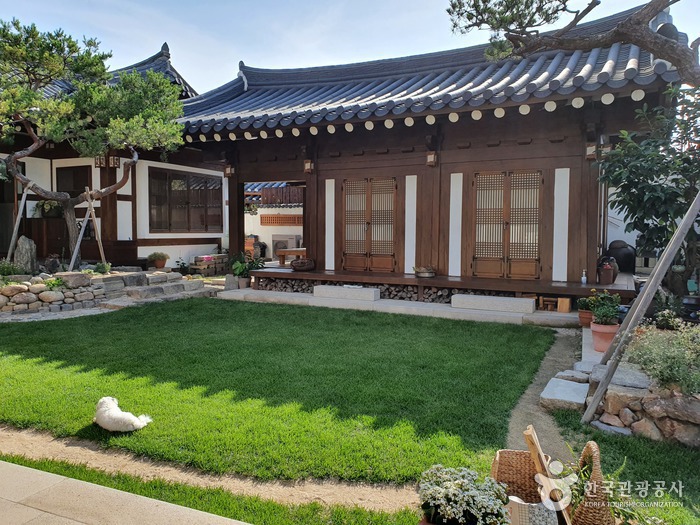
The Hanok Inn is a hotel-class traditional guesthouse in Sansu-dong, Gyeongju, Gyeongsangbuk-do, which consists of 4 separate buildings. The sarangchae - a two-story hanok with a hipped roof - contains a double room and a large family room, finished with red clay and hanji paper; both rooms have toilets. The annex building is a one-storey gable-roofed hanok with a raised wooden patio where guests can drink tea and relax. In the main building there’s a hanok experience room and a friendly cafe-restaurant where breakfast is served. The hanok’s back gate gives onto an alley leading to Hwangnidan-gil, Cheomseongdae Observatory, and the Daereungwon tomb complex; this alley is a favorite photo spot.
Neungpo Dawon (능포다원)
6.7Km 2025-10-29
91-3 Wonhyo-ro, Gyeongju-si, Gyeongsangbuk-do
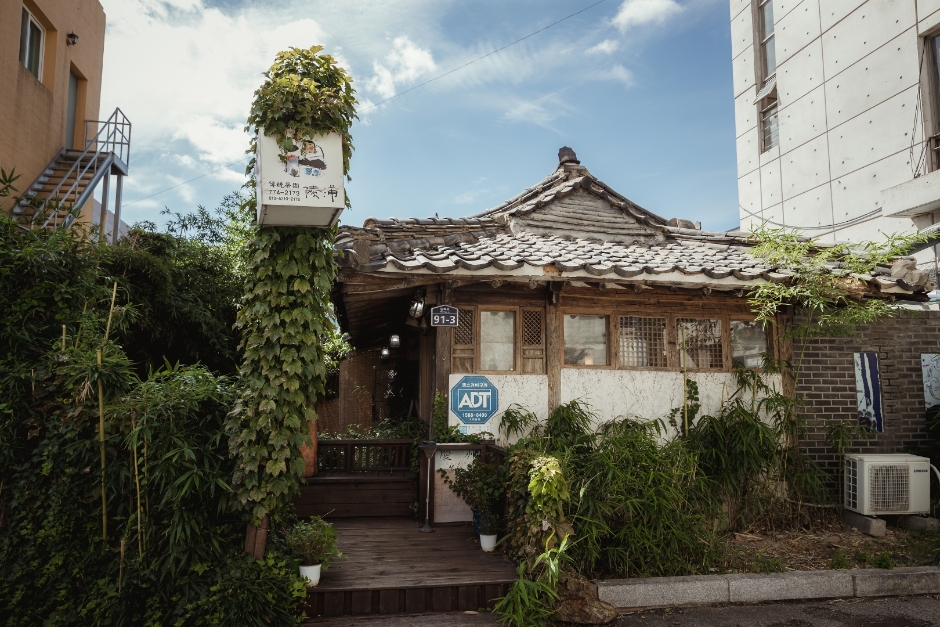
A traditional Hanok tea house subtly nestled among buildings. It served as the filming location for the traditional tea house “Arisol” managed by Gong Yoon-hee in the movie “Gyeongju.” The tea, brewed by the owner, boasts a rich flavor. The painting “Chunhwa” that served as the movie's motif is a work by the husband of the tea house owner. Various artworks, starting with “Chunhwa,” are displayed throughout the tea house.
 English
 한국어
한국어 日本語
日本語 中文(简体)
 Deutsch
 Français
 Español
 Русский


