
Gyeongju National Museum (국립경주박물관)
5.3Km 2025-05-21
186 Iljeong-ro, Gyeongju-si, Gyeongsangbuk-do
Gyeongju National Museum houses numerous historical and cultural artifacts of the Silla dynasty (57 BC-AD 935). The museum provides various programs including at the Children’s Museum School. The newly renovated Silla Art Gallery and Silla History Gallery lobby by Teoyang Studio are popular among visitors. This multi-complex center provides the history of Silla with various artifacts.
Gyeongju Wolseong Palace Site (Banwolseong Fortress) (경주 월성(반월성))
5.5Km 2023-01-03
Inwang-dong, Gyeongju-si, Gyeongsangbuk-do
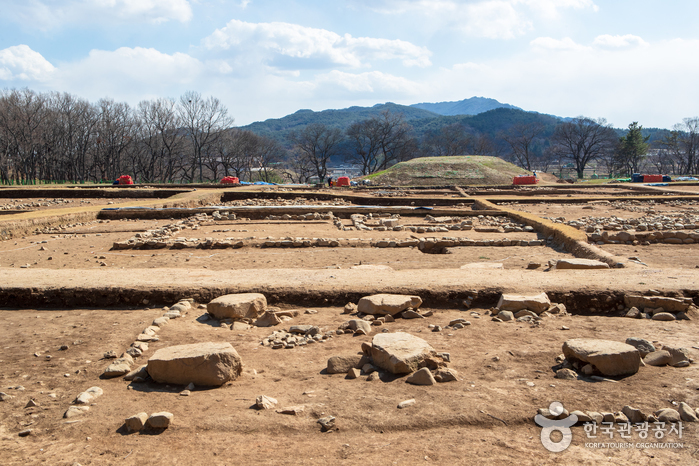
This was the location of the palace-fortress during the Silla dynasty (57 BC ~ AD 935). The fortress takes after its name, which, literally translates to mean a crescent moon shape on top of a hill. The famous history books of Samgukyusa mention that Silla’s 4th King Seoktalhae (AD 57~80) thought this area was an ideal spot for the fortress and bought the land from a nobleman. The 2nd King Namhae (AD 4~24) impressed by Seoktalhae’s actions, took him in as his son-in-law, later, becoming the 4th king. The area was then under Silla’s rule for 900 years, the last king being the 56th, Gyeongsoon (AD 927~935).
Although the magnificent grandeur of the palace is now just an empty lot, it has been told that this area was filled with imperial buildings during the Silla dynasty. Currently, the region of Wolseong has a freezer made out of rocks called Seokbinggo, an archery range, a horse-riding field, and a traditional playground, which resembles the grounds of the Joseon Period (the dynasty that ruled the Korean peninsula from 1392-1910).
Hwarang Institute (화랑교육원)
5.7Km 2024-02-23
62 Saenamsan-gil, Gyeongju-si, Gyeongsangbuk-do
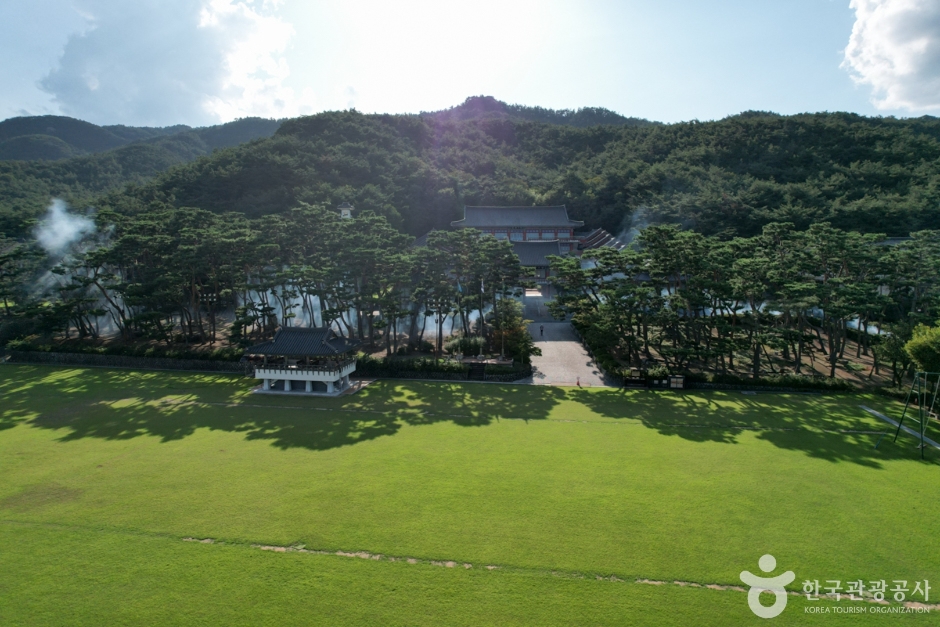
Hwarang Institute is Korea's first character education organization. It aims to inherit the spirit of the Silla dynasty's Hwarang, a youth warrior group, and to cultivate good character and personality in children. Its facilities include Hwarang Hall, a playground, an auditorium, and a Safety Education Hall. Notably, the Safety Education Hall features an earthquake experience room, a life-saving room, and a 4D video room, where children can receive effective preventive safety education on health, crime, and natural disasters. Nearby tourist attractions include the Gyeongju National Museum, the Tomb of King Jeonggang, Gyeongju Millennium Forest Garden, and the Tomb of King Gyeongae.
Nadul Hanok (나들한옥)
6.0Km 2024-12-19
4-1 , Jjoksaem-gil, Gyeongju-si, Gyeongsangbuk-do
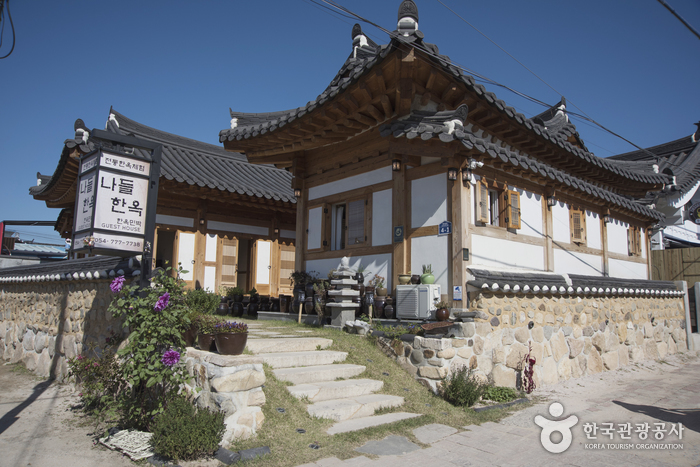
Nadeul Hanok is a newly-built hanok stay in Gyeongju, Gyeongsangbuk-do, which combines traditional hanok style with modern convenience. All rooms come with bed, toilet and bathroom, and thermostat-controlled ondol underfloor heating. In the shared lounge is an automatic coffee machine, a water purifier, toaster, electric range and electric kettle - plus emergency medical kit - all of which are free of charge to residents. Breakfast is also provided without charge. Nadeul Hanok is just a minute's walk from Gyeongju Cheomseongdae, with other famous Gyeongju sites also within walking distance.
Wiyeonjae Hanok Stay (위연재)
6.1Km 2024-12-19
7 , Jjoksaem-gil, Gyeongju-si, Gyeongsangbuk-do
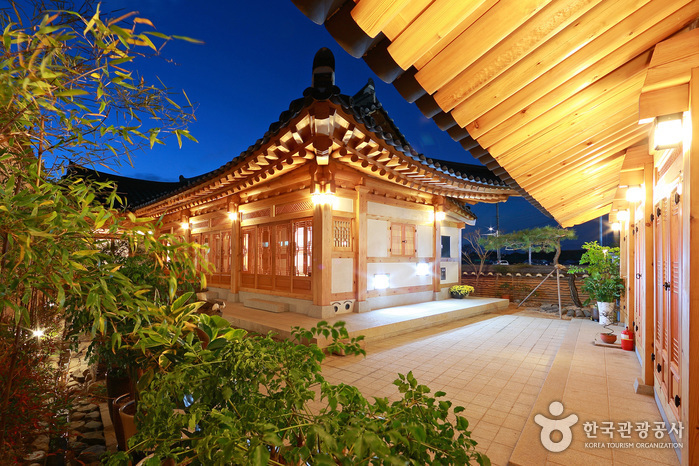
Wiyeonjae hanok stay stands on the edge of the Gyeongju Historic Area, so that from here Cheomseongdae, Daereungwon, Donggung Palace, Wolji Pond and the other historic sites can be reached on foot. It’s a place where Silla period relics were excavated during construction, and you can still feel the 1,000 year history of the Silla capital. All rooms are ondol-style, and all have bathrooms. One room, Munmu, has a numary(raised floor) which is a great spot for taking photos. A free breakfast is provided and parking space is available.
141MINIHOTEL (141미니호텔)
6.2Km 2024-12-19
141 , Wonhyo-ro, Gyeongju-si, Gyeongsangbuk-do
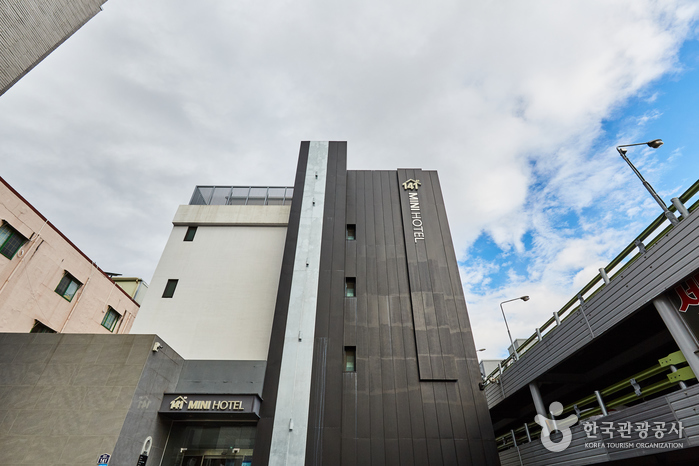
The 141 Mini Hotel is in Gyeongju, Gyeongsangbuk-do - capital of the ancient Silla kingdom and often described as ‘a museum without walls’. The hotel caters to both holiday and business travelers, and hotel facilities include a book cafe, gallery, board game room, and business center, so visitors enjoy hotel-level convenience at motel-level prices. Gyeongju Station and Gyeongju Express Bus Terminal are just 5 minutes and 10 minutes away respectively; while tourist sites such as Daereungwon Tomb Complex, Donggung Palace and Wolji Pond, Cheomseongdae, and Bulguksa Temple are all nearby.
Tongiljeon Ginkgo Road (통일전 은행나무길)
6.2Km 2025-02-04
6 Chilburam-gil, Gyeongju-si, Gyeongsangbuk-do
Tongiljeon Ginkgo Road is a tree-lined road approximately 2 kilometers long in front of the Tongiljeon Hall, a building erected to commemorate the unification of the Three Kingdoms under Silla. The street is one of the best autumn destinations in Gyeongju, with ginkgo trees lined up on both sides of the road. During fall, the trees create a beautiful scene with their brilliant yellow leaves. The road is perfect for a leisurely drive or a walk, and from Tongiljeon Hall, visitors can enjoy a panoramic view of the entire ginkgo tree-lined path.
Gyeongju Seongdong Market (경주 성동시장)
6.2Km 2025-03-25
11 Wonhwa-ro 281beon-gil, Gyeongju-si, Gyeongsangbuk-do
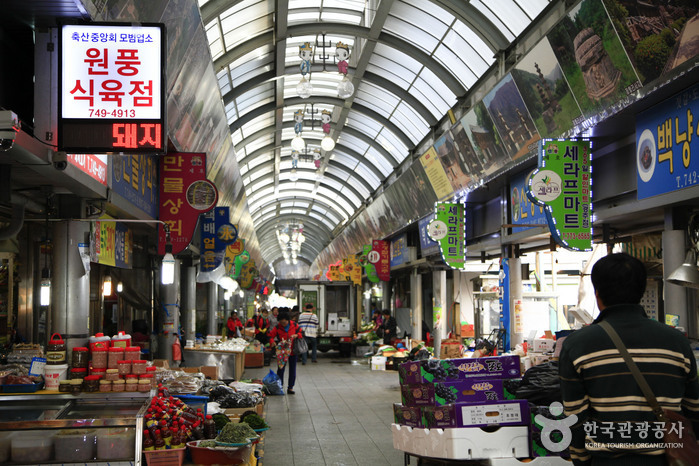
Gyeongju Seongdong Market has approximately 300 stores and 30 vendors. The market as found its place as the city’s representative local marketplace since its opening in 1971. Following a decline of customers due to the public's steadily increasing preference of supermarkets, Gyeongju Seongdong Market underwent a huge renovation in the recent past. From floorings to ceilings, and alleyways and walls, the market received a new look that emphasizes Gyeongju's historical significance to attract travelers and the local community alike.
Gyeongjuhyanggyo Local Confucian School (경주향교)
6.2Km 2025-06-12
27-20 Gyochonan-gil, Gyeongju-si, Gyeongsangbuk-do
Gyeongjuhyanggyo Local Confucian School is located near Gyochon Hanok Village in Gyeongju. The surrounding areas, Gyochon, Gyori, and Gyodong, derive their names because of this school. Although the exact date of its original construction is unknown, Gyeongju Hyanggyo was renovated during the reign of King Seongjong of the Joseon Dynasty, modeled after Seoul’s Seonggyungwan National Academy. The buildings follow the typical Confucian layout of “hall in the front, shrine in the back.” While seowon were private academies, hyanggyo were public institutions. Although it no longer serves the educational purpose, every spring and autumn it hosts traditional Confucian rituals. It also offers cultural programs such as tea ceremonies, rice-cake pounding, and archery. From April to October it hosts traditional Korean-style demonstration weddings, where visitors can participate in the ceremonies for free.
Yosukgung 1779 (요석궁1779)
6.3Km 2025-09-02
19-4 Gyochonan-gil, Gyeongju-si, Gyeongsangbuk-do
Named after Silla King Muyeol's daughter Princess Yoseok, Yosukgung 1779 is a fine dining restaurant that serves traditional Korean food. The resturant is run by the Choi family, who settled on the site of Princess Yoseok's house during the Joseon dynasty, and has passed on the restaurant and family recipes through 12 generations. All the foods served are made with organic ingredients, for a healthy taste that cannot be found anywhere else.
 English
 한국어
한국어 日本語
日本語 中文(简体)
 Deutsch
 Français
 Español
 Русский


