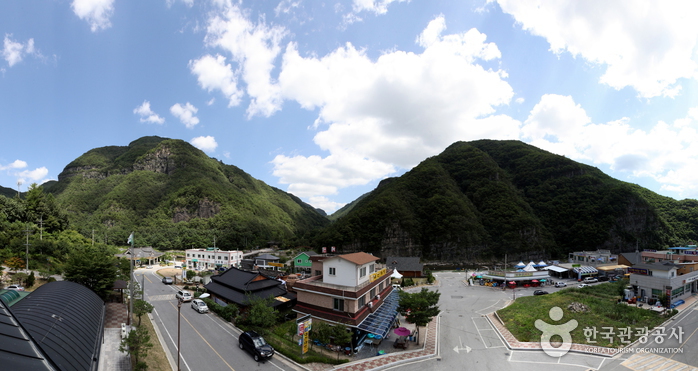
Cheongnyangsan Provincial Park (청량산도립공원)
8.3Km 2022-07-26
39, Gwangseok-gil, Bonghwa-gun, Gyeongsangbuk-do
+82-54-679-6651
Cheongnyangsan Mountain, with an altitude of 870 meters, is hidden away from civilization. Attractions in the mountain are 12 peaks including Geumtapbong Peak, eight caves, Gwangchangpokpo Falls, and Cheongnyangsa Temple, built by Buddhist monk Wonhyo during King Munmu’s third year of reign during the Silla Period (57 BC - AD 935).
Behind the Cheongnyangsan Provincial Park’s entrance boulder is a monument with a poem inscribed on it by the famous scholar Toegye Yi Hwang of the Joseon period called Cheongnyangsanga. Aside from Toegye Yi Hwang, Wonhyo and Uisang, caligraphy master Gimsaeng, scholar Choi Chi-won, and many others came to this mountain to cultivate their arts. Their presence still lingers in legends, being retold to this day.
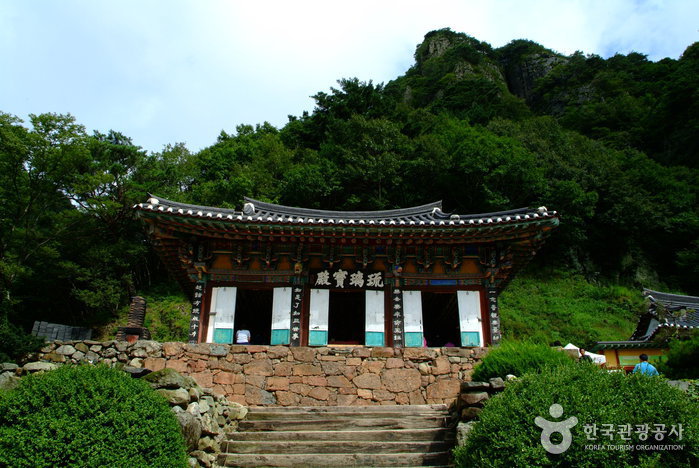
Bonghwa Cheongnyangsa Temple (청량사(봉화))
9.7Km 2022-12-27
199-152, Cheongnyangsan-gil, Bonghwa-gun, Gyeongsangbuk-do
+82-54-672-1446
Located in Cheongnyangsan Mountain Provincial Park, Cheongnyangsa Temple was built by the great monk Wonhyo in 663, the 3rd year of King Munmu of the Silla Kingdom. According to the principles of feng shui, the area is an ideal place for a temple – with the 12 mountain peaks surrounding the temple like the petals of a lotus flower.
The temple is home to two precious historical remains; one is the board of Yuribojeon that King Gongmin of Goryeo wrote upon and the other is Jibul. Yuribojeon is the building where Yaksa-yorae-bul (the Medicine Buddha Statute) is housed and Jibul is a Buddha statute made of paper that was painted with gold.
At the back of the temple is Bosalbong Peak looking out towards Cheongnyangsan Mountain. A 30-minute walk along the hiking trail will lead the hikers to Eungjinjeon, a hermitage with a beautiful view where the great monk Wonhyo once stayed. Behind Eungjinjeon stands Geumtapbong Peak and the sheer cliffs below. The peak was named Geumtapbong (meaning ‘golden pagoda’ in Korean) since it looks like a nine-story pagoda with pine trees growing around the base. In the autumn, the beautiful red, gold and orange hues of the maple trees are a true sight to behold.

Andong School of Korean Etiquette (안동예절학교)
10.0Km 2023-04-07
1333-5, Toegye-ro, Andong-si, Gyeongsangbuk-do
+82-54-841-0511
Andong School of Korean Etiquette, which is located in Andong, is a mecca of Korea's Confucian customs and provides an opportunity to experience traditional Korean etiquette.
In addition to Korean traditional etiquette, Andong School of Korean Etiquette also teaches tea etiquette and traditional Korean music using instruments such as janggu and gayageum. Students can also experience the joy of learning how to play folk games such as yunnori and kite-flying. The school offers a wide variety of hands-on programs related to Korea's traditions and customs such as mask dance, paper craft, cooking, wedding, and eco-rafting on Nakdonggang River.
There are other popular tourist attractions nearby such as Dosanseowon Confucian Academy, Forest Science Museum and Yi Yuk-sa Literary Hall.
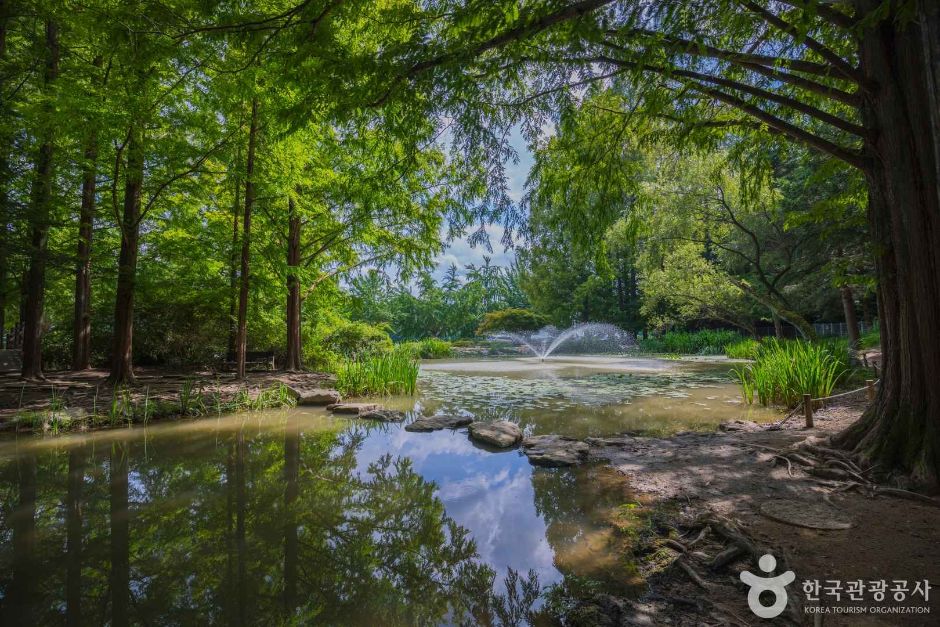
Nakgangmulgil Park (낙강물길공원)
16.7Km 2024-11-14
423 Sanga-dong, Andong-si, Gyeongsangbuk-do
Nakgangmulgil Park, called the Giverny of Korea, is a small waterside park located near Andong Dam. The park is the perfect setting for a relaxing moment, with benches placed under trees and beside walkways throughout the park. The natural environment creates plenty of photo spots. Visitors looking for a longer walk in nature can follow the riverside deck to Wolryeong Park.
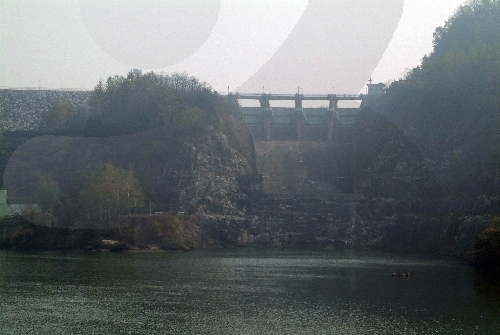
Andong Dam (안동댐)
17.3Km 2021-07-21
31, Hoban-ro, Andong-si, Gyeongsangbuk-do
+82-54-850-4267
Andong Dam is a multipurpose dam on the Nakdonggang River. The dam was constructed to prevent flood damage to the downstream region and to procure water for agricultural, industrial, and residential purposes. Construction of the dam completed in 1976 with a length of 612 meters. x_height of 83 meters and holds 1.2 billion tons of water. Andongho Lake formed by the dam is a popular fishing location.
Andong Folk Village (안동민속촌)
17.7Km 2024-05-30
Seonggok-dong, Andong-si, Gyeongsangbuk-do
+82-54-852-6800
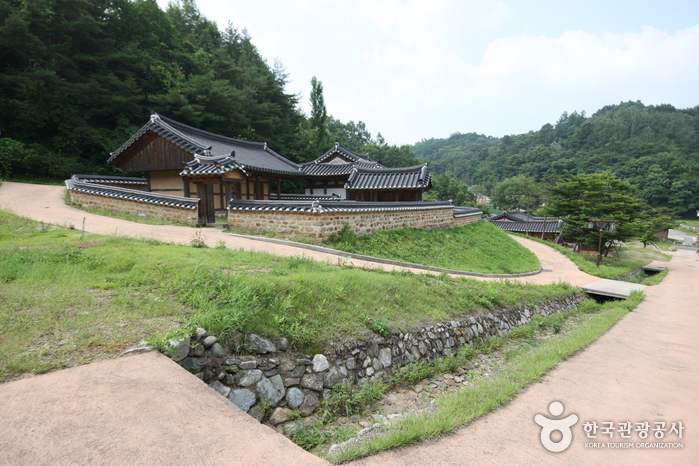
On the other side of the subsidiary dam of Andong Dam, thatched houses can be sparsely seen on a hilltop. The area is practically an outdoor museum, displaying traditional houses that were moved to safety prior to the construction of Andong Dam. Two jangseung (traditional Korean totem poles) are raised at the entrance of the outdoor museum, followed by a monument inscribed with the poem of famous Andong poet and democracy activist, Lee Yuk-sa. On the monument, his most noted work “Gwangya” (Wild Plain) is carved.
Nearby attractions include Andong Museum, Lee Yuk-sa Monument, a filming site of “Taejo Wang Geon (2000)," and Andongho Lake.
Andong Folk Museum (안동민속박물관)
17.8Km 2021-07-01
13, Minsokchon-gil, Andong-si, Gyeongsangbuk-do
+82-54-821-0649
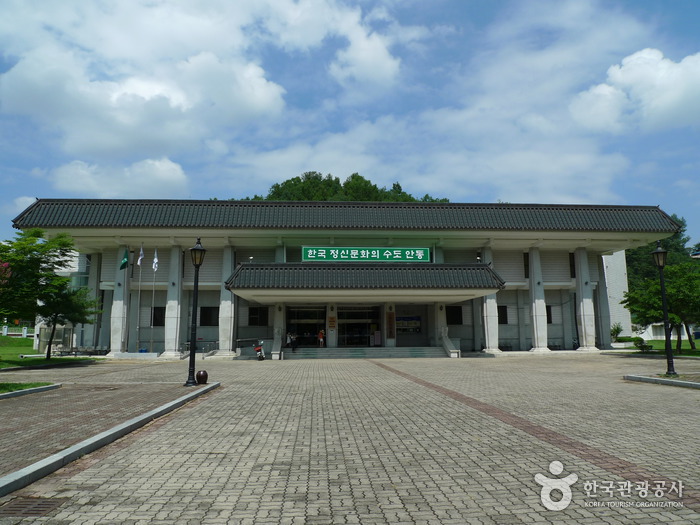
Andong Folk Museum is located within the Andong Dam Folk Village, a collection of houses and items collected before being submerged after the creation of the dam. The museum preserves and educates visitors on folk, Buddhist, and Confucian cultures. The museum is divided into an indoor section and an outdoor section. The indoor section in particular focuses on the unique cultural aspects of Andong through various exhibitions, as well as in the video screening room. The outdoor section features nearly 20 traditional structures, including hanok houses and old ice storage rooms, providing a closer look at the lifestyle of the past.
An dong gotak Esanru (안동고택 이상루)
17.8Km 2024-12-20
3193-6 , Pungsantaesa-ro, Andong-si, Gyeongsangbuk-do
+82-10-3522-1542
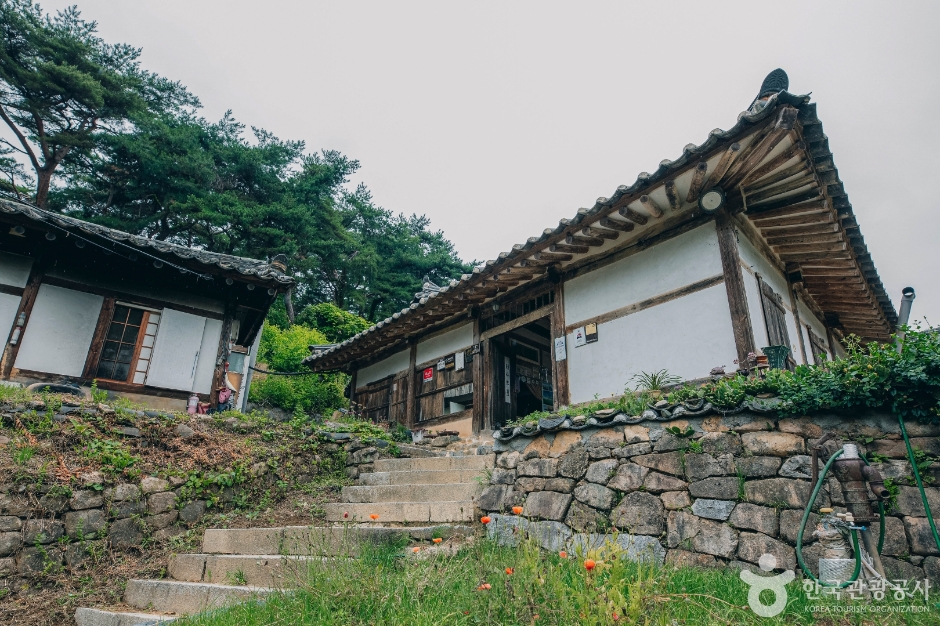
Andong Old House Lee Sangnu stands at the foot of Cheondeungsan Mountain in Andong, Gyeongsangbuk-do. The house has a 250-year history and is still used for family rituals commemorating the founder of the Andong Kim Clan. Lee Sangnu is a dignified two-story wooden pavilion with an attic, while at Yisangru visitors can set a fire in the fire pit in the winter or sleep in a tent or mosquito net in the summer. Cultural programs are available: tea ceremonies, knot craft, the mask dance, natural dyeing, Korean paper craft, and learning about filial piety. The Old House’s location between Andong Hahoe Village and Dosan Seowon makes it convenient for local site-seeing.
![Bongjeongsa Temple [UNESCO World Heritage] (봉정사 [유네스코 세계문화유산])](http://tong.visitkorea.or.kr/cms/resource/16/2654216_image2_1.jpg)
Bongjeongsa Temple [UNESCO World Heritage] (봉정사 [유네스코 세계문화유산])
18.1Km 2023-05-18
222, Bongjeongsa-gil, Andong-si, Gyeongsangbuk-do
+82-54-853-4181
Bongjeongsa Temple is believed to have been built in 672 by the Great Buddist Monk Uisang. However, other documents seem to state that Neungin Daedeuk, a disciple of Monk Uisang, established the temple. During the Korean War, many documents related to the temple were destroyed, so much of the history has been lost. In 1972, while reconstruction work was being done on Geungnakjeon Hall, records were discovered stating the hall was repaired in 1363. This discovery gave concrete evidence that Geungnakjeon Hall is the oldest wooden building in the nation.
Heotjesabap Kkachi Gunmeongjip (헛제사밥까치구멍집 )
18.2Km 2024-11-29
203, Seokju-ro, Andong-si, Gyeongsangbuk-do
+82-54-821-1056
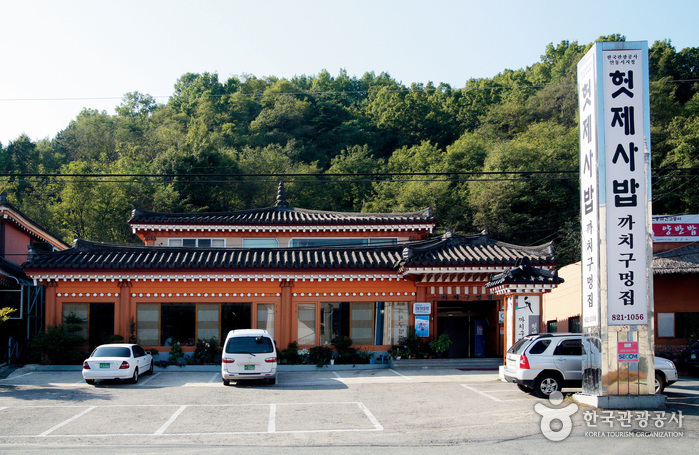
Heotjesabap Kkachi Gumeongjip is a popular restaurant located in Andong, serving yangbansang (yangban table set) fit for the aristocracy. The restaurant interior design features a traditional hanok floor, bringing the aristocratic feeling to life. One of the most popular dishes is hoetjesabap (Andong-style bibimbap). Heotjesabap coloring is not vibrant, but the dish is flavorful, with vegetables and jeon (savory pancakes) piled atop rice. The restaurant, with traditional tiles and designs, producing a feel of gentle harmony and overall traditional beauty coupled with a modern feel.
 English
 한국어
한국어 日本語
日本語 中文(简体)
 Deutsch
 Français
 Español
 Русский


