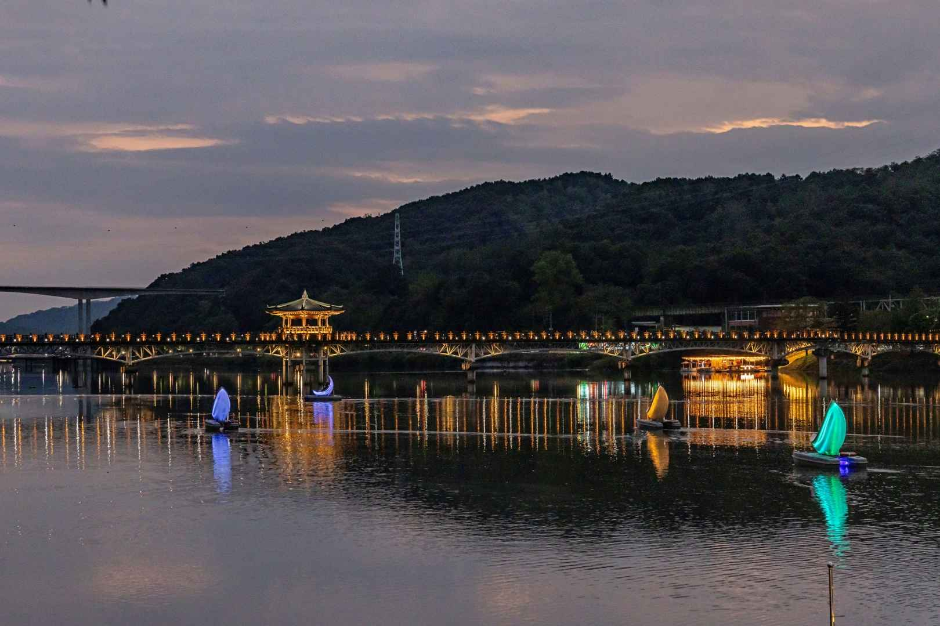
Woryeonggyo Bridge (월영교)
18.2Km 2025-10-23
Sanga-dong, Andong-si, Gyeongsangbuk-do
+82-54-852-6800
Woryeonggyo Bridge was named in reference to the submerged Woryeongdae Observatory and the names of nearby areas Wolgok-myeon and Eumdamgol. The view of Woryeonggyo Bridge with the moon's reflection in the Nakdonggang River is a beautiful sight. Woryeonggyo Bridge harbors a tragic yet beautiful legend about a wife who made a pair of mituri (hemp shoes) out of her hair in heartfelt yearning and condolence for her late husband. In commemoration of her pure and noble love, the bridge was designed in the style of mituri.
◎ Travel information to meet Hallyu’s charm - variety show "I Am Solo"
This spot is where Yeong-sik and Hyeon-suk enjoyed their hanbok date. Perhaps because of the romantic lights, the two managed to confirm their feelings for each other once more. You can walk on the bridge like Yeong-sik and Hyeon-suk did or take the Moon Boat on the lake and enjoy the view of the bridge from the water.
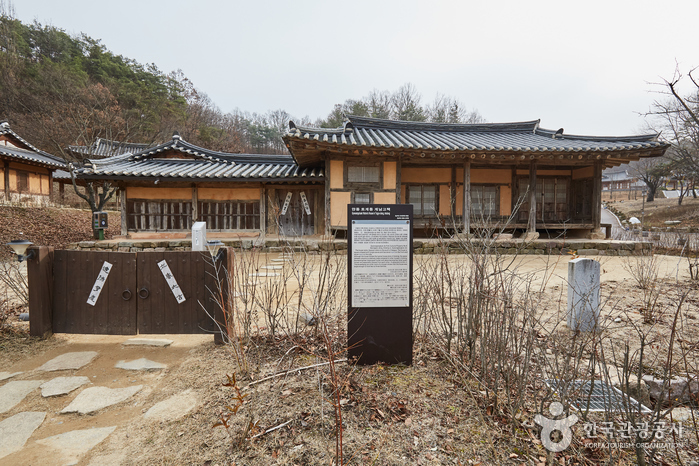
Traditional Resort Gurume (구름에)
18.3Km 2024-12-20
190 , Minsokchon-gil, Andong-si, Gyeongsangbuk-do
+82-54-823-9001
Gurume Resort in Andong-si, Gyeongsangbuk-do, consists of seven traditional hanok dating from the 17th, 18th and 19th centuries that were moved to this location because of a flood. The re-assembled hanok have been equipped with modern toilets, bathrooms, and AC units - plus a modern security system. Facilities include a book-cafe, a restaurant, a traditional experience room and a plaza.

Confucian Land (유교랜드)
18.4Km 2024-05-30
346-30 Gwangwangdanji-ro, Andong-si, Gyeongsangbuk-do
Confucian Land, located within Andong Culture & Tourism Resort, is a themed exhibition hall that focuses on Korea's Confucian culture. The facility uses the edu-tainment method to make a difficult subject matter easy to understand for young children. Exhibitions include the teachings of famous Confucian scholars like Toegye Yi Hwang and Yulgok Yi I, traditional musical instruments such as the gayageum and haegeum, as well as a video hall with 3D film capabilities and a children's game area with motion-tracking.
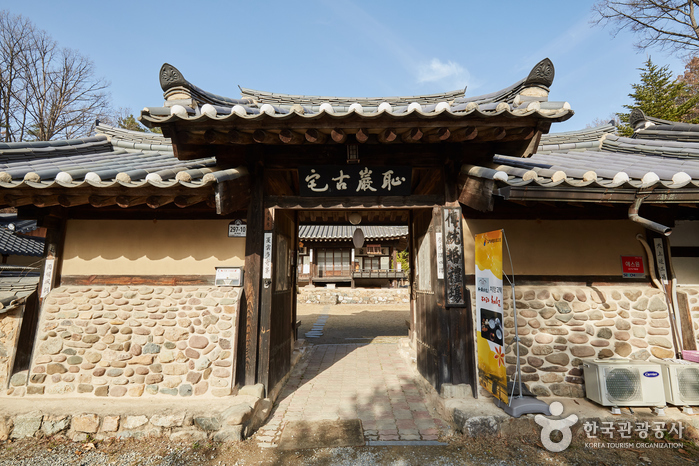
CHIAMGOTAEK (치암고택)
18.6Km 2024-12-20
297-10 , Toegye-ro, Andong-si, Gyeongsangbuk-do
+82-54-858-4411, +82-10-3530-4413
Chiam Old House in Andong, Gyeongsangbuk-do, was the home of Chiam Lee Man-hyeon, a Joseon official in the time of King Gojong, and is now a Gyeongsangbuk-do cultural treasure. Five of the buildings - Anchae, Sarangchae, Daemunchae, Byeoldangchae, and Byeolchae - have guestrooms, and reserving two or three rooms together enables visitors to feel they’re staying in a Joseon yangban’s house. Daemunchae has the best views over the house and surrounding landscape. The flower garden is a nice place to stroll and ponder the beauty of nature.
Zootopium (주토피움)
18.7Km 2024-05-29
346-95 Gwangwangdanji-ro, Andong-si, Gyeongsangbuk-do
Zootopium is the largest animal & plant themed park in Gyeongsangbuk-do, home to over 200 species. The park provides the perfect environment for children to learn more about nature and living organisms. The park features both indoor and outdoor sections, as well as amenities such as a restaurant and play areas for children.
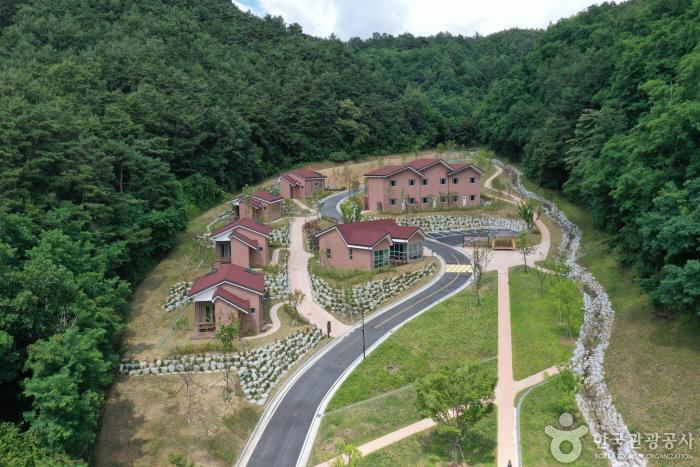
Bonghwa Pavilion Culture Center(봉화정자문화생활관)
19.6Km 2024-12-13
88 , Buraengi-gil, Bonghwa-gun, Gyeongsangbuk-do
+82-54-679-6963
Visitors to the Bonghwa Pavilion Cultural Residence Center can experience the Nujeong culture firsthand during their stay in the Solhyangchon, which is set in Oesam-ri, Bonghwa-gun, Gyeongsangbuk-do, and is themed around traditional towers and pavilions. Solhyangchoin can be divided into pensions and guest rooms, and reservations can only be made through the Bonghwa-gun Sports Facility Office's website. The pavilion exhibition hall, the pavilion garden, the pavilion rest area, and the dormitory yard are also available for your use. Nearby tourist attractions include Changpyeong Forest Park, Dadeok Mineral Spring Tourist Site, and Munsusan Natural Recreation Forest.
Yeongju Museom Village (영주 무섬마을)
19.6Km 2021-08-24
31-12, Museom-ro 234beon-gil, Yeongju-si, Gyeongsangbuk-do
+82-54-638-1127
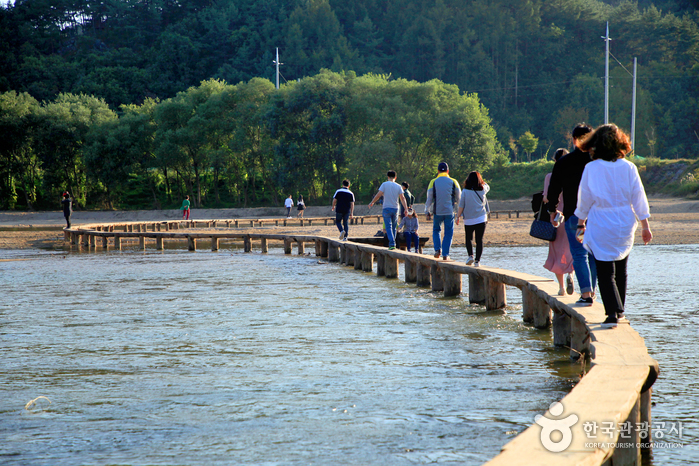
Located in Sudo-ri in Yeongju, Gyeongsangbuk-do, Museom Village is a charming hanok village surrounded by water. Flowing down from Sobaeksan Mountain and Taebaeksan Mountain, Naeseongcheon Stream and Yeongjucheon Stream converge and loop around Museom Village, surrounding the village on three sides with water. This peninsula-like village is not only the center of traditional Korean culture, but also has a gorgeous natural landscape complete with a wide sandy riverside and a lush inland forest.
Known for Haeudang and Manjukje Houses (two of the most historical hanok houses in the area), the village is also home to other outstanding traditional houses such as the Kim Gyu-jin House and the Kim Wi-jin House. Manjukje House is located at the heart of the village and the oldest traditional house in this hanok village. Manjukje was built in 1666 (7th year of King Heonjong's reign) by Bak Su (the father of the Bannam Bak Family).
Nearby Manjukje is Manun House, built in the early 19th century and named after Kim Hwi-geol (penname “Manun”). The house later became the home of the wife of the famous poet Jo Ji-hun, author of “Byeolli,” a poem expressing the beauty of Museom Village.
Other notable houses include the Kim Wi-jin House (a house belonging to aristocrats), the Kim Jeong-gyu House (a house without the traditional outer fencing), and the Bak Jae-yeon House, where the writings of Bak Gyu-su (a respected scholar during the Joseon period) still remain today.
Another famous attraction in the village is the Single Log Bridge, which was the village’s only connection to the outside world for over 350 years before the construction of Sudo Bridge in 1979. It is a tiny bridge in terms of x_width (30 cm), but it stretches for over 150 meters. It is said that the bridge was rebuilt annually after being destroyed each rainy season. With the construction of Sudo Bridge, the Single Log Bridge was no longer needed, but was rebuilt some time later in its original form. To celebrate the bridge’s impressive history, the village hosts the Single-Log Bridge Festival every October.
![Manjukjae House[Korea Quality] / 만죽재 고택[한국관광 품질인증]](http://tong.visitkorea.or.kr/cms/resource/55/3016955_image2_1.jpg)
Manjukjae House[Korea Quality] / 만죽재 고택[한국관광 품질인증]
19.7Km 2024-10-30
11-10 , Museom-ro 234beon-gil, Yeongju-si, Gyeongsangbuk-do
+82-54-638-1127
Manjukjae House is the oldest hanok in Museom Village, Yeongju, Gyeongsangbuk-do, with a history dating back 360 years. Originally built by Park Su to live the life of a reclusive gentleman after the Manchu Invasion of Korea, the house has been passed down from generation to generation through 13 generations. There are four guest rooms, Seomgye Chodang, Sarangchae (detached building), Anchae (main building), and Chaekbang (study), all of which can accommodate two people. Among them, Seomgye Chodang offers the best view, from where guests can enjoy the scenery of the log bridge in Museom Village, the Naeseongcheon Stream, and the white sandy beach. With the windows wide open, you can enjoy the cool breeze and the soothing sounds of nature.
Jeongjae Head House (정재종택)
19.7Km 2024-12-20
2661-8 , Gyeongdong-ro, Andong-si, Gyeongsangbuk-do
+82-54-822-6205
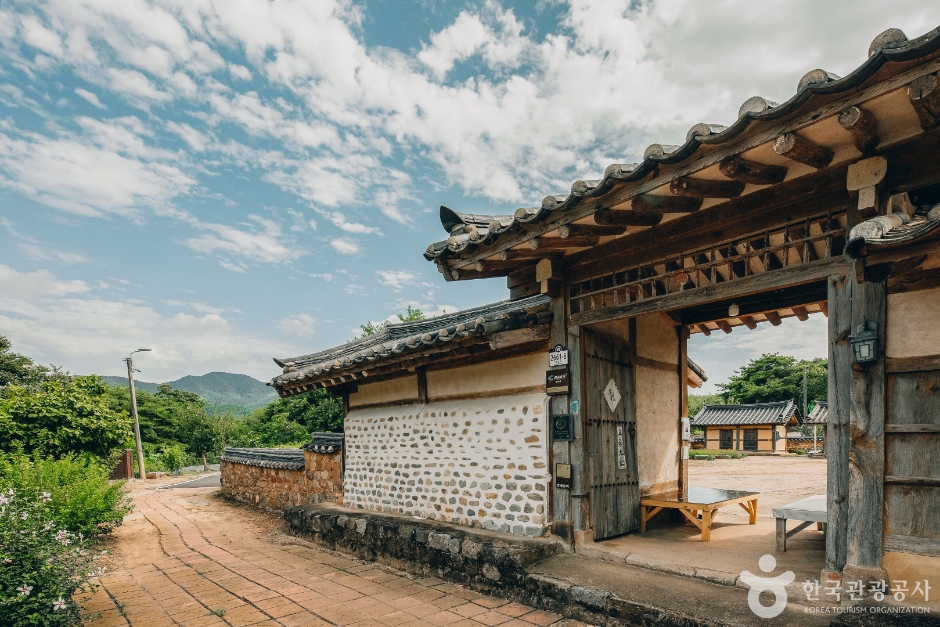
Jeongjae Head House is the head house of Joseon scholar Jeongjae Ryu Chi-myeong, a colleague of the famous Toegye Lee Hwang. The house overlooks Imha Lake in Andong-si, Gyeongsangbuk-do, and is 300 years old. The long endurance of the stone foundations, roof tiles and wooden beams and porch gives the place a solid, calming feel. The house consists of a daemunchae (gate house) jeongchim (square-shaped building), haengnangchae (servants’ quarters), sadang or shrine, and a pavilion called Manujeong which houses a lecture hall but can also be used for lodging. Guests can learn how to brew songhwaju spirit and tarak fermented milk liquor, and listen to gayageum or folk song performances.
Head House of the Tapdong Branch of the Goseong Yi Clan (법흥동 고성이씨탑동파종택)
19.8Km 2022-12-21
103, Imcheonggak-gil, Andong-si, Gyeongsangbuk-do
+82-54-840-5225
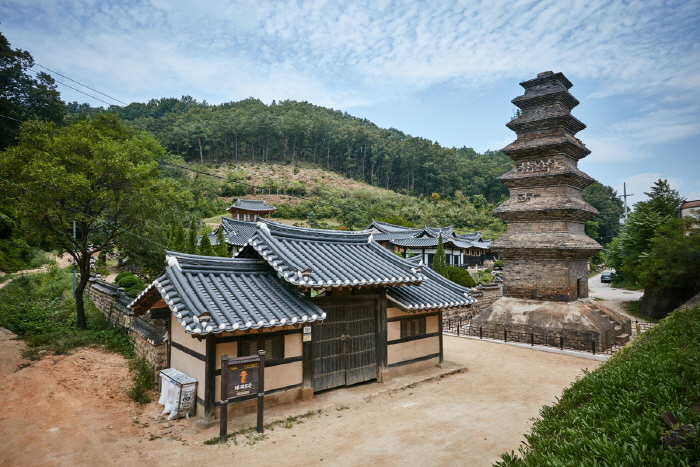
Head House of the Tapdong Branch of the Goseong Yi Clan, located in Andong, serves as a residential house of the Yi descendents even to this day. Constructed in 1685, this house has all of the beautiful features that represent Joseon-style architecture. After this period, additional structures were added periodically. Across from the house is the Seven-story Brick Pagoda at Beopheungsa Temple Site.
 English
 한국어
한국어 日本語
日本語 中文(简体)
 Deutsch
 Français
 Español
 Русский


