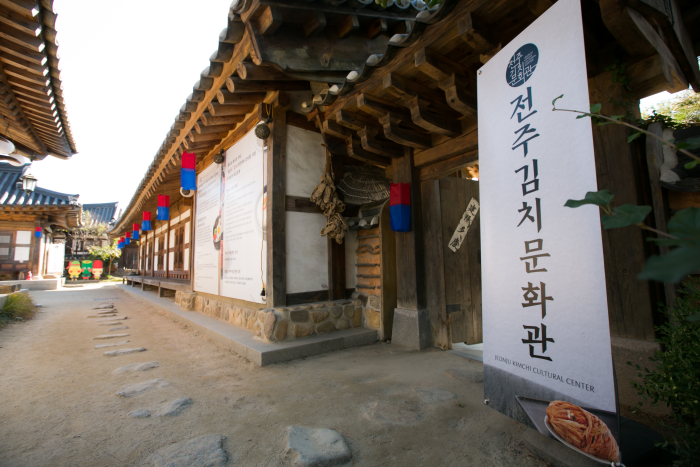
Centre culturel de kimchi dans le village hanok de Jeonju (전주한옥마을 전주김치문화관)
353.7M 2024-04-07
29, Eojin-gil, Wansan-gu, Jeonju-si, Région Jeonbuk
Le centre des expériences de vie traditionnelles de jeonju est un guest house situé dans le village de hanok de Jeonju. Les visiteurs peuvent y vivre une expérience unique de la vie en habitat traditionnel. Le centre était à l’origine une résidence de noble construite durant la dynastie Joseon (1392-1910) aujourd’hui reconstruite, elle accueille de nombreux visiteurs notamment des étrangers qui peuvent y découvrir le côté traditionnel de la Corée. L’habitat a perdu de son côté vetuste mais y a gagné en comfort. Les visiteurs peuvent s’amuser à découper le bois pour alimenter le système traditionnel de chauffage. Il s’agit du ondol, un système de chauffage qui irradie l’ensemble du sol par dessous. Les visiteurs dorment sur des petits matelas à même le sol où il est bon de se prélasser durant les journées froide d’hiver.
Dans ce guest house, les hôtes peuvent également apprendre des chansons traditionnelles, y prendre le thé, ou encore faire du vélo autour de la propriété. Les repas sont compris dans le prix de l’hébergement.
GaEunChae / 가은채
359.3M 2025-08-11
68-13, Hanji-gil, Wansan-gu, Jeonju-si, Région Jeonbuk
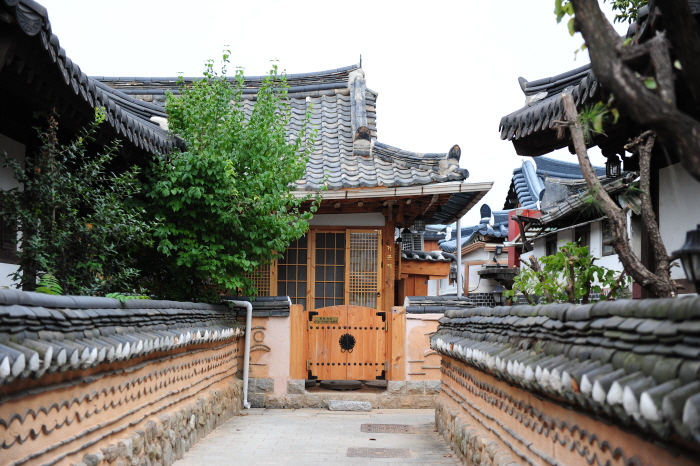
Gaeunchae is a Handol guesthouse located in Jeonju Hanok Village. Among the four Hanok buildings built by a construction company in 1969, two are being operated as a Gaeunchae guesthouse. While turning it into a lodging place, everything related to a private house was removed, but the original form of the building was revived for guests to feel the beauty of the traditional Hanok.
Jeonju Master's Crafts Center, Jeonju Korean Traditional Wine Museum, Seunggwangjae, Dakjongi Hanji Dolls Workshop, etc. are just a stone's throw away. In particular, the pretty alleys are part of the Hanok Village alley tour course 1 operated by Jeonju City.
In the middle of the yard of Gaeunchae are stones refined by hand years ago, including Macheon Stone, Sago Stone, Goheung Stone, Hwangdeung Stone, etc; the southern yard is paved with flat stones such as old granite, bakseok, and mica. Traditional room doors fitted without using any nails and traditional windows add to the gracefulness of Hanok.

Veteran Kalguksu (베테랑칼국수)
374.9M 2025-07-10
135, Gyeonggijeon-gil, Wansan-gu, Jeonju-si, Jeonbuk
Il s’agit d’un restaurant de nouilles traditionnelles aimé des habitants de Jeonju Hanok Village depuis plus de 40 ans, ouvert en 1977. L’établissement est réputé pour son bouillon épais et onctueux, mijoté longtemps, auquel sont ajoutés du perilla (sésame sauvage), de la viande et des œufs.
Les nouilles utilisées ne sont pas les larges nouilles ordinaires, mais des nouilles fines à la texture ferme et élastique. Le plat est garni de poudre de perilla, de piment et d’algues séchées, offrant un goût et une présentation constants au fil des années.
Outre les kalguksu (nouilles coupées au couteau), le restaurant propose des nouilles froides au soja (kongguksu) au goût riche et onctueux, ainsi que des mandu (raviolis) généreusement garnis, qui accompagnent parfaitement les nouilles. Avec chaque commande, du danmuji (radis mariné jaune) et du kimchi de radis en dés (kkakdugi) sont servis ; ce dernier est préparé maison avec des radis d’hiver de Jeju, ce qui lui confère un goût encore meilleur.
◎ Informations sur la Hallyu : ce restaurant est l’un des établissements fréquentés par les acteurs du drama Vingt-cinq, vingt et un. L’actrice principale, Kim Tae-ri, y est venue pour son petit-déjeuner lors du tournage de son vlog, attirant l’attention en dégustant son bol sans en laisser une seule nouille. Tout près se trouve aussi "2521 Guesthouse", la maison d’hôte ayant servi de résidence à Hee-do dans le drama, qui vaut une visite après le repas.
Musée de l'Alcool Traditionnel Coréen de Jeonju (전주 전통술박물관)
380.8M 2024-04-07
74, , Wansan-gu, Jeonju-si, Région Jeonbuk
Découvrez la gloire de l’alcool traditionnel coréen dans ce musée ! Vous pouvez voir les outils et machines utilisés pour la fabrication, ainsi que des expositions sur le thème de l’alcool traditionnel. Les zones les plus intéressantes du musée sont considérées commé étant la salle de préparation d’alcool et la salle de fermentation. Grâce aux enceintes disposées dans ces deux salles, vous pourrez entendre les sons amplifiés que l’alcool émet pendant le procédé de fermentation. Vous pourrez également profiter des arômes séduisants de la liqueur traditionnelle coréenne. Les premiers et troisièmes samedis du mois, vous pourrez vous faire la main à la fabrication et pendant les seconds et quatrièmes, il vous sera possible de participer à une dégustation traditionnelle.
Jeonju Nanjang (전주난장)
382.0M 2024-04-08
33-20, Dongmun-gil, Wansan-gu, Jeonju-si, Région Jeonbuk
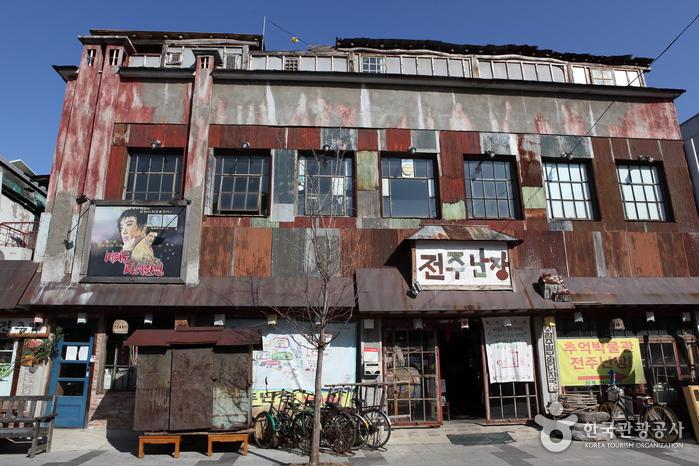
Jeonju Nanjang désigne un musée construit comme un parc thématique situé dans le village des hanok de Jeonju, un endroit idéal pour les prises de photo et les activités autour des traditions de Corée.
Dong Nak Won / 동락원
411.7M 2025-03-05
33-6, Eunhaeng-ro, Wansan-gu, Jeonju-si, Région Jeonbuk
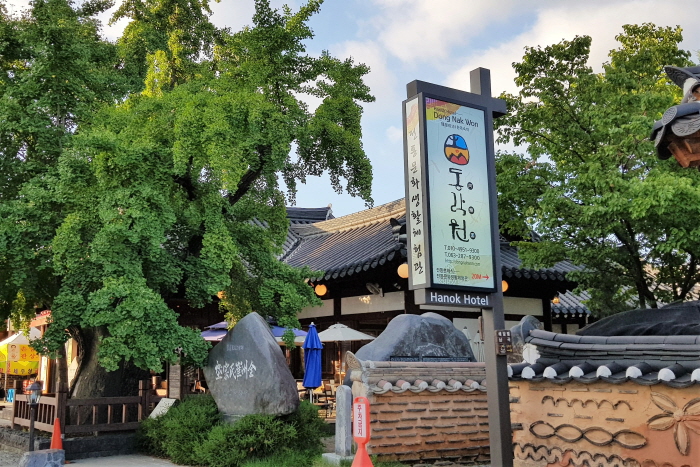
Hanok Hotel Dongrakwon used to be a memorial hall for Missionary M. Junkin who worked in Jeonju in 1985, and had long been used as an official residence for the Bank of Korea. The 100-year-old Hanok retains the history and culture that modern hotels do not have. Since the renovation to make it a hanok hotel, it is now utilized as a space for traditional music performances, traditional weddings, or small weddings. The entire building can be rented for various gatherings, seminars, conferences, family events, and so on. The beauty of a hanok is found in every corner of Dongrakwon such as the wide lawn, the pond in front of Sarangchae, and the jar stand next to Anchae. The antique furniture and folding screen in the rooms have been used for generations, enabling guests of the hanok to time travel to 50-100 years ago.
The yard is a great place to play simple Korean traditional plays such as Jegichagi and Dakjichiji, whereas the free-of-charge red clay sauna will relieve fatigue. The outdoor hot / cold bath and sun bath site is a new addition to Dongrakwon.
There is a 600-year-old Ginkgo tree standing on the Eunhang-ro, where the accommodation is located. Opposite the alley is Donghak Revolution Memorial Exhibition Hall; Gyeonggijeon East Gate is 200m away. The hotel is close to Taejo-ro, the busiest street of Jeonju Hanok Village; neighboring Eunhang-ro, Choi Myeong Hee-gil, and Eojin-gil all retain the unique quietness and beauty of Hanok Village. It will be also nice to ride on the mountain bike that Dongrakwon offers free of charge in order for guests to visit corners of the Hanok Village, or ride along the Jeonjucheon Stream.
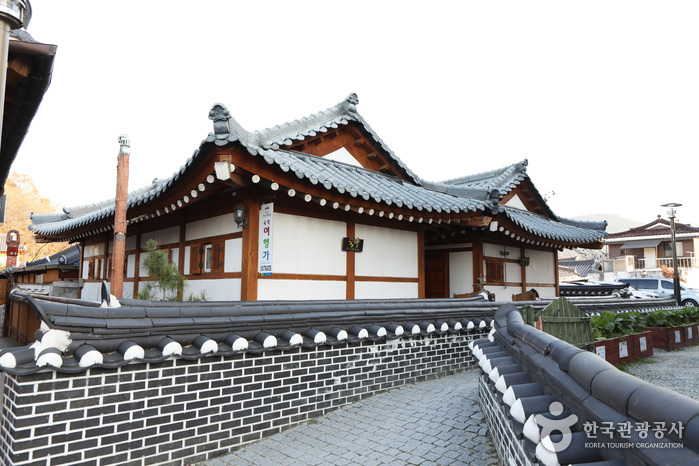
Yeohangga / 여행가
415.6M 2025-08-12
74-11, Eunhaeng-ro, Wansan-gu, Jeonju-si, Région Jeonbuk
Yeohangga is a guesthouse owned and run by a woman who majored in early childhood education and who has been teaching children for over 20 years. The name means "A home for a happy trip," she says. It’s a unique guesthouse since the owner offers various traditional educational games. The cozy and comfortable guesthouse is a traditional Korean house built in March 2013 at a site where an old house used to be. The main building and detached building are divided by the ridge of the roof with beautiful rafters. There is another meaning to the name of the guesthouse: "a house where the woman is happy." She named it as such for a good reason. She used to live in Seoul when her parents advised her to move to Jeonju and run a guesthouse, leaving her husband and child behind. At first, she considered accepting only female guests, but it wasn't an option since most of the people visiting Jeonju are couples and groups of friends. Instead, she made sure the guesthouse is safe for women while building the house. Many female tourists traveling alone find this a great feature of the guesthouse because they feel safer during their stay. For one, she installed three doors for the rooms (1 transparent door, 1 opaque glass door, and a traditional Korean door). Not only do the guests feel safer; the rooms are also well-insulated thanks to the triple doors. The floors and walls are covered with traditional Korean paper coated with soybean oil, which is very environment-friendly. In the four rooms named “Spring,” “Summer,” “Autumn,” and “Winter,” there are many toys and materials for traditional Korean cognition games, such as “Chilgyo Game,” “Gonu Game,” and “Mabangjin.” It’s very likely that even Koreans have never heard of these games. The owner of the guesthouse chose these games specifically because they are perfect for children to play in a traditional Korean house. She teaches her little guests how to play the games. “Chilgyo Game” involves making a shape with 7 to 20 pieces, whereas “Gonu Game” is similar to the game of Chinese chess. "Mabangjin" is a type of IQ game that involves laying down a total of nine different numbers in three rows and columns so that the sum of the three numbers is identical when added horizontally, vertically, or diagonally. Many guests find these games interesting, and the owner of the guesthouse finds joy in teaching these games to as many families as possible. She recently took over another traditional Korean guesthouse called "Samrakheon" near the Jeonju Oriental Medicine Center. It's a stand-alone guesthouse for groups and families, and she uses the place to teach traditional games to more people.
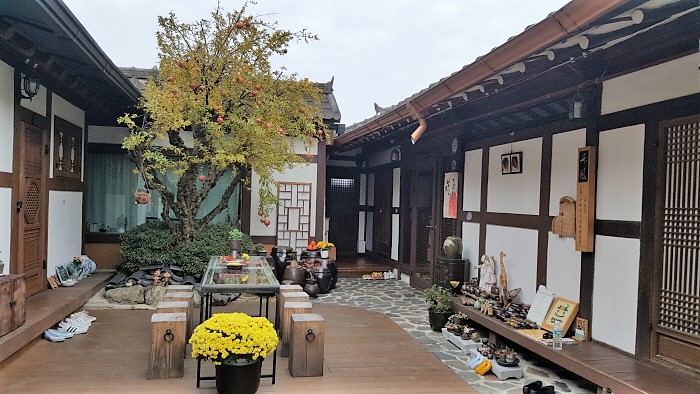
Inyeon Hanok (인연)
435.6M 2024-07-01
36, Hanji-gil, Wansan-gu, Jeonju-si, Région Jeonbuk
The Korea's largest "hanok (traditional Korean house)" village in the middle of Jeonju, Jeollabuk-do has been there for hundreds of years. Today, you can see new as well as old houses there. “Inyeon” is one of the traditional Korean houses located near the public parking lot on the outskirts of the hanok village, making it a great place to stay overnight in quiet. The word "inyeon" means "relationship" in Korean, referring to all types of ties with other people. The owner of the guesthouse named the place as such because she is greatful for all the guests and wanted to treat them well. She opened the guesthouse in September 2014. Since then, she has been kind enough to tell her guests which places are good to visit and which foods are delicious. She makes sure all the facilities including sheets and blankets are maintained clean for her guests to have a memorable stay. Built in the 1960's and remodeled in 2008, the traditional house is neat with most of the traditional features. It has four guestrooms named "Apricot Flower", "Orchid", "Chrysenthemum", and "Bamboo". The "Orchid Room" and "Bamboo Room" can accommodate up to seven people. The floor is covered with lacquered traditional Korean paper, and there are a number of traditional items in the room including the Korean gong. The traditional Korean ceiling rafters are visible in all the rooms.
All the rooms are furnished with a bathroom, air conditioner, TV, refrigerator, toiletries, and hair dryer. There is a 200-year-old pomegranate tree in the yard, and a table and chairs right in front of it for the guests to relax on a fair day. The table made of an old door and chairs made of a log under the red pomegranates are one of the most outstanding features of this guesthouse. There are lots of traditional items in the yard with which you can play traditional Korean games such as "yutnori" and "jegichagi", all of which can be used by the guests for free.
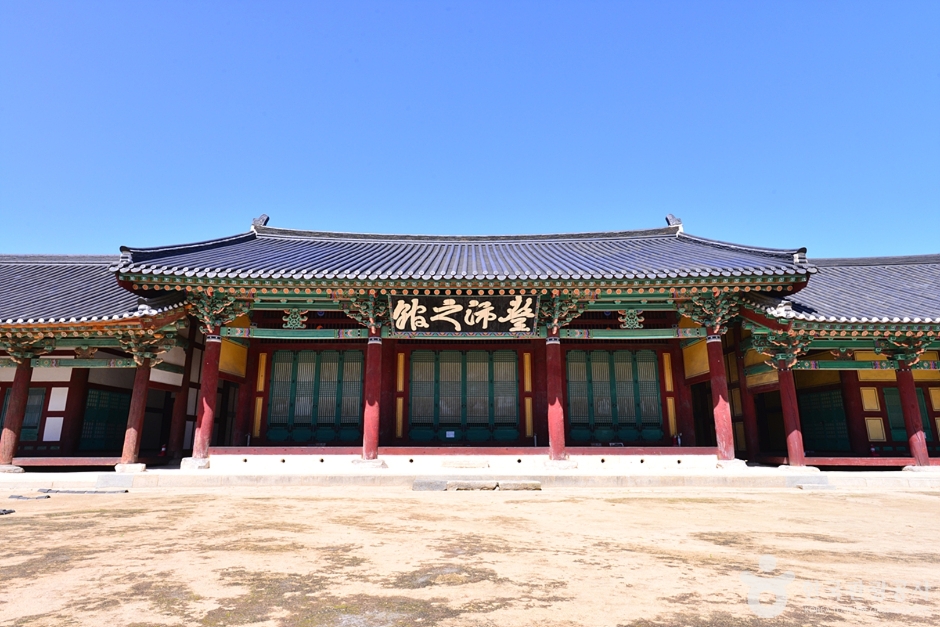
Jeonju Pungbaejigwan (전주 풍패지관 (전주객사))
437.9M 2024-07-09
59, Chunggyeong-ro, Wansan-gu, Jeonju-si, Jeonbuk
Durant la période de la dynastie Joseon, les officiels du gouvernement ser servaient de cet endroit comme lieu de résidence lors de leur visite à Jeju. Le lieu est désormais accessible au public. Le long et spacieux 'maru' (place centrale en bois) est ouvert au public, faisant de l'endroit un endroit confortable pour se reposer. Situé dans le centre de Jeonju, le site est facile à trouver en étant proche du village des hanok de Jeonju.
Village de hanok de Jeonju [Ville lente] (전주한옥마을 [슬로시티])
445.6M 2025-08-12
29, Eojin-gil, Wonsan-gu, Jeonju-si, Région Jeonbuk
Ce village traditionnel situé dans la ville de Jeonju s’étend sur une partie des quartiers Pungnam-dong and Gyo-dong et compte près de 800 maisons traditionnelles ou « hanok ». Alors que le reste de la ville a été modernisée, ce village dans la ville est resté tel quel et conserve toujours ses anciennes traditions.
La beauté du village de hanok de Jeonju réside principalement dans l’élégance des courbures de ses toits. Les bords des toits remontent légèrement vers le ciel, c’est la particularité des hanok. Généralement les hanok se divisent en deux parties dénommées anchae et sarangchae ; le anchae étant le domaine réservé à la femme et donc meublé en conséquence, le sarangchae étant la partie où réside l’homme. Alors que hommes et femmes vivaient séparement, le anchae se situait au fond de la maison, dans une partie plus calme et en retrait. Une autre caractèristique des hanok est le ondol, un système de chauffage par le sol. En effet, les Coréens s’asseyaient, mangeaient et dormaient sur le sol, ce système de chauffage était finalement nécessaire.
La structure du ondol, se compose de plusieurs foyers situés sous le sol surélevé de la maison, la chaleur émise par ces foyers chemine dans un circuit couvrant la surface des pièces.
L’architecture des hanok assuraient donc la chaleur pour les hivers rigoureux mais apporter aussi de la fraîcheur l’été avec une pièce centrale composée de plancher.
 Français
 한국어
한국어 English
 日本語
日本語 中文(简体)
 Deutsch
 Español
 Русский


