
Gyeongju Gyerim Forest (경주 계림)
2020-07-06
Gyo-dong, Gyeongju-si, Gyeongsangbuk-do
+82-54-779-8743
Gyerim Forest is located between the Cheomseongdae Observatory and Wolseong Fortress. The forest is thickly populated by ancient zelkova and willow trees rooted on gently sloping hills and along the small stream in the northwest part of the woods. According to legend, the forest is closely associated with myths surrounding the birth of Alji, the founder of the Gyeongju Kim clan. As such, it is designated national Historic Site No. 19.
Legend has it that King Talhae heard a rooster crying from deep inside the Sirim Woods. Chancellor Hogong was sent to investigate. Upon arriving, he found a rooster crying underneath a tree on which hung a golden box. Hogong immediately reported his find to the king, who instructed him to bring the golden box into the palace. The king opened the box and found a small child inside, Kim Alji. The forest, which had previously been called ‘Sirim’ or ‘Gurim’, became known as ‘Gyerim’, ('gye’ meaning rooster). The name Gyerim was also used to refer to the Silla kingdom.
Alji was adopted as the king’s son, but because the crown was passed on to King Pasa of the Park family, he never ascended the throne. The Kim clan later became the royal bloodline with the coronation of King Naemul some years later.
The memorial stone recording the birth of Kim Alji was erected in the third year of King Sunjo's rule in the Joseon dynasty. Located close to the royal fortress of Silla, the forest is still deeply revered as the mystical birthplace of the first ancestor of the royal Kim clan of Silla. Yellow canola blossoms along the path connecting Daereungwon with Gyerim and Banwolseong only add to the magical ambiance of the forest.
Yeongpyeongsa Temple (영평사)
2021-11-01
124, Yeongpyeongsa-gil, Sejong-si
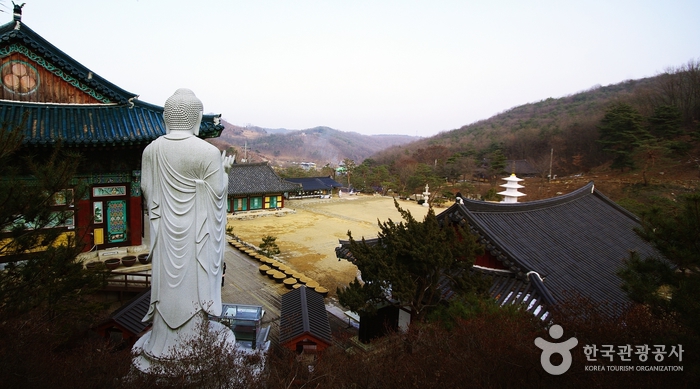
A branch of Magoksa Temple, which is the 6th local temple of the Jogyejong Order, Yeongpyeongsa Temple has six traditional buildings and three small hermitages. Janggunsan Mountain, where the temple is located, is small but full of energy. According to Feng Shui, the mountain is a perfect location for a temple because it is shaped like a dragon curled along the Geumgang River. Yeongpyeongsa is a tranquil place that captures the purity of the temple’s Buddhist practice, with fresh air and clean water that offer a habitat for fireflies, crawfish, and black snails. On the way in, visitors are greeted by a multitude of wildflowers vying for their attention: the columbines and the prairie crocuses in spring, the white lotuses in summer, and the Siberian chrysanthemums in autumn.
Girimsa Temple (기림사)
2022-12-29
437-17, Girim-ro, Gyeongju-si, Gyeongsangbuk-do
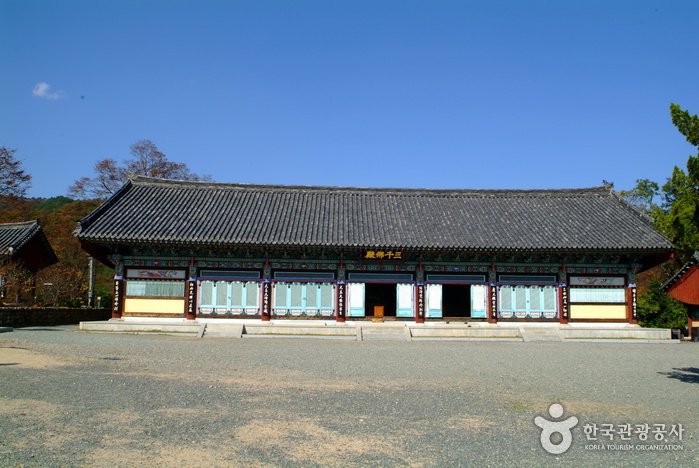
Girimsa Temple is located in Hamwolsan Mountain in Yangbuk-myeon, Gyeongju. The temple was built in the Silla Era and, with 16 buildings, is the second largest temple after Bulguksa.
Legend has it that the temple was originally built by the Venerable Gwang-yu, a sage from India, in the early part of the Silla Kingdom. The temple was reportedly called Imjeongsa at first, but was later changed to Girimsa after undergoing expansive renovations by Monk Wonhyo. It is still unclear exactly what year the temple was built in.
Girimsa is divided into two main areas. The first is the area around Daejeokgwangjeon Hall where the statue of Birojanabul is enshrined. The second is the area around the majestic 500-year-old bo tree (a kind of large fig tree) that is home to a wooden pagoda, the Seongbo Museum, Samsingak, Mangbujeon, and Gwaneumjeon halls. Daejeokgwangjeon Hall was first built during Queen Seondeok's reign, and was rebuilt six times since its original construction. Its simple but majestic architecture is characterized by baeheullim (aka, entasis columns) and a Dapoyangsik (Dapo-style) single-tiered gabled roof.
Girimsa is famous for Ojongsu, water that is said to have five different tastes. It consists of gamrosu, which is best for making tea; hwajeongsu, which supposedly gives comfort to the drinker; janggunsu, which makes the body stronger; myeongansu, which gives clear vision; and otaksu, which is said to sparkle so brightly that it attracts all the birds of the air. During Japanese colonial rule, the source of janggunsu, literally meaning ‘water of a general,’ was reportedly blocked off by Japanese soldiers, who were afraid the water would give the Korean people the strength to overthrow them. Except for janggunsu, water still continues to flow from each source.
On the way to Girimsa temple is Golgulsa Temple, well known for its 12 grottos. Golgulsa was originally a hermitage of Girimsa. After becoming an independent institution, it became the center of Seonmudo practice in Korea. The temple aims to promote the art of seonmudo on a national and international level.
Dadaepo Sunset Fountain of Dreams (다대포 꿈의 낙조분수)
2025-08-07
14 Morundae 1-gil, Saha-gu, Busan
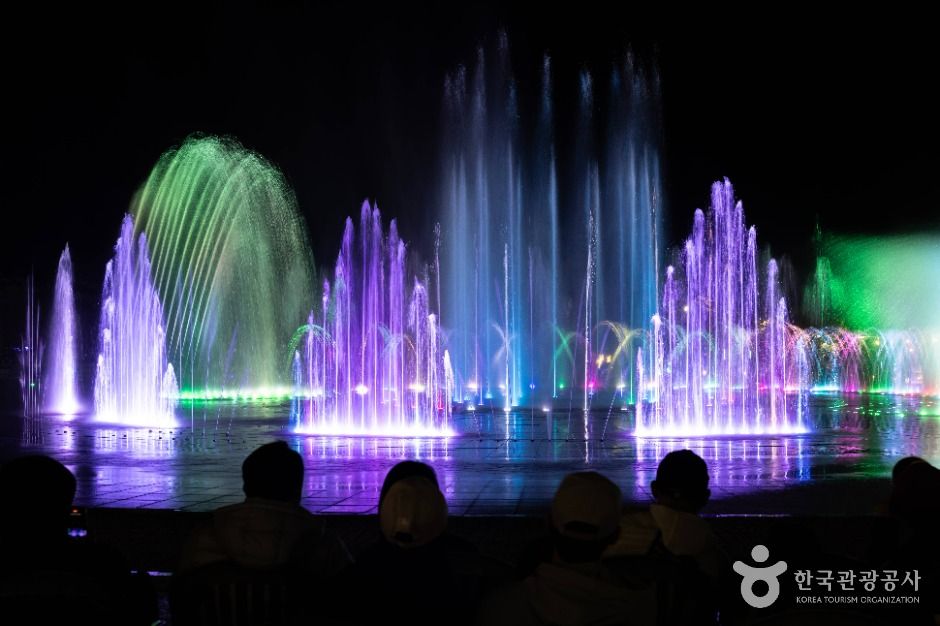
Dadaepo Sunset Fountain of Dreams is a musical fountain near Dadaepo Beach where water jets are synchronized with music and lighting. Covering an area of 2,519 square meters, it reaches a maximum water x_height of 55 meters and can produce various shapes such as wings of a crane, rainbow, sunflower, and mist. It presents over 60 songs ranging from popular, pop to classical genres, accompanied by the fountain's performance. The fountain operates from April to October annually.
Gyeongju Hwangnyongsa Temple Site (경주 황룡사지)
2021-01-29
64-19, Imhae-ro, Gyeongju-si, Gyeongsangbuk-do
+82-54-779-6100
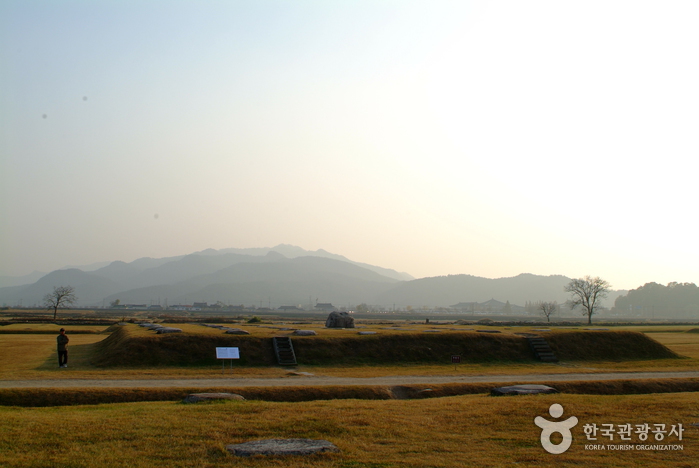
Hwangnyongsa Temple Site is located in front of Bunhwangsa Temple in Guhang-dong, Gyeongju. During the Silla Era, the Hwangnyongsa Temple was the nation’s largest temple and housed the bulk of the country’s major Buddhist treasures.
Construction of the temple began in 553 on a field east of the royal compound under the commission of King Jinheung. The king originally planned to build a palace, but decided to build a temple instead, after receiving reports that a yellow dragon had been spotted on the building site. The temple was thus named Hwangnyongsa (Temple of Yellow Dragon) and was completed in 569, seventeen years after construction began. The temple murals featured an old pine tree drawn by Artist Solgeo. During the Silla Era, the temple was the center of state-sanctioned Buddhism.
Later, when monk Jajang was studying in China during the Tang dynasty, he came across a god as he was passing by Taihe Pond. The god said to him, “The yellow dragon, which is my eldest son, is guarding Hwangnyongsa Temple upon orders of Brahma, the Creator. If you build a nine-story pagoda upon your return to Silla, the neighboring states will surrender and pay tribute, and the royal cause will be stronger. Once the construction of the pagoda is complete, prepare a memorial service for the local gods and pardon any of the country's criminals. If you follow all I have told you, no other state will dare invade Silla.”
After this encounter, Jajang returned to Silla and convinced Queen Seondeok to build the nine-story pagoda. Master architect Abiji of the neighboring state Baekje designed the pagoda and the project was built by Yongchun and 200 men using wood and stone. The night before the columns were to be erected, Architect Abiji of Baekje dreamed of the fall of Baekje and refused to complete the project. With a peal of thunder, an old monk and a man of great strength suddenly appeared from the temple's main hall, erected the columns, and magically disappeared. Abiji was so shocked at the sight that he accepted his country’s future demise as the fate of the gods and once again restarted work on the temple. (From Samgungnyusa, the Memorabilia of the Three Kingdoms)
In the twenty-three years following the completion of the pagoda, Queen Seondeok unified the Three Kingdoms; later, numerous scholars pointed to the pagoda as a contributing factor in the unification. Of the three treasures of Silla, two were located at Hwangnyongsa Temple. The largest bell of Silla was also in the temple, but was taken away during the Mongol invasion. The highest monks of Silla preached at the temple, and many kings came to listen to the Buddhist teachings.
During excavation work in July 1969, the massive foundation stones of the sermon hall, auditorium, and pagoda were found. Eight years of archaeological excavations and studies revealed the unique layout of the temple grounds, which consisted of one pagoda and three halls; also found were 40,000 or so ancient artifacts. Though foundation stones and other structures from the bottom of the temple were identified through excavation, there are no historical clues about the temple’s upper design, making the restoration of the temple in its entirety practically impossible. The size of the temple, based on archeological findings, was about 70 acres, roughly eight times larger than that of Bulguksa Temple.
Laseonjae (한국역사문화음식학교 라선재)
2021-09-25
424-33, Bomun-ro, Gyeongju-si, Gyeongsangbuk-do
+82-54-771-6005
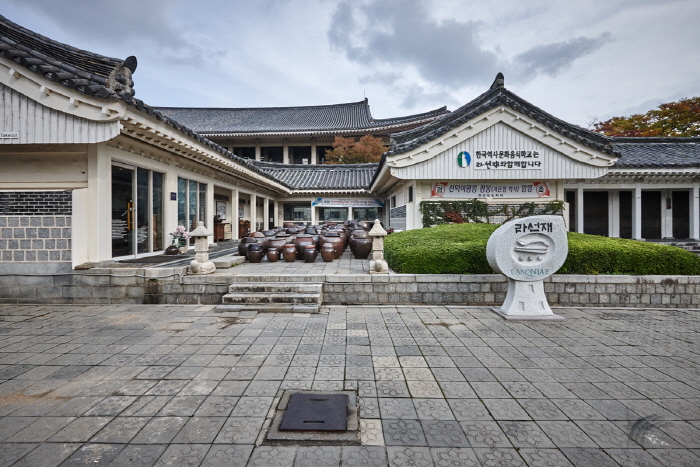
Housed in the Culinary School of Korea History and Culture in Gyeongju, the Laseonjae restaurant serves unique culinary delights that recreate the cuisine served in the royal courts of the Silla Kingdom. The school has a well-established reputation as a culinary institution that excels in preserving the taste and cooking styles of the past. Laseonjae was opened with the goal of promoting Isageum, the Silla-style course meal that the school developed after many years of research.
The Isageum table consists of various dishes served in the royal court of Silla: the dishes are made of nine rare, medicinal ingredients called gujinmi. The interior of Laseonjae is decorated mostly in gold, the color that defines the Silla Kingdom. Note the columns with lotus leaf patterns and other characteristics unique to banquet halls from the Silla royal court. The restaurant staff further portrays the splendor of the era by wearing traditional Shilla dress, seemingly transporting diners back in time while they enjoy an elegant and delicious meal experience.
Mopyeong Village (모평마을)
2026-08-20
80, Sangmo-gil, Hampyeong-gun, Jeonnam-Gwangju Special Metropolitan City
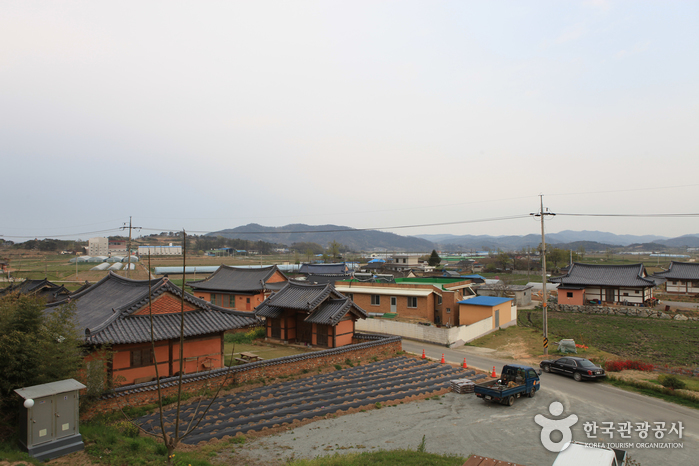
Located in Hampyeong-gun, Jeonnam-Gwangju Special Metropolitan City, Mopyeong Village is a scenic farming village that is rich in tradition and history. From the moment you start walking down the stonewall-lined path into town, this small village will capture your heart. The village’s important history (including its title as the origin of Hampyeong-gun of Jeonnam-Gwangju Special Metropolitan City Province) is evident in everything you see: from the traditional houses to the 500-year old forest. The area is home to 27 historical and cultural sites and the beautiful Haebochoen Stream, which is shaded by over 40 different types of trees including zelkova trees, nettle trees, and willow trees. Some of the town’s traditional houses, which are about 80 years old, offer guesthouse accommodations to tourists. They include Mopyeongheon, Sopungga and Hisomun (a house made of yellow sod). In addition to the beautiful country scenery, there is a great selection of available programs that highlight the area’s specialties, including: mulberry-picking, silkworm-feeding and Korean traditional sauce-making. You can also visit a traditional watermill, which has been restored, and swim and splash around in the forest stream. Visitors are encouraged to try their hand at making green tea cakes at the traditional teahouse nearby. The area of Mopyeong is full of things to entertain visitors, including a number of attractions and special events. Some of the area’s most praiseworthy attractions are the Hampyeong Butterfly Festival, the Cluster Amaryllis Festival in Yongcheonsa Temple, the Chrysanthemum Festival, and the Hampyeong Eco Park and Folk Museum. Other towns well worth a visit in the Mopyeong area are Hamo Maeul, Ungok Maeul and Wonsan Maeul. A stay at Wonsan Maeul gives visitors a chance to experience firsthand the reality of an agricultural lifestyle by doing some activities like mulberry-picking. For a more low-key trip, make your way over to Ungok Maeul, where you can enjoy the fantastic scenery at the lake or take a relaxing walk along the hiking trails of Mt. Wolyangsan.
Uncle Strawberry’s Farm (논산 딸기삼촌농장)
2021-05-28
Byeongsa-ri, Nonsan-si, Chungcheongnam-do
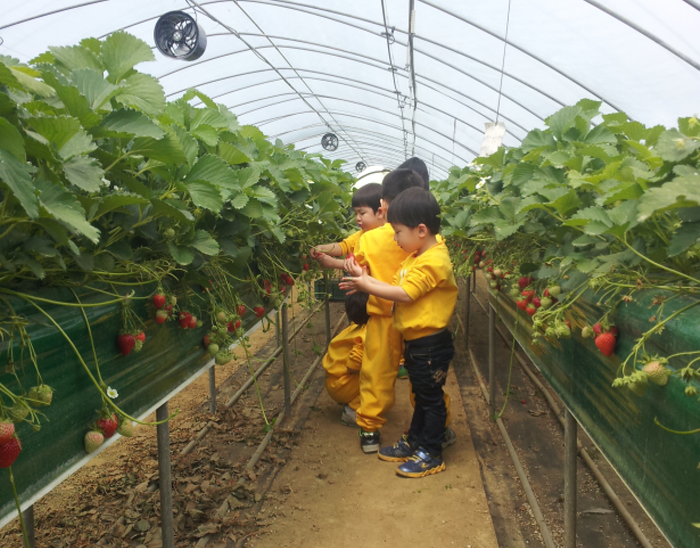
Uncle Strawberry originally sold his products to retail distributors such as markets, department stores and discount stores. However, the farm changed into an experience farm in order to provide the freshest produce to consumers. With no retailers in-between, Uncle Strawberry is now able to provide his best quality strawberries to his customers at a lower price. Uncle Strawberry products have been certified organic, using all-natural and eco-friendly farming methods.

Gyeongju EXPO Grand Park (경주엑스포대공원)
2026-05-19
614 Gyeonggam-ro, Gyeongju-si, Gyeongsangbuk-do
Located in the Bomun Tourist Complex, Gyeongju EXPO Grand Park is where the Gyeongju World Expo, the world's first cultural fair themed around culture and arts, was held in 1998. Over the following 20 years, it served as the venue for ten Gyeongju World Expos, boosting Korean cultural pride and contributing to the development of human culture. Today, it is a popular attraction featuring diverse cultural content such as exhibitions, videos, performances, and hands-on experiences. Major facilities include Gyeongju Tower, Gyeongju Expo Solgeo Art Museum, and more.

Seosan Buseoksa Temple (부석사(서산))
2024-12-03
243 Buseoksa-gil, Seosan-si, Chungcheongnam-do
Located on Dobisan Mountain in Seosan, Chungcheongnam-do, Buseoksa Temple was built by the Great Monk Uisang in 677, the 17th year of King Munmu of Silla, and was later rebuilt by Great Monk Muhak during the Joseon dynasty. The temple houses eight seated Buddha statues and attracts many visitors due to its magnificent surrounding scenery.
 English
 한국어
한국어 日本語
日本語 中文(简体)
 Deutsch
 Français
 Español
 Русский


