Gyeongju Hwangnyongsa Temple Site (경주 황룡사지)

  • Gyeongju Hwangnyongsa Temple Site (경주 황룡사지)
  • Gyeongju Hwangnyongsa Temple Site (경주 황룡사지)
  • Gyeongju Hwangnyongsa Temple Site (경주 황룡사지)
  • Gyeongju Hwangnyongsa Temple Site (경주 황룡사지)
  • Gyeongju Hwangnyongsa Temple Site (경주 황룡사지)
  • Gyeongju Hwangnyongsa Temple Site (경주 황룡사지)

Explanation

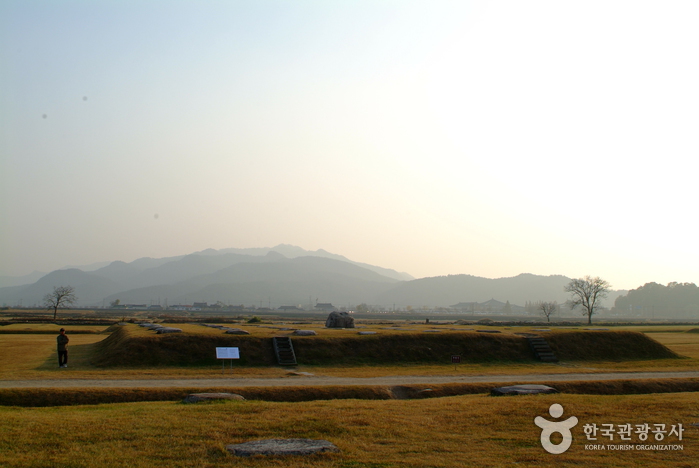
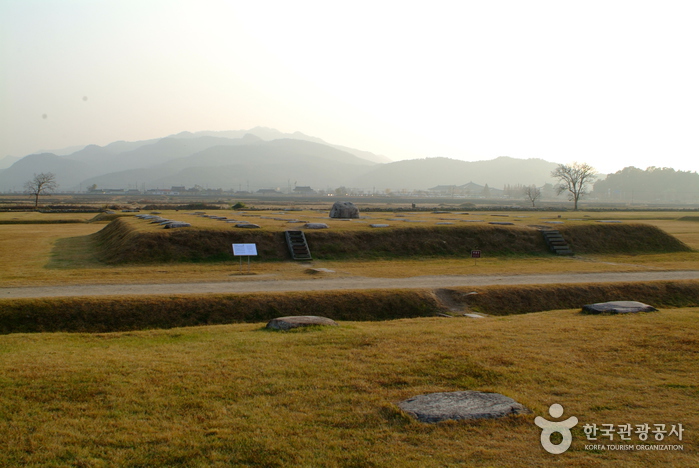
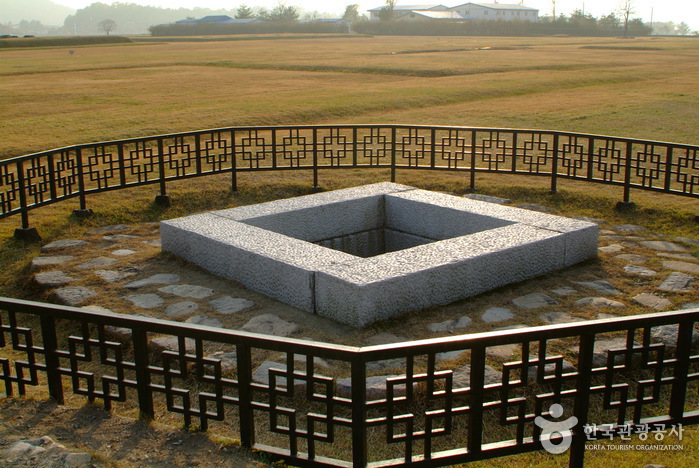
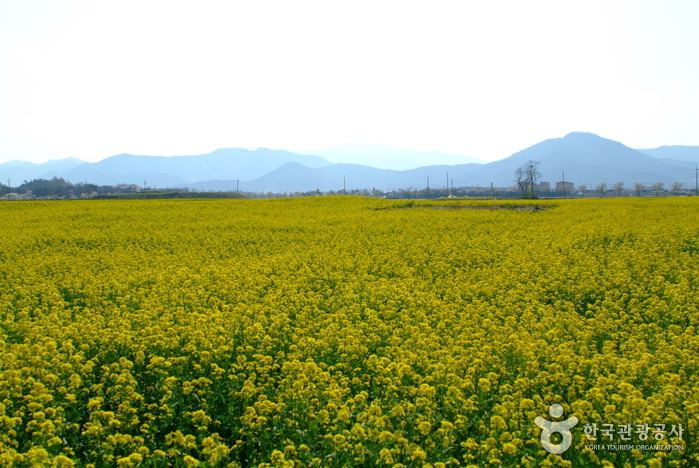
Hwangnyongsa Temple Site is located in front of Bunhwangsa Temple in Guhang-dong, Gyeongju. During the Silla Era, the Hwangnyongsa Temple was the nation’s largest temple and housed the bulk of the country’s major Buddhist treasures.

Construction of the temple began in 553 on a field east of the royal compound under the commission of King Jinheung. The king originally planned to build a palace, but decided to build a temple instead, after receiving reports that a yellow dragon had been spotted on the building site. The temple was thus named Hwangnyongsa (Temple of Yellow Dragon) and was completed in 569, seventeen years after construction began. The temple murals featured an old pine tree drawn by Artist Solgeo. During the Silla Era, the temple was the center of state-sanctioned Buddhism.

Later, when monk Jajang was studying in China during the Tang dynasty, he came across a god as he was passing by Taihe Pond. The god said to him, “The yellow dragon, which is my eldest son, is guarding Hwangnyongsa Temple upon orders of Brahma, the Creator. If you build a nine-story pagoda upon your return to Silla, the neighboring states will surrender and pay tribute, and the royal cause will be stronger. Once the construction of the pagoda is complete, prepare a memorial service for the local gods and pardon any of the country's criminals. If you follow all I have told you, no other state will dare invade Silla.”

After this encounter, Jajang returned to Silla and convinced Queen Seondeok to build the nine-story pagoda. Master architect Abiji of the neighboring state Baekje designed the pagoda and the project was built by Yongchun and 200 men using wood and stone. The night before the columns were to be erected, Architect Abiji of Baekje dreamed of the fall of Baekje and refused to complete the project. With a peal of thunder, an old monk and a man of great strength suddenly appeared from the temple's main hall, erected the columns, and magically disappeared. Abiji was so shocked at the sight that he accepted his country’s future demise as the fate of the gods and once again restarted work on the temple. (From Samgungnyusa, the Memorabilia of the Three Kingdoms)

In the twenty-three years following the completion of the pagoda, Queen Seondeok unified the Three Kingdoms; later, numerous scholars pointed to the pagoda as a contributing factor in the unification. Of the three treasures of Silla, two were located at Hwangnyongsa Temple. The largest bell of Silla was also in the temple, but was taken away during the Mongol invasion. The highest monks of Silla preached at the temple, and many kings came to listen to the Buddhist teachings.

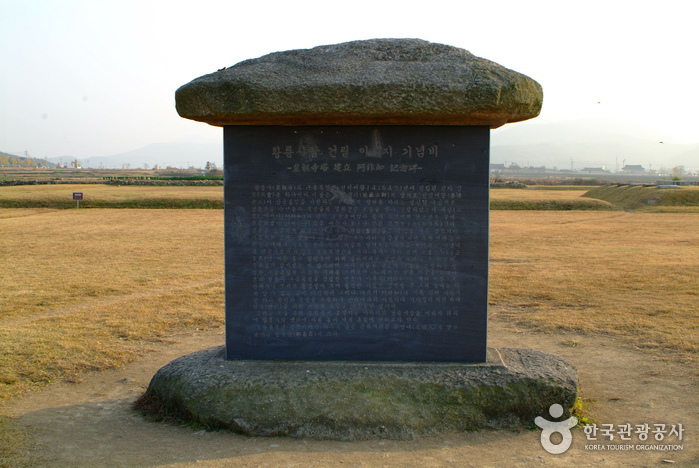
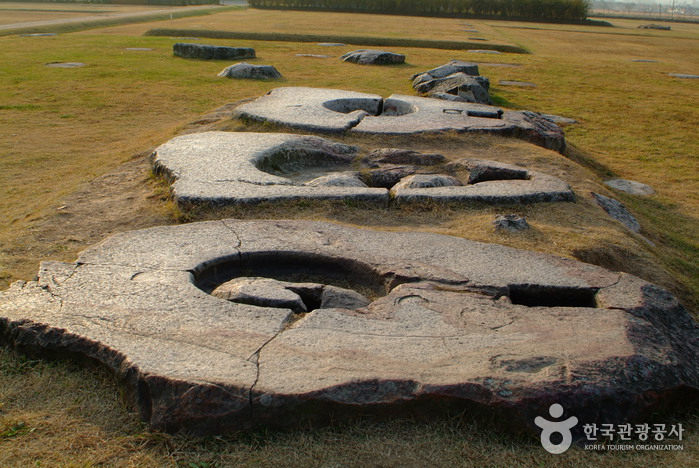
During excavation work in July 1969, the massive foundation stones of the sermon hall, auditorium, and pagoda were found. Eight years of archaeological excavations and studies revealed the unique layout of the temple grounds, which consisted of one pagoda and three halls; also found were 40,000 or so ancient artifacts. Though foundation stones and other structures from the bottom of the temple were identified through excavation, there are no historical clues about the temple’s upper design, making the restoration of the temple in its entirety practically impossible. The size of the temple, based on archeological findings, was about 70 acres, roughly eight times larger than that of Bulguksa Temple.


Inquiry

+82-54-779-6100


Homepage

www.gyeongju.go.kr/tour


Information Use

Contact and Information : • 1330 Travel Hotline: +82-2-1330
(Korean, English, Japanese, Chinese)
• For more info: +82-54-779-6100


Location

64-19, Imhae-ro, Gyeongju-si, Gyeongsangbuk-do

Saudang Head House (사우당 종택)

Saudang Head House (사우당 종택)

2025-12-05

54-4 Suryun-gil, Suryun-myeon, Seongju-gun, Gyeongsangbuk-do

Saudang Head House, located in Yundong Village in Seongju, Gyeongsangbuk-do, is the ancestral home of Kim Yong-cho, one of the founding contributors of the Joseon dynasty. The name Saudang is derived from the pen name of Kim Kwan-seok, who settled in Yundong Village. Since the scholar Kim Kwan-seok settled here during the mid-Joseon period, Yundong Village has remained a clan village of the Uiseong Kim Clan. Within the village are Seodeoksa Shrine, a historic monument, and 13 additional buildings for ancestral rites in honor the clan's ancestors. For 600 years, Saundang Head House has continued the legacy as the ancestral home of Uiseong Kim Clan Commonly referred to as the "head house," this ancestral home is not only the residence of the firstborn but also serves as the spiritual pillar and center of the village. Additionally, it has been a place for nurturing future scholars, recognized for its influence on the local academic culture and its architectural preservation value, and is registered as a cultural heritage site of Gyeongsangbuk-do. Currently, the 21st head of the clan, Kim Gi-dae, and his wife, Ryu Jeong-sook, are safeguarding the ancestral home and promoting the fading culture of clan houses.

Jivaka Beauty (지바카 뷰티)

2025-12-09

6th Floor, 16 Gangnam-daero 102-gil, Gangnam-gu, Seoul

JIVAKA BEAUTY is a trusted and convenient total care solution provider specializing in K-Beauty and K-Health services. We collaborate with a wide range of medical institutions and wellness spas to offer comprehensive care that enhances both the health and beauty of our clients. Leveraging Korea’s advanced medical technology, we have continued to develop customized medical and wellness programs tailored for international visitors. With extensive hands-on experience and proven expertise, we remain committed to delivering exceptional service and ensuring high satisfaction for clients visiting Korea.

Creation & Love Women's Hospital (CLWH) (시엘병원)

2025-12-09

957 Mujin-daero, Seo-gu, Gwangju

Based on over 25 years of clinical experience, Ciel Fertility Hospital provides comprehensive medical services including infertility diagnosis, artificial insemination, IVF (in vitro fertilization), and laparoscopy and hysteroscopic surgery. It is a global infertility hospital that operates an international medical center and provides interpretation and concierge services to patients overseas, including in Mongolia, Russia, and the United States, and guarantees safe and reliable medical services and an environment where patients can focus on treatment.

Donghoon Advanced Lengthening Reconstruction Institute (이동훈연세정형외과의원)

2025-12-09

3th–5th Floor, Superstar Tower, 10 Wiryeseoil-ro, Sujeong-gu, Seongnam-si, Gyeonggi-do

Donghoon Advanced Lengthening Reconstruction Institute specializes in surgical treatments for bone extension and deformity correction, including limb lengthening, deformity correction, osteotomy for osteoarthritis, leg length discrepancy, and more. We oversee the entire process of our patients' treatment, from consultation and examination to operation, recovery, and rehabilitation. Patient safety is our top priority. To ensure the highest level of safety and care for our patients, we are equipped with aseptic operating rooms, uninterruptible power supply systems, SwimEX underwater physical therapy, and a low-dose imaging system EOS.

Saengki Korean Medicine Clinic (생기한의원 강남역)

2025-12-09

14th Floor, Ara Tower, 3 Seocho-daero 77-gil, Seocho-gu, Seoul

Give treatment of skin diseases such as atopic dermatitis, psoriasis, eczema, hives, seborrheic dermatitis, warts, and pompholyx(dyshidrotic eczema)

Micrographic skin diagnosis for the first time in Korea
Development of the stilled medicinal wet dressing
Patent moxibustion for warts and condyloma
Presentation of papers at the World Conference

Treatment method: 
herbal medicine and pills tailored to one's constitution / pharmacopuncture, acupuncture, moxibustion, light treatment according to symptoms / lifestyle guidance suitable for one's personal tendency

Dong-A University Hospital (동아대학교병원)

2025-12-09

26 Daesingongwon-ro, Seo-gu, Busan

Dong-A University Hospital is a teaching hospital that conducts advanced clinical research and specialized medical care. As a university hospital integrating patient care, medical research, and education, it responds to the healthcare needs of the local community and provides high-quality medical services. It is also responsible for clinical training of medical students and the development of healthcare professionals, and operates a TRUST-based medical system founded on safety, research, communication, and technology as a tertiary general hospital.

Nonsan Myeongjae House (논산명재고택)

2025-12-05

50 Noseongsanseong-gil, Noseong-myeon, Nonsan-si, Chungcheongnam-do

Myeongjae House in Nonsan, also known as Yoon Jeung's House, faces the village. At its backdrop is the scenic landscape of Noseongsan Mountain, and behind the gates is a large rectangular pond. Inside the pond, there is a small, round rock, as if an island, where a 300-year-old tree has stood the test of time alongside the old house. Walk past the pond and ascend the stone steps to the front yard, where a sarangchae (main guest room) greets visitors. In 1984, the house was recognized for its value and designated as a National Folk Cultural Heritage. This traditional house offers hanok stays, as well as experience programs such as tea ceremonies, natural dyeing, and traditional music performances. Nearby attractions include Noseongsanseong Fortress, Noseonghyanggyo Confucian School, Noseong Gwollisa Temple, and the main neighborhood of Noseong-myeon.

Reberry Clinic Myeongdong (리베리의원 명동점)

2025-11-28

#201, 2nd Floor & #301, 3rd Floor, 58 Myeongdong 10-gil, Jung-gu, Seoul

1. A dedicated medical director is personally assigned to each client, ensuring responsible and individualized care.
2. We go beyond consultation — every session is a professional medical treatment.
3. With our LifeBiz AI-powered 3D analysis camera, we provide an objective and precise facial assessment.
4. Our treatments are guided by a scientific skin-type classification system for accurate and tailored results.
5. Through 3D facial analysis, pigmentation diagnosis, and skin-type classification, we design a fully customized treatment pathway.
6. At Libery Clinic Aesthetic, we offer not only advanced medical procedures, but also warm décolleté and therapeutic massage care for a holistic experience.

Heartner (하트너)

2025-11-28

2nd Floor, 5-9 Ojosan-ro 21beon-gil, Gyeyang-gu, Incheon

Heartner Medical Center is an international healthcare service center specializing in organizing treatment at leading clinics in South Korea for patients from all over the world.

We provide comprehensive support at every stage of the medical journey — from selecting the appropriate clinic and coordinating treatment to offering personalized assistance and professional interpretation services.

With extensive experience in coordinating treatment across a wide range of medical fields, Heartner Medical Group ensures that every patient receives high-quality medical care tailored to their individual needs.

In addition to general and specialized medical programs, we also assist international clients seeking plastic surgery in South Korea, providing full guidance and ensuring comfort throughout the entire process.

Frientrip Co., Ltd. (주식회사 프렌트립)

2025-11-28

#G704, HEYGROUND, 115 Wangsimni-ro, Seongdong-gu, Seoul

Frientrip is a wellness-based medical tourism service that integrates travel with personalized health management. It partners with certified medical institutions and trusted wellness providers to offer a seamless journey that combines check-ups, beauty and healthcare programs, and recovery experiences. KareTrip enables customers to conveniently schedule medical services while enjoying travel, providing tailored itineraries and on-site support as a comprehensive end-to-end service.