Jukgyegugok Valley (죽계구곡)
2017-12-22
Jukgye-ro 315beon-gil, Yeongju-si, Gyeongsangbuk-do
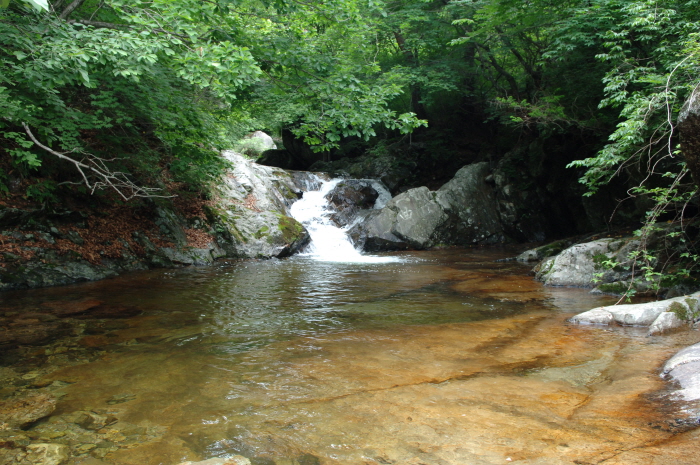
Jukgyegugok Valley is the valley stretching from Baejeom-ri to Choamsa Temple.
Joseon-era Confucian scholar Toegye Yi Hwang (1501-1570) was inspired by the
scenery of the valley and the enchanting sound of the flowing water, so he came
up with names for each of the nine sections of the valley and collectively called
them Jukgyegugok (nine bamboo valleys). The valley presents a splendid sight
indeed with crystal clear waters, lush forest, and white rocks. In summer, vacationers
from around the country flock to Jukgyegugok Valley to cool off from the sweltering
heat by dipping their feet in the refreshing waters of the valley. Famous tourist
attractions near the valley include Sosuseowon Confucian Academy, Buseoksa Temple,
and Eupnaeri Mural Tomb.
* Choamsa Temple
On the path that ascends from Jukgyegugok Valley, there is a small temple
located at the foot of Sobaeksan Mountain. The great monk Uisang Daesa of the
Silla Kingdom reached this place during his search for an ideal site to build
a Buddhist temple invoking national security. He set up a small thatched hut
for a temporary stay until he found the most propitious spot, on which he built
Buseoksa Temple. In the site where his thatched hut once stood, he built another
temple and named it Choamsa Temple. The original structure was destroyed by
fire during the Korean War (1950-1953). The temple has been restored to its
present state by the Buddhist monk Lee Bo-won after years of arduous efforts.
Mubongsa Temple (무봉사)
2021-06-15
16-11, Yeongnamnu 1-gil, Miryang-si, Gyeongsangnam-do
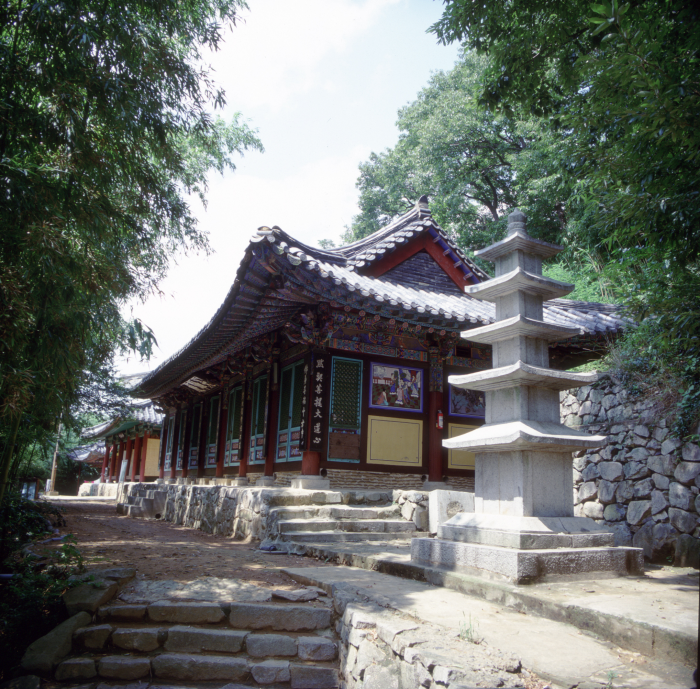
Mubongsa, meaning “a sacred place where phoenix used to dance,” is a small Buddhist temple. It is conveniently located near one of the Miryang’s top attractions, Yeongnamnu Pavilion. Perched high on the cliffs above the upper reaches of the river is Aranggak Pavilion. A flight of stairs from this pavilion lead to the famous Yeongnamnu Pavilion and Mubongsa Temple. Enshrining a stone seated Buddha statue designated as Treasure No. 493, the temple has long been a popular site among poets and painters for its picturesque landscape.
Ganghwahyanggyo Confucian School (강화향교)
2020-06-29
58, Hyanggyo-gil, Ganghwa-gun, Incheon
+82-32-930-4571
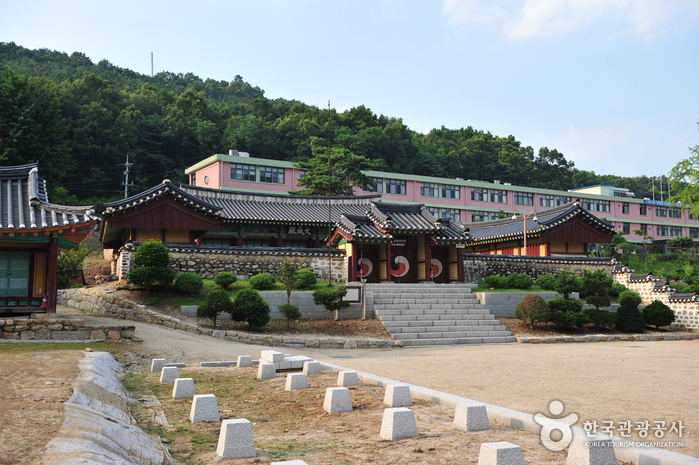
First established in Ganghwa-eup during the 5th year of King Injong in the Goryeo dynasty (1127), Ganghwahyanggyo Confucian School was moved to Ganghwa-gun and then restored at the foot of Buksan Mountain (formally Songaksan Mountain) in 1624 by Sim Yeol during the 2nd year of King Injo.
Ganghwahyanggyo Confucian School is regarded as an important cultural and historical site in Ganghwa-eup.
Angseong Carbonate Hot Springs (앙성탄산온천)
2019-08-12
1457, Gagok-ro, Angseong-myeon, Chungju-si, Chungcheongbuk-do
+82-43-855-7360
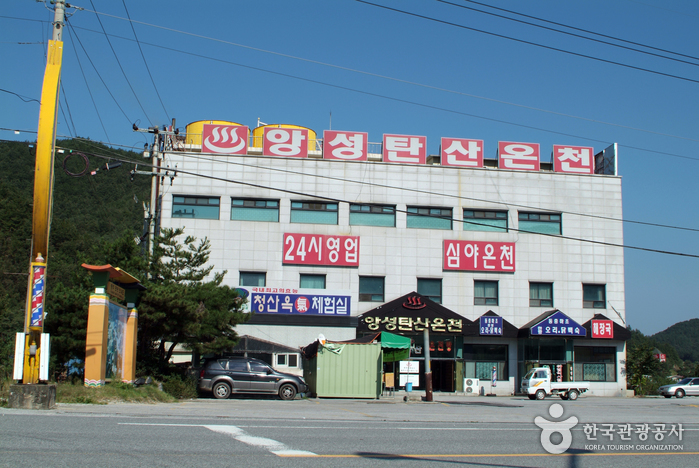
The water at Angseong Carbonate Hot Springs comes from 700 meters underground. This water contains about 2.800㎎/L of carbonic acid and is beneficial in many ways. It is known to be effective in preventing high and low blood pressures, diabetes, arthritis, neuralgia, depression, lifestlye diseases, obesity caused by lack of exercise, stiff shoulder, back pain, colds, constipation, and hemorrhoids. Carbonic acid hot springs are also good for stress relief, increasing metabolism, stimulating blood circulation, and for the treatment of hypersensitive skin, cosmetics allergies, freckles, age spots, athelete’s foot and eczema.
The water temperature at the hot spring stays between 25-38 degrees Celcius. A separate pool is available for people who prefer a warmer temperature than that. Known for promoting physical and psycological health, a carbonic acid hot spring bath also softens the skin and helps fatigue recovery.
For added benefits, Angseong Carbonate
Hot Springs also uses oak wood for heating its jjimjilbang (Korean sauna) and the water.
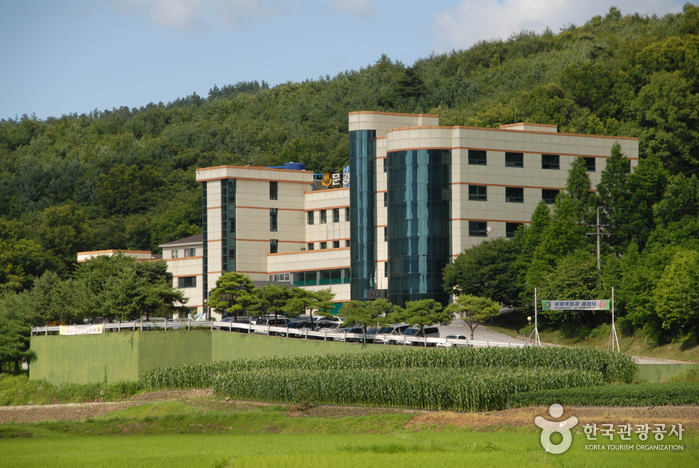
Mungang Sulfur Hot Springs (문강유황온천)
2017-07-21
1061, Palbong-ro, Salmi-myeon, Chungju-si, Chungcheongbuk-do
+82-43-848-5115
Located in the middle of Woraksan Mountain, Joryeongsan Mountain, and Sujupalbong
Mountain, Hot Sulfur Springs is considered one of the best hot sulfur springs
in Korea.
Sulfur springs effectively assist in treating a range of health
issues. Since it softens skin, it is helpful for treating cornification of the
skin and chronic eczema. It enlarges micro vessels, aiding in the treatment
of chronic rheumatism, high blood pressure, diabetes, woman’s diseases, arteriosclerosis,
and athlete’s foot. Thanks to sulfur’s detoxifying effects, drinking sulfur
spring water helps your body detoxify from heavy metals and drugs.
Mungang
Hot Sulfur Spring Hotel and Itempool education Institute are located in the
Mungang Hot Sulfur Spring zone. Suanbo Hot Spring is also a short distance away,
meaning visitors can enjoy two different types of hot springs.

Gangmun Beach (강문해변)
2026-06-11
352 Changhae-ro, Gangneung-si, Gangwon-do
Located in Gangmun-dong, Gangmun Beach is lined with fresh hoe (sliced raw fish) restaurants along Gangmunhang Port. The beach has accommodations nearby and is in close proximity to the Gyeongpo area, making it a great vacation destination. Not only is the beach a well-known diving spot among scuba divers for its deep waters and abundant marine life, but its dock is also popular among fishers all year round.◎ Travel information to meet Hallyu’s charm - TV series"She Was Pretty"This spot is where Sung-joon comes up with the idea of a photoshoot after seeing Hye-jin by the sea. It is also the place where the two leads share a heart-to-heart in a romantic scene. It has a lot of photogenic spots with the East Sea in the background, so it is a popular spot for dates.
Sacheon Beach (사천해변(사천해수욕장))
2022-12-26
San 282-1, Sacheonjin-ri, Gangneung-si, Gangwon-do
Nestled between Gyeongpodae Beach and Yeongok Beach, Sacheon Beach is a clean and quiet beach covering an area of 18,000 ㎡ over a length of 300 meters. The beach opened on July 1, 1975; due to its close location to Gyeongpo Provincial Park, many vacationers choose to come here during the holidays. A thick pine forest spreads out against the beach, and the fine white sand and shallow waters make this area an ideal place for rest and relaxation.
Anmokhaebyeon Beach (안목해변)
2024-05-23
20-1 Changhae-ro 14beon-gil, Gangneung-si, Gangwon-do
Anmokhaebyeon Beach spans over 500 meters in length and covers an area of 20,000 square meters. The beach is often packed with families on vacation. Right in front of the beach is Anmokhang Port, where around 23 fishing boats can be moored to unload their catch throughout the year. The place has also become more popular since the main street along the beach earned the reputation as a "coffee street."
Seocheon Dalgogae Mosi Village (서천 달고개모시마을)
2021-03-10
5, Hwahan-ro 504beon-gil, Seocheon-gun, Chungcheongnam-do
+82-41-950-6380
In Seocheon Dalgogae Mosi Village, the long-standing tradition of Hansan mosi (ramie fabric) is passed down and preserved in the hands of the village women. Hansan mosi is also called fine ramie because of the time-consuming and labor-intensive process involved. The village offers a variety of mosi-themed experience programs for visitors with the help of experienced village artisans. Programs include ramie plant harvesting and ramie fabric weaving. Visitors can also try some highly nutritious ramie rice cakes and tea.
Yecheon Samgangjumak (예천 삼강주막)
2021-07-31
27, Samgangni-gil, Yecheon-gun, Gyeongsangbuk-do
A place where people can see traditional jumak (small taverns serving food and liquor), Samgangjumak once sold food to people who travel through Samgang Port, offered rooms for peddlers to stay, and provided poets with a place to rest.
Built around 1900, this tavern is small but the floor plan is so compact that its historical value in Korean architecture is high. It also reflects the local history and culture of the past. Now, it is a tourist attraction where visitors can experience food and the atmosphere of Korea's culture in the past.
 English
 한국어
한국어 日本語
日本語 中文(简体)
 Deutsch
 Français
 Español
 Русский


