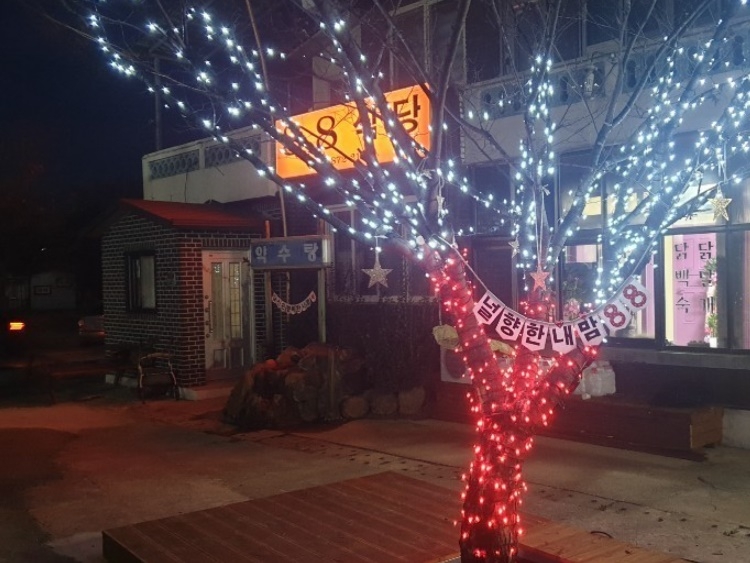
Palpal Sikdang (팔팔식당)
10.2Km 2024-12-10
Palpal Sikdang is a restaurant located north of Juwangsan National Park. The menu is simple with only three items: dak baeksuk (whole chicken soup), chicken wings, and chicken bulgogi. Dak baeksuk is a bowl of chicken porridge served with chicken. The restaurant’s chicken wings are a dish made only with barbequed chicken wings characterized by a crispy texture and rich seasoning. Chicken bulgogi is a dish of chicken mixed with red pepper paste seasoning and grilled on an iron plate. It goes well with vegetable wraps. It has a spicy taste but is not too spicy, so even children can enjoy it. By the restaurant’s entrance is a clean, drinkable mineral spring water that flows down from the mountains.
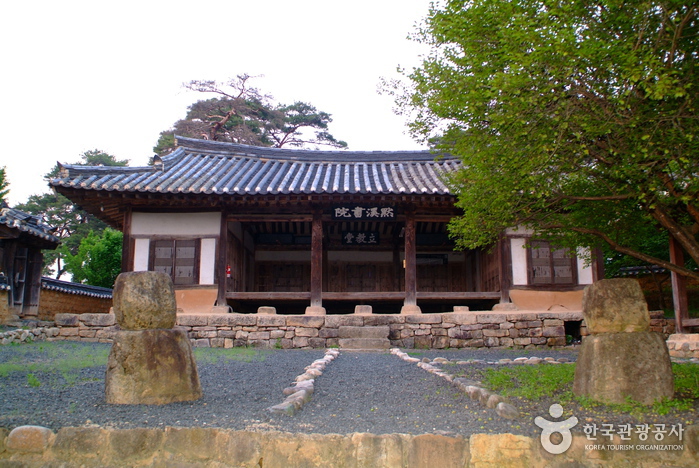
Mukgyeseowon Confucian Academy & Mukgye Head House of Andong Kim Clan (묵계서원 및 안동김씨 묵계종택)
10.6Km 2024-05-29
1736-5 Chunghyo-ro, Giran-myeon, Andong-si, Gyeongsangbuk-do
Mukgyeseowon Confucian Academy was founded in 1687, but was mostly destroyed in 1869, leaving just the lecture hall behind. Recently, these removed buildings have slowly been rebuilt to restore the academy to its former glory.
Mukgye Head House of the Andong Kim Clan is located near the Confucian academy and features a shrine to Bobaekdang, the founder of the academy. The house was built in a square shape with an open courtyard in the middle and has been maintained in good condition.
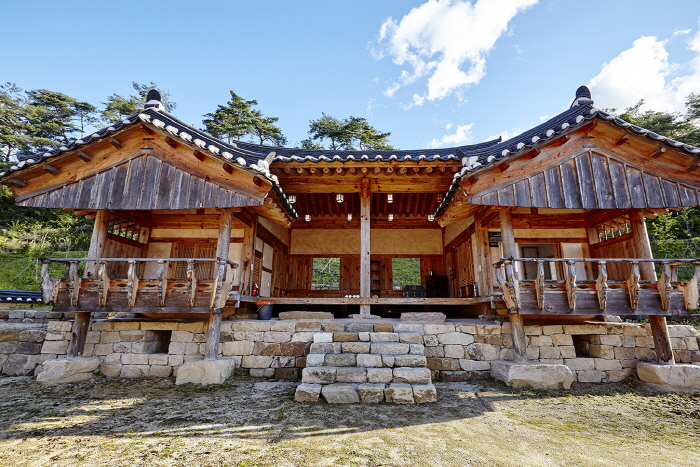
HAHN BY SONO (한 바이 소노)
11.8Km 2024-12-20
494 , Juwangsan-ro, Cheongsong-gun, Gyeongsangbuk-do
Cheongsong Folk Crafts Village has a hanok guest-house compound in the Cheongsong Tourist Area of Gyeongsangbuk-do. Daegam’s house, Yeonggam’s house, and Jeongseung’s house have wide floor areas, big yards many rooms, while Saengwondaek and Chambongdaek are simpler, straight-roofed hanoks. All houses have modern toilets. The barn, warehouse and traditional kitchens are presented as they were in Joseon times. As well as arts and crafts the complex houses a traditional pottery village, a pottery exhibition hall, a folk museum, and the intriguing Flower Stone Museum.
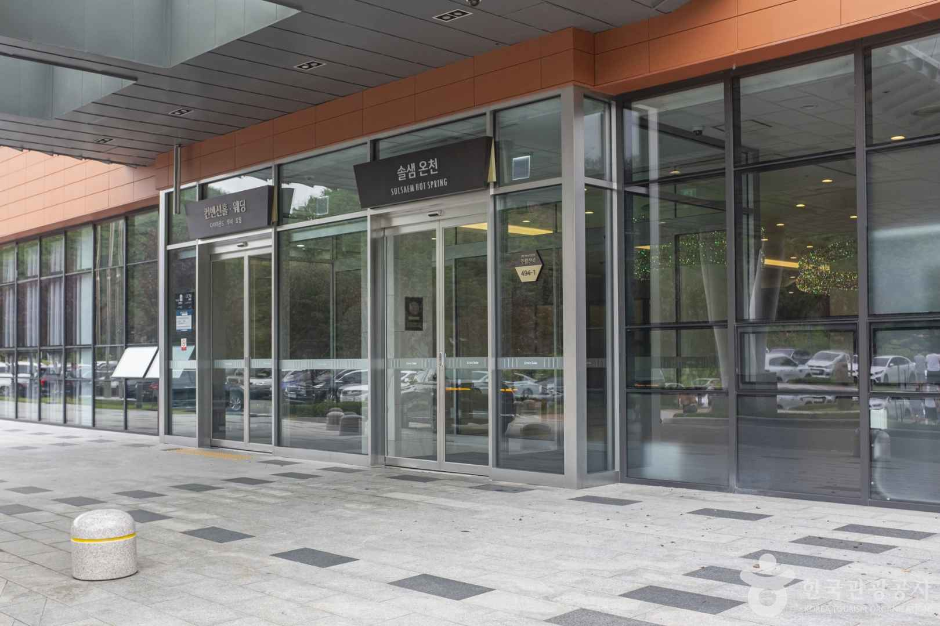
Sono Belle Cheongsong Solsaem Hot Spring (소노벨 청송 솔샘온천)
11.9Km 2024-11-18
494-1 Juwangsan-ro, Juwangsan-myeon, Cheongsong-gun, Gyeongsangbuk-do
Solsaem Hot Spring offers a relaxing escape to visitors with 570 tons of natural spring water daily. Surrounded by the blue forest and clear skies of Cheongsong, the open-air hot spring provides a serene retreat, allowing visitors to unwind and release stress with hinoki bath, neck shower, and underwater massages.

Juwangsan National Park (주왕산국립공원)
12.8Km 2023-03-13
169-7, Gongwon-gil, Cheongsong-gun, Gyeongsangbuk-do
Juwangsan Mountain (alt. 720.6 m) is located in the Baekdudaegan Mountain Range, the backbone of the Korean peninsula. The mountain features deep valleys and many sheer rock cliffs to make it the third-largest rocky mountain in the country. Juwangsan Mountain was recognized as a tourist attraction on May 30, 1972, and became the 12th national park a few years later on March 30, 1976. The park is relatively small, filling in an area of just 105.582 ㎢ but it is great for a leisure walk with walking trails along the valleys up to waterfalls.
Juwangsan Mountain was called Seokbyeongsan Mountain during the Silla dynasty due to the many stone peaks jutting out but has been called Juwangsan Mountain since the Unified Silla period. In addition to these tall rocky peaks, Juwangsan National Park also includes four waterfalls, caves, Daejeonsa Temple, and other attractions for a comprehensive tourist site.
Daejeonsa Temple (대전사)
13.0Km 2023-04-17
226, Gongwon-gil, Cheongsong-gun, Gyeongsangbuk-do
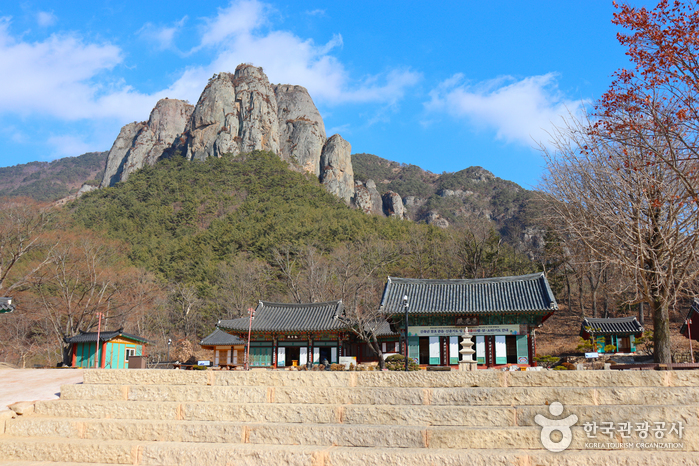
Daejeonsa Temple is said to have been built by Great Monk Uisang in the 12th year of King Munmu’s reign (672). It was rebuilt in the 13th year of King Hyeonjong’s reign (1672) after a fire destroyed the original temple complex during the Imjin War (1592-1598). During work to renovate Bogwangjeon Hall in 1976, a text that had been put up with the ridge beams was found. Bogwangjeon Hall is a small building and its ceiling is in the shape of a Chinese character that symbolize with the meaning "well" or "pavilion" that looks similar to the sharp(#) symbol. A Birojanabul Buddhist statue is enshrined in the hall.
Supullim (수풀림)
13.1Km 2024-12-10
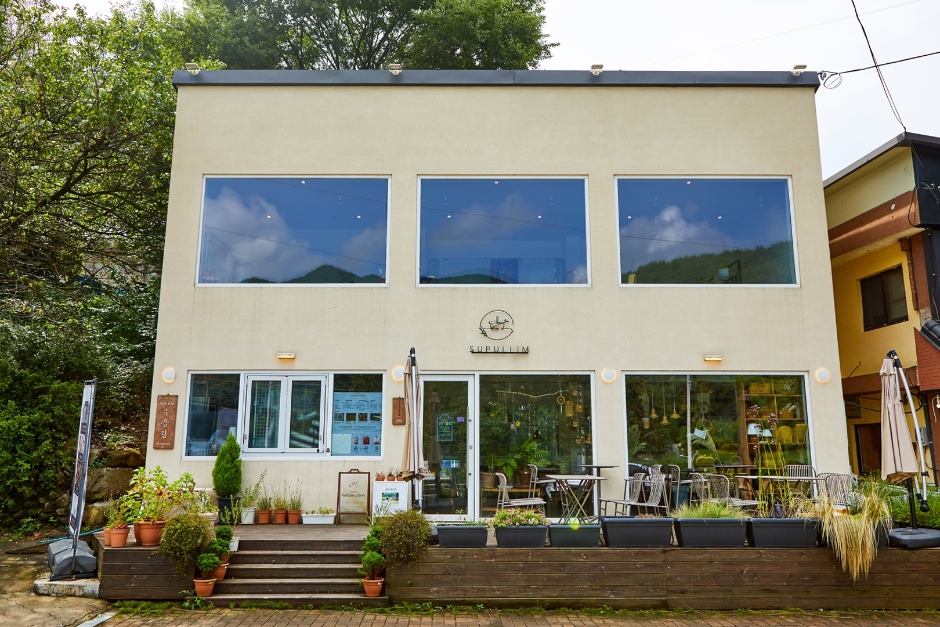
This café is located at the entrance of Juwangsan National Park and is also famous for its Juwangsan Mountain view. The view of Juwangsan Mountain is even better from the second floor. The signature menus here are handmade ssanghwacha (medicinal herb tea) and injeolmi patbingsu (shaved Ice with red beans and injeolmi). The café is a great place to stop by to enjoy the scenery of Juwangsan Mountain before or after the hike. This place also operates as a rattan workshop, showcasing and selling handmade rattan items.
Three Falls of Juwangsan Mountain (주왕산 1.2.3 폭포)
13.3Km 2024-02-13
24 Sangui-ri, Juwangsan-myeon, Cheongsong-gun, Gyeongsangbuk-do
Above Haksodae Cliff in Juwangsan Mountain lie three enchanting waterfalls. The first of these falls goes by the name of Yongchupokpo Falls, where water gracefully meanders through a gorge, enveloped by encircling rocks. Roughly one kilometer further upstream, you'll encounter Jeolgupokpo Falls, accompanied by the tranquil Seonnyeotang Pond below. To the left of Jeolgupokpo Falls stands the grandeur of Yongyeonpokpo Falls, the largest and most magnificent among them. Yongyeonpokpo Falls is also famously referred to as Ssangyongchupokpo Falls, denoting its two distinct torrents of water ('ssang' meaning 'two,' and 'yongchu' signifying 'pond' in Korean). A well-maintained trekking path welcomes visitors, allowing them to explore and ascend to witness these three falls, with a gentle incline that is easily traversed by visitors of all ages.
Suaedang (안동 수애당)
13.7Km 2024-12-20
1714-11 , Sugogyonggye-ro, Andong-si, Gyeongsangbuk-do
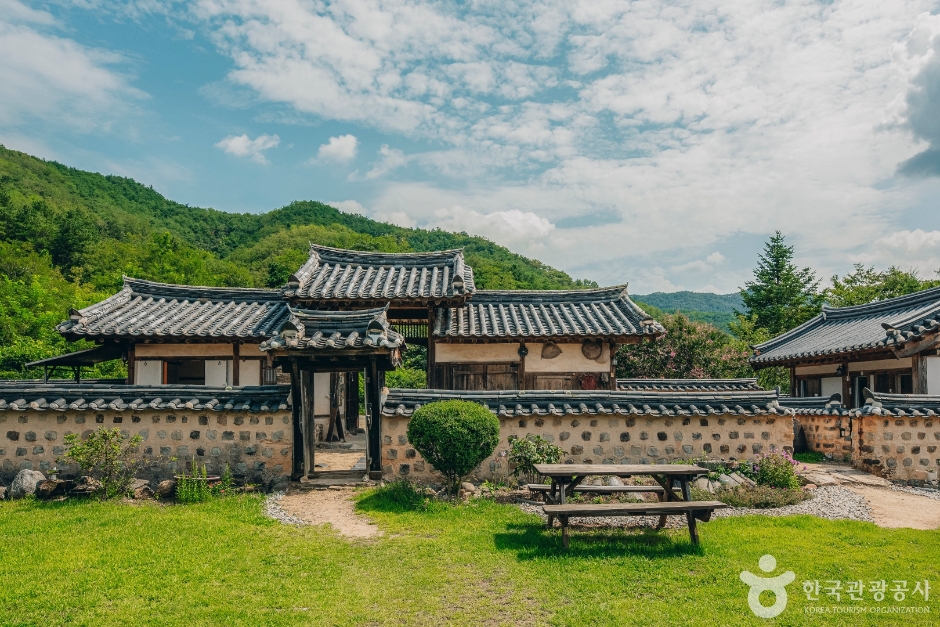
Suaedang House in Andong, Gyeongsangbuk-do, was built in 1939 by independence activist Soo Ae Yu Jin-geol, and is a Gyeongsangbuk-do cultural asset. The hipped-and-gabled pavilion and the ㄱ-shaped gobangchae (female servants’ quarters) face each other across the courtyard, and the house has a 10-metre lofty gate. Suaedang was moved to its current location in 1987 due to the construction of the Imha Dam. The room and Daecheongmaru are red clay-walled and natural painted. The view of the lake from Suaecang is very beautiful.
Jeongjae Head House (정재종택)
14.7Km 2024-12-20
2661-8 , Gyeongdong-ro, Andong-si, Gyeongsangbuk-do
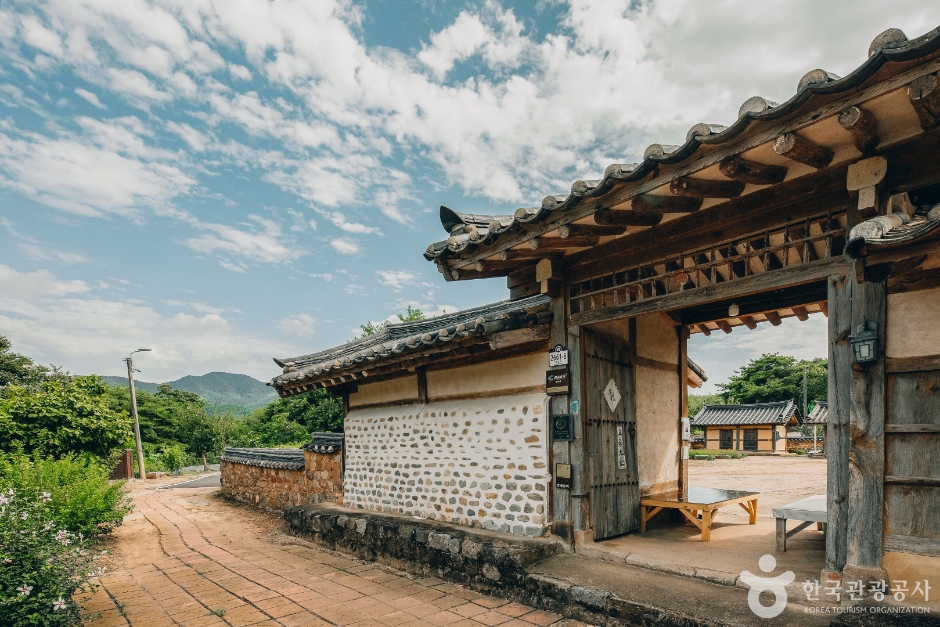
Jeongjae Head House is the head house of Joseon scholar Jeongjae Ryu Chi-myeong, a colleague of the famous Toegye Lee Hwang. The house overlooks Imha Lake in Andong-si, Gyeongsangbuk-do, and is 300 years old. The long endurance of the stone foundations, roof tiles and wooden beams and porch gives the place a solid, calming feel. The house consists of a daemunchae (gate house) jeongchim (square-shaped building), haengnangchae (servants’ quarters), sadang or shrine, and a pavilion called Manujeong which houses a lecture hall but can also be used for lodging. Guests can learn how to brew songhwaju spirit and tarak fermented milk liquor, and listen to gayageum or folk song performances.
 English
 한국어
한국어 日本語
日本語 中文(简体)
 Deutsch
 Français
 Español
 Русский


