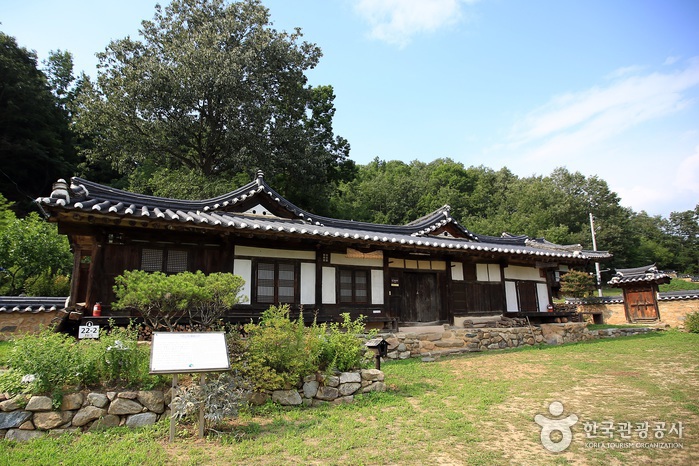
Seobyeok Historic House (서벽고택)
.0M 2021-11-01
22-2, Jungdeul 2-gil, Cheongsong-gun, Gyeongsangbuk-do
Located in Jungpyeong-dong at the family village of the Pyeongsan Sin clan, the Seobyeok Historic House was originally created when Sin Hanchang, a scholar from late Joseon dynasty, got married and moved out of his parents’ house. The house was expanded by Sin Chigu in 1739. The house and is built in a rectangular shape with 6 kan (traditional Korean measurement; space between two pillars) in the front, 4 kan on the sides and a courtyard in the middle.
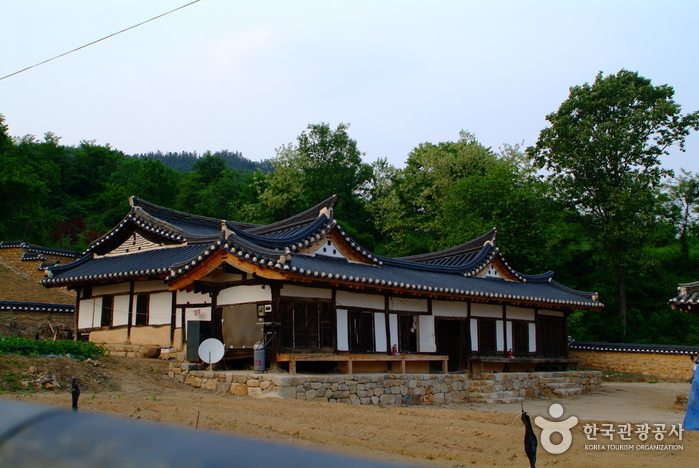
Head House of Pansagongpa Branch of Pyeongsan Sin Clan (청송 평산신씨 판사공파 종택과 분가 고택)
41.5M 2021-12-08
16, Jungdeul 2-gil, Cheongsong-gun, Gyeongsangbuk-do
Located in Cheongsong-gun, Gyeongsangbuk-do Province, Head House of Pansagongpa Branch of Pyeongsan Sin Clan is the head house of the noble Pyeongsan Sin family line. The house was created by Sin Han-tae during the reign of King Sukjong (1674-1720) of the Joseon dynasty. Since its construction centuries ago, the house has been inhabitated by the descendants of Sin Deuk-cheong, the 15th eldest grandson of General Sin Sung-gyem. This house has all of the features of an upper–class house of the Joseon period. The buildings of the house are built in a rectangular shape, with the courtyard in the center. The compound consists of Soteuldaemun (high-rising gate), Haengrangchae (servants’ quarters located next to the gate), Gotgan (storeroom in which grain and other items were stored), Anchae (room for the female family members) and a pavilion.
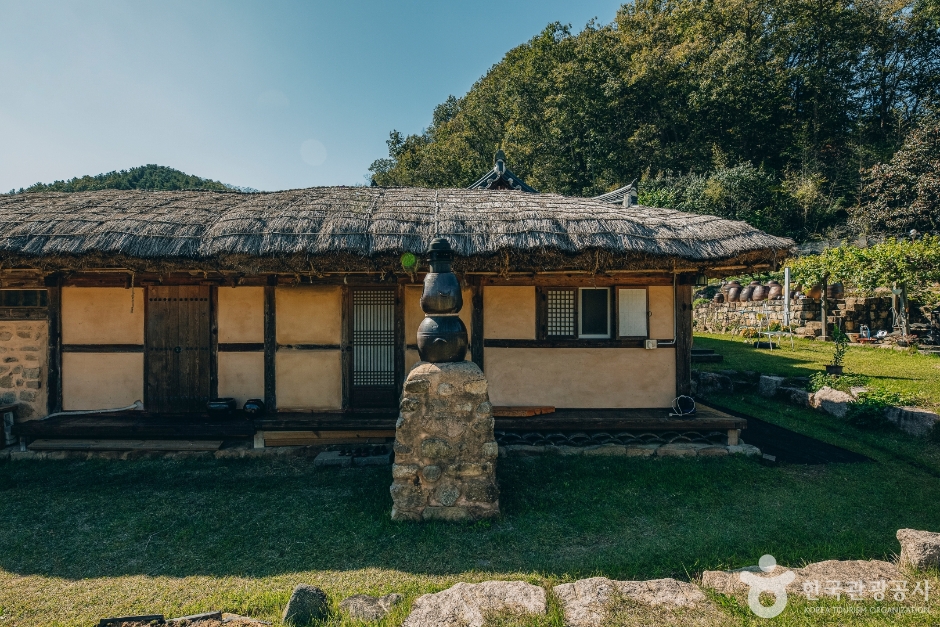
House of Changsil (창실고택)
2.3Km 2024-12-20
39 , Songsogotaek-gil, Cheongsong-gun, Gyeongsangbuk-do
Changsil Old House is a courtyard hanok in Cheongsong-gun, Gyeongsangbuk-do. It was built in 1917 by Sim Ho-taek of Songso as a home for his younger brother. The anchae (women’s house) and the sarangchae (men’s house) are arranged side by side, with the connected library and storeroom between them. Just inside the gate is a haengnangchae (servants’ quarters), and there is also a thatched hanok which is currently being rented out as a red clay room.
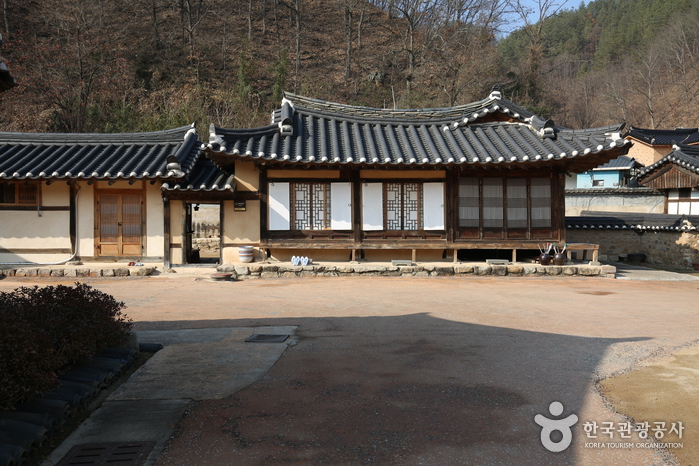
Chalbanggong Head House (찰방공종택)
2.5Km 2024-12-20
23-8 , Songsogotaek-gil, Cheongsong-gun, Gyeongsangbuk-do
Chalbanggong Head House, located in Cheongsong-gun, Gyeongsangbuk-do, was built in 1933 and is the head house of the 9th generation of Cheongsong Sim, Eun-gong Ak. Formerly used as a school, it is now a local cultural heritage centre. The U-shaped layout and the north gate are unique, and facing the entrance is the Songso Old House, comprising 99 rooms with traditional Korean wall paper and bedding. There is a wood-burning ondol room, a large yard, and a kitchen garden - a quiet, relaxing spot where you can hear only the sound of the wind and the birds.
Songso House (청송 송소고택)
2.5Km 2021-10-25
15-2, Songsogotaek-gil, Cheongsong-gun, Gyeongsangbuk-do
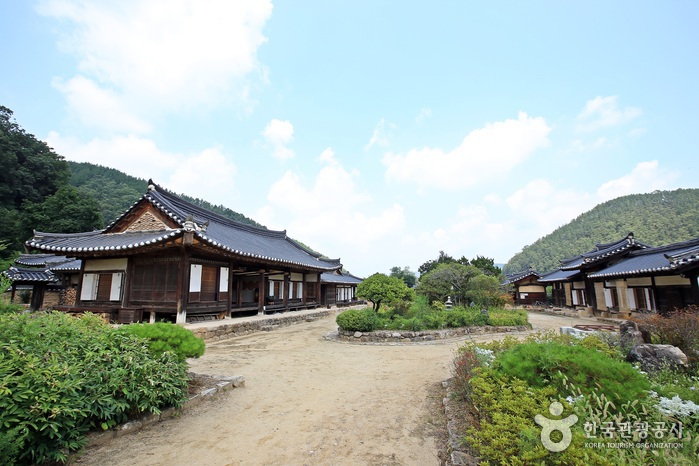
Located in Cheongsong, Gyeongsangbuk-do, Songso House also known as "Sim Wealthy Family House" was built around the 1880s. The house has all the features of a typical aristocrat house during the Joseon dynasty, consisting of a large sarangbang (main building) and individual chambers with a square-shaped front yard at their center.
The complex has an annex building on the side, where it has been renovated and now used as a guesthouse for travelers. Visitors spending a night at this traditional building can enjoy the quiet and peaceful atmosphere, as well as try out playing various traditional games.

Song jeong Historic House (송정고택)
2.5Km 2024-12-20
15-1 , Songsogotaek-gil, Cheongsong-gun, Gyeongsangbuk-do
Songjeong Old House in Deokcheon Village, Cheongsong-gun, Gyeongsangbuk-do, is an ‘ㅁ’-shaped hanok and one-time home of Sim Sang-gwan, a wealthy gentleman of the early 20th century. The house is notable for its incorporation of the library used by Shim Sang-gwang. To the right is Songso's house and to the left a trail leading to a water well and a pine forest. The Korean-style rooms are ondol-heated with traditional wallpaper and natural cotton duvets. There’s a spacious yard where traditional Korean music can be heard, while the annual Old House music concerts are very popular.
![Dalgi Mineral Spring [National Geopark] (달기약수탕 (청송 국가지질공원))](http://tong.visitkorea.or.kr/cms/resource/16/2703516_image2_1.jpg)
Dalgi Mineral Spring [National Geopark] (달기약수탕 (청송 국가지질공원))
5.9Km 2025-01-09
16, Yaksu-gil, Cheongsong-gun, Gyeongsangbuk-do
Dalgi Mineral Spring was found approximately 130 years ago during construction of a waterway. The carbonated water has various minerals that help treat multiple diseases. The water is formed when rain water gets absorbed underground and meets carbon dioxide from the magma deep below.
Jirye Arts Village (지례예술촌)
8.5Km 2024-05-29
427 Jiryeyesulchon-gil, Andong-si, Gyeongsangbuk-do
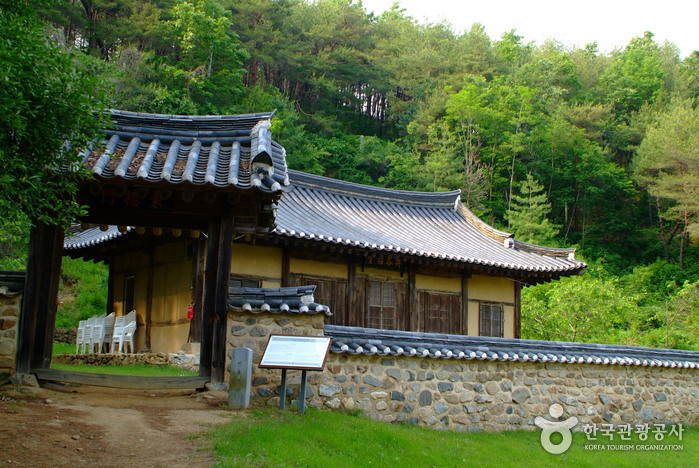
Located in Andong, Jirye Arts Village first formed as a result of the construction of Imha Dam. When a small neighborhood in Jirye-ri, Imdong-myeon was at the risk of flood due to the dam, Kim Won-gil, the village leader at the time, relocated and rebuilt ten houses to the current location in 1986. This neighborhood, now known as Jirye Arts Village, was designated as an art village in 1990 and since then, many artists settled in the neighborhood and formed a community of culture and art. Today, Jirye Arts Village offers a variety of opportunities to experience Korean culture through hands-on arts and crafts as well as diverse cultural activities.
Cheongsong Folk Museum (청송민속박물관)
9.4Km 2022-08-05
222, Juwangsan-ro, Cheongsong-gun, Gyeongsangbuk-do
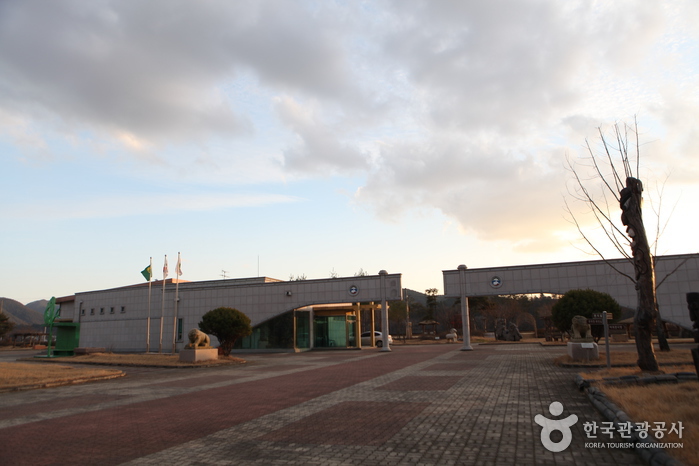
Cheongsong Folk Museum was opened in 1999 to promote the history, culture, and customs of the region. The three-story museum offers indoor & outdoor exhibition halls.
The indoor exhibition halls showcase educational materials related to farming and the customs of Cheongsong. Exhibitions - such as the Traditional Guest Room, Weaving Room, Items of Everyday Use, and Cheongsong Porcelain - offer glimpses of how people lived in the past. The outdoor exhibition space reproduces a traditional tavern, waterwheel, millstone operated by a horse or ox, monument to ward off misfortunes and protect prosperity, and natural stones used for worship, with which visitors can experience farm life in the past.
Cheongsong Yasong Art Gallery (군립 청송야송미술관)
10.1Km 2025-01-13
5162, Gyeongdong-ro, Cheongsong-gun, Gyeongsangbuk-do
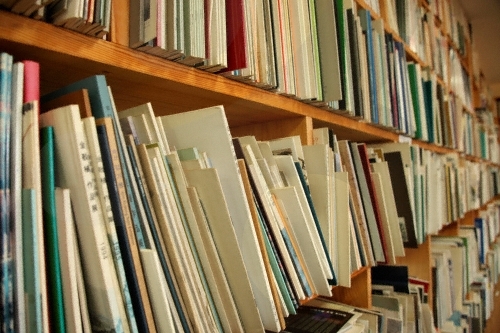
The Cheongsong Yasong Art Gallery opened on April 29, 2005. The art gallery exhibits 350 Korean paintings and pottery works of Yasong Lee Won-jwa, who is a traditional Korean painter native to Cheongsong. Also on display are around 50 works of noted painters and sculptors from in and out of Korea, and over 10,000 art books, all of which have been donated to the gallery. The two-story building was formerly Sinchon Primary School, which was remodeled into an art gallery after its closure.
 English
 한국어
한국어 日本語
日本語 中文(简体)
 Deutsch
 Français
 Español
 Русский


