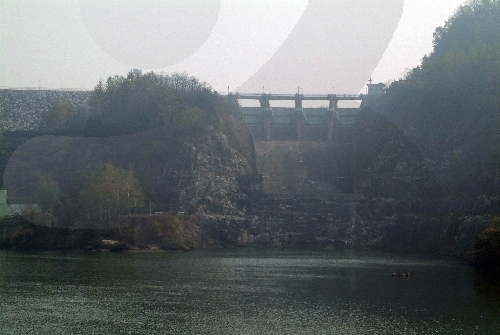
Andong Dam (안동댐)
3.6Km 2021-07-21
31, Hoban-ro, Andong-si, Gyeongsangbuk-do
Andong Dam is a multipurpose dam on the Nakdonggang River. The dam was constructed to prevent flood damage to the downstream region and to procure water for agricultural, industrial, and residential purposes. Construction of the dam completed in 1976 with a length of 612 meters. x_height of 83 meters and holds 1.2 billion tons of water. Andongho Lake formed by the dam is a popular fishing location.
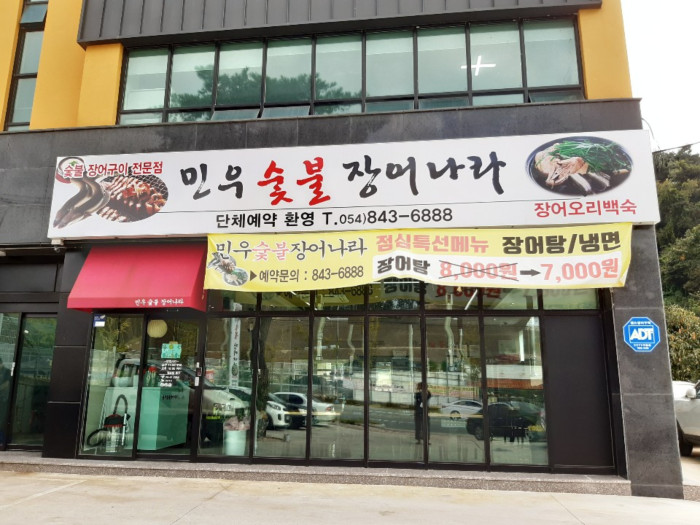
Minu Sutbul Jangeo Nara(민우숯불장어나라)
4.1Km 2025-08-01
24, Gwangmyeong-ro, Andong-si, Gyeongsangbuk-do
This is a place where you can enjoy healthy eel dishes. The best menu at this restaurant is grilled eel. This Korean dishes restaurant is located in Andong-si, Gyeongsangbuk-do.

Confucian Land (유교랜드)
4.1Km 2024-05-30
346-30 Gwangwangdanji-ro, Andong-si, Gyeongsangbuk-do
Confucian Land, located within Andong Culture & Tourism Resort, is a themed exhibition hall that focuses on Korea's Confucian culture. The facility uses the edu-tainment method to make a difficult subject matter easy to understand for young children. Exhibitions include the teachings of famous Confucian scholars like Toegye Yi Hwang and Yulgok Yi I, traditional musical instruments such as the gayageum and haegeum, as well as a video hall with 3D film capabilities and a children's game area with motion-tracking.
Zootopium (주토피움)
4.2Km 2024-05-29
346-95 Gwangwangdanji-ro, Andong-si, Gyeongsangbuk-do
Zootopium is the largest animal & plant themed park in Gyeongsangbuk-do, home to over 200 species. The park provides the perfect environment for children to learn more about nature and living organisms. The park features both indoor and outdoor sections, as well as amenities such as a restaurant and play areas for children.
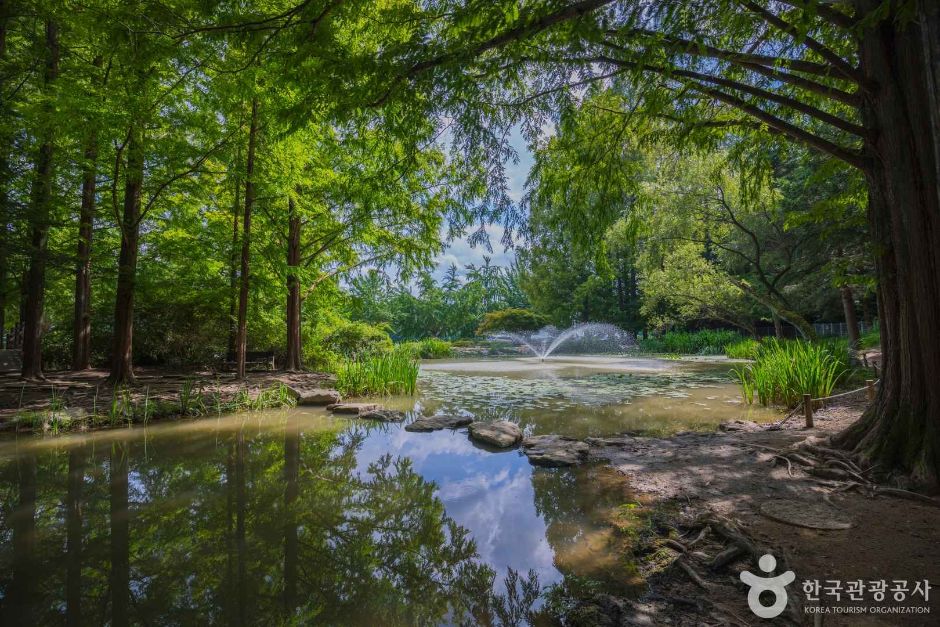
Nakgangmulgil Park (낙강물길공원)
4.3Km 2024-11-14
423 Sanga-dong, Andong-si, Gyeongsangbuk-do
Nakgangmulgil Park, called the Giverny of Korea, is a small waterside park located near Andong Dam. The park is the perfect setting for a relaxing moment, with benches placed under trees and beside walkways throughout the park. The natural environment creates plenty of photo spots. Visitors looking for a longer walk in nature can follow the riverside deck to Wolryeong Park.
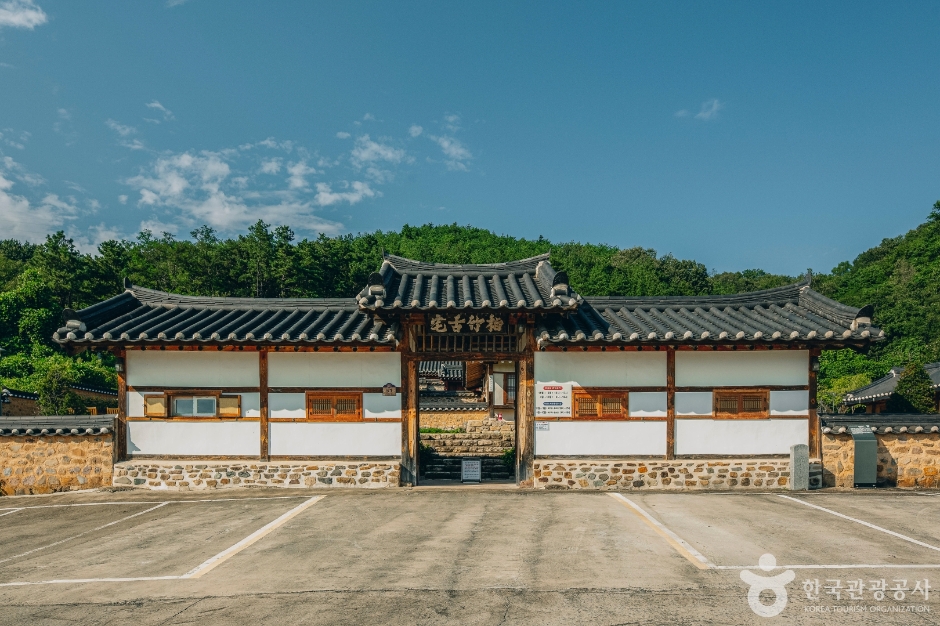
Imyeonjae Head House (흥해배씨 임연재종택)
5.5Km 2024-12-19
51 , Hyanggyo 1-gil, Andong-si, Gyeongsangbuk-do
Imyeonjae Head House on Hyanggyo-dil, Andong, Gyeongsangbuk-do, has been the home of the Heunghae Bae clan ever since Bae Sang-ji settled here around 1400. (The house is also known as Baekjuk Old House, memorialising the name of Bae’s consort.) The wooden walls, stairs and eves of Imyeonjae exude old-time hanok charm, and visitors will find a small reading room which has been a library ever since the house was built. Guestrooms are fitted with AC, while the shared bathrooms are modern and clean.
Hakbongjongtaek (학봉종택)
7.5Km 2024-12-20
2830-6 , Pungsantaesa-ro, Andong-si, Gyeongsangbuk-do
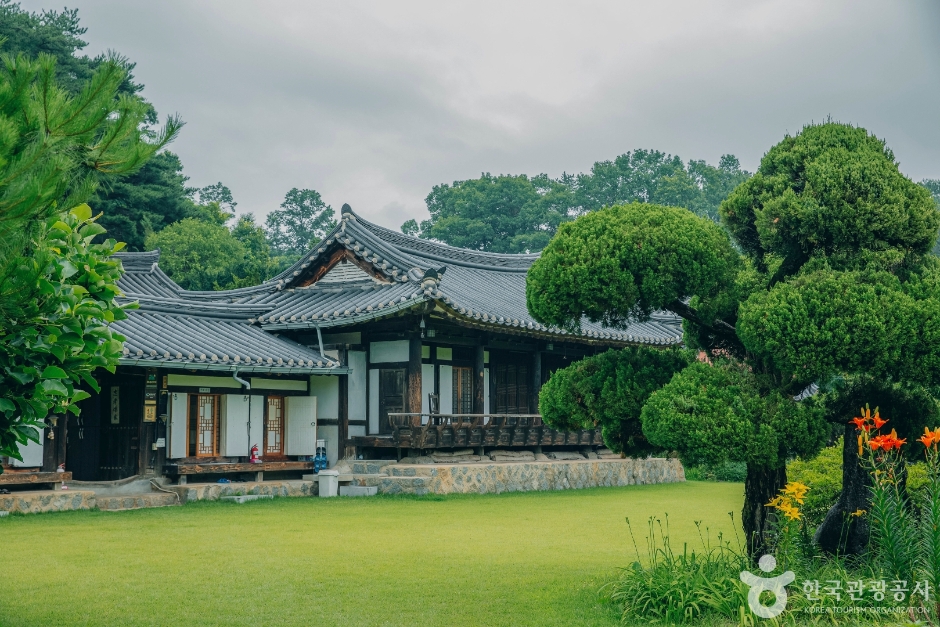
Hakbong Head House in Andong, Gyeongsangbuk-do, is the head house of the Uiseong Kim Clan. Originally built by Joseon scholar and educator Hakbong Kim Seong-il, it was moved to its present location in 1964. As a head house it has an unusually wide daecheong, as well as a large yard and garden with various trees and oddly shaped rocks. Concerts are regularly held at the old house. Hakbong’s descendants inherited not just this historic house, but also his patriotic spirit, many of them devoting themselves to the anti-Japanese independence movement.
An dong gotak Esanru (안동고택 이상루)
9.1Km 2024-12-20
3193-6 , Pungsantaesa-ro, Andong-si, Gyeongsangbuk-do
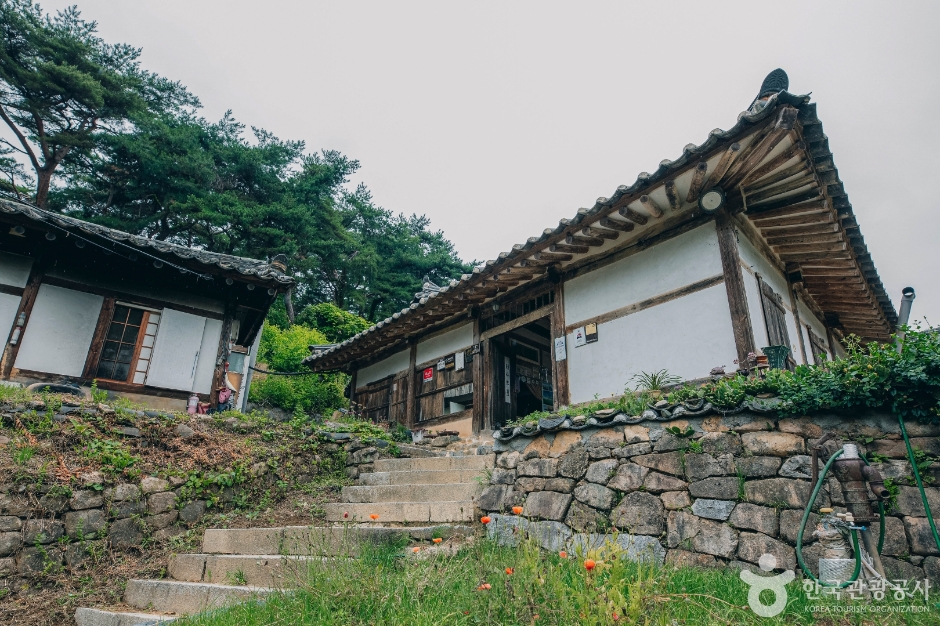
Andong Old House Lee Sangnu stands at the foot of Cheondeungsan Mountain in Andong, Gyeongsangbuk-do. The house has a 250-year history and is still used for family rituals commemorating the founder of the Andong Kim Clan. Lee Sangnu is a dignified two-story wooden pavilion with an attic, while at Yisangru visitors can set a fire in the fire pit in the winter or sleep in a tent or mosquito net in the summer. Cultural programs are available: tea ceremonies, knot craft, the mask dance, natural dyeing, Korean paper craft, and learning about filial piety. The Old House’s location between Andong Hahoe Village and Dosan Seowon makes it convenient for local site-seeing.
Andong School of Korean Etiquette (안동예절학교)
10.9Km 2023-04-07
1333-5, Toegye-ro, Andong-si, Gyeongsangbuk-do
Andong School of Korean Etiquette, which is located in Andong, is a mecca of Korea's Confucian customs and provides an opportunity to experience traditional Korean etiquette.
In addition to Korean traditional etiquette, Andong School of Korean Etiquette also teaches tea etiquette and traditional Korean music using instruments such as janggu and gayageum. Students can also experience the joy of learning how to play folk games such as yunnori and kite-flying. The school offers a wide variety of hands-on programs related to Korea's traditions and customs such as mask dance, paper craft, cooking, wedding, and eco-rafting on Nakdonggang River.
There are other popular tourist attractions nearby such as Dosanseowon Confucian Academy, Forest Science Museum and Yi Yuk-sa Literary Hall.
![Bongjeongsa Temple [UNESCO World Heritage] (봉정사 [유네스코 세계문화유산])](http://tong.visitkorea.or.kr/cms/resource/16/2654216_image2_1.jpg)
Bongjeongsa Temple [UNESCO World Heritage] (봉정사 [유네스코 세계문화유산])
12.0Km 2023-05-18
222, Bongjeongsa-gil, Andong-si, Gyeongsangbuk-do
Bongjeongsa Temple is believed to have been built in 672 by the Great Buddist Monk Uisang. However, other documents seem to state that Neungin Daedeuk, a disciple of Monk Uisang, established the temple. During the Korean War, many documents related to the temple were destroyed, so much of the history has been lost. In 1972, while reconstruction work was being done on Geungnakjeon Hall, records were discovered stating the hall was repaired in 1363. This discovery gave concrete evidence that Geungnakjeon Hall is the oldest wooden building in the nation.
 English
 한국어
한국어 日本語
日本語 中文(简体)
 Deutsch
 Français
 Español
 Русский


