![Bongjeongsa Temple [UNESCO World Heritage] (봉정사 [유네스코 세계문화유산])](http://tong.visitkorea.or.kr/cms/resource/16/2654216_image2_1.jpg)
Bongjeongsa Temple [UNESCO World Heritage] (봉정사 [유네스코 세계문화유산])
10.5Km 2023-05-18
222, Bongjeongsa-gil, Andong-si, Gyeongsangbuk-do
Bongjeongsa Temple is believed to have been built in 672 by the Great Buddist Monk Uisang. However, other documents seem to state that Neungin Daedeuk, a disciple of Monk Uisang, established the temple. During the Korean War, many documents related to the temple were destroyed, so much of the history has been lost. In 1972, while reconstruction work was being done on Geungnakjeon Hall, records were discovered stating the hall was repaired in 1363. This discovery gave concrete evidence that Geungnakjeon Hall is the oldest wooden building in the nation.
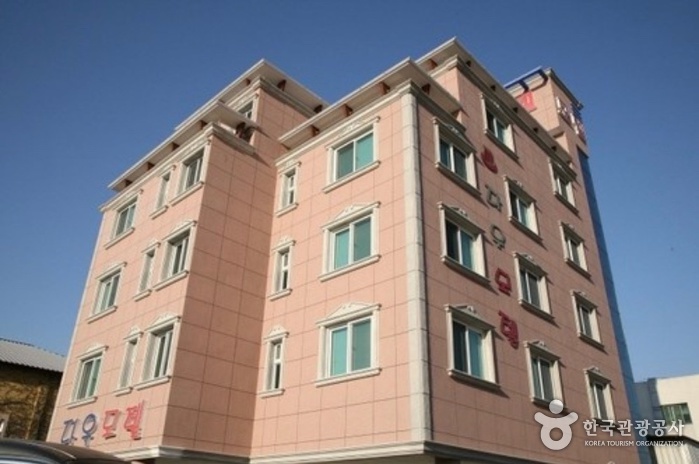
Dawoo Motel (다우모텔)
13.3Km 2024-12-19
66 , Jangteojungang-gil, Andong-si, Gyeongsangbuk-do
The Dawoo is a motel in the downtown area of Pungsan-eup, Andong-si, Gyeongsangbuk-do, whose reasonable rates make it a favorite with visitors to Hahoe Village. Guestrooms are either bedroom-style or ondol-style. There is no extra charge for additional members when family travelers use the ondol room. Some rooms have bathtubs. Bottled water, coffee, and soft drinks are provided free of charge upon arrival. Pets are welcome, and there’s an English language information services if needed. Hahoe Folk Village and Byeongsan Seowon Confucian Academy are just 20 minutes away by car.
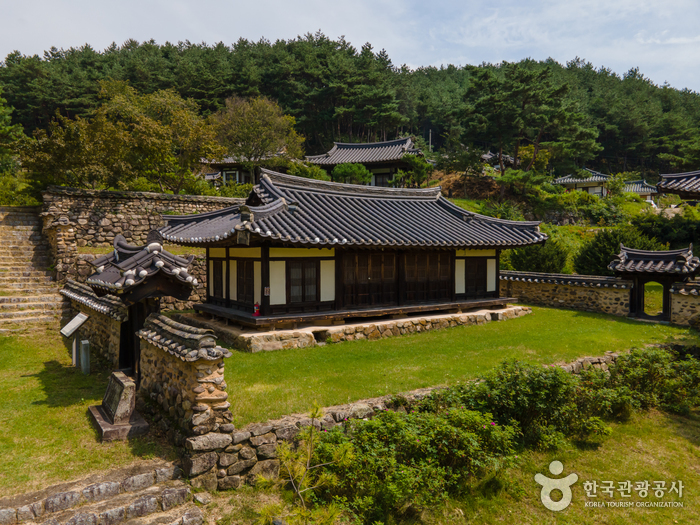
Andong Gunja Village (안동 군자마을)
13.3Km 2024-02-23
29 Gunjari-gil, Waryong-myeon, Andong-si, Gyeongsangbuk-do
Andong Gunja Village, established 600 years ago, was relocated 2 kilometers from its original site due to submergence during the construction of Andong Dam. The village's tradtional houses and pavilions were meticulously moved to preserve their historic value. Known as Gunja Village, it derives its name from a remark by the Joseon-era civil servant Jeong Gu, who noted, "There is no one in the village who is not a Gunja (gentleman)". The village is home to over 20 ancient houses, including the Hujodang Head House and Takcheongjeong Pavilion, maintained in their original state. Moreover, the village archives over 1,000 documents detailing adoption, property ownership, and labor distribution.
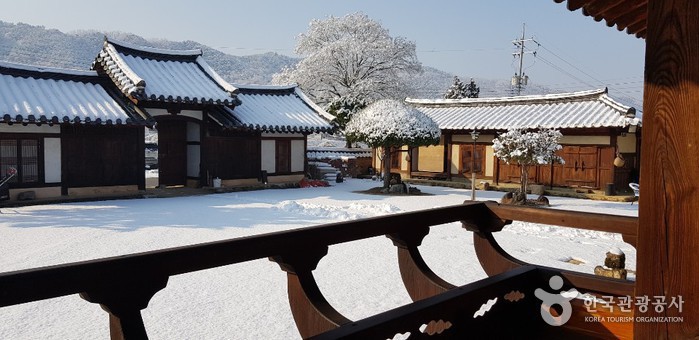
Oryuheon House (오류헌)
14.5Km 2024-12-19
18-15 , Gireumaje-gil, Andong-si, Gyeongsangbuk-do
Oryuheon, near Lake Imha in Andong, Gyeongsangbuk-do, is a 400-year-old Joseon period house and a national folk cultural asset. The delicate window and screen muntins and parquet floors in the sarangchae (men’s quarters) and daemunchae (gate house) exemplify the magnificence of yangban houses of the 1600s. The guestroom is in an annex building and consists of a large sleeping room, a daecheongmaru living room, and a bathroom/toilet. Cooking is not allowed, but a free Korean breakfast is provided, and barbecues can also be arranged. Nearby are Imhaho Water Leisure Camp, Manhyujeong Pavilion, and Hahoe Village.
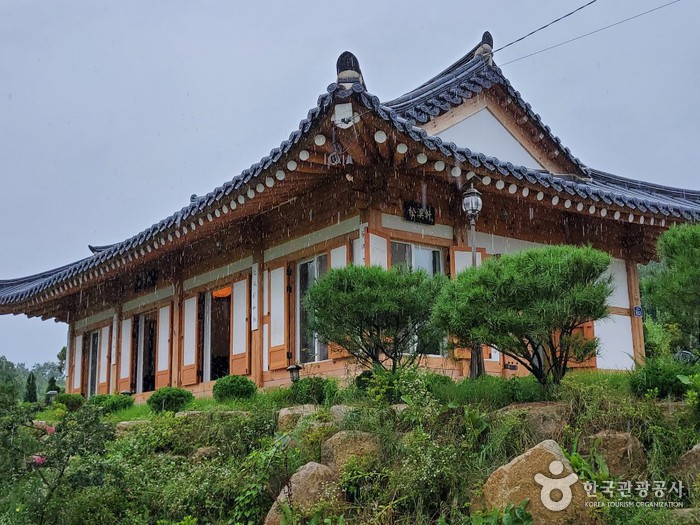
Songgyehyeon (송계헌)
14.8Km 2024-12-19
332 , Byeongsan-gil, Andong-si, Gyeongsangbuk-do
Song Gye-heon is a pinewood-built hanok in Andong, Gyeongsangbuk-do - not far from the famous Byeongsan Seowon Confucian school - which combines traditional hanok style with modern convenience. The hanok is rented out as a single unit, and is ideal for families or group travelers. There are 3 bedrooms, one with a bed and the other two Korean-style rooms, with ample living space. There’s a kitchen for guests’ use, and the owner is happy to guide you round the Andong area.
![Byeongsanseowon Confucian Academy [UNESCO World Heritage] (병산서원 [유네스코 세계유산])](http://tong.visitkorea.or.kr/cms/resource/63/2620863_image2_1.jpg)
Byeongsanseowon Confucian Academy [UNESCO World Heritage] (병산서원 [유네스코 세계유산])
15.3Km 2024-05-29
386 Byeongsan-gil, Andong-si, Gyeongsangbuk-do
Before it became a Confucian academy, Byeongsanseowon Confucian Academy was originally located in Pungsang-hyeon under the name Pungakseodang School, which was used as a educational institution since the Goryeo dynasty by a political party known as the Sarim Party. It was moved to its current location in Byeongsan by a well-respected Confucian scholar named Yu Seong-nyong, penname Seoae, in 1572, and renamed to Byeongsanseowon in 1614.
In 1863, Byeongsanseowon was recognized by the king to receive support as a private Confucian academy. The lecture hall and shrine were reconstructed in 1921 and 1937 respectively as part of preservation efforts made during the Japanese occupation. This academy is designated as a Historic Site, housing a collection of 1,000 documents and 3,000 books, including works by Yu Seong-nyong.
![Yangsodang[Korea Quality] / 양소당[한국관광 품질인증]](http://tong.visitkorea.or.kr/cms/resource/55/2803255_image2_1.jpg)
Yangsodang[Korea Quality] / 양소당[한국관광 품질인증]
15.3Km 2024-10-30
28 , Jangtaegol-gil, Andong-si, Gyeongsangbuk-do
Yangsodang is the head house of the Andong Kim Clan, which dates back 230 years and is located in Sosan Village in Andong, Gyeongsangbuk-do. Being a true hanok built by joining wood without nails, this house is a perfect place to take in the beauty of traditional Korean architecture. There are five guest rooms, including the Anchae Anbang (main room in the main building), a large ondol (underfloor heated) room across from the Anchae (main building), and a large Sarangchae (detached building) that has two rooms with a maru (wide wooden floor area); all of the rooms, except the small room, have either a daecheong maru (wooden-floored living room) or toenmaru (narrow wooden porch). In the yard east of Yangjo-dang, you can experience what it is like to live in a hanok, as well as participate in craft activities using Hanji (Korean paper).

Hakgasan Recreational Forest (학가산자연휴양림)
16.0Km 2021-06-15
210, Hyuyangnim-gil, Yecheon-gun, Gyeongsangbuk-do
Hakgasan Recreational Forest is located in a valley on the northern side of Hakgasan Mountain, known for its clean air. The recreational forest has log cabins that harmonize with the nearby trees, creeks, and rocks, making visitors feel as if they are resting at a luxury villa. It is an ideal vacation destination for those who want to get closer to nature. There is a hiking path leading to the summit of Hakgasan Mountain from the forest, taking around 2 hours. Additional amenities within the forest include campfire pits, an outdoor stage, children's playground, exercise equipment, water play area, a lecture hall, and more.
Yekki Village (예끼마을)
16.2Km 2024-05-30
14 Seonseong-gil, Dosan-myeon, Andong-si, Gyeongsangbuk-do
Yekki Village is an artistic village in Andong. The alleyways are decorated with colorful murals, the galleries feature work from local artists, and visitors can experience a hanok experience. The biggest charm of the village is the Sunseong Susang-gil Waterway, a floating path across the lake.
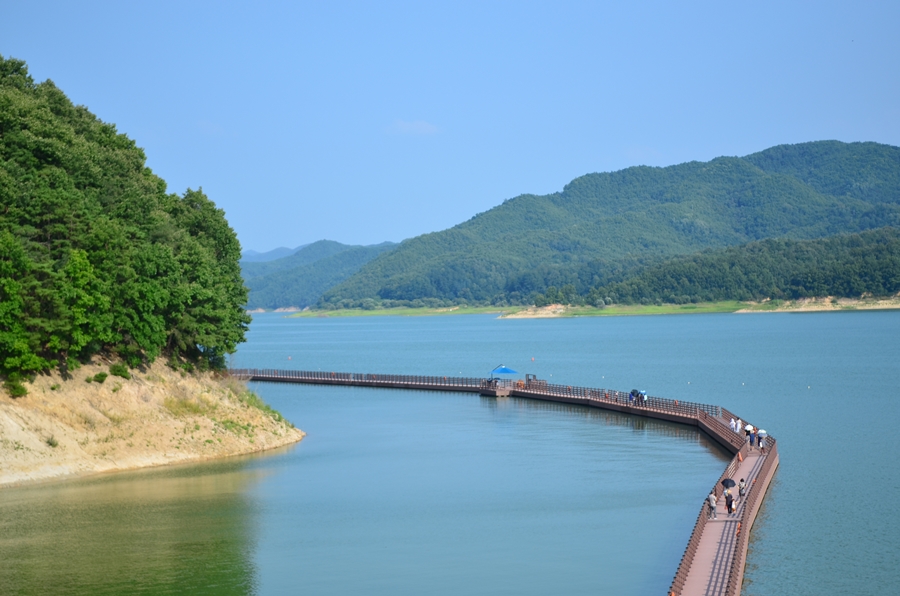
Sunseong Susang-gil Waterway (선성수상길)
16.2Km 2024-05-30
14 Seonseong-gil, Dosan-myeon, Andong-si, Gyeongsangbuk-do
Sunseong Susang-gil Waterway is a 1-kilometer-long floating pathway that connects Sunseonghyeon Culture Complex with Andong Lakeside Park. Because the pathway floats on the water, it rocks with each step one takes, creating the feeling of truly walking on water. At the halfway point of the waterway is an exhibition of black-and-white photos and materials from Yean Elementary School, lost to the formation of the lake following the construction of Andong Dam in 1974.
 English
 한국어
한국어 日本語
日本語 中文(简体)
 Deutsch
 Français
 Español
 Русский


