![Byeongsanseowon Confucian Academy [UNESCO World Heritage] (병산서원 [유네스코 세계유산])](http://tong.visitkorea.or.kr/cms/resource/63/2620863_image2_1.jpg)
Byeongsanseowon Confucian Academy [UNESCO World Heritage] (병산서원 [유네스코 세계유산])
15.3Km 2024-05-29
386 Byeongsan-gil, Andong-si, Gyeongsangbuk-do
Before it became a Confucian academy, Byeongsanseowon Confucian Academy was originally located in Pungsang-hyeon under the name Pungakseodang School, which was used as a educational institution since the Goryeo dynasty by a political party known as the Sarim Party. It was moved to its current location in Byeongsan by a well-respected Confucian scholar named Yu Seong-nyong, penname Seoae, in 1572, and renamed to Byeongsanseowon in 1614.
In 1863, Byeongsanseowon was recognized by the king to receive support as a private Confucian academy. The lecture hall and shrine were reconstructed in 1921 and 1937 respectively as part of preservation efforts made during the Japanese occupation. This academy is designated as a Historic Site, housing a collection of 1,000 documents and 3,000 books, including works by Yu Seong-nyong.

Yekki Village (예끼마을)
16.2Km 2024-05-30
14 Seonseong-gil, Dosan-myeon, Andong-si, Gyeongsangbuk-do
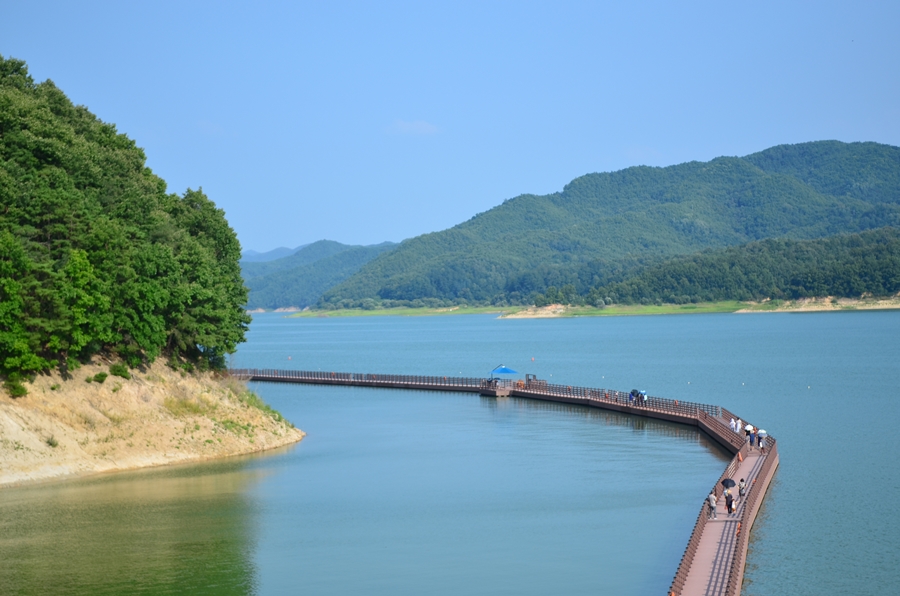
Yekki Village is an artistic village in Andong. The alleyways are decorated with colorful murals, the galleries feature work from local artists, and visitors can experience a hanok experience. The biggest charm of the village is the Sunseong Susang-gil Waterway, a floating path across the lake.
Sunseong Susang-gil Waterway (선성수상길)
16.2Km 2024-05-30
14 Seonseong-gil, Dosan-myeon, Andong-si, Gyeongsangbuk-do
Sunseong Susang-gil Waterway is a 1-kilometer-long floating pathway that connects Sunseonghyeon Culture Complex with Andong Lakeside Park. Because the pathway floats on the water, it rocks with each step one takes, creating the feeling of truly walking on water. At the halfway point of the waterway is an exhibition of black-and-white photos and materials from Yean Elementary School, lost to the formation of the lake following the construction of Andong Dam in 1974.
Hahoe Mask Museum (하회세계탈박물관)
17.2Km 2024-05-29
206 Jeonseo-ro, Pungcheon-myeon, Andong-si, Gyeongsangbuk-do
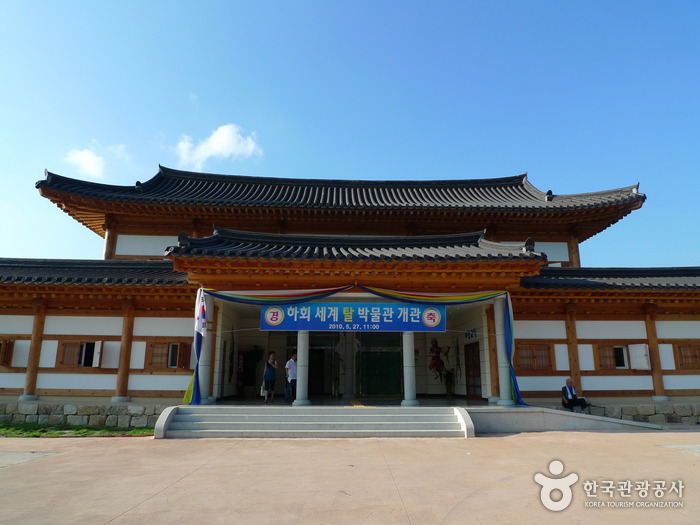
Hahoe Mask Museum is located in Andong Hahoe Village, a representative traditional Korean folk town that is the home of the Hahoe Mask (National Treasure) and the Byeolsin Gut Mask Dance (Important Intangible Cultural Property). The museum displays not only Hahoe masks, but also other traditional masks from all over the world.
The museum consists of five permanant exhibition halls and one special exhibition hall, housing a wide range of masks from all over the world along with Hahoe masks. The museum also offers activity programs such as wearing a mask, mask trick art, photo zone, and more.
Hahoe Byeolsingut Tallori (Mask Dance Drama of Hahoe) (하회별신굿탈놀이 상설공연)
17.7Km 2025-12-04
3-15, Hahoejongga-gil, Andong-si, Gyeongsangbuk-do
RakKoJae Andong(Hahoe) (락고재 안동(하회))
18.3Km 2024-10-17
51 , Hahoegangbyeon-gil, Andong-si, Gyeongsangbuk-do
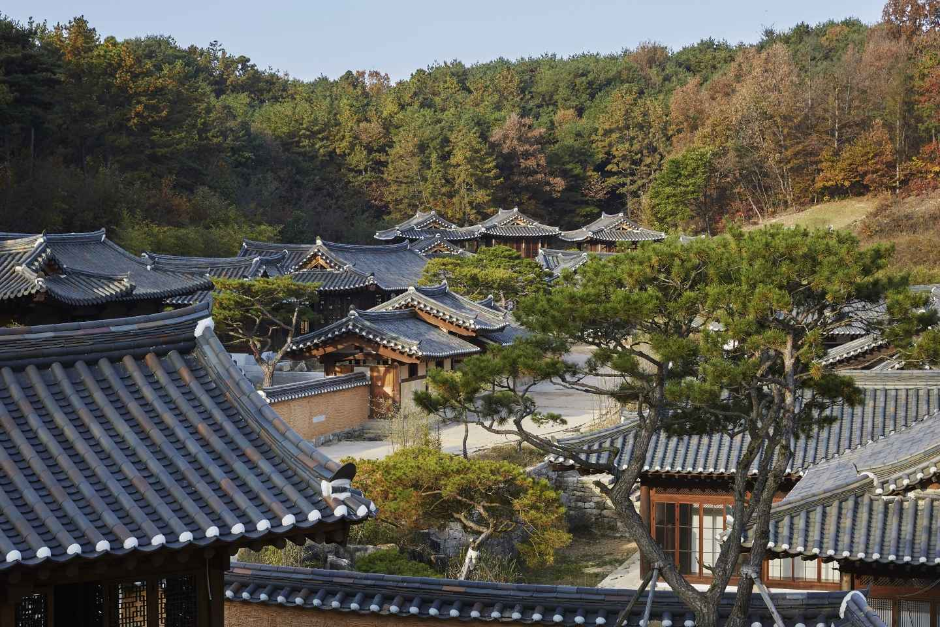
Rakkojae is a guest house by the ferry over the Nakdong River in Hahoe Village, Andong, Geyongsangbuk-do. It consists of four buildings, each with one or two guest rooms. All rooms have a private bathroom, and one incorporates a sauna. Starlit and moonlit evenings in Hahoe refresh both mind and body, and by crossing the river by ferry boat and climbing Buyongdae Cliff, visitors can enjoy panoramas of the historic village and beautiful Nakdong valley. Another ‘must see’ is the nearby Mansongjeong Pine Forest - one of Korea’s Natural Monuments.
Yeongju Museom Village (영주 무섬마을)
19.4Km 2021-08-24
31-12, Museom-ro 234beon-gil, Yeongju-si, Gyeongsangbuk-do
Located in Sudo-ri in Yeongju, Gyeongsangbuk-do, Museom Village is a charming hanok village surrounded by water. Flowing down from Sobaeksan Mountain and Taebaeksan Mountain, Naeseongcheon Stream and Yeongjucheon Stream converge and loop around Museom Village, surrounding the village on three sides with water. This peninsula-like village is not only the center of traditional Korean culture, but also has a gorgeous natural landscape complete with a wide sandy riverside and a lush inland forest.
Known for Haeudang and Manjukje Houses (two of the most historical hanok houses in the area), the village is also home to other outstanding traditional houses such as the Kim Gyu-jin House and the Kim Wi-jin House. Manjukje House is located at the heart of the village and the oldest traditional house in this hanok village. Manjukje was built in 1666 (7th year of King Heonjong's reign) by Bak Su (the father of the Bannam Bak Family).
Nearby Manjukje is Manun House, built in the early 19th century and named after Kim Hwi-geol (penname “Manun”). The house later became the home of the wife of the famous poet Jo Ji-hun, author of “Byeolli,” a poem expressing the beauty of Museom Village.
Other notable houses include the Kim Wi-jin House (a house belonging to aristocrats), the Kim Jeong-gyu House (a house without the traditional outer fencing), and the Bak Jae-yeon House, where the writings of Bak Gyu-su (a respected scholar during the Joseon period) still remain today.
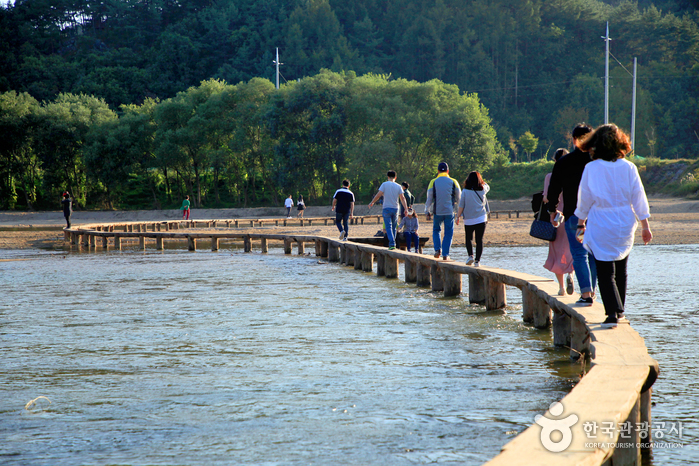
Another famous attraction in the village is the Single Log Bridge, which was the village’s only connection to the outside world for over 350 years before the construction of Sudo Bridge in 1979. It is a tiny bridge in terms of x_width (30 cm), but it stretches for over 150 meters. It is said that the bridge was rebuilt annually after being destroyed each rainy season. With the construction of Sudo Bridge, the Single Log Bridge was no longer needed, but was rebuilt some time later in its original form. To celebrate the bridge’s impressive history, the village hosts the Single-Log Bridge Festival every October.
 English
 한국어
한국어 日本語
日本語 中文(简体)
 Deutsch
 Français
 Español
 Русский


