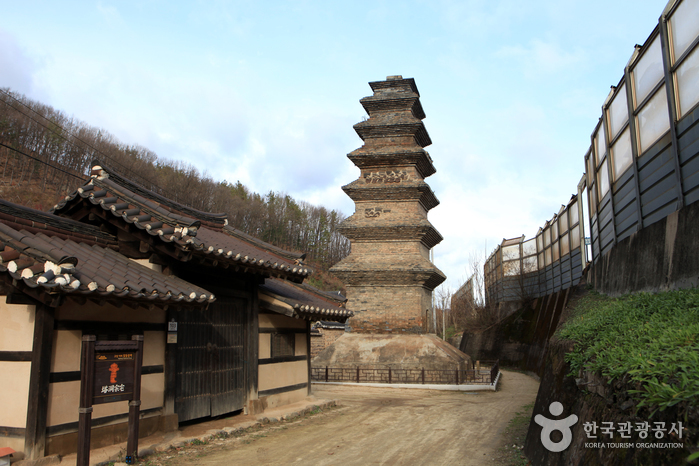
Sinsedong Chilcheung Jeontap - Sinsedong 7 stories Brick Pagoda (안동 법흥사지 칠층전탑)
9.0Km 2021-07-13
Beopheung-dong, Andong-si, Gyeonsangbuk-do
Designated National Treasure No.16, Sinsedong Chilcheung Jeontap is Korea's oldest and largest stone pagoda.
The pagoda measures 16.8 meters high with a x_width of 7.75 meters. The pagoda was originally built at Beopeungsa Temple during the eighth century of the Unified Silla Kingdom [654-935] and is the only remaining relic from the temple.
The pagoda is presently located on the estate of the head house of the Goseong Lee family. The sangryunbu, the ornamental top portion of the pagoda, has been totally lost, but the lower tiered portions are intact with beautiful carvings of Buddhist tutelary deity. Traces of tiled roof were found on each story of the tower. Historical records show that the tower was rebuilt in 1487 and that around the same period, three parts of the temple remained.
![Yangsodang[Korea Quality] / 양소당[한국관광 품질인증]](http://tong.visitkorea.or.kr/cms/resource/55/2803255_image2_1.jpg)
Yangsodang[Korea Quality] / 양소당[한국관광 품질인증]
9.3Km 2024-10-30
28 , Jangtaegol-gil, Andong-si, Gyeongsangbuk-do
Yangsodang is the head house of the Andong Kim Clan, which dates back 230 years and is located in Sosan Village in Andong, Gyeongsangbuk-do. Being a true hanok built by joining wood without nails, this house is a perfect place to take in the beauty of traditional Korean architecture. There are five guest rooms, including the Anchae Anbang (main room in the main building), a large ondol (underfloor heated) room across from the Anchae (main building), and a large Sarangchae (detached building) that has two rooms with a maru (wide wooden floor area); all of the rooms, except the small room, have either a daecheong maru (wooden-floored living room) or toenmaru (narrow wooden porch). In the yard east of Yangjo-dang, you can experience what it is like to live in a hanok, as well as participate in craft activities using Hanji (Korean paper).
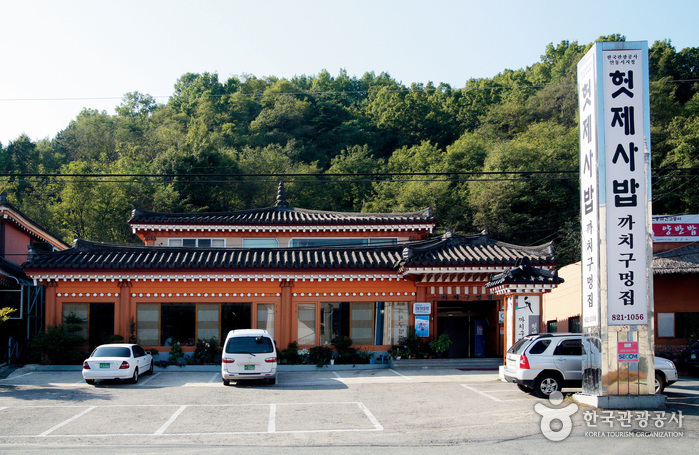
Heotjesabap Kkachi Gunmeongjip (헛제사밥까치구멍집 )
9.7Km 2024-11-29
203, Seokju-ro, Andong-si, Gyeongsangbuk-do
Heotjesabap Kkachi Gumeongjip is a popular restaurant located in Andong, serving yangbansang (yangban table set) fit for the aristocracy. The restaurant interior design features a traditional hanok floor, bringing the aristocratic feeling to life. One of the most popular dishes is hoetjesabap (Andong-style bibimbap). Heotjesabap coloring is not vibrant, but the dish is flavorful, with vegetables and jeon (savory pancakes) piled atop rice. The restaurant, with traditional tiles and designs, producing a feel of gentle harmony and overall traditional beauty coupled with a modern feel.
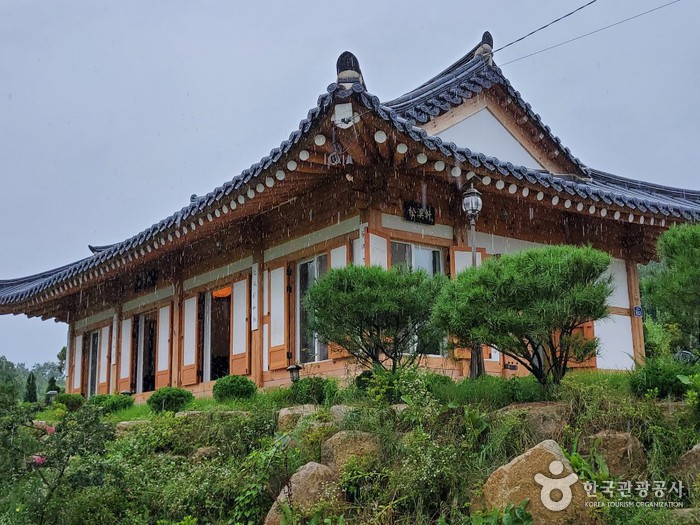
Songgyehyeon (송계헌)
10.0Km 2024-12-19
332 , Byeongsan-gil, Andong-si, Gyeongsangbuk-do
Song Gye-heon is a pinewood-built hanok in Andong, Gyeongsangbuk-do - not far from the famous Byeongsan Seowon Confucian school - which combines traditional hanok style with modern convenience. The hanok is rented out as a single unit, and is ideal for families or group travelers. There are 3 bedrooms, one with a bed and the other two Korean-style rooms, with ample living space. There’s a kitchen for guests’ use, and the owner is happy to guide you round the Andong area.
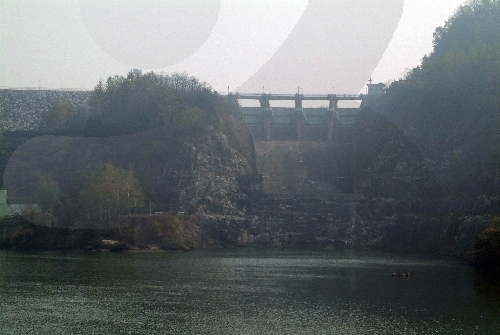
Andong Dam (안동댐)
10.2Km 2021-07-21
31, Hoban-ro, Andong-si, Gyeongsangbuk-do
Andong Dam is a multipurpose dam on the Nakdonggang River. The dam was constructed to prevent flood damage to the downstream region and to procure water for agricultural, industrial, and residential purposes. Construction of the dam completed in 1976 with a length of 612 meters. x_height of 83 meters and holds 1.2 billion tons of water. Andongho Lake formed by the dam is a popular fishing location.
Andong Folk Museum (안동민속박물관)
10.4Km 2021-07-01
13, Minsokchon-gil, Andong-si, Gyeongsangbuk-do
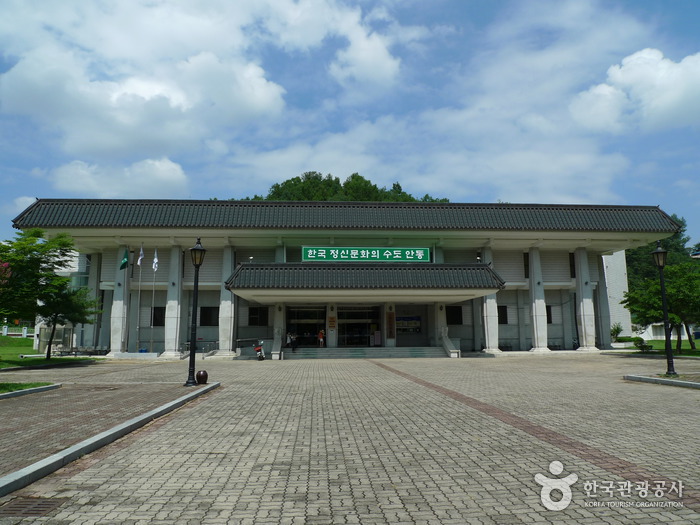
Andong Folk Museum is located within the Andong Dam Folk Village, a collection of houses and items collected before being submerged after the creation of the dam. The museum preserves and educates visitors on folk, Buddhist, and Confucian cultures. The museum is divided into an indoor section and an outdoor section. The indoor section in particular focuses on the unique cultural aspects of Andong through various exhibitions, as well as in the video screening room. The outdoor section features nearly 20 traditional structures, including hanok houses and old ice storage rooms, providing a closer look at the lifestyle of the past.
![Byeongsanseowon Confucian Academy [UNESCO World Heritage] (병산서원 [유네스코 세계유산])](http://tong.visitkorea.or.kr/cms/resource/63/2620863_image2_1.jpg)
Byeongsanseowon Confucian Academy [UNESCO World Heritage] (병산서원 [유네스코 세계유산])
10.4Km 2024-05-29
386 Byeongsan-gil, Andong-si, Gyeongsangbuk-do
Before it became a Confucian academy, Byeongsanseowon Confucian Academy was originally located in Pungsang-hyeon under the name Pungakseodang School, which was used as a educational institution since the Goryeo dynasty by a political party known as the Sarim Party. It was moved to its current location in Byeongsan by a well-respected Confucian scholar named Yu Seong-nyong, penname Seoae, in 1572, and renamed to Byeongsanseowon in 1614.
In 1863, Byeongsanseowon was recognized by the king to receive support as a private Confucian academy. The lecture hall and shrine were reconstructed in 1921 and 1937 respectively as part of preservation efforts made during the Japanese occupation. This academy is designated as a Historic Site, housing a collection of 1,000 documents and 3,000 books, including works by Yu Seong-nyong.
Andong Folk Village (안동민속촌)
10.4Km 2024-05-30
Seonggok-dong, Andong-si, Gyeongsangbuk-do
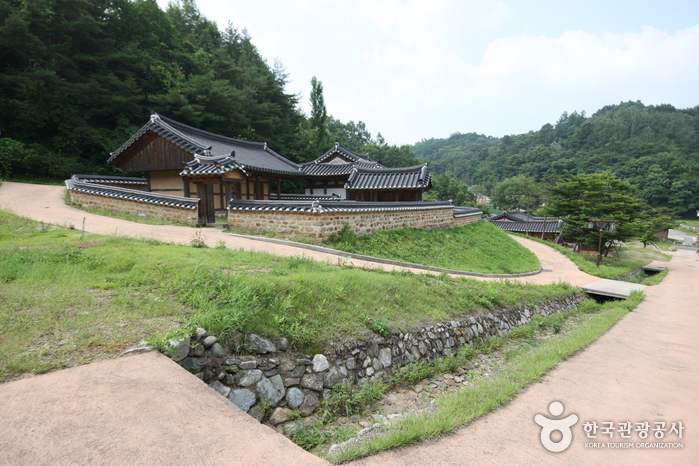
On the other side of the subsidiary dam of Andong Dam, thatched houses can be sparsely seen on a hilltop. The area is practically an outdoor museum, displaying traditional houses that were moved to safety prior to the construction of Andong Dam. Two jangseung (traditional Korean totem poles) are raised at the entrance of the outdoor museum, followed by a monument inscribed with the poem of famous Andong poet and democracy activist, Lee Yuk-sa. On the monument, his most noted work “Gwangya” (Wild Plain) is carved.
Nearby attractions include Andong Museum, Lee Yuk-sa Monument, a filming site of “Taejo Wang Geon (2000)," and Andongho Lake.
Traditional Resort Gurume (구름에)
10.7Km 2024-12-20
190 , Minsokchon-gil, Andong-si, Gyeongsangbuk-do
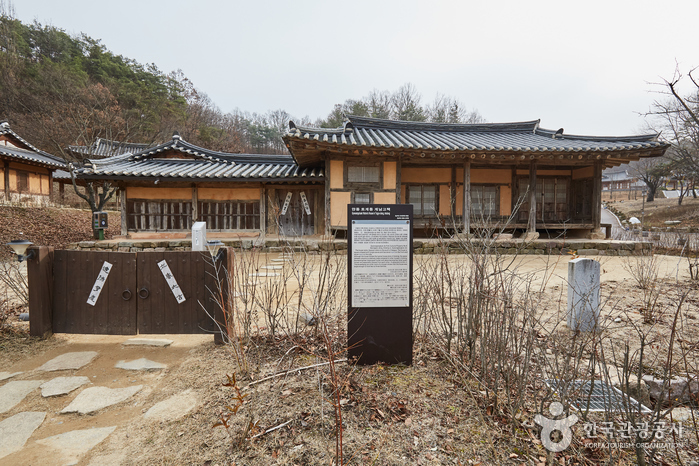
Gurume Resort in Andong-si, Gyeongsangbuk-do, consists of seven traditional hanok dating from the 17th, 18th and 19th centuries that were moved to this location because of a flood. The re-assembled hanok have been equipped with modern toilets, bathrooms, and AC units - plus a modern security system. Facilities include a book-cafe, a restaurant, a traditional experience room and a plaza.
Nakgangmulgil Park (낙강물길공원)
10.7Km 2024-11-14
423 Sanga-dong, Andong-si, Gyeongsangbuk-do
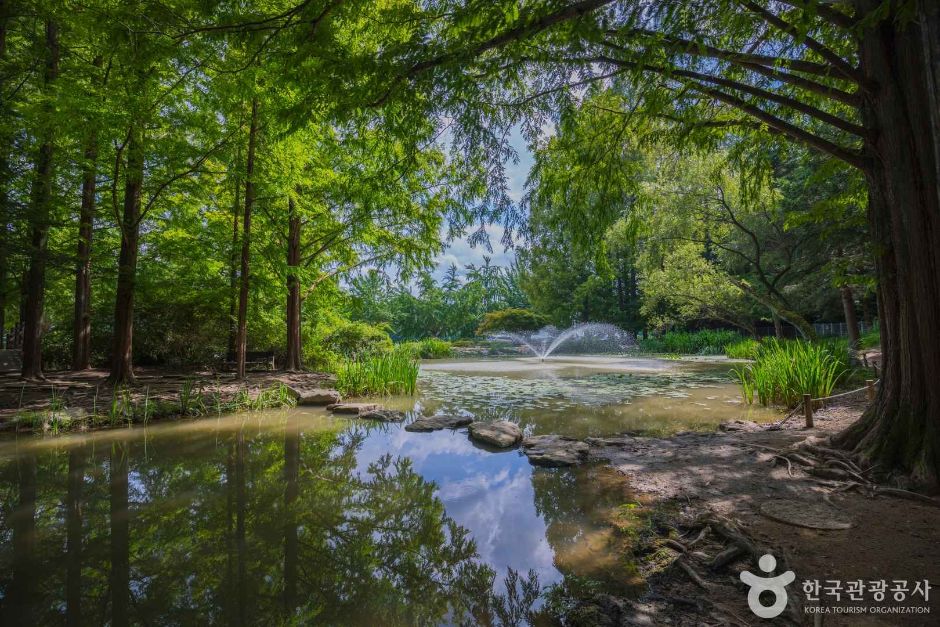
Nakgangmulgil Park, called the Giverny of Korea, is a small waterside park located near Andong Dam. The park is the perfect setting for a relaxing moment, with benches placed under trees and beside walkways throughout the park. The natural environment creates plenty of photo spots. Visitors looking for a longer walk in nature can follow the riverside deck to Wolryeong Park.
 English
 한국어
한국어 日本語
日本語 中文(简体)
 Deutsch
 Français
 Español
 Русский


