
Sinse-dong Mural Village (신세동 벽화마을)
8.1Km 2023-10-24
78, Taesa-gil, Andong-si, Gyeongsangbuk-do
Sinse-dong Mural Village is located in Dongmun-dong, Andong. Originally an informal settlement, the introduction of the Maeulmisul Art Project in 2009 and subsequent urban renewal projects transformed the village into one of Andong’s most famous tourist sites. Today’s village is home to numerous murals and monthly flea markets like the Geurimae Market and Woryeong Market.
Grasswon Park (그라스원)
8.1Km 2023-07-10
273, Yuksa-ro, Andong-si, Gyeongsangbuk-do
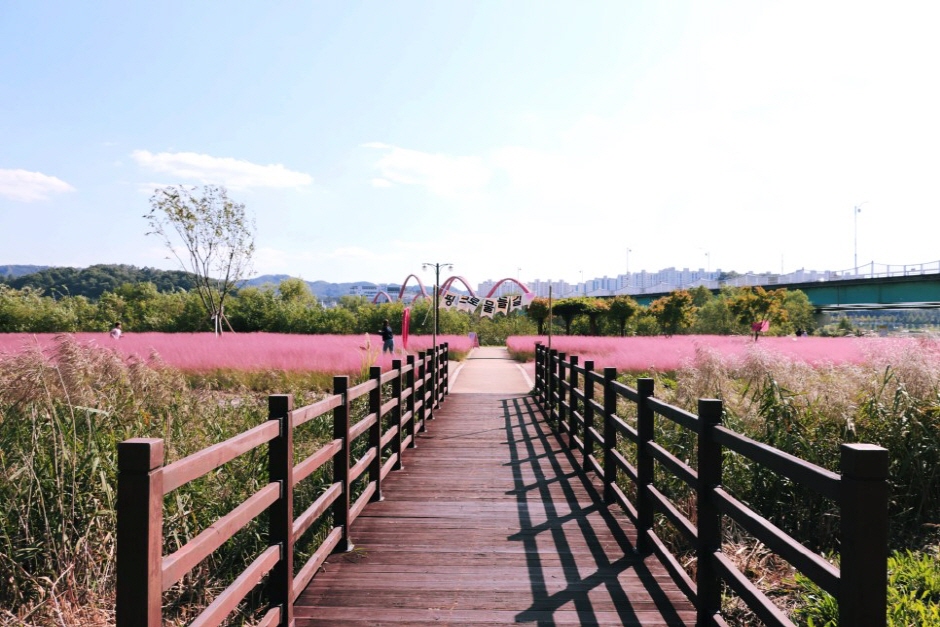
Grasswon Park is located on the banks of the Nakdonggang River as it cuts through downtown Andong. The park, north of Yeonggadaegyo Bridge, features walking trails thorugh a variety of flowers and grasses. The park is attractive all year round, but is especially popular in fall when the muhly grass turns the whole field into a lovely shade of pink. The walking and bicycle paths also connect with Baekjo Park to the south of the bridge, making this the perfect place to enjoy the pure environment of the Nakdonggang River.
Imcheonggak House (안동 임청각)
8.9Km 2021-11-09
63, Imcheonggak-gil, Andong-si, Gyeongsangbuk-do
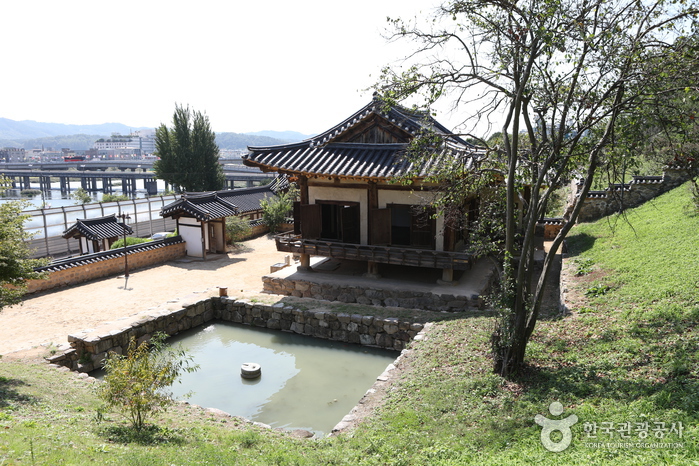
Imcheonggak House is the largest remaining household from the Joseon dynasty, holding a history of over 500 years. The house was built for one aristocratic family’s love of the scenic beauty in the surrounding area. It was originally built with a total of 99 kan (traditional measurement of space between pillars) but only 70 remain. The most famous structure on this property is the annexed pavilion, Gunjajeong. An autograph of the famous Confucian scholar Lee Hwang can be found hanging outside the pavilion.
Head House of the Tapdong Branch of the Goseong Yi Clan (법흥동 고성이씨탑동파종택)
9.0Km 2022-12-21
103, Imcheonggak-gil, Andong-si, Gyeongsangbuk-do
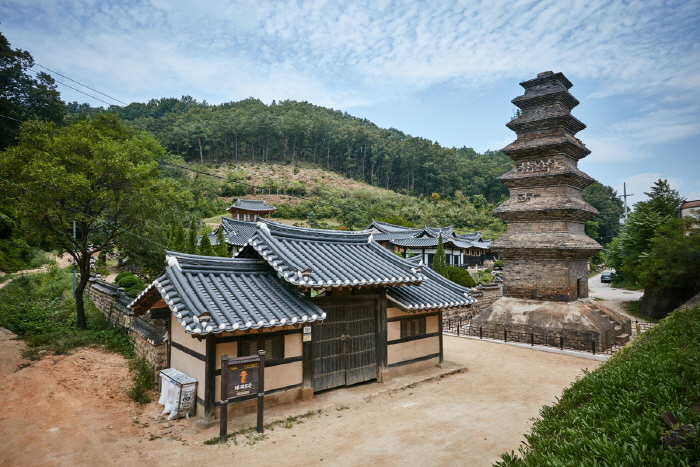
Head House of the Tapdong Branch of the Goseong Yi Clan, located in Andong, serves as a residential house of the Yi descendents even to this day. Constructed in 1685, this house has all of the beautiful features that represent Joseon-style architecture. After this period, additional structures were added periodically. Across from the house is the Seven-story Brick Pagoda at Beopheungsa Temple Site.
Heotjesabap Kkachi Gunmeongjip (헛제사밥까치구멍집 )
9.7Km 2024-11-29
203, Seokju-ro, Andong-si, Gyeongsangbuk-do
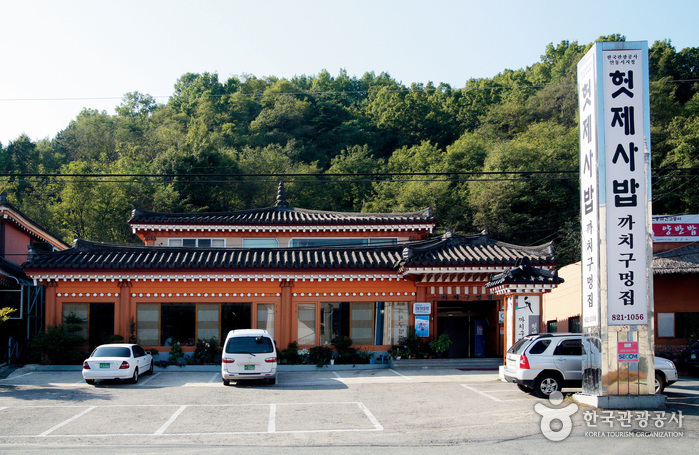
Heotjesabap Kkachi Gumeongjip is a popular restaurant located in Andong, serving yangbansang (yangban table set) fit for the aristocracy. The restaurant interior design features a traditional hanok floor, bringing the aristocratic feeling to life. One of the most popular dishes is hoetjesabap (Andong-style bibimbap). Heotjesabap coloring is not vibrant, but the dish is flavorful, with vegetables and jeon (savory pancakes) piled atop rice. The restaurant, with traditional tiles and designs, producing a feel of gentle harmony and overall traditional beauty coupled with a modern feel.
![Byeongsanseowon Confucian Academy [UNESCO World Heritage] (병산서원 [유네스코 세계유산])](http://tong.visitkorea.or.kr/cms/resource/63/2620863_image2_1.jpg)
Byeongsanseowon Confucian Academy [UNESCO World Heritage] (병산서원 [유네스코 세계유산])
10.4Km 2024-05-29
386 Byeongsan-gil, Andong-si, Gyeongsangbuk-do
Before it became a Confucian academy, Byeongsanseowon Confucian Academy was originally located in Pungsang-hyeon under the name Pungakseodang School, which was used as a educational institution since the Goryeo dynasty by a political party known as the Sarim Party. It was moved to its current location in Byeongsan by a well-respected Confucian scholar named Yu Seong-nyong, penname Seoae, in 1572, and renamed to Byeongsanseowon in 1614.
In 1863, Byeongsanseowon was recognized by the king to receive support as a private Confucian academy. The lecture hall and shrine were reconstructed in 1921 and 1937 respectively as part of preservation efforts made during the Japanese occupation. This academy is designated as a Historic Site, housing a collection of 1,000 documents and 3,000 books, including works by Yu Seong-nyong.
Andong Folk Village (안동민속촌)
10.4Km 2024-05-30
Seonggok-dong, Andong-si, Gyeongsangbuk-do
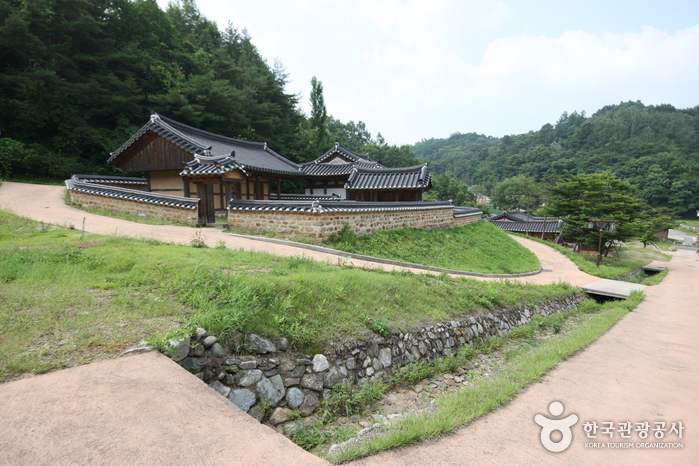
On the other side of the subsidiary dam of Andong Dam, thatched houses can be sparsely seen on a hilltop. The area is practically an outdoor museum, displaying traditional houses that were moved to safety prior to the construction of Andong Dam. Two jangseung (traditional Korean totem poles) are raised at the entrance of the outdoor museum, followed by a monument inscribed with the poem of famous Andong poet and democracy activist, Lee Yuk-sa. On the monument, his most noted work “Gwangya” (Wild Plain) is carved.
Nearby attractions include Andong Museum, Lee Yuk-sa Monument, a filming site of “Taejo Wang Geon (2000)," and Andongho Lake.
Nakgangmulgil Park (낙강물길공원)
10.7Km 2024-11-14
423 Sanga-dong, Andong-si, Gyeongsangbuk-do
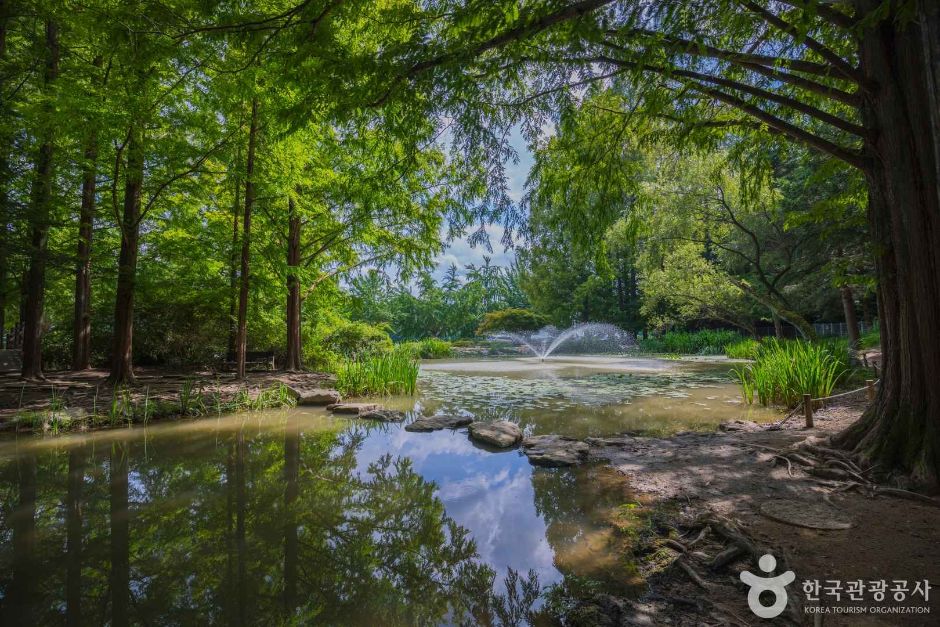
Nakgangmulgil Park, called the Giverny of Korea, is a small waterside park located near Andong Dam. The park is the perfect setting for a relaxing moment, with benches placed under trees and beside walkways throughout the park. The natural environment creates plenty of photo spots. Visitors looking for a longer walk in nature can follow the riverside deck to Wolryeong Park.
Confucian Land (유교랜드)
11.7Km 2024-05-30
346-30 Gwangwangdanji-ro, Andong-si, Gyeongsangbuk-do
Confucian Land, located within Andong Culture & Tourism Resort, is a themed exhibition hall that focuses on Korea's Confucian culture. The facility uses the edu-tainment method to make a difficult subject matter easy to understand for young children. Exhibitions include the teachings of famous Confucian scholars like Toegye Yi Hwang and Yulgok Yi I, traditional musical instruments such as the gayageum and haegeum, as well as a video hall with 3D film capabilities and a children's game area with motion-tracking.
Zootopium (주토피움)
11.9Km 2024-05-29
346-95 Gwangwangdanji-ro, Andong-si, Gyeongsangbuk-do
Zootopium is the largest animal & plant themed park in Gyeongsangbuk-do, home to over 200 species. The park provides the perfect environment for children to learn more about nature and living organisms. The park features both indoor and outdoor sections, as well as amenities such as a restaurant and play areas for children.
 English
 한국어
한국어 日本語
日本語 中文(简体)
 Deutsch
 Français
 Español
 Русский


