Gapsa Temple (갑사)
14.0Km 2021-12-17
567-3, Gapsa-ro, Gongju-si, Chungcheongnam-do
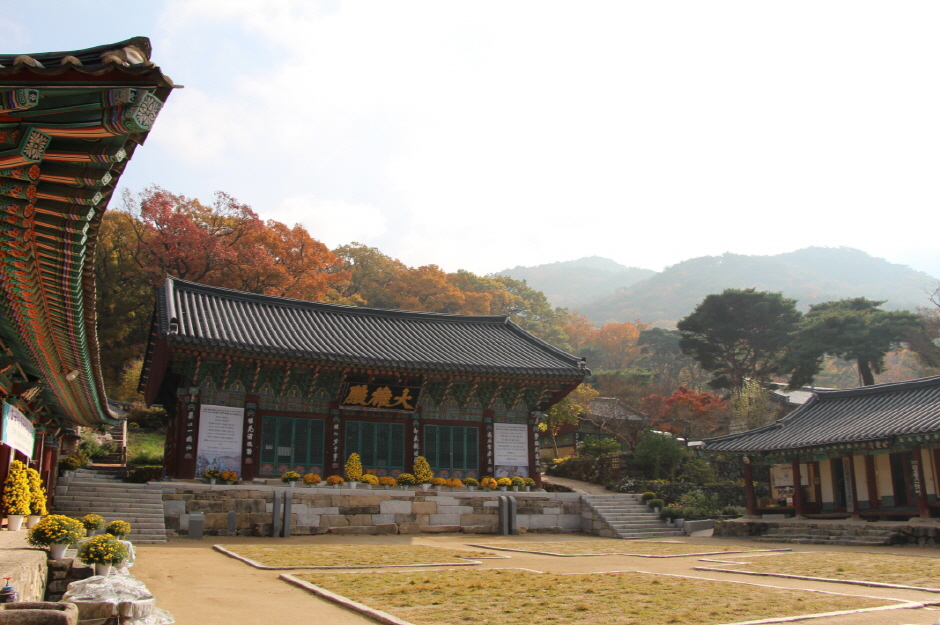
Gapsa Temple is located in the forested foothills of Gyeryongsan Mountain, 19 kilometers from Gongju and a three-hour walk from Donghaksa Temple. The temple is most beautiful during fall when surrounded by crimson foliage. Gapsa Temple was established by monk Adohwasang in 420, during the early Baekje Period. The temple's beauty allowed it to escape destruction many times, but it was ultimately burned down during the Imjin War (1592-1598). The current structures were built in 1604. Nearby attractions include Yongmunpokpo Falls, Sujeongbong Peak, and Cheonjinbotab Pagoda.
Gapsagyegok Valley (갑사계곡)
14.5Km 2024-02-21
519 Gapsa-ro, Gyeryong-myeon, Gongju-si, Chungcheongnam-do
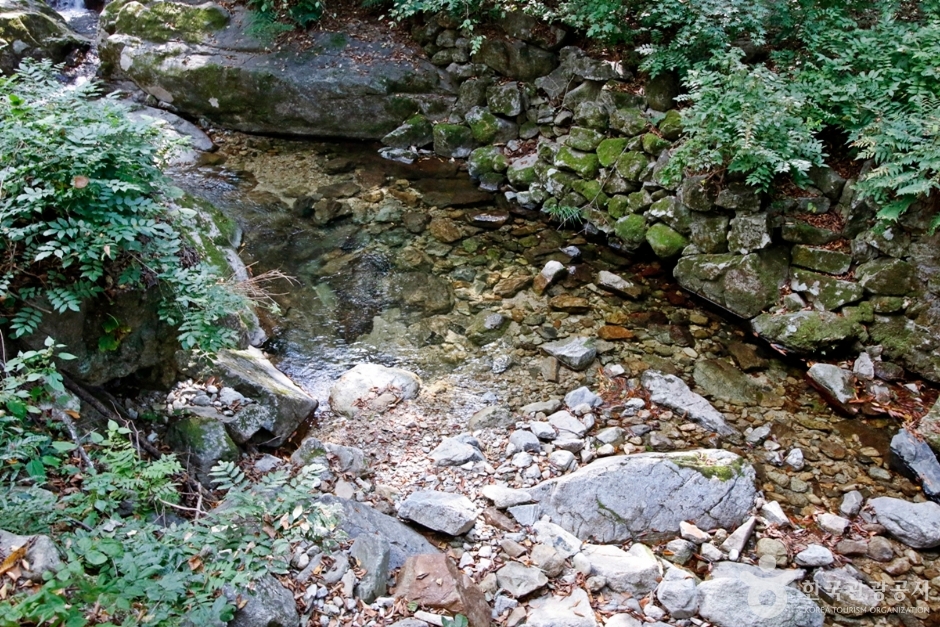
Gapsagyegok Valley is a valley located on the northwest slope of Gyeryongsan Mountain in Gongju-si. With moderate temperatures even in summer, it is suitable as a recreational area, while the autumn foliage adds to its beauty. At the entrance lies Gapsa Temple, a Buddhist temple with various cultural assets, offering insights into Korean Buddhist culture. Within the valley, visitors can enjoy forest walks and view attractions such as the Yongmunpokpo Falls.
Gujeolsa Temple (구절사)
14.6Km 2024-02-26
226, Sangjung-gil, Gunseo-myeon, Okcheon-gun, Chungcheongbuk-do
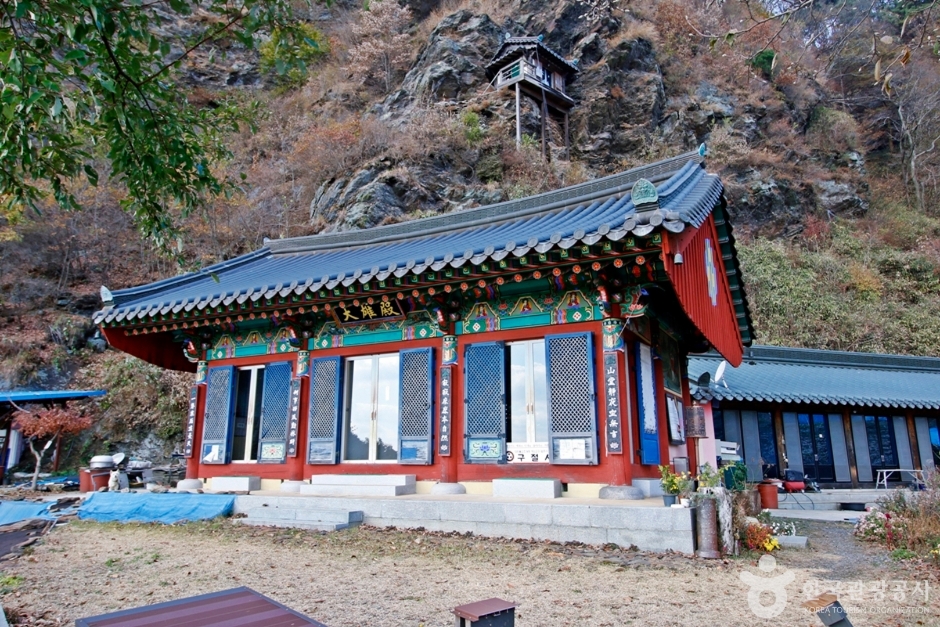
Gujeolsa Temple is a Buddhist temple located deep within the Sikjangsan Mountain in Okcheon. It was founded in 1393 and was rebuilt in 1933 to its present appearance. The road from the radio tower fork to Gujeolsa Temple in Sikjangsan Mountain’s hiking trails is lush with acacia trees, which are in full bloom in May. Another sight that should not be missed is the fog shrouding the foot of the mountain in spring and fall.

Geumgang Recreational Forest (Arboretum, Forest Museum) (금강자연휴양림(금강수목원,산림박물관))
15.1Km 2025-05-20
110, Sallimbangmulgwan-gil, Sejong-si
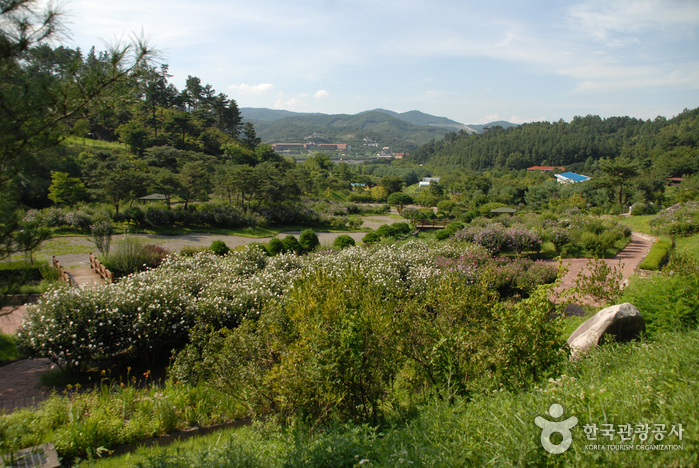
Along the river from Gongju toward Daejeon there is Geumgang River to the right. Following this river, there is a red arch-shaped bridge on the right called Bultigyo Bridge. Geumgang Recreational Forest, a large and well-organized forest, is located on the other side of this bridge. In the past, this remote village can only be reached by boat. In 1994, the Chungnam Forest Environment Research Institute moved to this area and designated the well-preserved dense forest as Geumgang Recreational Forest, and the Forest Museum opened in October 1997. Geumgang Recreational Forest is different from other recreational forests. Rather than a dense forest with a trail, this forest has a variety of attractions such as the Forest Museum, an arboretum, greenhouse, pond, and wildlife park scattered on well-maintained roads, giving the impression of a city park.
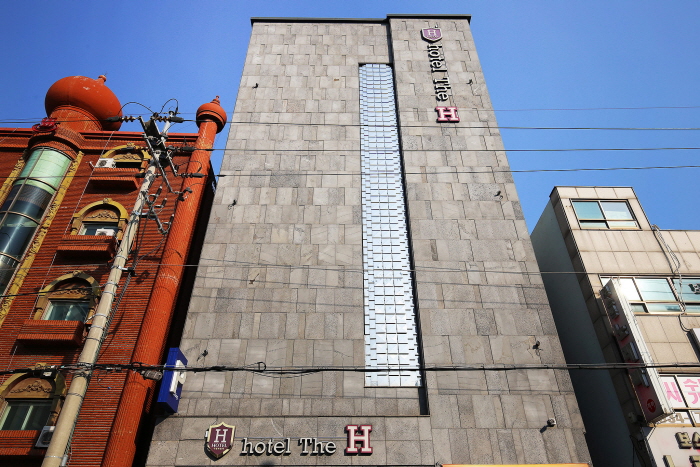
Hotel The H (호텔 더 에이치(Hotel The H))
15.6Km 2024-12-22
58 , Sintanjindong-ro 23beon-gil, Daedeok-gu, Daejeon
Hotel The H is a business hotel close to Sintanjin station in Daejeon, Chungcheongnam-do, offering quality services and reasonable prices. The pent rooms are equipped with barbecue, campfire, and cooking facilities, as well as a private terrace and swimming pool - making them ideal for parties and family gatherings. Some rooms are equipped with disabled toilets. Free breakfast is served at the 1st floor cafe, and there is a business center with shared PCs and printers. Geumgang Lohas Eco Park is a pleasant 20-minute walk away.
Yetteo Folk Museum (옛터민속박물관)
15.7Km 2025-02-04
321-35 Sannae-ro, Dong-gu, Daejeon
The Yetteo Folk Museum showcases traditional folk artifacts that reflect the daily life of the Daejeon region. Inside the exhibition hall, visitors can view items such as knives, tray tables, water droppers, cups, and oil lamps. The outdoor exhibition area features stone mortars, troughs, and grinding stones. The museum also includes a traditional jar exhibition hall, a Korean restaurant, and a traditional teahouse. Visitors can engage in hands-on experiences like natural dyeing, hanji paper crafts, and knot-making, or relax and enjoy a campfire.
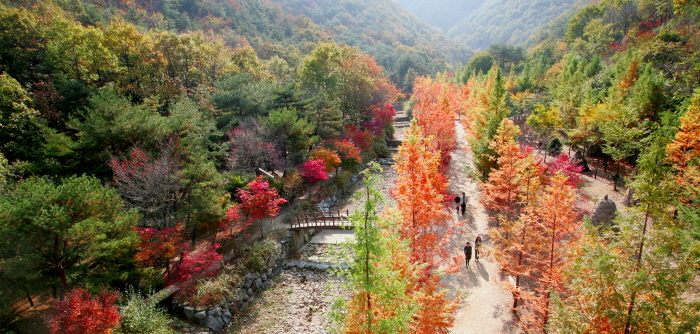
Sangso-dong Forest Park (상소동 산림욕장)
16.1Km 2022-12-26
San 1-1, Sangso-dong, Dong-gu, Daejeon
Sangso-dong Forest Park is located at the point where the foothills of Maninsan Mountain and Sikjangsan Mountain meet. The road to the park is beautifully lined with sycamore trees. The park offers various facilities for enjoying nature and in particular, the stone pagodas placed throughout the park are a must-see. Visitors can stack their own rocks and make wishes relating to family, health, relationships, and more. The park is great for walks, hikes, or even just to relax as wild flowers bloom all throughout spring to fall.
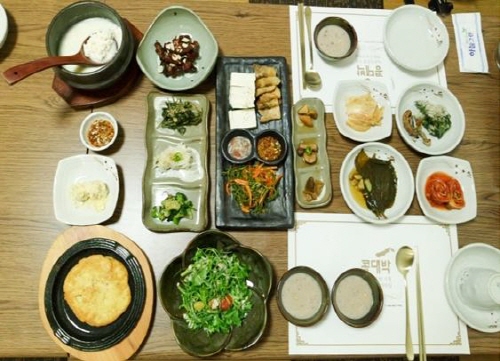
Kong Daebak (콩대박)
16.5Km 2025-05-20
9 Daebak-gil, Geumnam-myeon, Sejong-si
Kong Daebak is a restaurant specializing in soybean-based dishes. There are two menu options: kongseobang bapsang and konggaksi bapsang. Kongseobang bapsang includes dishes like doenjang jjigae (soybean paste jjigae), salad, kong jeon (soybean pancake), suyuk (boiled pork slices), mushroom dishes, jangajji (pickled vegetable), and dessert. Adding dishes like kkaennip jeon (pan-fried battered perilla leaves) and dubu jeongol (bean curd hot pot) turns it into konggaksi bapsang. Since the food is prepared on the same day, advance reservations are essential.
Daecheongho Lake (대청호)
17.1Km 2022-12-26
Dong-gu, Daejeon / Munui-myeon, Chungcheongbuk-do
Daecheongho Lake is a man-made lake, stretching from Daejeon to Cheongju-si, Okcheon-gun, and Boeun-gun. Construction began in 1975 and finished in 1980, and the lake supplies water for various use to people in Daejeon and Cheongju.
The reservoir water spans an area of over 72.8 ㎢ with a perimeter of 80 kilometers, and the water kept in storage has a volume of 1.5 billion tons, making the reservoir the third largest lake in Korea. The area is famous for its beautiful driving course along a tree-lined road through the nearby mountain which has an altitude of 200 to 300 meters. Also, resident birds and migratory birds, such as white heron, can be seen during summer in the upper region of the lake.
 English
 한국어
한국어 日本語
日本語 中文(简体)
 Deutsch
 Français
 Español
 Русский


