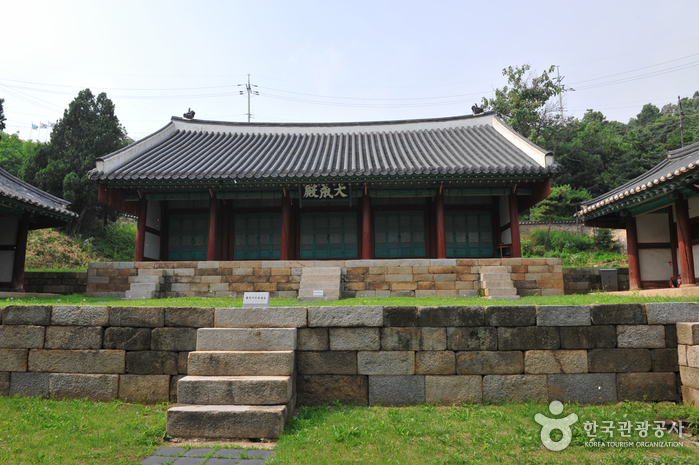
Suwonhyanggyo Confucian School (수원향교)
11.0Km 2022-12-29
107-9, Hyanggyo-ro, Paldal-gu, Suwon-si, Gyeonggi-do
+82-31-245-7639
Suwonhyanggyo Confucian School was built in 1291 in front of Hwasan Mountain in Hwaseong where it stayed for nearly 500 years. It was moved to its current location in 1789 with the construction of Hwaseong Fortress. During the move, some of the original wood was exposed to water and began to rot. These parts were repaired in 1795 and efforts were made to prevent the wooden structure from futher damage. The current school is comprised of various halls, gates, and pavilions. It is registered as Gyeonggi-do Cultural Property and operates programs every summer for regional students.
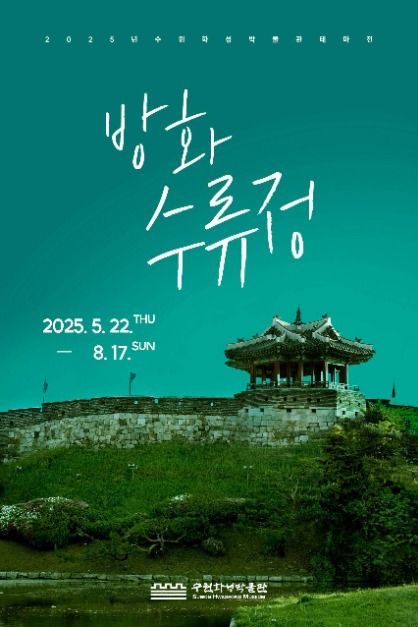
Suwon Hwaseong Museum Themed Exhibition Banghwasuryujeong Pavilion (수원화성박물관 테마전 방화수류정)
11.0Km 2025-07-14
21 Changnyong-daero, Paldal-gu, Suwon-si, Gyeonggi-do
+82-31-228-4209
Banghwasuryujeong Pavilion stands looking over the Hwahongmun Gate and Yongyeon Pond and is a place where the aspirations of King Jeongjo live on. Suwon Hwaseong Fortress has a total of four pavilions, and Banghwasuryujeong Pavilion is located on the northwestern side of the fortress. The fortresses were built to act as a watchtower for keeping an eye on outside invasion, with Banghwasuryujeong Pavilion being located at the most strategic point. Although it was built as a military watchtower, it was designed to also act as a pavilion, and Banghwasuryujeong Pavilion was recognized as a National Treasure in 2011 for outstanding techniques and aesthetics that represent the Joseon dynasty in the 18th century.
Suwon Museum (수원박물관)
11.0Km 2025-05-22
265 Changnyong-daero, Yeongtong-gu, Suwon-si, Gyeonggi-do
+82-31-228-4150
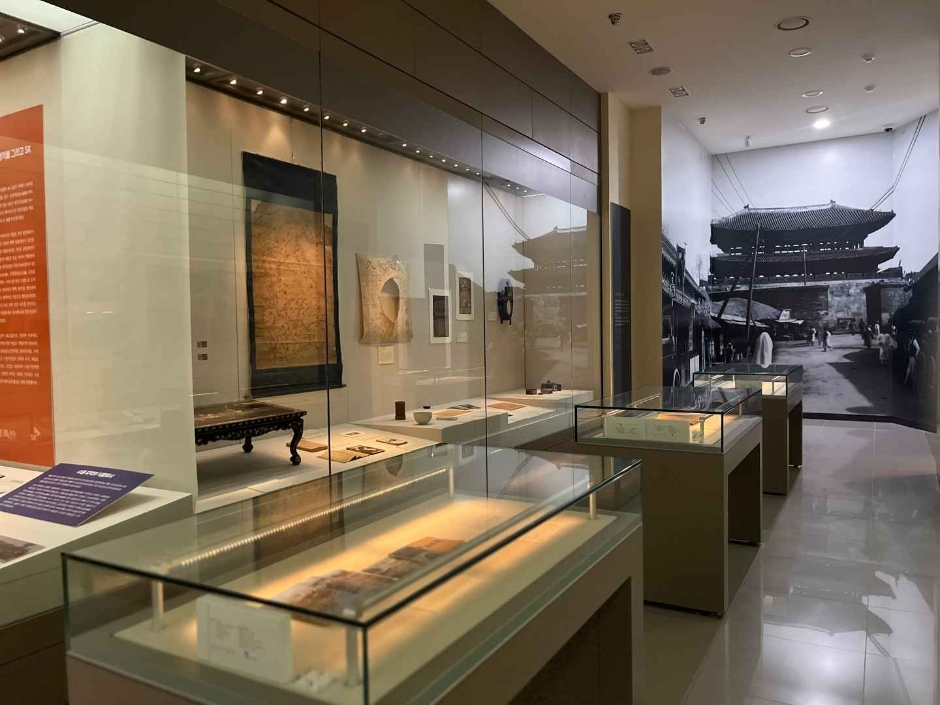
Locaed in Iui-dong, Yeongtong-gu, Suwon Museum has one basement floor and two above-ground floors, spanning over an area of 6,535 ㎡. Suwon Museum consists of two main exhibition halls, Suwon Museum of History and Calligraphy Museum of Korea, showcasing approximately 48,000 relics, and a planned exhibition hall for special occasions and exhibitions.
Suwon Museum of History recreates a scene of Yeongdong Market Street during the1960s. Children can learn and get secondhand experience of what Suwon was like in the past while adult visitors can reminisce the old times.
Calligraphy Museum of Korea is the first calligraphy museum built by a local government. The museum houses Korea's significant calligraphy works. The hall features a spacious area and its display cases are designed with cutting edge technology to highlight the relics on display. Exhibited collections include geumseokmun (metal writing), beopseo (calligraphic specimen of renowned artists of the past), works of renowned calligraphers during the Joseon dynasty, eopil (the writings of Kings), seogan (letters), works of renowned contemporary calligraphers, and more. Also, a planned exhibition hall holds exhibitions with specific themes every year. In addition, the museum offers educational programs for visitors as well as large scale calligraphy events for the general public.
Four Seasons Garden (에버랜드 튤립가든)
11.1Km 2025-04-16
199 Everland-ro, Cheoin-gu, Yongin-si, Gyeonggi-do
+82-31-320-5000
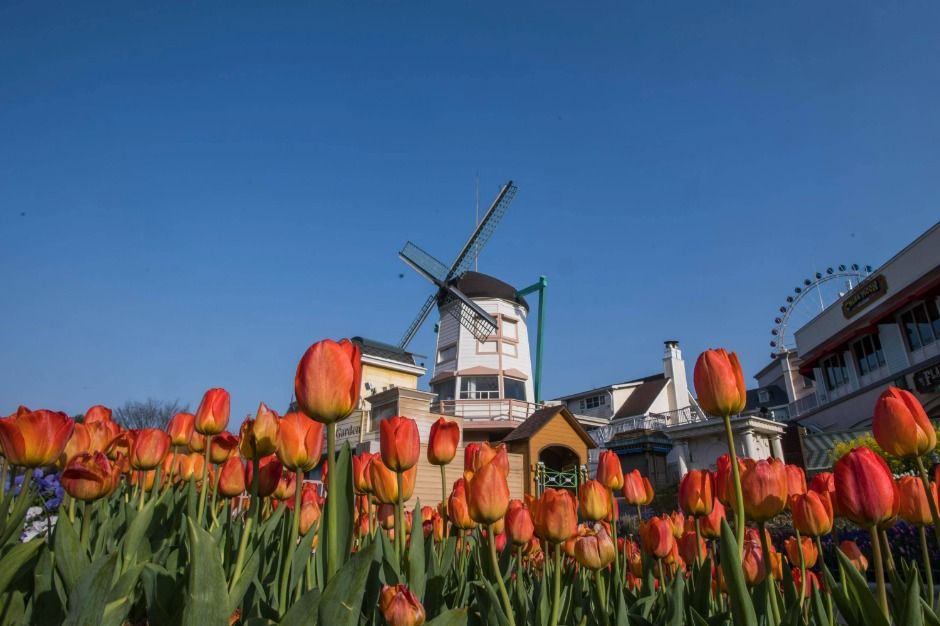
Four Seasons Garden, shining all year around with the power of gardener Lara! Fall into the waves of attractive flowers.
Spring: Tulip Garden
Summer: Tropical Garden
Fall: Autumn Flowers
Winter: Christmas & Snow
Everland Summer Festival (에버랜드 썸머워터 펀)
11.1Km 2025-04-16
199 Everland-ro, Cheoin-gu, Yongin-si, Gyeonggi-do
+82-31-320-5000
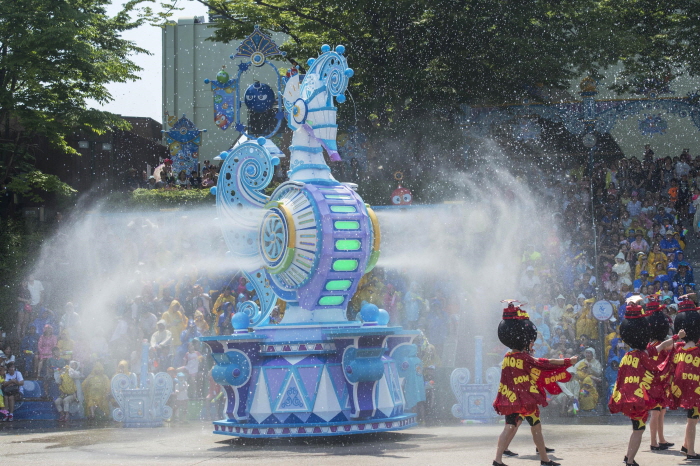
Since the first event in 2005, Everland's Summer Water Fun festival has made Everland one of the most popular summer attractions. The festival is packed with various programs like water shows, light shows, and game activities for visitors to enjoy.

Everland Winter Festival (에버랜드 Winter Wishes)
11.1Km 2025-04-16
199 Everland-ro, Cheoin-gu, Yongin-si, Gyeonggi-do
+82-31-321-9393
Everland Winter Festival is a fantastic and romantic winter festival. During the period, tourists can enjoy various attractions like T-express, Thunder Falls, Lost Valley, and the Safari Ride more freely compared with other seasons as well as a romantic Christmas ambience. At night, the village boasts its concept of gold, brightening the area.
Suwon Hwaseong Museum (수원화성박물관)
11.1Km 2021-12-21
21, Changnyong-daero, Paldal-gu, Suwon-si, Gyeonggi-do
+82-31-228-4242
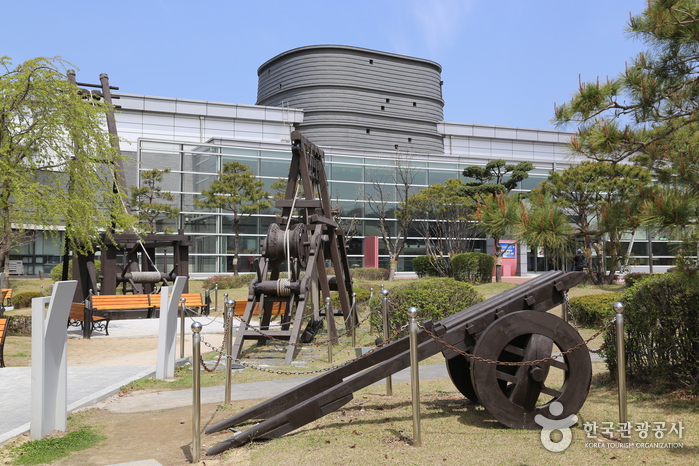
Suwon Hwaseong Museum presents the history and culture of Suwon Hwaseong Fortress, an important Korean cultural asset and UNESCO World Cultural Heritage Site. Visitors to the museum can learn about the formation of the fortress and the city of Suwon itself through detailed, systematically designed exhititions. The museum houses an extensive collection of items that showcase the construction and development of the fortress, as well as gatherings and events that took place within the fortress.
Hwaseong Fortress Tourist Trolley (화성어차)
11.1Km 2025-07-01
8 Changnyong-daero 103beon-gil, Paldal-gu, Suwon-si, Gyeonggi-do
+82-31-228-4686
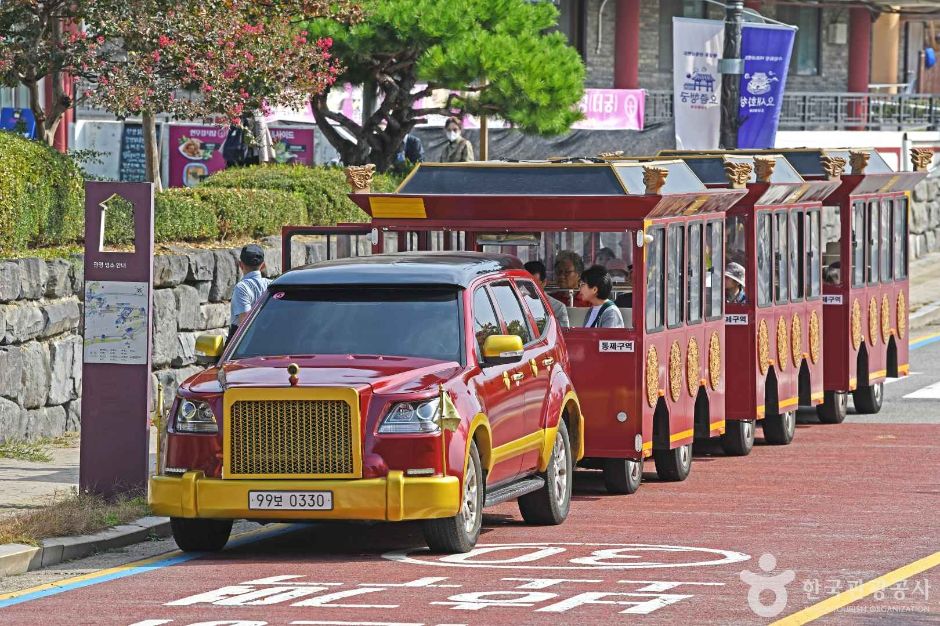
With a design inspired by the royal vehicle used by King Gojong and palanquins of the Joseon dynasty, Hwaseong Fortress Tourist Trolley provides visitors with a comfortable tour around the main attractions of Suwon Hwaseong Fortress. It is divided into a sightseeing course that starts at Hwaseong Temporary Palace and visits the main gates, and a circular course that starts at Yeonmudae Post and visits the main military facilities. Reservations are required on the website. All seats are equipped with an earphone jack offering an audio guide of Suwon Hwaseong Fortress in English, Chinese and Japanese.

Olive Young - Yongin Suji Branch [Tax Refund Shop] (올리브영 용인수지)
11.1Km 2024-04-23
119, Pungdeokcheon-ro, Suji-gu, Yongin-si, Gyeonggi-do
-
Nostalgic Dalgona (추억의달고나)
11.1Km 2024-02-01
44 Haenggung-ro, Paldal-gu, Suwon-si, Gyeonggi-do
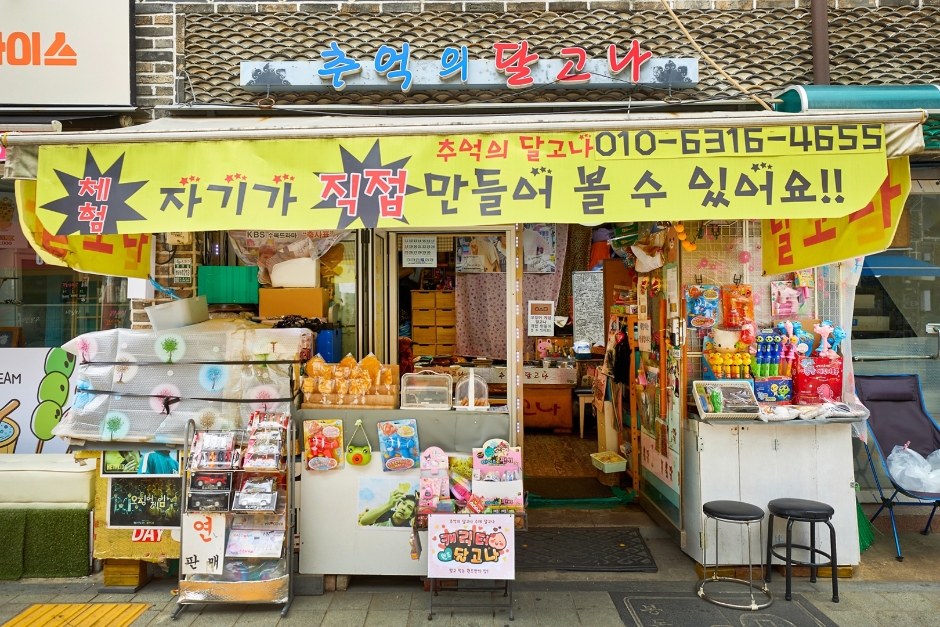
At Nostalgic Dalgona, visitors can make and eat dalgona, a snack that has become world-famous as it frequently appears in Korean content such as drama series like Netflix's Squid Game and entertainment shows. The recipe requires using a ladle and heat to dissolve sugar mixed with a small amount of baking soda. Once dissolved, pour out the caramel-like mix onto a tray, then stamp the surface with a cookie cutter of a preferred shape, such as heart, animal figure, or umbrella. The process of tearing off the edges along the pattern like from the scene in Squid Game can be quite a challenge and fun at the same time.
 English
 한국어
한국어 日本語
日本語 中文(简体)
 Deutsch
 Français
 Español
 Русский


