
Ebookers Korea Inc. ((주)이부커스코리아)
4.9Km 2025-10-23
(2nd Floor), 212 Jangchungdan-ro, Jung-gu, Seoul
We strive for a special kind of tourism that combines wellness tourism (healing) and medical tourism (treatment).
We are a Korean wellness and medical tourism company leading the country’s safe and healthy travel culture.
* Products and Services
Wellness medical tourism programs that uniquely combine wellness and medical tourism
Referral and reservation service for selected wellness destinations and Korean hospitals with excellent medical technology
Guidance services provided at local partner companies
Content creation and reservation based on our personalized service system
Convenient tourism programs catering to each patient's health conditions
Medical tourism visa application and referral services on C33VISA site
* A medical tourism product brand
Medi Well Come products: Health checkup / general practice (minor / major / female / preventive / eye problems)
![Queens Bucket - Dongdaemun Branch [Tax Refund Shop] (쿠엔즈버킷 동대문)](http://tong.visitkorea.or.kr/cms/resource/47/2878747_image2_1.jpg)
Queens Bucket - Dongdaemun Branch [Tax Refund Shop] (쿠엔즈버킷 동대문)
4.9Km 2024-04-18
5-4, Toegye-ro 64-gil, Jung-gu, Seoul
-
![Olive Young - Sinyongsan Station Branch [Tax Refund Shop] (올리브영 신용산역)](http://tong.visitkorea.or.kr/cms/resource/95/2888195_image2_1.jpg)
Olive Young - Sinyongsan Station Branch [Tax Refund Shop] (올리브영 신용산역)
4.9Km 2024-04-17
#101, and #102, 95, Hangang-daero, Yongsan-gu, Seoul
-
![Solb - Konkuk Univ. Branch [Tax Refund Shop] (솔브 건대)](http://tong.visitkorea.or.kr/cms/resource/99/2878799_image2_1.jpg)
Solb - Konkuk Univ. Branch [Tax Refund Shop] (솔브 건대)
5.0Km 2024-04-17
1F, 115, Neungdong-ro, Gwangjin-gu, Seoul
-
![Olive Young - Hwanghak Sageori Branch [Tax Refund Shop] (올리브영 황학사거리)](http://tong.visitkorea.or.kr/cms/resource/46/2888246_image2_1.jpg)
Olive Young - Hwanghak Sageori Branch [Tax Refund Shop] (올리브영 황학사거리)
5.0Km 2024-04-17
410, Wangsimni-ro, Seongdong-gu, Seoul
-
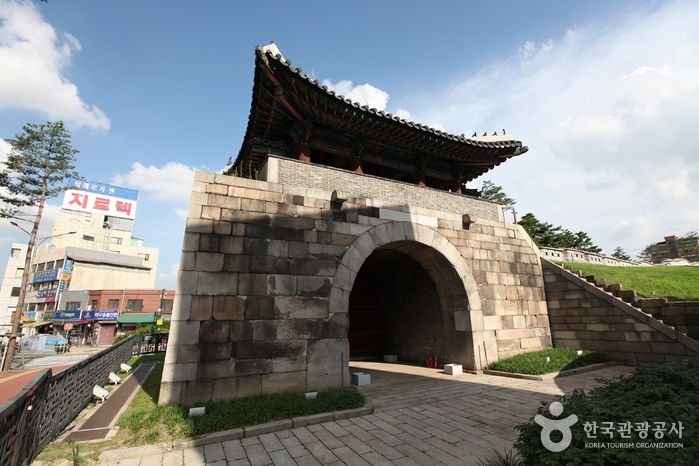
Gwanghuimun Gate (광희문)
5.0Km 2021-02-24
344, Toegye-ro, Jung-gu, Seoul
+82-2-3700-3900
Gwanghuimun Gate is said to have been originally constructed in 1396, the 5th year of King Taejo, at the southeast of the capital city. It was often referred to as Sugumun Gate (water channel gate) and was actually used as a Sigumun, literally meaning “corpse gate,” as funeral processions passed through this gate when exiting to the east.
During the Imjin War (1592-1598), the fortress gate was destroyed to such a degree that it made finding the original location close to impossible. Nevertheless, reconstruction efforts were started in 1711 (37th year of King Sukjong) and the gate was restored together with the gate's watchtower. Gwanghuimun Gate remained intact even when the fortress walls were demolished to build tram tracks during the Japanese occupation, but it was later damaged during the Korean War and left neglected. In 1975, restoration work was carried out to relocate Gwanghuimun Gate to a site 15 meters south of its original location since it stood in the middle of the road.
![Hoopcity Dongdaemun [Tax Refund Shop] (HOOPCITY 동대문)](http://tong.visitkorea.or.kr/cms/resource/51/2878751_image2_1.jpg)
Hoopcity Dongdaemun [Tax Refund Shop] (HOOPCITY 동대문)
5.0Km 2024-04-18
1F, 324, Toegye-ro, Jung-gu, Seoul
-
![Olive Young - Sangwangsimni Station Branch [Tax Refund Shop] (올리브영 상왕십리역)](http://tong.visitkorea.or.kr/cms/resource/62/2878762_image2_1.jpg)
Olive Young - Sangwangsimni Station Branch [Tax Refund Shop] (올리브영 상왕십리역)
5.0Km 2024-04-16
382, Wangsimni-ro, Seongdong-gu, Seoul
-
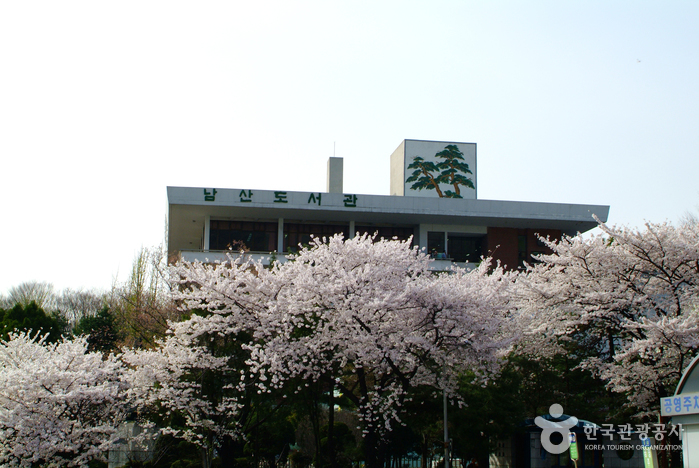
Namsan Library (서울특별시교육청 남산도서관)
5.0Km 2021-07-07
109, Sowol-ro, Yongsan-gu, Seoul
+82-2-754-7338
Namsan Library opened as Kyeongseong Prefectural Library in 1922 as a public library in Myeong-dong, Jung-gu, Seoul. The library was moved to the current site in 1964 with a newly built building and its name changed to Namsan Library in 1965. This concrete building was built in 1964 and was designed by architect Lee Haeseong. It was designated as Seoul Future Heritage in 2013, credited for its preservation value.
It is comprised of 19 rooms and educational areas including the Humanity and Social Science Hall, Nature Science Hall, Language and Literature Hall, Electronic Information Room and more. Since opening, the library has collected nearly 500,000 books, 16,000 non-book materials, 700 continuing resources, and other special materials like old books, oriental books (including Japanese books), and more. Namsan Library also operates a reading treatment program unique to this library that began in 2005. The program includes remodeling of reading consultation room, training for people in charge of reading treatment, workshops, programs for individuals and groups. Also, various exhibitions, lectures, shows, cultural classes and other events are available all year long to enhance lifelong education.
![Standard Eyewear [Tax Refund Shop] (스탠다드안경원)](http://tong.visitkorea.or.kr/cms/resource/06/3313906_image2_1.jpg)
Standard Eyewear [Tax Refund Shop] (스탠다드안경원)
5.0Km 2024-06-27
134, Dongjak-daero, Seocho-gu, Seoul
-
 English
 한국어
한국어 日本語
日本語 中文(简体)
 Deutsch
 Français
 Español
 Русский


