
Youngone Corporation [Tax Refund Shop] (주식회사 영원무역)
4.1Km 2024-04-19
159, Mallijae-ro, Jung-gu, Seoul
-
Jihwaja (지화자)
4.1Km 2024-03-18
125 Jahamun-ro, Jongno-gu, Seoul
+82-2-2269-5834
Jihwaja is a traditional Korean restaurant operated by a successor of Joseon dynasty royal dishes. Their manchan course (full course) includes menus served at royal banquets such as gungjung manchan (royal course), Jineo-byul manchan (deluxe royal degustation course), and janggeum manchan (daejanggeum degustation course) courses. The janggeum course reconstructs dishes from the drama "Dae Jang Geum." For the Jeongchan course (Set menu), they offer so galbi sura (grilled beef ribs course), jeonbok cho sura (braised abalones in soy sauce course), so galbi jjim sura (braised beef short ribs course), and haemul sinseollo sura (seafood hot pot course). Additionally, they serve milk porridge, meat and vegetable skewers, mandu, royal hot pot, and grilled marinated beef.
![Olive Young - Sookmyung Women’s Univ. Branch [Tax Refund Shop] (올리브영 숙대)](http://tong.visitkorea.or.kr/cms/resource/25/2889625_image2_1.jpg)
Olive Young - Sookmyung Women’s Univ. Branch [Tax Refund Shop] (올리브영 숙대)
4.1Km 2024-04-18
19, Cheongpa-ro 45-gil, Yongsan-gu, Seoul
-
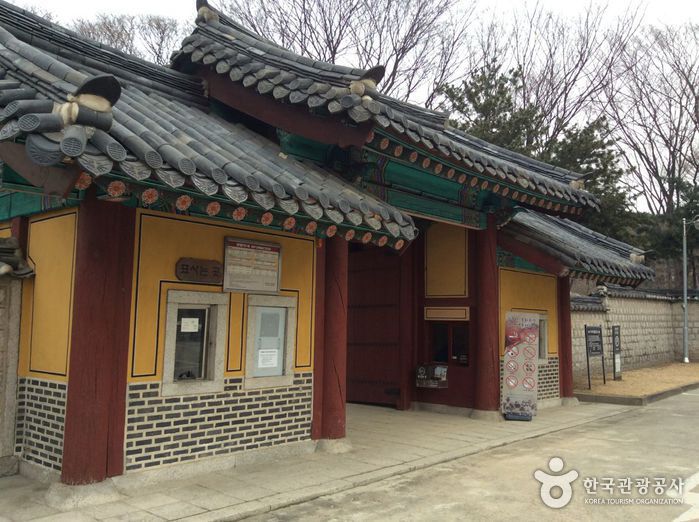
Yeonghwiwon and Sunginwon Royal Tombs (서울 영휘원(순헌황귀비)과 숭인원(이진))
4.2Km 2021-03-12
90, Hongneung-ro, Dongdaemun-gu, Seoul
+82-2-962-0556
Yeonghwiwon & Sunginwon Royal Tombs house the tombs of Queen Consort Sunheon and the first son of Imperial Prince Yeong, Yi Jin. Queen Consort Sunheon was a concubine of Emperor Gojong and the mother of Imperial Prince Yeong. The tomb site was originally the resting place of Empress Myeongseong, the first official wife of Emperor Gojong, but her tomb was moved to Namyangju after Gojong's death where they are interred together.
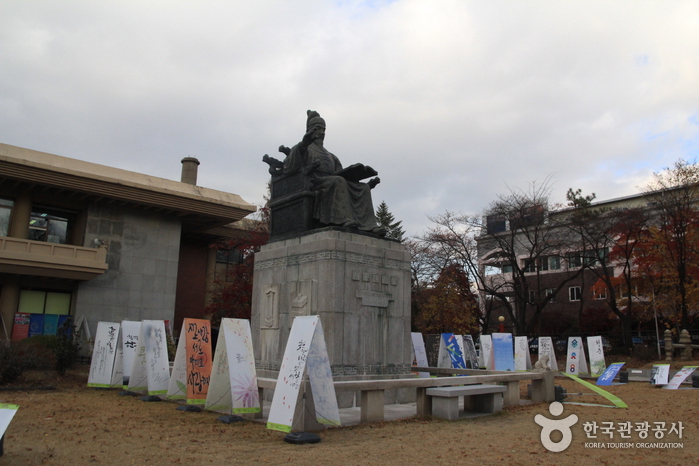
King Sejong The Great Museum (세종대왕박물관)
4.2Km 2024-03-08
56, Hoegi-ro, Dongdaemun-gu, Seoul
+82-2-969-8851
King Sejong The Great Museum is a cultural complex located in the heart of Seoul, near Gwanghwamun Plaza.The Hangeul Room exhibits documents published during the reign of King Sejong, the Science Room displays Cheugugi and celestial planisphere, and the Korean Traditional Music Room showcases various traditional Korean musical instruments. The Biography Room features Portrait of King Sejong and paintings depicting scenes from his life. Outdoors, there are statues of King Sejong, the scahe sundial, the clepsydra, and Cheugugi.
River City Water Ski Resort (리버시티수상스키장)
4.2Km 2025-10-23
37-53 Apgujeong-ro 11-gil, Gangnam-gu, Seoul, Jamwon District 1 in Hangang Park
In 'I Live Alone', it is none other than the Hangang River where SHINee's Key and Minho enjoyed water skiing and 'Pangpang' boat. Necessary equipment can be rented, and water skiing and wakeboarding lessons are also offered, so even beginners can visit without any hesitation. Above all, the most attractive thing is that you can enjoy water sports in downtown Seoul without having to go far. There are shower rooms and changing rooms, as well as a Ramyeon making machine. There is no better delicacy than eating freshly boiled Ramyeon while drying your wet hair after playing in the water.
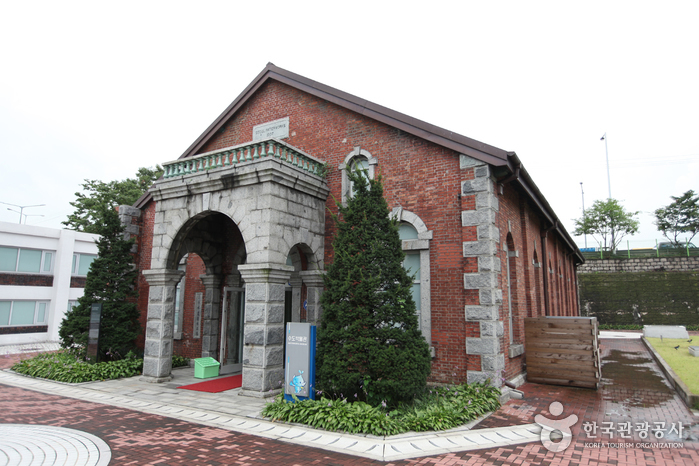
Waterworks Museum (수도박물관)
4.3Km 2025-01-17
27, Wangsimni-ro, Seongdong-gu, Seoul
+82-2-3146-5936
The Ttukseom Water Purification Plant (Waterworks Museum and Slow Sand Filtration Basin) was completed in August 1908 as the first water purification plant ever built in Korea. In 2008, it celebrated 100 years of history with the opening of the Waterworks Museum, which showcases the history and value of Seoul's public waterworks. The museum was recognized for its modern architectural design and designated Tangible Cultural Asset of Seoul No.72.
Hangang River (한강)
4.3Km 2024-10-29
257 Gangbyeonbuk-ro, Seongdong-gu, Seoul
+82-2-120
The Hangang River is a iconic river in Korea that crosses Seoul from north to south. Various parks and cultural facilities are located along the river, attracting numerous people to enjoy leisure and relaxation. Many people enjoy walking, biking, and jogging along the river. Water sports such as fishing, kayaking, and sailing are also popular, and the night view of the river from a cruise ship makes it even more beautiful. Events such as concerts, drone festivals, and fireworks displays are also a must-see.
Olive Young - Seoul Forest Station Branch [Tax Refund Shop] (올리브영 서울숲역점)
4.3Km 2024-06-26
1F, 50, Wangsimni-ro, Seongdong-gu, Seoul
-
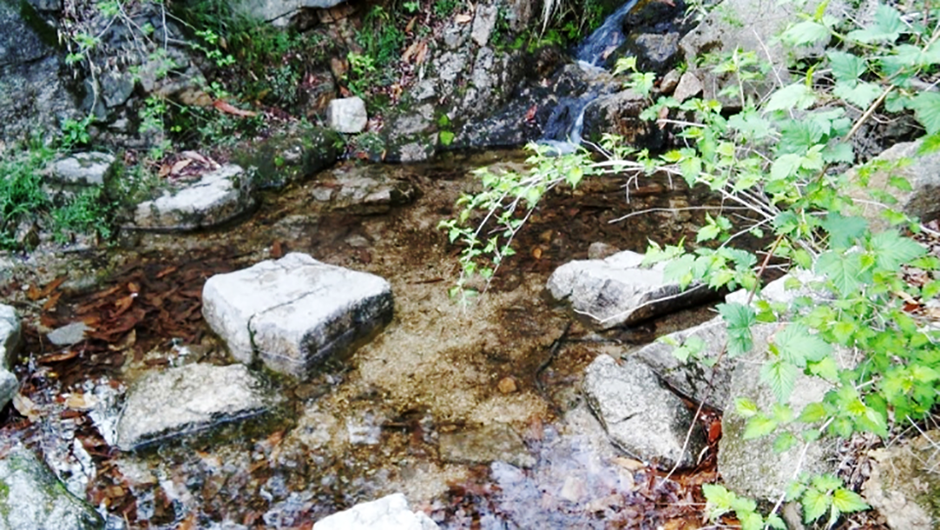
Suseongdonggyegok Valley (수성동계곡)
4.3Km 2023-08-17
185-3, Ogin-dong, Jongno-gu, Seoul 서울특별시 종로구 옥인동
Suseong-dong Valley's stream runs down from Inwangsan Mountain and joins Cheonggyecheon Stream, and it is said that the name of the village was called Suseong-dong during the Joseon dynasty due to the loud and clear sound of the flowing water. It appears in the painting "Jangdong Palgyeongcheop," which is Jangdong Eight Scenic Views, that depicts the eight scenic views of Bugaksan Mountain and Inwangsan Mountain as well as in other historical books of the Joseon dynasty as a place of scenic beauty. The valley was so famous for its beauty, that Prince Anpyeong of the Joseon dynasty built his house "Bihaedang" to fully enjoy the view, and the valley and its stone bridge were designated as a cultural property of Seoul in 2010.
 English
 한국어
한국어 日本語
日本語 中文(简体)
 Deutsch
 Français
 Español
 Русский


