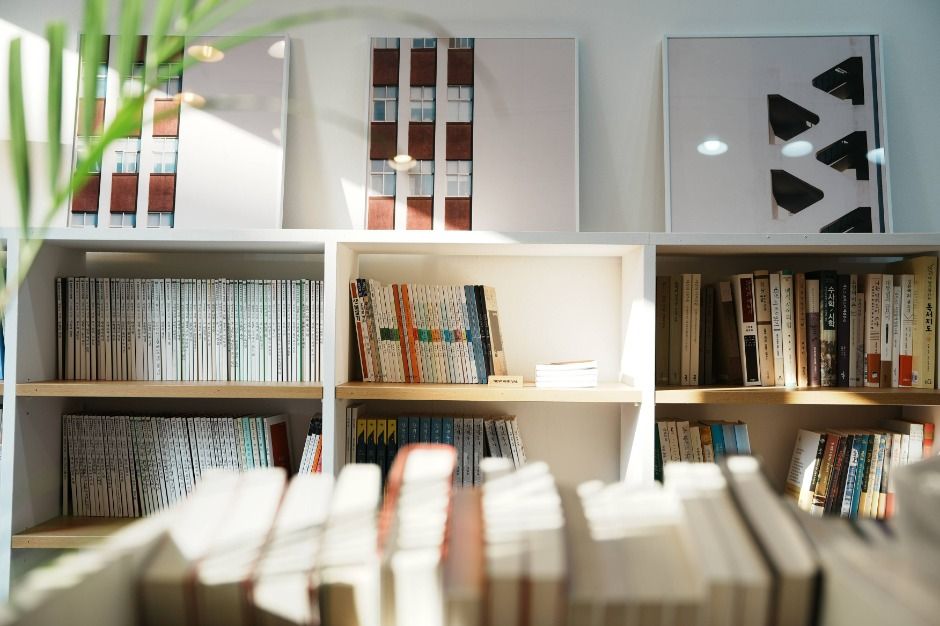
Dasi Bookshop (다시서점)
17.0Km 2025-08-14
77-24 Gonghang-daero 8-gil, Gangseo-gu, Seoul
Dasi Bookshop sells both second-hand and new books, and offers a space for readers to connect with books through a carefully curated selection, including limited edition books and books from independent publishers that are difficult to come by. In addition, it hosts book talks, book reading sessions, and author events, creating a cultural space for the community to connect. Visitors can also purchase merchandise and specially designed products, along with books, available both online and in the physical store.

Anyang Art Park (안양예술공원)
17.1Km 2025-10-23
7 Yesulgongwon-ro 131beon-gil, Manan-gu, Anyang-si, Gyeonggi-do
+82-31-8045-7000
Anyang Art Park, formerly known as Anyang Recreational Park, is an easily accessible, well-maintained cultural space. It has been revitalized with updated features such as artificial waterfalls, an outdoor stage, a plaza, walking paths, and enhanced lighting facilities. The park promotes art projects by displaying 50 artworks from renowned Korean and international artists throughout various locations. Nearby, visitors can explore additional local attractions including hiking trails through dense forests, traditional temples such as Anyangsa Temple and Yeomburam Hermitage, the treasure-designated Flagpole Supports at Jungchosa Temple Site, and the Kimchungup Architecture Museum, all of which contribute to a rich area experience.
National Women's History Exhibition Hall (국립여성사전시관)
17.4Km 2021-09-23
50, Hwajung-ro 104beon-gil, Deogyang-gu, Goyang-si, Gyeonggi-do
+82-31-819-2288
The National Women’s History Exhibition Hall opened on December 9, 2002 in Daebang-dong, Seoul, but was moved to its current location in Goyang, Gyeonggi-do on September 1, 2014. The hall uses both traditional display techniques as well as creative media art to showcase the history and culture of women in Korea. The exhibition hall aims to give women their rightful place in Korean history, in addition to enhancing women’s sense of pride and expand gender equality through various activities, including public education programs and special exhibitions.
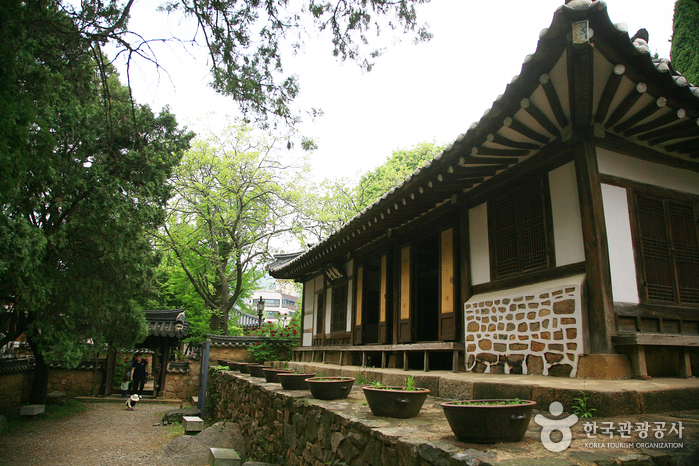
Chunghyeon Museum (충현박물관)
17.7Km 2021-08-02
5-6, Ori-ro 347beon-gil, Gwangmyeong-si, Gyeonggi-do
+82-2-898-0505
The Chunghyeon Museum preserves the legacy of the respected scholar Ori Lee Wonik. The museum's logo is inspired by the scholar's signature on a letter that he wrote four years before his death, addressed to his son Lee Uijeon, grandson Lee Suyak, and successive descendants. Visitors can see various artifacts and ruins related to Lee Wonik.
Dongpyun Korean Medicine Clinic (동편부부한의원)
17.9Km 2025-11-28
#202, 2nd Floor, 188 Burim-ro, Dongan-gu, Anyang-si, Gyeonggi-do
Dongpyeon Korean Medicine Clinic focuses on restoring body balance through holistic treatments.
Specialized in detox care, weight control, skin improvement, and pre/postnatal therapy,
it helps the body recover naturally by addressing root causes, not just symptoms.
Namhansanseong Trail (남한산성 탐방로)
18.0Km 2024-02-20
Sanseong-ri, Namhansanseong-myeon, Gwangju-si, Gyeonggi-do
Namhansanseong Trail is a historical-themed path designed to provide an experiential journey through the Namhansanseong Fortress, a UNESCO World Heritage site. This lengthy elliptical fortress is built on rugged terrain at an elevation of 500 meters, with walls spanning a circumference of 12.4 kilometers. Offering a total of five routes, the trail presents breathtaking scenery and adds charm with pathways that closely follow the fortress walls.
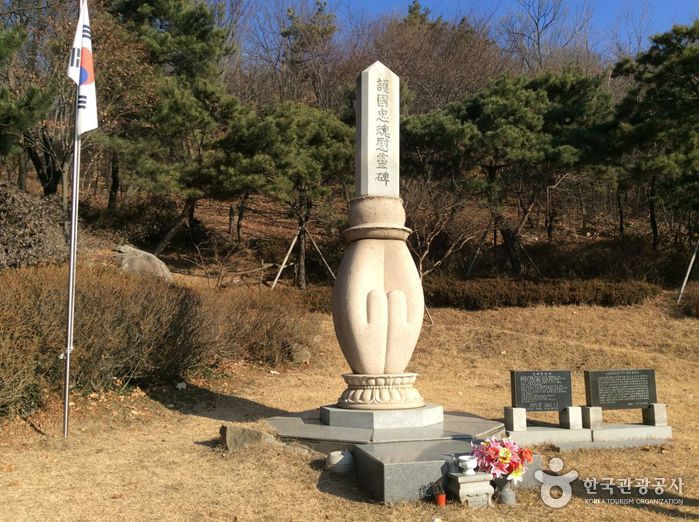
Memorial to the Loyal Dead (호국충혼위령비)
18.0Km 2025-01-13
56-33, Gaehwadong-ro 13-gil, Gangseo-gu, Seoul
+82-2-2125-0848
When the fate of the nation was hanging by a thread as the North Korean Army launched an invasion of the South on June 25, 1950, about 1,100 officers and men from
the South Korean First Division's 11th, 12th, and 15th regiment retreated to Gimpo and built the last line of defense on Gaehwasan Mountain from June 26 to 30 to fight against a large army
of North Korean soldiers disguised as South Korean men.
Unfortunately, their communication with the headquarters was
cut off and their supply of ammunition and food ran out. As a result, the entire South Korean force was killed by the much larger North Korean army
in a valley around Gaehwasan Mountain. In order to commemorate those who died for the country, the government established the
Memorial to the Loyal Dead on Gaehwasan Mountain in 1994. A memorial service is
also held here annualy on June 28th.
x_height: 4.7 meters high
Built by the First Division of the ROK Army, Mitasa Temple
Pureun Arboretum & Hang-dong Railroad (푸른수목원&항동철길)
18.0Km 2025-01-17
240 Yeondong-ro, Guro-gu, Seoul
Pureun Arboretum is a botanical garden boasting well-established ecological parks and scenic walking trails. It encompasses diverse themed gardens, including the Wildflower Garden, Hydrangea Garden, Conifer Garden, Broadleaf Tree Garden, Bulbous Plant Garden, Wetland Garden, and Rose Garden, complemented by an Visitor Center. The Forest Learning School, functioning as a greenhouse, showcases plants from various corners of the globe and hosts educational programs. Visitors can avail themselves of facilities like the book café, a café, and a library. Additionally, the arboretum is intersected by the abandoned railroad tracks of Hang-dong.
Myongji Hospital (명지병원)
18.1Km 2025-10-23
55 Hwasu-ro 14beon-gil, Deogyang-gu, Goyang-si, Gyeonggi-do
Myongji Hospital is a general hospital located in Goyang-si with various departments and specialized treatment centers.
We operate Breast Thyroid Center, Prostate Cancer and Kidney Cancer Center, Ovarian Cancer and Gynecological Cancer Center, and Robotic Surgery Center for specialized treatment, and have introduced the latest medical device, da Vinci Xi to conduct surgeries for various types of cancer as well as robotic surgeries for a wide range of benign diseases. In addition, we provide more specialized and prompt medical services to patients through advanced facilities such as the Radiology Center, Rehabilitation Center, Intervention Center, and Comprehensive Health Checkup Center. Specifically, we are prominent in the field of organ transplantation and operate the Organ Transplant Center performing liver, kidney, lung, and heart transplants. We offer interpretation services for foreign patients by professional coordinators who speak English, Russian, Mongolian, and Chinese to eliminate language barriers by opening the International Medical Center in 2009 and provide guesthouses, airport pick-up and send-off services for foreign patients as well to maximize their convenience.
Chung-Ang University Gwangmyeong Hospital (중앙대학교광명병원)
18.1Km 2025-11-06
110 Deokan-ro (Iljik-dong), Gwangmyeong-si, Gyeonggi-do
Chung-Ang University Gwangmyeong Hospital is a general medical institution with approximately 700 beds. Opened in March 2022, the hospital has a total floor area of 97,000㎡ and consists of 14 floors above ground and 8 floors underground.
The hospital operates around six specialized clusters for critical care: Cancer Hospital, Cardiovascular & Cerebrovascular Hospital, Respiratory & Allergy Center, Digestive Disease Center, Spine Center, and Joint Center. With leading specialists in each field and state-of-the-art medical equipment, it provides advanced treatments and multidisciplinary care.
Recognized as a “hospital specializing in surgery,” Chung-Ang University Gwangmyeong Hospital plays a central role in the metropolitan critical care system. It leads the digital transformation of healthcare by harmonizing digital healthcare with public health services, strengthening its position as a highly competitive medical institution. Moving forward, the hospital will continue to pursue patient-centered medical innovation and strive to become a next-generation hospital that represents not only the Seoul metropolitan area but also the Republic of Korea.
 English
 한국어
한국어 日本語
日本語 中文(简体)
 Deutsch
 Français
 Español
 Русский


