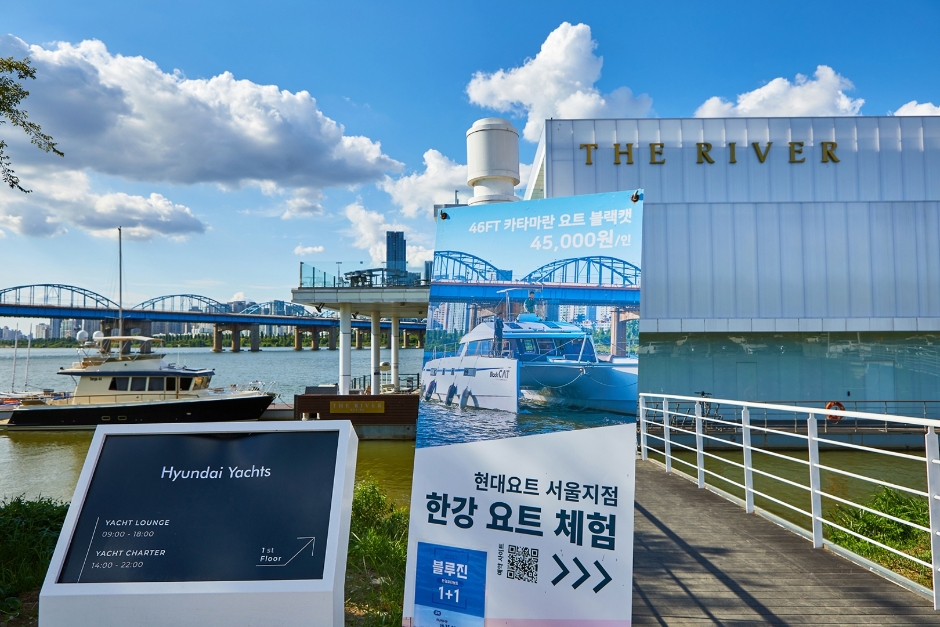
Hyundai Yacht Seoul Branch (현대요트 서울지점)
3.9Km 2024-01-04
350 Dongjak-daero, Seocho-gu, Seoul
Hyundai Yacht Seoul Branch is where visitors can enjoy water sports such as yachting, dinghy yachts (small sail yachts for one to three people without engines and cabins), and kayaking on the Hangang River. It is located in “The River” in Banpo Hangang Park. Luxury yachts, named Black Cat and Blue Jin, are popular with families, while those who enjoy thrilling activities prefer dinghy yachts and kayaks. Visitors can enjoy an incredible sunset on the water as the Hangang River and Seoul's cityscape create an amazing view.
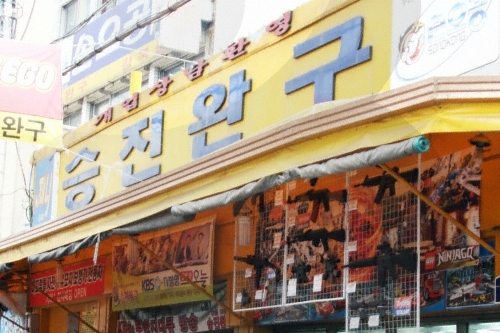
Seungjin Toy (승진완구)
3.9Km 2025-01-06
30, Jong-ro 52-gil, Jongno-gu, Seoul
Seungjin Toy is a toy store that carries almost every kind of toy imaginable from stuffed animals to character dolls and much more. What makes this store even more attractive to many customers is that their merchandise is, on average, 30% cheaper than that of their competitors.

Frientrip Co., Ltd. (주식회사 프렌트립)
3.9Km 2025-11-28
#G704, HEYGROUND, 115 Wangsimni-ro, Seongdong-gu, Seoul
Frientrip is a wellness-based medical tourism service that integrates travel with personalized health management. It partners with certified medical institutions and trusted wellness providers to offer a seamless journey that combines check-ups, beauty and healthcare programs, and recovery experiences. KareTrip enables customers to conveniently schedule medical services while enjoying travel, providing tailored itineraries and on-site support as a comprehensive end-to-end service.
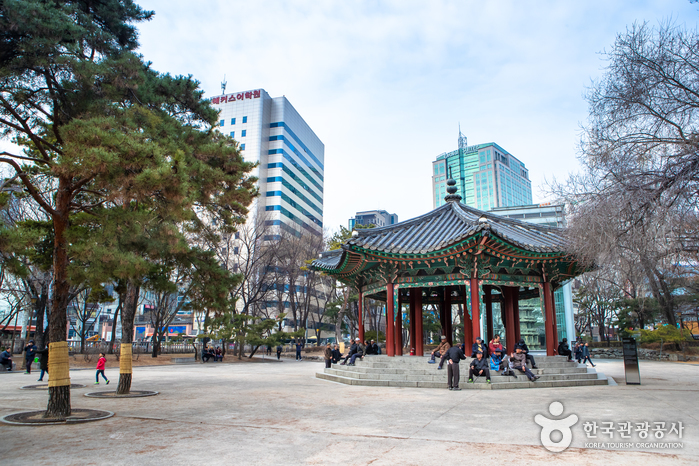
Tapgol Park (탑골공원)
3.9Km 2024-03-04
99, Jong-ro, Jongno-gu, Seoul
Tapgol Park is the first modern park in Seoul. Having been the site of the Buddhist temple of Wongaksa Temple since 1467, the land was turned into a park in 1897. The park has a significant presence in Korean history, being the place where the March 1 Independence Movement began in 1919. One can find historical sites that hearken back to the struggle, such as the Palgakjeong Pavilion, the center of the movement; cultural heritage sites such as the Ten-story Stone Pagoda of Wongaksa Temple Site and the Stele for the Construction of Daewongaksa Temple at Wongaksa Temple Site; and monuments such as the independence movement relief plate, murals, the statue of Son Byeong-hee, and the statue of Han Yong-un.
Nana Plastic Surgery (나나성형외과의원)
4.0Km 2025-10-23
(2nd-10th and 12th-13th Floors, HM Tower), 492 Gamnam-daero, Gangnam-gu, Seoul
Nana Plastic Surgery Center provides one-on-one care that takes into account individual characteristics.
We boast a system that makes patients feel at ease. For example, we have surveillance cameras in the operating room, a system where doctors are responsible for safe surgery with their real names, and a resident anesthesiologist.
We have specialized doctors in each field (eye/nose/breast/facial contouring cosmetic surgeries, cosmetic surgery for men, skin lifting, body contouring surgery, non-invasive procedures, collaboration with otolaryngologists, breast examination, etc.). They treat patients with great care and always strive for satisfactory results.
WOOA Plastic Surgery (우아성형외과의원)
4.0Km 2025-11-26
492 Gangnam-daero, Gangnam-gu, Seoul
WOOA Plastic Surgery was formerly Regen Plastic Surgery and Dermatology in Apgujeong. It is run according to the treatment philosophy of Director Woo-jung Kim, the founder of Regen Plastic Surgery who earned a doctorate in plastic surgery at Seoul National University.
WOOA Plastic Surgery is a global comprehensive beauty brand encompassing plastic surgery, dermatology, and cosmetics, with the vision of providing responsible medical services and realizing elegant beauty for each patient.
The clinic is committed to ceaseless research with the goal of becoming a leading medical institution that produces leaders to drive medical developments in Korea. It aims to become a global comprehensive beauty brand, with employees who all prioritize customers' safety and rapid recovery.
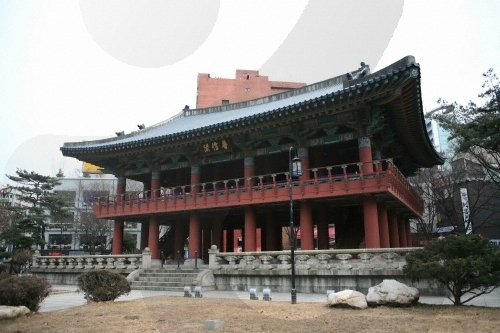
Bosingak Belfry (보신각 터)
4.0Km 2024-03-04
54, Jong-ro, Jongno-gu, Seoul
Bosingak Belfry is also known as Jonggak. It was the site in which a large bell, used to keep the time in Seoul, was found during the Joseon period (1392-1897). Bosingak Belfry was burned down during the Korean War (1950-1953) and was reconstructed in 1979. The original bell was moved to the Gyeongbokgung Palace, and a new bell was forged in 1985. At midnight, January 1, the bell at the Bosingak Belfry is rung to welcome the new year. Many people gather around the belfry to make a wish for their new year.
YOU&I Clinic Wangsimni (유앤아이의원 왕십리점)
4.0Km 2025-11-24
2nd–3rd Floor, Handong Tower, 315 Wangsimni-ro, Seongdong-gu, Seou
YOU&I Clinic is a trusted dermatology and aesthetic clinic with extensive experience and expertise accumulated since 2006.
At YOU&I Clinic, we are committed to using authentic products, providing precise and honest treatments, and offering personalized services tailored to each individual’s needs.
We welcome clients not only from Korea but also from Japan, China, and Thailand, and offer Japanese and Chinese interpretation services. All foreign clients receive treatments at the same prices as Korean clients.
YOU&I Clinic specializes in lifting, petite procedures, and skin boosters, as well as a wide range of aesthetic skin treatments. We also provide thorough aftercare to ensure the highest level of satisfaction for every client.
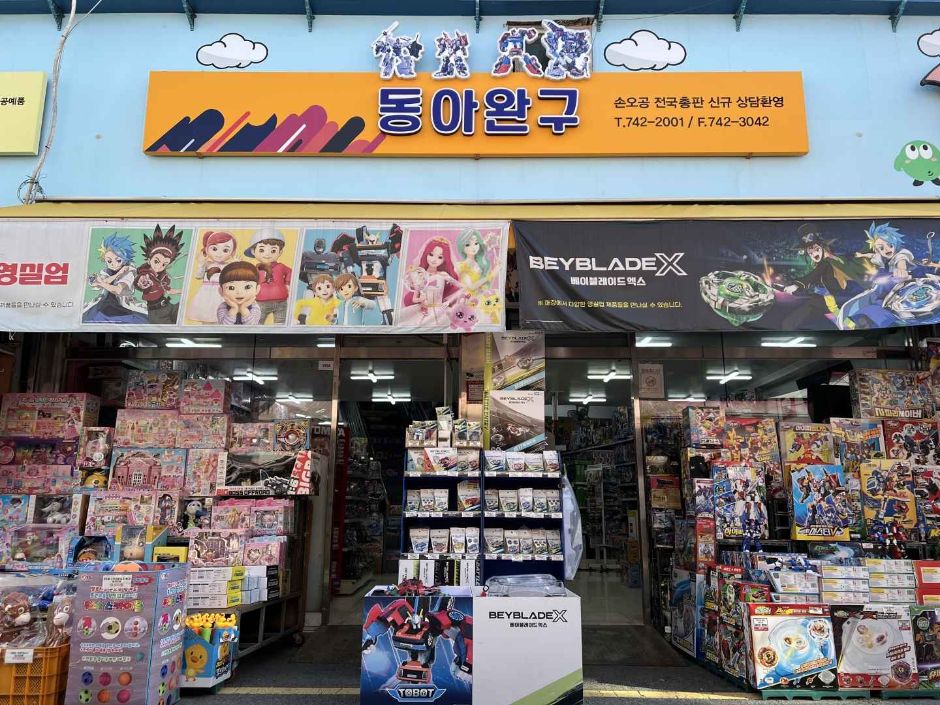
Donga Stationery (동아완구)
4.0Km 2024-09-11
5 Jong-ro 52-gil, Jongno-gu, Seoul
Donga Stationery is a stationery store located along Changsin-dong Stationery Street. The stop offers a full range of stationery and character goods and is popular among children and adults alike. The shop is located right by Dongdaemun Station (Seoul Subway Line 1), Exit 4, making it easily accessible.
Cafe PLENO (카페쁠레노)
4.0Km 2025-11-06
724, Seolleung-ro, Gangnam-gu, Seoul
Actor Jang Keun-Suk
This cafe is run by actor Jang Keun-Suk, who is called the 'Asian Prince'. The white-style interior and plant decorations create a refreshing atmosphere, making you feel as if you are visiting a botanical garden. The flower decoration of Cafe PLENO changes according to the season and consists of flowers that can be enjoyed in that season. It is considered a good place to enjoy a quiet leisure time with excellent lighting as well as coffee taste. The drinks and dessert decorations are also great. Many Japanese tourists come to see Jang Keun-Suk, and a Japanese menu is also prepared.
 English
 한국어
한국어 日本語
日本語 中文(简体)
 Deutsch
 Français
 Español
 Русский


