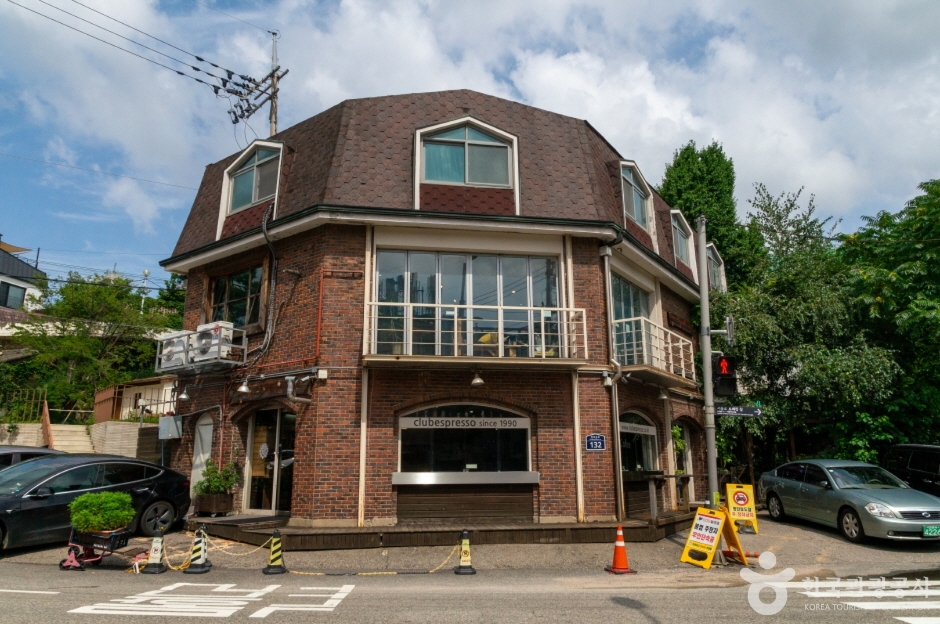
Club Espresso (클럽에스프레소)
3.0Km 2024-02-20
132 Changuimun-ro, Jongno-gu, Seoul
Club Espresso is a café that opened in 1990, constructed with red bricks. They roast their own coffee beans, offering a diverse coffee menu. The Moon Blend, a blend of Colombian, Brazilian, Ethiopian, and Guatemalan beans, is a favorite among regulars and is made with the coffee bean ratio favored by former President Moon Jae-in. Nearby attractions include the Yun Dongju Hill (Cheongun Park) and the Yun Dong-ju Literary Museum, dedicated to the poet beloved by Koreans.
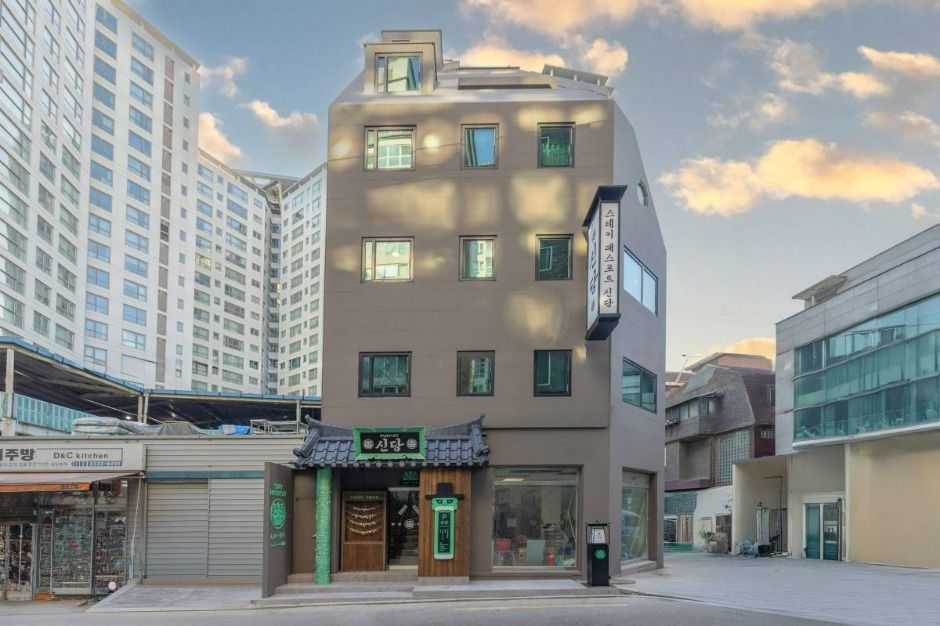
Stay Passport Sindang Ryokan (스테이 패스포트 신당 료칸)
3.0Km 2025-04-24
33 Nangye-ro 11-gil, Jung-gu, Seoul
Stay Passport Sindang Ryokan offers a four major room types: "Goyo" and "Sohyang," designed for two who seek privacy and relaxation away from the busy city life; "Pungryu," accommodating up to four people, perfect for family guests or a group of friends; and "Pungyo," designed to offer utmost relaxation.
![Olive Young - Twin City Branch [Tax Refund Shop] (올리브영 트윈시티)](http://tong.visitkorea.or.kr/cms/resource/04/2889104_image2_1.jpg)
Olive Young - Twin City Branch [Tax Refund Shop] (올리브영 트윈시티)
3.0Km 2024-04-18
Store #B109, #B110, GF Twin City Bldg., 366, Hangang-daero, Yongsan-gu, Seoul
-
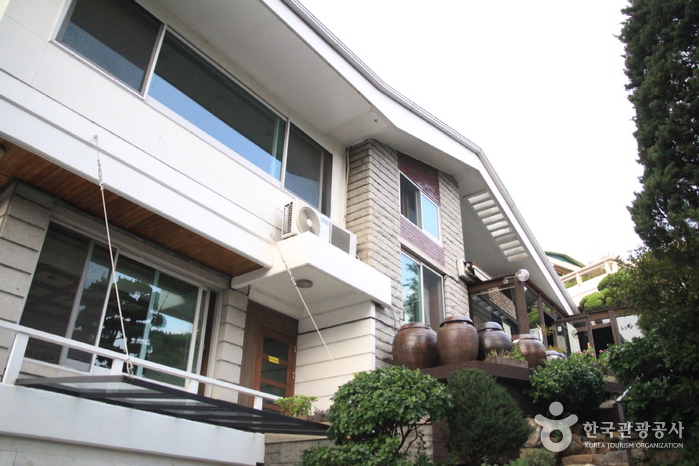
Jaha Sonmandu (자하손만두)
3.0Km 2024-03-06
12 Baekseokdong-gil, Jongno-gu, Seoul
+82-2-379-2648
Jaha Sonmandu is a mandu specialty restaurant located in Buam-dong. Their signature dish is mandu guk (mandu soup), which features dumplings filled with beef, pork, mung beans, and bean curd, boiled in a clear broth. The chewy mandu skin and the clean-tasting broth, flavored with homemade soy sauce, are highlights of the dish. Housed in a renovated residential building, the restaurant offers a refined yet homey atmosphere for dining. Through the windows, diners can enjoy a refreshing view of Inwangsan Mountain.
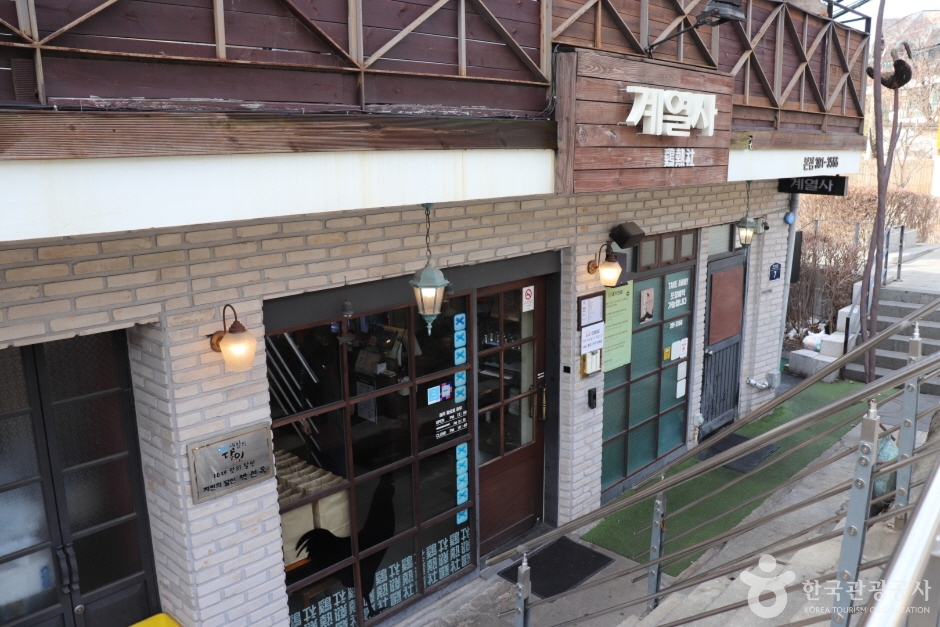
Buam-dong Gaeyeoalsa (부암동 계열사)
3.0Km 2024-02-21
7 Baekseokdong-gil, Jongno-gu, Seoul
Buam-dong Gaeyeoalsa is a chicken place that has received recognition in the Blue Ribbon Survey, the first restaurant guide in Korea. The representative menu is the fried chicken served in a bamboo tray with wedge potatoes. The chicken has a thin and crispy coating. Nearby attractions include the Yun Dongju Hill (Cheongun Park) and the Yun Dong-ju Literary Museum, dedicated to the poet beloved by Koreans.
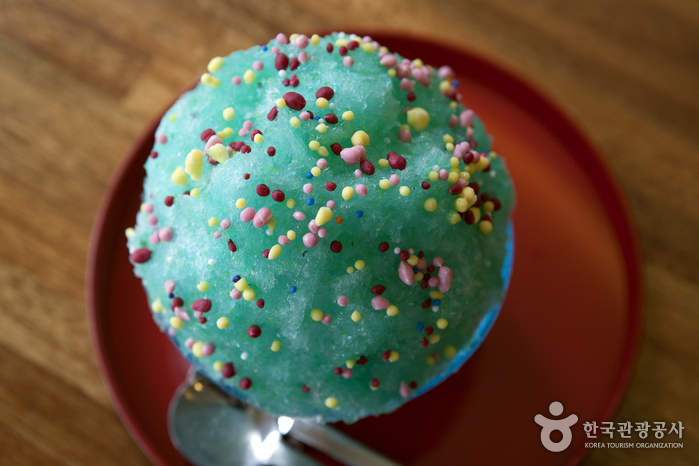
Boobing (부빙)
3.0Km 2024-01-12
136 Changuimun-ro, Jongno-gu, Seoul
Boobing is short for "Buam-dong bingsu" (shaved ice). As such, it is a shaved ice restaurant that always has a long waiting line on weekdays or weekends. The main menu item is pat bingsu (shaved ice with red beans), made with red beans that are provided by a bean produce. They also serve their own original bingsu desserts that use ingredients like melon, mint chocolate, and gold pineapple. Their signature menu is Chodang corn bingsu, made with finely ground corn with milk ice on top. The cafe has a one bingsu order per person policy.
Sosohan Punggyeong (소소한 풍경)
3.0Km 2024-02-20
75 Jahamun-ro 40-gil, Jongno-gu, Seoul
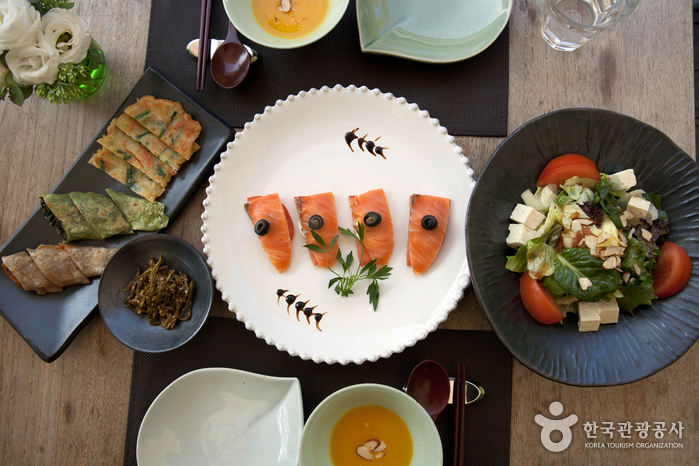
Sosohan Punggyeong is the first restaurant that received the restaurant guide, Blue Ribbon Survey, in Korea. It is located in a renovated house with a courtyard. They offer a course menu featuring appetizers to desserts. One of the signature dishes is the gaji jjim (spicy eggplant soup), a dish made with eggplant and meat. It is recommended to make reservations in advance, as many guests prefer to book ahead.

Dongnimmun Gate (독립문)
3.0Km 2022-12-15
251, Tongil-ro, Seodaemun-gu, Seoul
Dongnimmun stands at the location originally known as Yeongeun, where envoys were once treated. When a Chinese envoy visited, the King would go out through this door to greet. In 1898, to announce the independence from Japan, Dongnimun was constructed with the fund collected by the citizens. The traces of the past still remain on Dongnimmun with two pillars in front of Dongnimmun being the remains of Yeongeunmun.
The Arc de Triomphe in France can be recalled in comparison to Dongnimmun. Dongnimmun was built using granite with a passageway x_height of 14.28 meters. On the top it is written ‘Dongnimmun’ in Korean with the national flag drawn on each side. On the inner-left side there are stone stairs leading to the attic. The national flower Mugunghwa are planted around Dongnimmun. Now it is surrounded by roads and it is eye-catching to view when passing by.
Seodaemun Prison History Museum (서대문형무소역사관)
3.0Km 2024-12-02
251 Tongil-ro, Seodaemun-gu, Seoul
Seodaemun Prison was built under the Japanese administration to imprison independence movement activists. It first opened on October 21, 1908 under the name Gyeongseong Prison. Eventually, so many activists were imprisoned that the building had to be expanded. At that time, the name changed to Seodaemun Prison on September 3, 1912. Eighty years later, the prison was turned into Seodaemun Independence Park on August 15, 1992 to commemorate the Korean patriots who were tortured in prison, giving their lives for freedom. Of the many buildings, only seven were preserved for their historical significance, among which three prison buildings and the execution site were designated as a Historic Site. In 1998, the park underwent another transformation into today's Seodaemun Prison History Hall to educate the public on the importance of Korea's independence and the sacrifices of those who fought to achieve it.
![Olive Young - Sinseol-dong Station Branch [Tax Refund Shop] (올리브영 신설동역)](http://tong.visitkorea.or.kr/cms/resource/24/2888624_image2_1.jpg)
Olive Young - Sinseol-dong Station Branch [Tax Refund Shop] (올리브영 신설동역)
3.1Km 2024-04-16
4, Wangsan-ro, Dongdaemun-gu, Seoul
-
 English
 한국어
한국어 日本語
日本語 中文(简体)
 Deutsch
 Français
 Español
 Русский


