
Leeum, Samsung Museum of Art (삼성미술관 리움)
4.8Km 2022-12-15
60-16, Itaewon-ro 55-gil, Yongsan-gu, Seoul
Leeum, Samsung Museum of Art, exhibits traditional and modern art works by Korean and international artists. The museum itself is just as fascinating as the art works on display, since the museum's three buildings were designed by internationally renowned architects Mario Botta, Jean Nouvel, and Rem Koolhaas.
MUSEUM 1 houses traditional Korean art, such as calligraphy, paintings, ceramic arts, and metal craftwork, while MUSEUM 2 displays modern and contemporary art by both Korean and international artists.
King Sejong The Great Museum (세종대왕박물관)
4.9Km 2024-03-08
56, Hoegi-ro, Dongdaemun-gu, Seoul
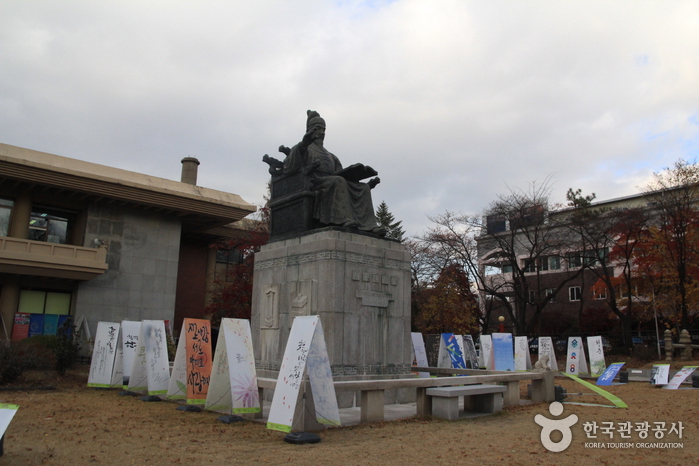
King Sejong The Great Museum is a cultural complex located in the heart of Seoul, near Gwanghwamun Plaza.The Hangeul Room exhibits documents published during the reign of King Sejong, the Science Room displays Cheugugi and celestial planisphere, and the Korean Traditional Music Room showcases various traditional Korean musical instruments. The Biography Room features Portrait of King Sejong and paintings depicting scenes from his life. Outdoors, there are statues of King Sejong, the scahe sundial, the clepsydra, and Cheugugi.
JaneDMCKorea (주)제인디엠씨코리아)
4.9Km 2025-10-23
(4th Floor), 51 Mallijae-ro, Mapo-gu, Seoul
Jane DMC Korea is an inbound travel agency and international patient recruitment organization established in 2006. Headquartered in Seoul, with branch offices in Busan, Indonesia, and India, the company develops and sells programs for international clients in 40 countries while also attracting international patients.
Kim Koo Museum & Library (백범김구기념관)
4.9Km 2022-08-30
26, Imjeong-ro, Yongsan-gu, Seoul
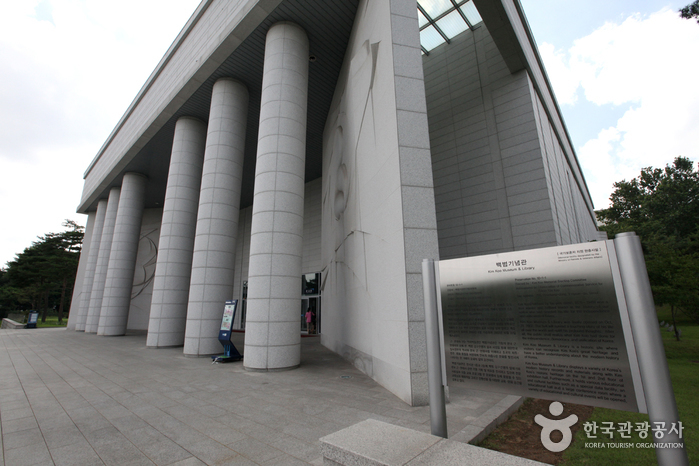
Kim Koo Museum & Library was built in Yongsan-gu, Seoul to commemorate Baekbeom Kim Koo (1876-1949), a highly respected Korean independence activist. It opened on October 22, 2002 to commemorate Kim Koo's efforts and achievements in Korean history. The main hall is comprised of two floors, exhibiting relics related to his entire life. A statue of a seated Kim Koo is situated in the central space of the first hall.
Medical Avenue ((주)메디컬애비뉴)
5.0Km 2025-10-23
(#1433, Mapo T Town), 144 Mapo-daero, Mapo-gu, Seoul
Since its inception in 2014, Medical Avenue has been a leading medical agency, providing world-class healthcare services in Korea to patients from around the globe. Our deep understanding of patients' cultural backgrounds and the Korean medical system allows us to minimize language and cultural barriers through the support of professional interpreters and multicultural coordinators. This dedication has resulted in over 5,000 patients receiving stable treatment with a satisfaction rate that boasts over 98% returning patients. Medical Avenue is committed to ensuring that patients receive comfortable and trustworthy care, continually striving to deliver the best medical services available.
The War Memorial of Korea (전쟁기념관)
5.0Km 2022-12-29
29, Itaewon-ro, Yongsan-gu, Seoul
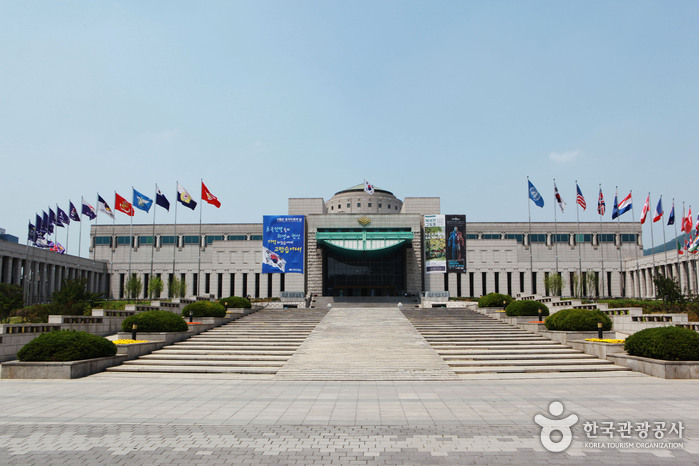
The War Memorial of Korea, located in Yongsan-gu, Seoul, exhibits and preserves materials related to the Korean War and serves as a national moral educational venue. It was established on June 10, 1994 by the War Memorial Service Korea Society to commemorate the noble sacrifice of patriotic martyrs. The museum houses approximately 33,000 artifacts with about 10,000 on display at indoor and outdoor exhibitions. There are six separate indoor halls, including Expeditionary Forces Room, Patriotic Memorial Room, War History Room, 6·25 Korean War Room, Development Hall and Large Machinery Room. The outdoor exhibition showcases large-sized weapons. Visitors of all ages from children to adults can also participate in 20 various educational programs and diverse cultural events such as military music and honor guard events, drawing contest, cultural event and more. The character of War Memorial of Korea is ‘Mudori’ featuring a helmet symbolizing the protection of the nation and a bay leaf meaning peace.
![Lindapick [Korea Quality] / 린다픽 [한국관광 품질인증]](http://tong.visitkorea.or.kr/cms/resource/10/2803310_image2_1.jpg)
Lindapick [Korea Quality] / 린다픽 [한국관광 품질인증]
5.1Km 2024-10-30
26-5, Itaewon-ro 23-gil, Yongsan-gu, Seoul
Lindapick is a guesthouse located a five-minute walk from Itaewon Station (line 6). The host of this new guesthouse, open in May 2021, prioritizes cleanliness by washing bedding and disinfect the whole place every time a guest leaves. The CCTVs that are installed outside and at the shared inner space are operated around the clock, strengthening the security. The light-lemon-color exterior walls of the accommodation and the muted-colored rooms are in harmony, forming a fresh and calm atmosphere. The room that can accommodate two persons shows how the host is considerate. A 100% natural aroma diffuser emits peppermint scent that makes guest unwind, and the lavender scent lets guests sleep tight. The kitchen with a refrigerator and a microwave oven is where you can cook a simple dishes, and the air purifier and the washing machine let you enjoy a fresher rest. From the entrance to the room, there is a garden that is decorated as an outdoor terrace, where you can have a leisurely time sunning yourself.
Severance Hospital (연세대학교 의과대학 세브란스병원)
5.1Km 2025-10-23
50-1 Yonsei-ro, Seodaemun-gu, Seoul
THE FIRST & THE BEST
As the first Western-style hospital in Korea, and with over 140 years of history, Severance Hospital (Gwanghyewon) has been leading the medical industry in Korea since its foundation in 1885.
Dedicated to improving the quality of medical services through specialization, Severance Hospital has the distinction of being the first hospital in Korea to operate six specialized hospitals: the Dental Hospital, Cancer Center, Rehabilitation Hospital, Cardiovascular Hospital, Children's Hospital, and Eye Hospital.
In 2023, Severance Hospital achieved a world first by performing 40,000 robotic surgeries and introduced a new paradigm in cancer treatment by bringing Carbon Ion Therapy to Korea for the first time.
As a global leader in advanced medical technology and patient-centered services, Severance Hospital was the first medical institution in Korea to receive JCI (Joint Commission International) accreditation and has ranked first in the medical service sector of the NCSI (National Customer Satisfaction Index) for 14 consecutive years.
Yonsei University Dental Hospital (연세대학교 치과대학병원)
5.1Km 2025-11-21
50-1 Yonsei-ro, Seodaemun-gu, Seoul
Since November 1915, when Dr. William J. Scheifley established the Department of Dentistry at Severance Union Medical School, officially introducing Western dental medicine to Korea, Yonsei University Dental Hospital has maintained its status as the nation's first and foremost dental institution for over 100 years. Notably, Yonsei University Dental Hospital, equipped with the finest medical professionals, state-of-the-art facilities, and a well-coordinated collaborative system among departments, excels in the treatment and prevention of oral and maxillofacial diseases while prioritizing the happiness and well-being of its patients. It stands as the premier dental hospital in Korea.
Seodaemun Culture & Sports Center Swimming Pool (서대문 문화체육회관 실내수영장)
5.1Km 2024-03-20
39 Baekryeonsa-gil, Seodaemun-gu, Seoul
Seodaemun Culture & Sports Center Swimming Pool, covering 973 square meters, features a total of seven lanes with both adult and children's pools. The facility provides regular swimming lessons, survival swimming lessons, aqua aerobics, and more. The water quality is maintained using a natural salt electrolysis system. For free swimming, visitors can purchase tickets from the kiosk on the second floor, receive wristbands from the information desk, and enjoy the facility at an affordable cost.
 English
 한국어
한국어 日本語
日本語 中文(简体)
 Deutsch
 Français
 Español
 Русский


