
![Converse - Myeong-dong Branch [Tax Refund Shop] (컨버스 명동점)](http://tong.visitkorea.or.kr/cms/resource/46/2878646_image2_1.jpg)
Converse - Myeong-dong Branch [Tax Refund Shop] (컨버스 명동점)
2.6Km 2024-06-27
16-1, Myeongdong 8-gil, Jung-gu, Seoul
-
![The Handsome Tommy Hilfiger - Myeong-dong Branch [Tax Refund Shop] (한섬 타미힐피거 명동)](http://tong.visitkorea.or.kr/cms/resource/47/2888847_image2_1.jpg)
The Handsome Tommy Hilfiger - Myeong-dong Branch [Tax Refund Shop] (한섬 타미힐피거 명동)
2.6Km 2024-04-18
11, Myeongdong 6-gil, Jung-gu, Seoul
-
![Innisfree - Myeong-dong 2(i)-ga Branch [Tax Refund Shop] (이니스프리 명동2가점)](http://tong.visitkorea.or.kr/cms/resource/70/2887870_image2_1.jpg)
Innisfree - Myeong-dong 2(i)-ga Branch [Tax Refund Shop] (이니스프리 명동2가점)
2.7Km 2024-04-22
1F, 2F (Myeongdong 2-ga), 27, Myeongdong 10-gil, Jung-gu, Seoul
-
![Black Yak - Jongno Branch [Tax Refund Shop] (블랙야크 종로)](http://tong.visitkorea.or.kr/cms/resource/32/2878232_image2_1.jpg)
Black Yak - Jongno Branch [Tax Refund Shop] (블랙야크 종로)
2.7Km 2024-04-22
22, Jong-ro 36-gil, Jongno-gu, Seoul
-
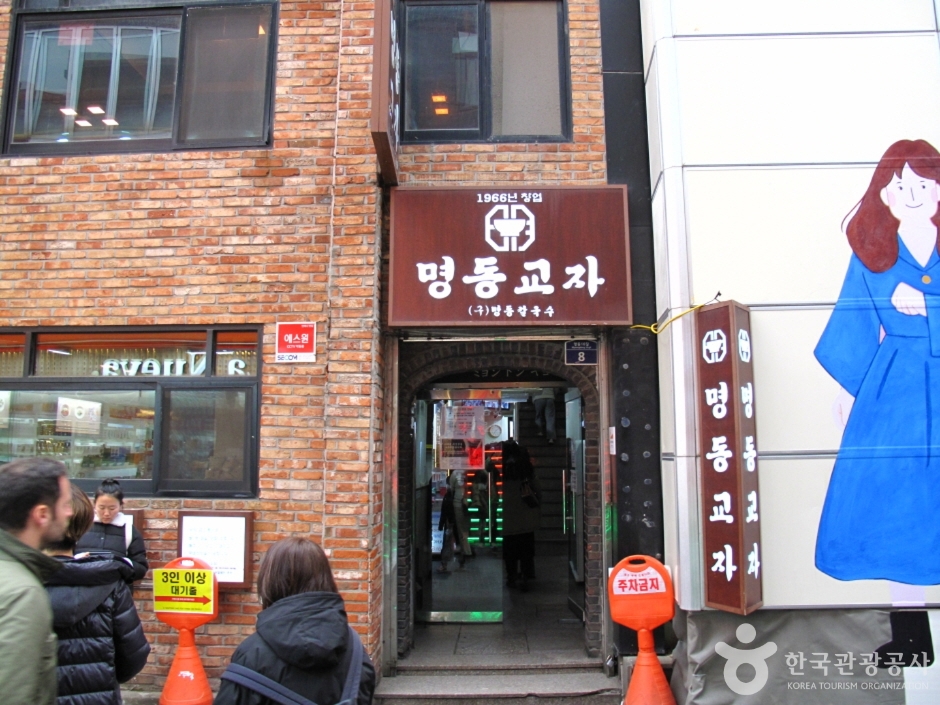
Myeongdong Kyoja (명동교자)
2.7Km 2024-03-25
29 Myeongdong 10-gil, Jung-gu, Seoul
+82-2-776-5348
Since 1970, Myeongdong Kyoja has been a staple in Myeongdong for its kalguksu (noodle soup), believed to be the progenitor of the Myeongdong-style kalguksu known for its rich broth and delicious gyoja (mandu). The restaurant's hallmark dish, kalguksu, features handmade noodles served in a deep, flavorful broth. In addition to its famous noodle soup, other beloved dishes include mandu and bibim guksu (spicy noodles).
Dongnimmun Gate (독립문)
2.7Km 2022-12-15
251, Tongil-ro, Seodaemun-gu, Seoul
Dongnimmun stands at the location originally known as Yeongeun, where envoys were once treated. When a Chinese envoy visited, the King would go out through this door to greet. In 1898, to announce the independence from Japan, Dongnimun was constructed with the fund collected by the citizens. The traces of the past still remain on Dongnimmun with two pillars in front of Dongnimmun being the remains of Yeongeunmun.
The Arc de Triomphe in France can be recalled in comparison to Dongnimmun. Dongnimmun was built using granite with a passageway x_height of 14.28 meters. On the top it is written ‘Dongnimmun’ in Korean with the national flag drawn on each side. On the inner-left side there are stone stairs leading to the attic. The national flower Mugunghwa are planted around Dongnimmun. Now it is surrounded by roads and it is eye-catching to view when passing by.
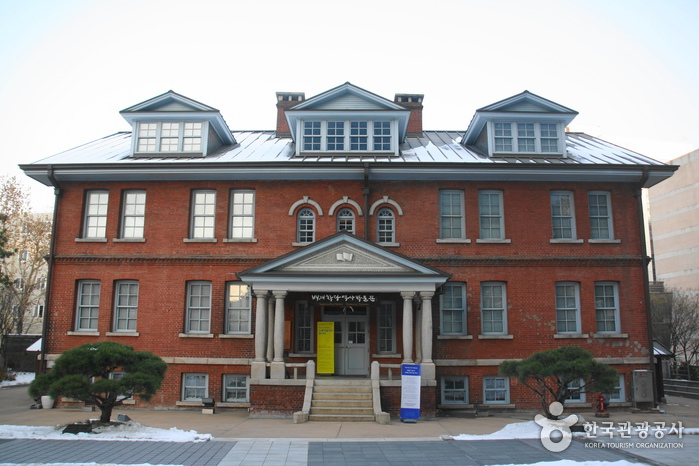
Appenzeller Noble Memorial Museum (배재학당 역사 박물관)
2.7Km 2022-10-14
19, Seosomun-ro 11-gil, Jung-gu, Seoul
+82-2-319-5578
The Appenzeller Noble Memorial Museum is dedicated to Henry Gerhart Appenzeller, the missionary who opened the first Western-style educational institution in Korea in 1885. The school started with English and core subjects, but expanded into the Pai Chai University, Pai Chai High School, and Pai Chai Middle School and has many famous alumni, including Rhee Syng-man. The memorial hall opened in 2008 in the east wing of the original school building, which was built in 1916 and designated as a Seoul Monument. With dynamically arranged permanent exhibitions, annual special exhibitions and special lectures, the museum offers a unique learning experience to visitors and people with an interest in the history of education in Korea.
Seodaemun Prison History Museum (서대문형무소역사관)
2.7Km 2024-12-02
251 Tongil-ro, Seodaemun-gu, Seoul
Seodaemun Prison was built under the Japanese administration to imprison independence movement activists. It first opened on October 21, 1908 under the name Gyeongseong Prison. Eventually, so many activists were imprisoned that the building had to be expanded. At that time, the name changed to Seodaemun Prison on September 3, 1912. Eighty years later, the prison was turned into Seodaemun Independence Park on August 15, 1992 to commemorate the Korean patriots who were tortured in prison, giving their lives for freedom. Of the many buildings, only seven were preserved for their historical significance, among which three prison buildings and the execution site were designated as a Historic Site. In 1998, the park underwent another transformation into today's Seodaemun Prison History Hall to educate the public on the importance of Korea's independence and the sacrifices of those who fought to achieve it.
Bank of Korea Money Museum (화폐박물관)
2.7Km 2024-03-18
39 Namdaemun-ro, Jung-gu, Seoul
This Renaissance-style three-story stone building is the museum of the Bank of Korea. The older Bank of Korea was established as the central bank of the Korean Empire in 1909 and has been designated as a National Historical Site. During the Japanese colonial period, the bank was renamed the Bank of Joseon, and the building was used as the main and head office of the Bank of Korea until 2001. The building has been used as the nation’s Money Museum since June 2001 in celebration of the 50th anniversary of the Bank of Korea. The museum has 13 exhibition rooms on two floors, with one basement floor and two above-ground floors. It holds special exhibitions of various currency and art collections to provide domestic and foreign visitors with the opportunity to enjoy the history and culture of currency. Visitors can learn about the Bank of Korea and the central banking system, as well as how to identify counterfeit notes and how money is produced and circulated. It is also a good place for children to learn about currencies from around the world. Advance reservations are required, and parking is not available. The museum can easily be reached via subway by getting off at Hoehyeon Station (Seoul Subway Line 4) and exiting through Exit 7.
 English
 한국어
한국어 日本語
日本語 中文(简体)
 Deutsch
 Français
 Español
 Русский


