Gwanghwamun Gate (광화문)
910.9M 2024-12-04
161 Sajik-ro, Jongno-gu, Seoul
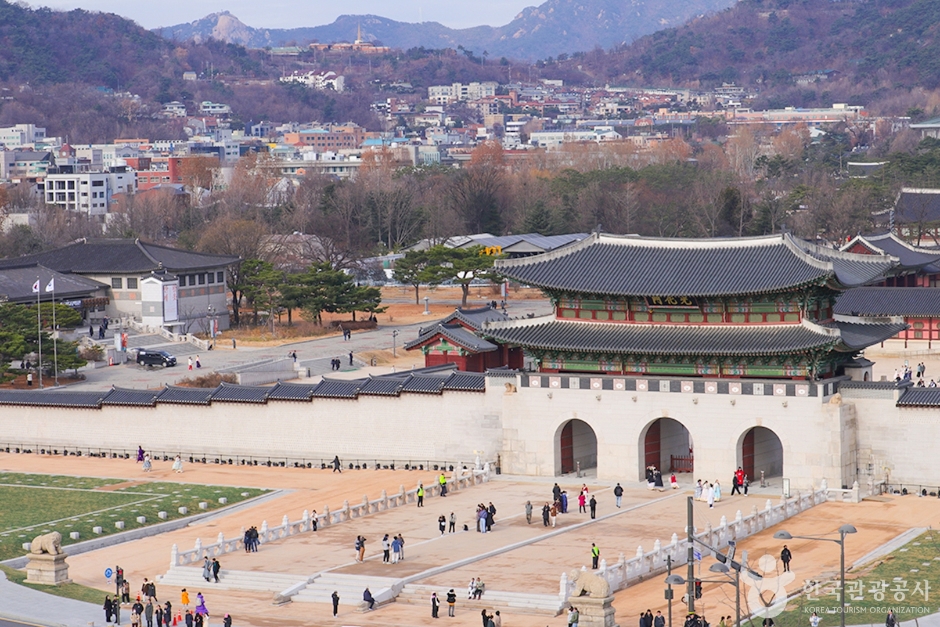
Built in 1395 under the reign of King Taejo, the first king of the Joseon dynasty, Gwanghwamun Gate is the southern gate of Gyeongbokgung Palace. It is also the main gate of the palace, therefore larger and fancier in comparison to the other gates. Gwanghwamun Gate consists of three arched gates; the center gate was used by the king, while the other two were used by the crown prince and royal officials. The tall granite walls of the gate serve as a platform for the wooden gate tower that watches over the city. The gate has a sign with its name written at the top center of the gate tower.
Gwanghwamun Gate went through several damages and restorations over the course of history. It was first severely damaged during the Imjin War (1592-1598) and was not restored until the reconstruction of Gyeongbokgung Palace in 1864. Under the Japanese administration, the gate was demolished and relocated to the north of the palace's eastern gate, followed by series of damages during the Korean War (1950-1953). In 1968, Gwanghwamun Gate was relocated back to the south of the palace and was rebuilt using concrete; however, the gate’s position was shifted a few meters away from its original location. In 2006, a major reconstruction project took place to restore Gwanghwamun Gate to its original state and location, disassembling the structure completely and replacing concrete with granite and wood. After three years and eight months of construction, Gwanghwamun Gate was fully restored to its original form and was open to the public on August 15, 2010.
Starbucks Byuldabang (스타벅스 별다방)
930.5M 2024-12-27
100 Toegye-ro, Jung-gu, Seoul
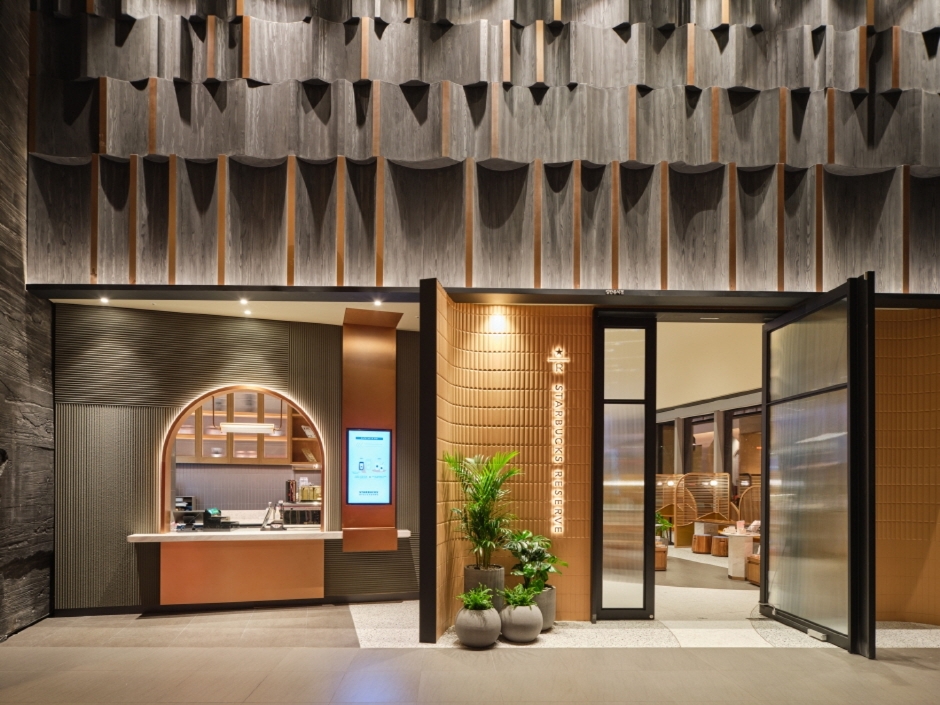
Byuldabang is a cozy space in the city, where the present and future of Starbucks coexist
Byuldabang is a special name. It combines the Korean words byul, which means stars, and dabang, which means a traditional space where people gather and talk over tea or drink. Byuldabang is the nickname Koreans generally use for Starbucks. Starbucks Byuldabang store opened in appreciation of customers of Starbucks Korea, celebrating its 22nd anniversary. This particular store is a Starbucks Reserve store with new concept food items, and is the first among Starbucks stores worldwide to have digital art wall decorations. The images projected to the art wall are “The Journey of Siren.” It is a surreal journey of Siren, who delivers coffee messages around the ocean, day and night. Customers love the story.
Sieunjae (시은재)
931.9M 2024-12-23
439 , Samil-daero, Jongno-gu, Seoul
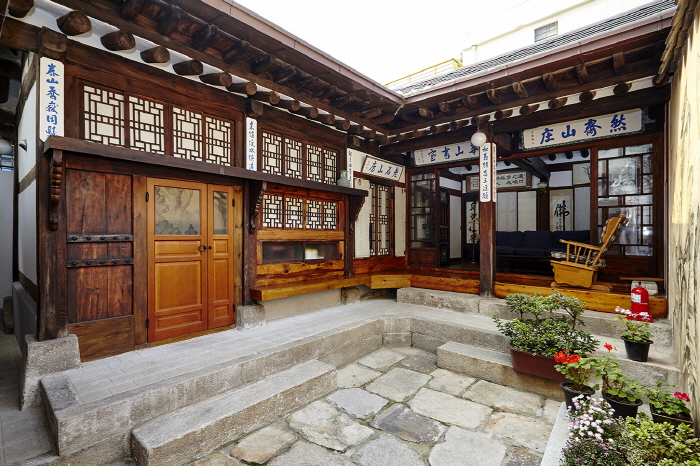
Sieunjae is a hanok stay that has stood in the midst of busy Gyeongun-dong, Jongno-gu, Seoul, for generations. The guestrooms comprise an anbang (bedroom plus living room), three smaller rooms, and a byeolchae or detached house. All rooms have a toilet, and there’s a well-equipped shared kitchen and a washing machine. Guests can either rent individual rooms or the whole hanok. Jongno is convenient for travel to all the historic sites of Seoul, and there’s a public carpark nearby.
Seoul Museum of Craft Art (SeMoCA) (서울공예박물관)
931.1M 2025-06-19
4 Yulgok-ro 3-gil, Jongno-gu, Seoul
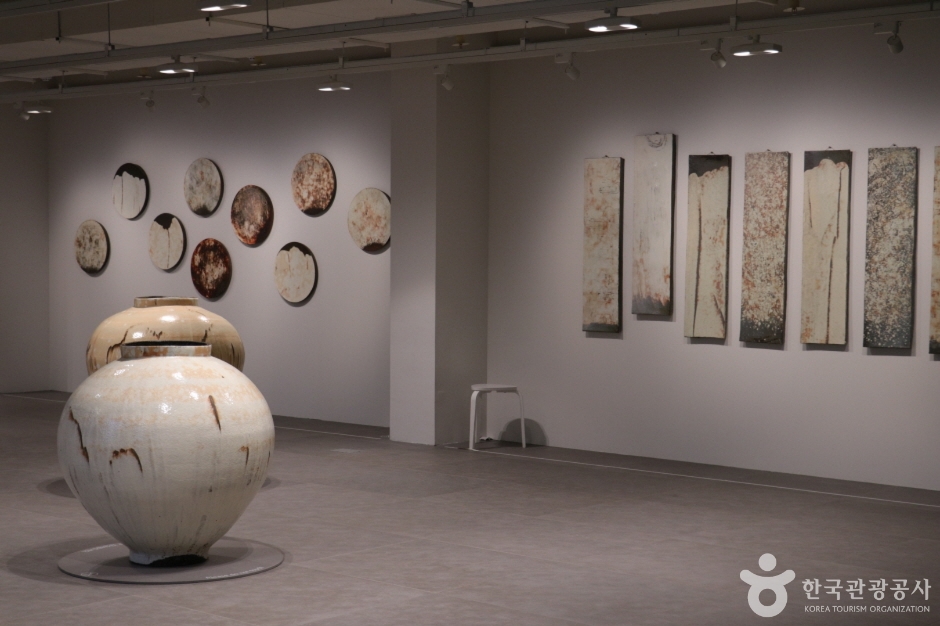
The Seoul Museum of Craft Art (SeMoCA), the first public museum of craft art in Korea, opened its doors in Anguk-dong, Jongno-gu, in July 2021 after renovating five buildings of the former Pungmoon Girls’ High School. SeMoCA studies and shares not only works, but also information, records, people, and environment related to craft art with the goal of becoming a dynamic platform for experiencing the technical, practical, artistic, and cultural values of craft.
SeMoCA holds a collection that comprises various crafts and craft materials covering multiple fields and eras from the traditional to the present. SeMoCA also holds exhibitions that feature the history of craft from traditional to contemporary art as well as local and children’s crafts, along with programs that utilize the museum’s craft installations, craft archives, craft library, and craft resource management system.
The site of the museum has deep historical roots as it is also the Andong Secondary Palace Site, where a detached palace was constructed as a royal residence for King Sejong’s son Prince Yeongeung, and served as a venue for royal celebrations, such as the wedding of King Sunjong. The site is also at the center of Jongno-gu, where Joseon-era master artisans (“gyeonggongjang”) of the royal palace produced and delivered craft works.
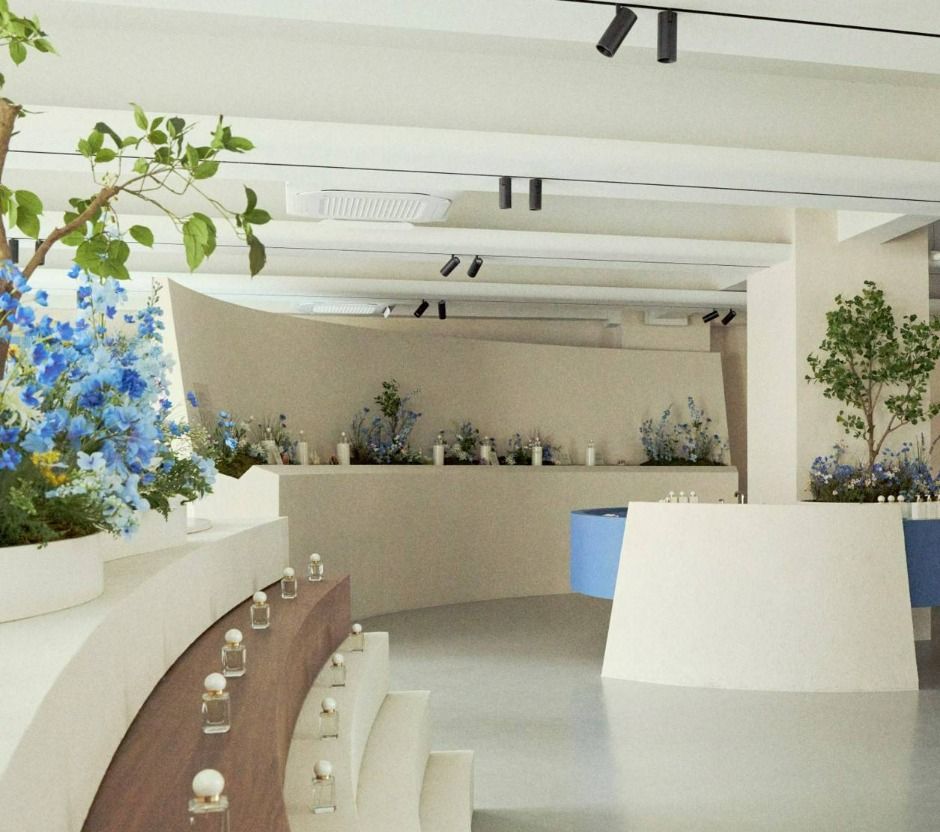
Matthew Chang Anguk (메튜장 안국)
935.4M 2025-07-14
33 Yulgok-ro, Jongno-gu, Seoul
Matthew Chang Anguk flagship store uses the whole space to bring the brand's philosophy to life through fragrance. Located in Anguk, the heart of Korea's tradition and aesthetics, the store's tranquil atmosphere sets the mood for visitors to try on and experiment with the brand's carefully selected perfume collection. The staff provides assistance in recommending the perfect scent according to visitor's preference, mood, and nostalgia. The store also has a section dedicated to body care products, such as hand wash and body lotion.
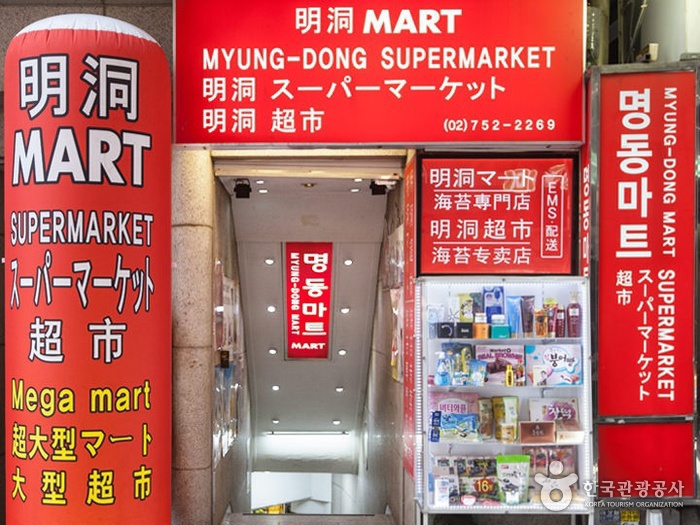
Harmony Mart Myeong-dong Station Branch (하모니마트 명동역점)
938.8M 2024-12-23
58 , Myeongdong 10-gil, Jung-gu, Seoul
Harmony Mart Myeongdong Station Branch is a discount supermarket specializing in Korean products popular with foreign tourists. It’s on the 1st basement floor of the Shinil Building annex, just a minute's walk from Exit 8 of Myeongdong Subway Station, Jungu, Seoul. Shop here for kimchi, seaweed, ginseng products, tea, ramen, handicrafts, daily necessities and souvenirs. English, Chinese, and Japanese are spoken, and payments can be made in yen and yuan. With purchases of KRW 50,000 or more, there’s free delivery to accomodations within a 5km radius.

Reberry Clinic Myeongdong (리베리의원 명동점)
938.8M 2025-11-28
#201, 2nd Floor & #301, 3rd Floor, 58 Myeongdong 10-gil, Jung-gu, Seoul
1. A dedicated medical director is personally assigned to each client, ensuring responsible and individualized care.
2. We go beyond consultation — every session is a professional medical treatment.
3. With our LifeBiz AI-powered 3D analysis camera, we provide an objective and precise facial assessment.
4. Our treatments are guided by a scientific skin-type classification system for accurate and tailored results.
5. Through 3D facial analysis, pigmentation diagnosis, and skin-type classification, we design a fully customized treatment pathway.
6. At Libery Clinic Aesthetic, we offer not only advanced medical procedures, but also warm décolleté and therapeutic massage care for a holistic experience.
Kangbuk Samsung Hospital (강북삼성병원)
967.9M 2025-10-23
29 Saemunan-ro, Jongno-gu, Seoul
Established in 1968, Kangbuk Samsung Hospital has over 50 years of history and is taking a new leap forward with a vision for its centennial year.
Through partnerships with renowned institutions, such as Johns Hopkins Hospital in the United States and the BBDC in Canada, the hospital delivers advanced medical services while leading the public health arena. It is also committed to systematic research and the development of ICT-integrated digital healthcare, which will be the foundation for future medicine. With an excellent infrastructure that includes clinics and specialized centers (e.g., the Diabetes Center, Breast and Thyroid Cancer Center, Digestive Cancer Center, Musculoskeletal Disease Center, and Prostate Center), Kangbuk Samsung Hospital provides top-quality medical services focused on providing patients with satisfactory treatments.
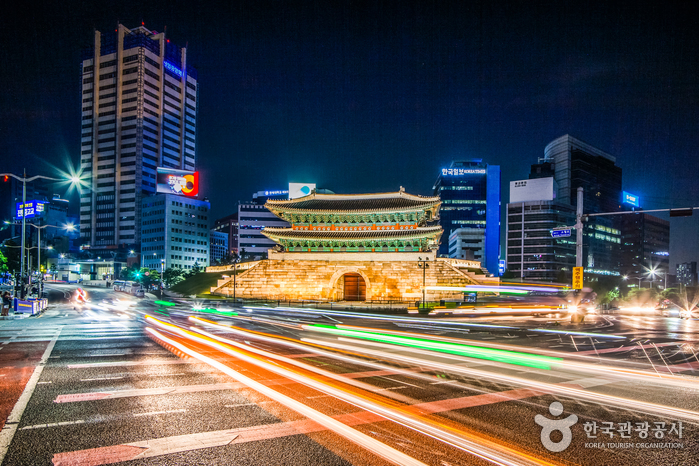
Sungnyemun Gate (숭례문)
980.5M 2024-11-27
40 Sejong-daero, Jung-gu, Seoul
Sungnyemun Gate is Korea’s National Treasure No. 1, and its unofficial name is Namdaemun Gate. Sungnyemun Gate is the largest castle gate stone structure with an arched entrance in the middle. There’s a column on top of a platform, raising the roof, distinguishing the upper stories and lower stories of the building. Passageways for traffic are located at the east and west ends of the gate. Different from the other gates, Sungnyemun Gate’s tablet has its name written vertically.
On February 10, 2008, Sungnyemun was destroyed by fire. After a 5-year reconstruction work, the gate was re-opened to the public again on May 4, 2013.
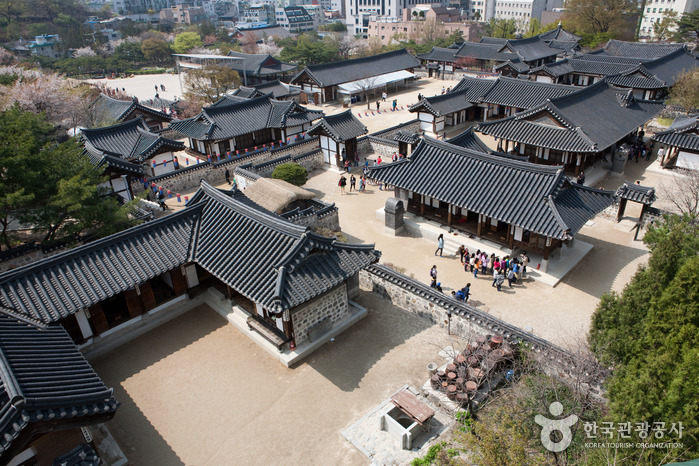
Myeong-dong, Namdaemun, Bukchang-dong, Da-dong and Mugyo-dong Special Tourist Zone (명동 남대문 북창동 다동무교동 관광특구)
981.1M 2021-12-30
40, Sejong-daero, Jung-gu, Seoul
Myeong-dong, Namdaemun, Bukchang-dong and Da-dong are widely known among international visitors as hot spots for shopping and food.
Myeong-dong is a popular destination for shopping, culture, arts and fashion. Major shopping malls such as Lotte Department Store, Shinsegae Department Store, Myeong-dong Migliore and Samik Fashion Town are located here. Shoppers can find a variety of products here from high-end items to relatively inexpensive clothes. There’s also no shortage of street food, traditional restaurants, coffee shops and fancy cafes.
Namdaemun Market is the biggest traditional market in Korea. Visitors can purchase souvenirs and local produce at an affordable price in the shopping complex crowded with stores and street stalls. The market sells a variety of clothes, kitchenware, toys, accessories, food, flowers and imported goods.
Bukchang-dong and Sogong-dong have high-end accommodations including Lotte Hotel Seoul and Westin Chosun Seoul, duty-free shops, and restaurants serving traditional dishes.
[Myeong-dong, Namdaemun Market and Bukchang-dong Special Tourist Zone]
Areas included: Myeong-dong, Bukchang-dong, Mugyo-dong and Da-dong, Seoul
Area size: 872,809 ㎡
Tourist attractions: Myeong-dong, Namdaemun Market and Bukchang-dong, Department Stores (Lotte Department and Shinsegae Department Store, etc.), Traditional Market, Duty-free Shop, Hanok Village, N Seoul Tower, etc.
 English
 한국어
한국어 日本語
日本語 中文(简体)
 Deutsch
 Français
 Español
 Русский


