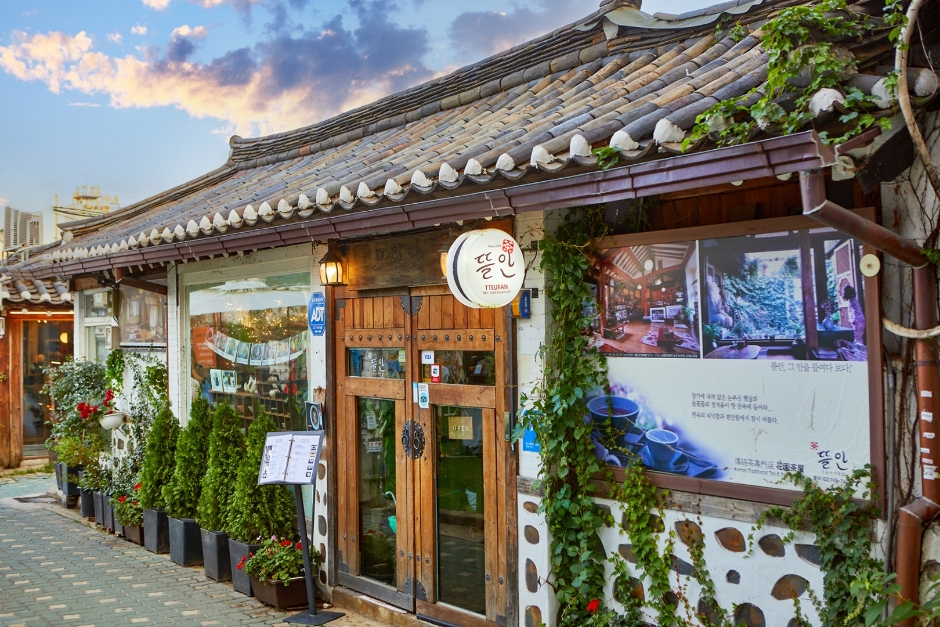
Tteulan Teahouse (뜰안)
1.1Km 2024-12-10
Tteulan Teahouse is a cafe that really allows one to feel the tradition and flair of Korea. Tteulan has two entrances: one facing the wide alley and the other facing the smaller one. The smaller entrance is decorated like a garden, so it feels as if one is stepping into a land of fairy-tales. The café has a floor seating tables with traditional items like gadari soban (a table with legs that curve like a dog's legs), and jogakbo (a textile woven from several pieces of scrap cloth), all of which add to the traditional Korean aesthetic. The menu features ssanghwacha (medicinal herb tea known to help the immune system), a favorite among middle-aged and elderly Koreans; omija tea (omija is a tart berry that grows in East Asia known to be good for lung and bronchial health and boosts immunity); citrus tea (usually made with yuzu which is rich in vitamin C and said to help mitigate fatigue); and pour-over coffee. Traditional desserts include mugwort rice cake (rice cake with mugwort added for herbal flavor, best enjoyed with malt syrup), pumpkin rice cake, and roasted grain powder (a nutritious beverage made with a variety of powdered grain). It can be hard to find seating in the afternoon, so visitors are advised to avoid these hours if they seek to enjoy their drink in peace.
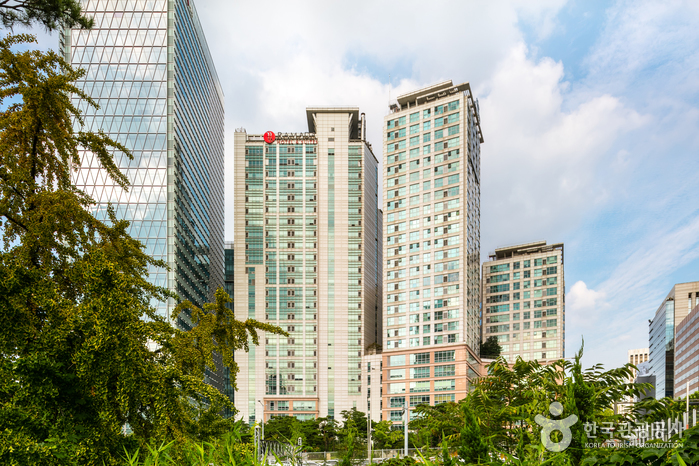
Ramada Hotel & Suites by Wyndham Seoul Namdaemun (라마다 호텔앤스위트 서울남대문)
1.1Km 2024-12-23
27 , Chilpae-ro, Jung-gu, Seoul
Ramada Hotel and Suites Namdaemun in Jung-gu, in the heart of Seoul,is famousd of for foreigner tourists and vacationers. Transport is convenient, with Seoul Station and City Hall Subway Station close by. Major Seoul tourist attractions such as Namdaemun Market, Myeong-dong, Gwanghwamun, and Deoksugung Palace are easily reachable on foot. A range of room types are offered, and additional facilities include a business center, restaurants, cafes, and an underground shopping mall. Dogs are allowed in rooms, but an extra cleaning fee is payable.
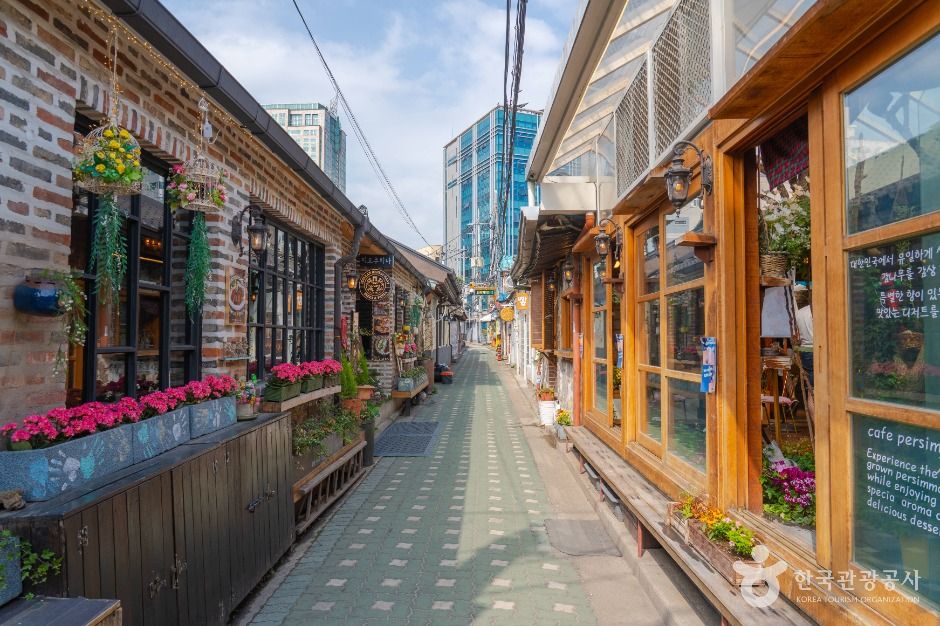
Ikseon-dong Hanok Street (익선동 한옥거리)
1.1Km 2025-10-27
Ikseon-dong, Jongno-gu, Seoul
Ikseon-dong is a place where the harmony of alleys and hanok houses exudes beautiful charm and is a must-visit spot for tourists of all ages and genders. It is also an area that connects the younger and older generations.
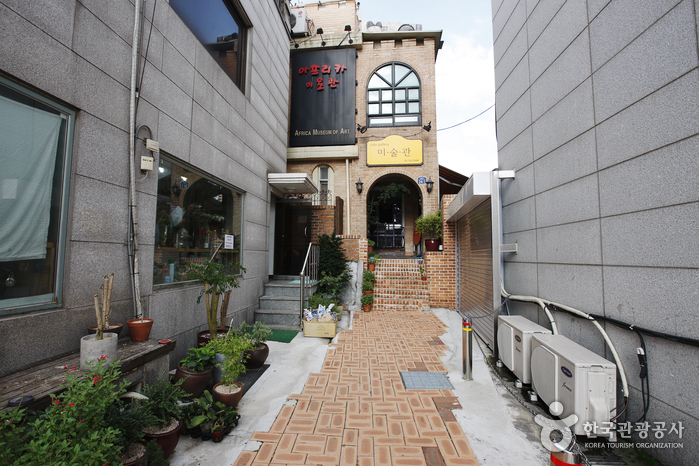
Africa Museum of Art (아프리카미술관)
1.1Km 2022-10-26
24-1, Samcheong-ro, Jongno-gu, Seoul
The Africa Museum of Art was established with the purpose of hosting various art festivals and providing the grounds for researching various art themes. A major principle of the gallery is to promote works of art that actively attempt to explore the human mind.
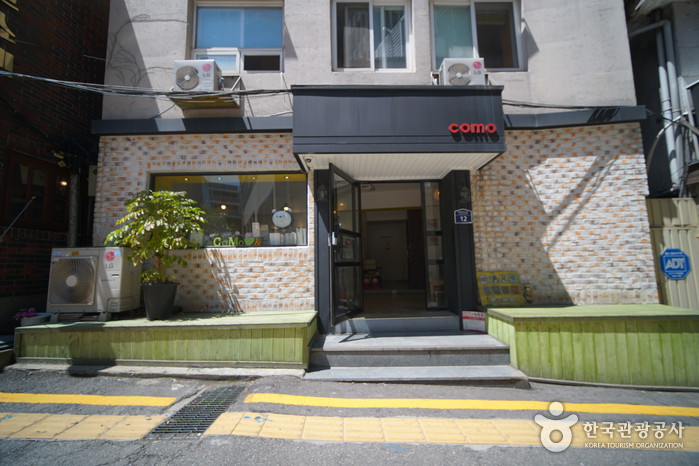
Myeongdong Guesthouse Como (명동게스트하우스 꼬모)
1.1Km 2024-12-23
12 , Toegye-ro 24-gil, Jung-gu, Seoul
Como is a guesthouse in Jongno-gu, Seoul, just 3-minute’s walk away from Myeongdong Station on Line 4. Como is particularly popular with foreign travelers: staff are fluent in English and Chinese, and luggage storage is free of charge. Rooms come in different sizes to cater from single travelers to family groups, and all have a separate bathroom and toilet. Must-see local sights such as Namsan Seoul Tower, Sungnyemun Gate, and Namdaemun Market are easily reached by car or bus.

Bukchon Hanok Village Gamgodang Street (북촌한옥마을 감고당길)
1.1Km 2025-10-30
Anguk-dong, Jongno-gu, Seoul
An alley with cute cafes and galleries
This is the road that appeared in the last episode and the flashback scene where Choi Ung (played by Choi Woosik) and Kuk Yeonsoo (played by Kim Dami) got drunk. Behind the Seoul Craft Museum in Bukchon Hanok Village, it extends for about 440m from Poongmoon Girls' High School to Jeongdok Library. There are many pretty cafes and galleries on the cozy road, and there are also craft markets open, so there is plenty to look around. The alley where Kuk Yeonsoo walked with the drunken Choi Ung on her back is Yunboseon Street in the middle of Gamgodang Street. It stretches along the hill between narrow tiled walls and stone walls, giving off a unique atmosphere.
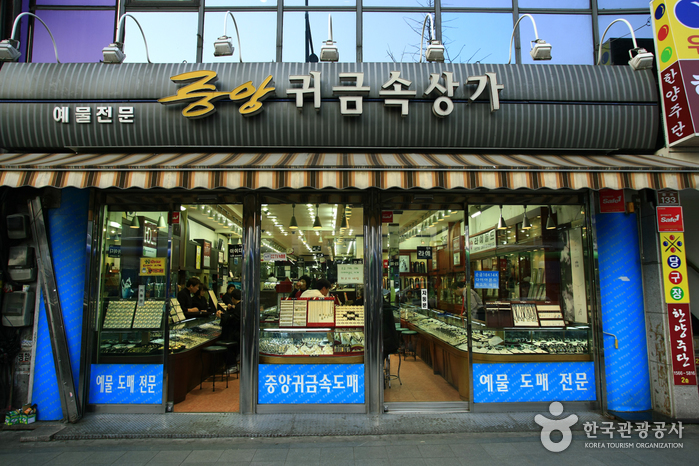
Jongno 3(sam)-ga Jewelry District (종로3가 귀금속 전문상가)
1.1Km 2025-06-30
Jongno3-ga, Jongno-gu, Seoul-si
There is an enormous selection of wholesalers and retail jewelry stores in this district, spread throughout Jongno 3(sam)-ga and 4(sa)-ga. The glittering showcases here are especially popular amongst young people and foreign tourists looking to find fine jewelry at affordable prices. Stores in the jewelry district have a selection of designs that are extraordinarily diverse and prices that are 20 to 40% lower than at other jewelry outlets in Korea.

Sejong Village Food Street (세종마을 음식문화거리)
1.1Km 2025-06-17
Chebu-dong, Jongno-gu, Seoul
Previously known as Geumcheongyo Market, it was officially named Sejong Village Food Street in 2011, as King Sejong was born in this village. The street is full of lively energy and features both long-standing restaurants, also known as nopo in Korean, and recently established trendy eateries. Its convenient location and inviting atmosphere make it a popular place to visit.
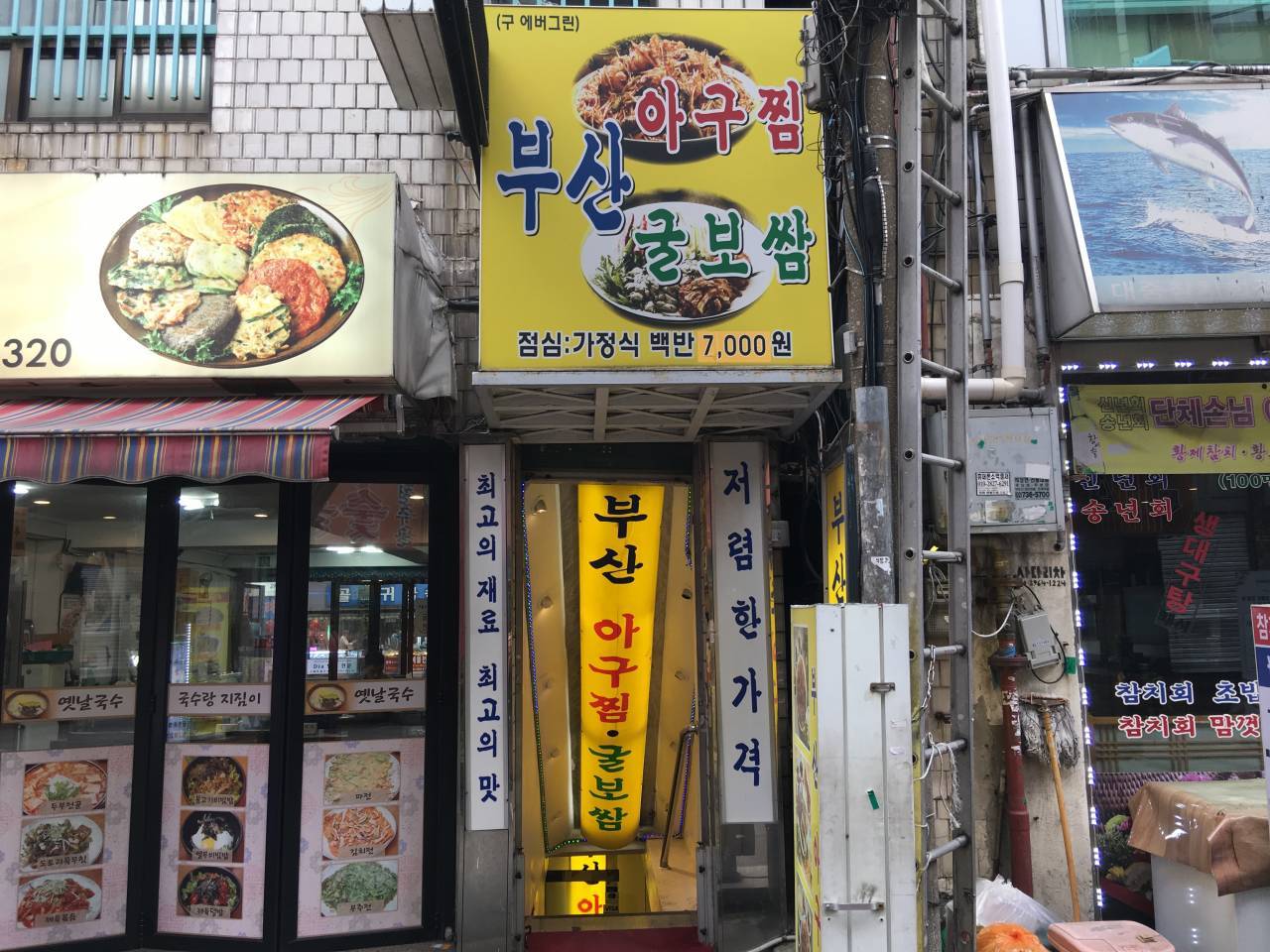
Busan Agujjim Gulbossam (부산아구찜굴보쌈)
1.2Km 2024-10-15
서울특별시 종로구 돈화문로 35
This is a Korean cuisine located in Jongno, Seoul. The best menu at this restaurant is spicy braised monkfish. Stewed monkfish is a spicy seafood dish made of fish and vegetables.
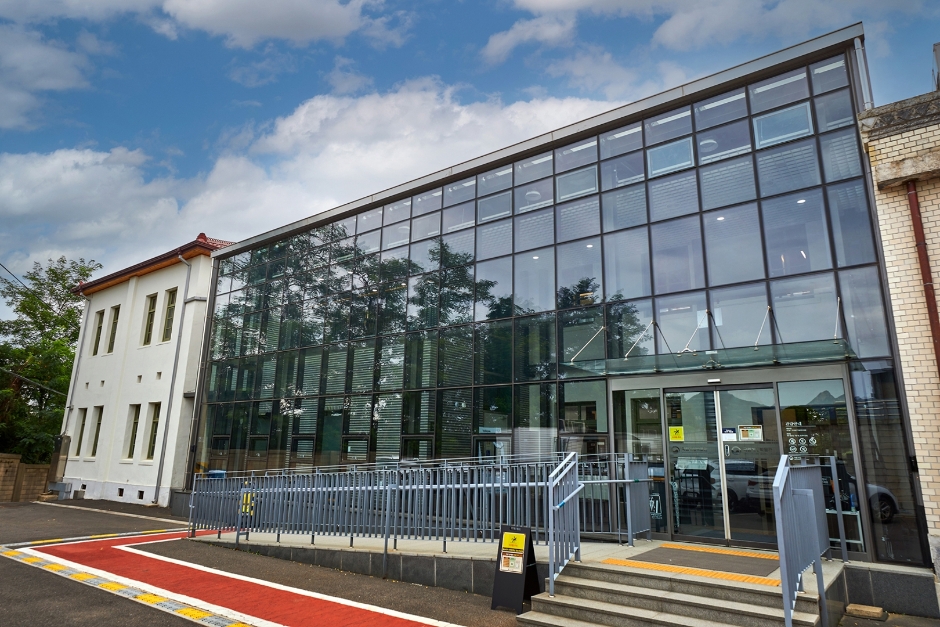
National Meteorological Museum of Korea (국립기상박물관)
1.2Km 2024-03-26
52 Songwol-gil, Jongno-gu, Seoul
A museum where one can look at Korea's meteorological observation history and technological development through exhibitions. The museum has the world's first rain gauge, invented in 1441, in the early Joseon dynasty. The museum operates approximately 350 meteorological observatories across Korea and focuses on promoting the uniqueness and excellence of Korea's meteorological science. There are permanent collections and special exhibitions. The permanent collections focus on the history of meteorological science in Korea. At the same time, the special exhibitions take a closer look at the history and information about meteorological science and natural disasters (e.g., earthquakes) that occurred in various regions of Korea. There are experience programs related to meteorological science, such as making a rain gauge or learning about rain gauges.
 English
 한국어
한국어 日本語
日本語 中文(简体)
 Deutsch
 Français
 Español
 Русский


