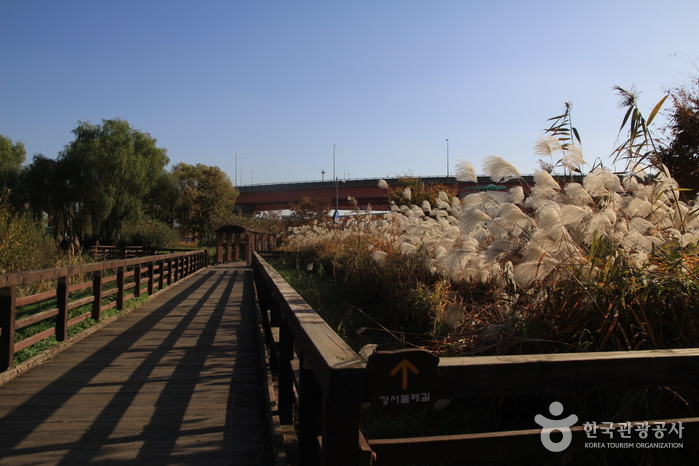
Gangseo Marsh Ecological Park (강서습지생태공원)
14.6Km 2021-06-22
279-23, Yangcheon-ro 27-gil, Gangseo-gu, Seoul
The Gangseo Marsh Ecological Park is an eco-park located on the Hangang River between the southern side of Banghwadaegyo Bridge and southern side of Haengjudaegyo Bridge. Established in July 2007, the park is partly comprised of low wetlands, freshwater lakes, and various aquatic plants. Eco-trails wind around the park through reed areas, around willow trees, and past the migratory bird observation. At the park, visitors can watch and learn about a variety of migratory birds during summer and winter or join one of the park’s organized eco-education programs.
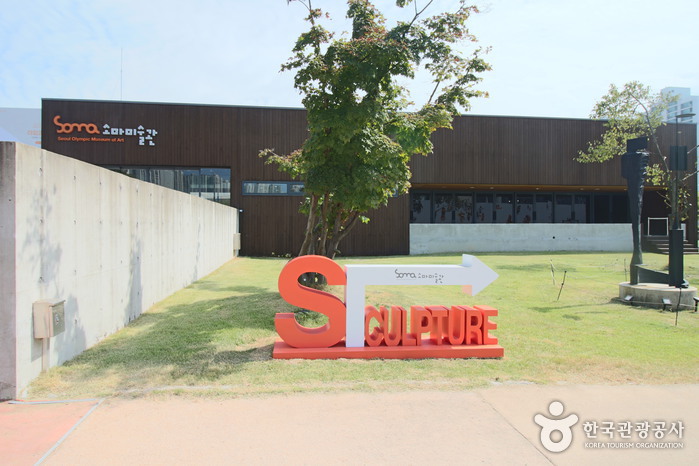
Soma Museum of Art (소마미술관)
14.7Km 2023-04-13
424, Olympic-ro, Songpa-gu, Seoul
Soma Museum of Art was opened in September 2004 as a cultural space amid the nature of Seoul Olympic Park. The museum displays over 222 sculptures, and offers a variety of cultural and educational programs, including the nation's first drawing center and archive.
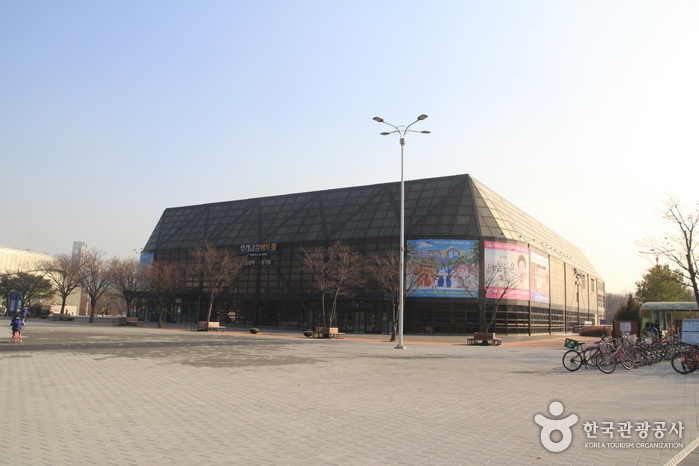
Olympic Park Stadium (올림픽공원 경기장)
14.7Km 2021-06-11
424, Olympic-ro, Songpa-gu, Seoul
Olympic Park is an expansive outdoor area for Seoul residents to enjoy, offering facilities and venues for a range of events including athletic competitions, concerts and other performances. The park houses athletic facilities including the gymnasium of the ’88 Seoul Olympic Games, a fencing stadium, weightlifting stadium, swimming pool and tennis courts. Moreover, those venues are multi-purpose facilities that can host a wide range of events and performances.
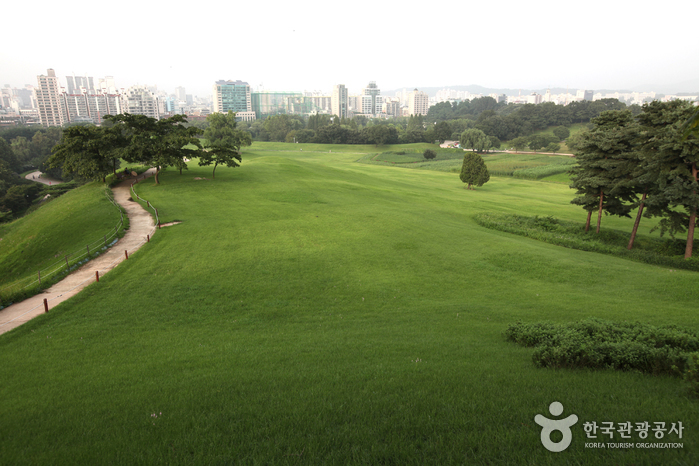
Seoul Mongchontoseong Earthen Fortification (서울 몽촌토성)
14.7Km 2024-03-12
424, Olympic-ro, Songpa-gu, Seoul
Mongchontoseong Earthen Fortification is an ancient earthen fortress built during the Hanseong period of the ancient Korean kingdom of Baekje (BC 18-AD 660). It is believed to have been constructed in the 3rd to 4th centuries. Utilizing the natural advantages of the Hangang River, it served defensive purposes with its trench and log barrier. Excavated relics from the Baekje era are on display at the Seoul Baekje Museum. The site is situated within the Olympic Park in Songpa, Seoul.
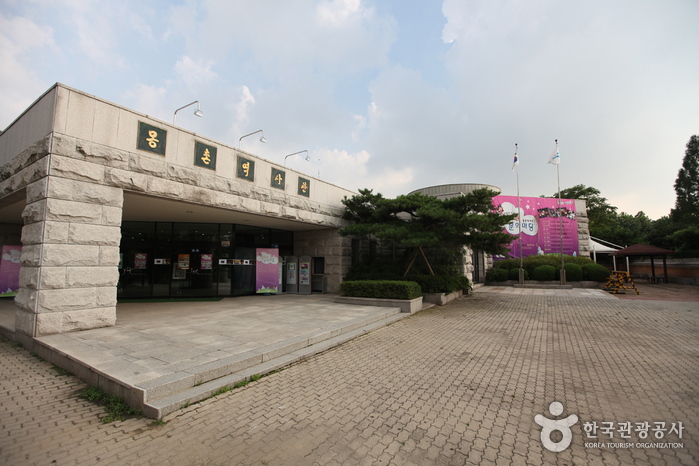
Mongchon Museum of History (몽촌역사관)
14.8Km 2021-08-13
424, Olympic-ro, Songpa-gu, Seoul
The Mongchon Museum of History, located within Olympic Park, displays artifacts from the excavations of Mongchontoseong Fortress, such as earthen fortifications as well as other artifacts of the Baekje Kingdom period, offering a glimpse into Baekje culture. A model of a Baekje dugout hut site reveals ancient dwelling patterns. Also, the facility displays a perfectly preserved model of ancient houses and tombs, giving visitors the feel of traveling back to prehistoric ages.

The Catholic University of Korea Bucheon St. Mary’s Hospital (가톨릭대학교 부천성모병원)
15.0Km 2025-10-23
327 Sosa-ro, Wonmi-gu, Bucheon-si, Gyeonggi-do
The Catholic University of Korea Bucheon St. Mary's Hospital is the first university hospital in Bucheon. Since its opening in 1958, it has used leading medical technology and has contributed to the local community healthcare development and health promotion.
We will expand our multidisciplinary medical treatment so that patients' emotions can be embraced, and we will showcase our advanced patient-centered hospital.
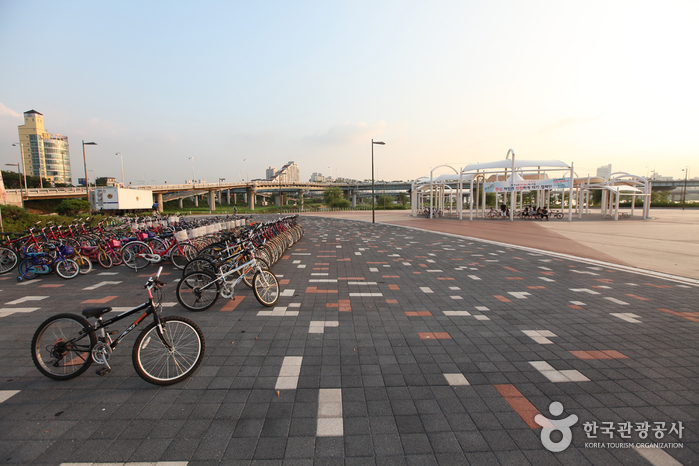
Gwangnaru Hangang Park (광나루한강공원)
15.0Km 2021-12-25
83-66, Seonsa-ro, Gangdong-gu, Seoul
Hangang Citizen's Park, composed of 12 areas including Jamsil, Ttukseom and Jamwon, is an eco-friendly park providing areas for sports and leisure. The park is equipped with various cultural and recreational facilities and also has an ecological park. Gwangnaru Hangang Park formed naturally through rich silt that flowed in from the upper Hangang River that was then filled with reeds, creating an ideal habitat for groups of migratory birds.
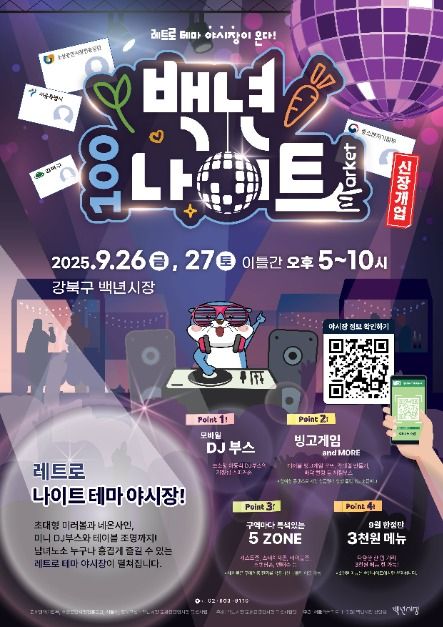
100 Years Market 100 Years Night (백년시장 백년나이트)
15.0Km 2025-10-23
16 Hancheon-ro 144-gil, Gangbuk-gu, Seoul
+82-2-903-9110
100 Year Market, a traditional market with a long history, transforms into a vibrant night market as evening falls. With a mini mirror ball, neon signs, and a mini DJ booth alongside new dining options each month, this retro-themed market is perfect for visitors of all ages.
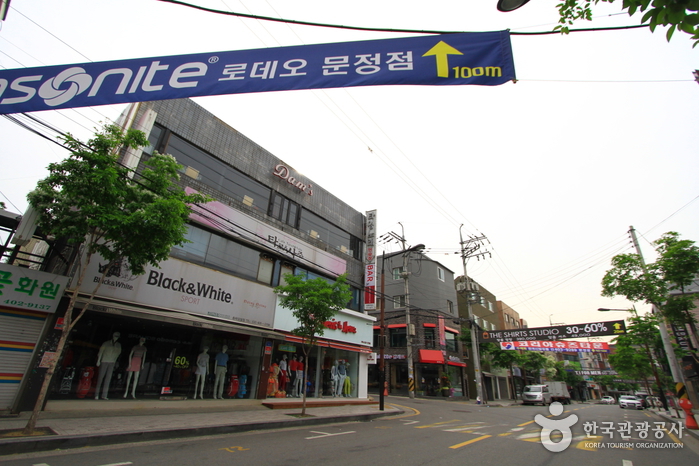
Munjeong-dong Rodeo Street (문정동 로데오거리)
15.1Km 2025-03-29
10, Dongnam-ro 4-gil, Songpa-gu, Seoul
Munjeong-dong Rodeo Street is a large shopping district containing over 200 brand-name discount stores. The street is T-shaped, with a 1-kilometer-long main street connected to a 400-meter-long alley, and the Munjeong 1-dong Resident Center located at the center. For shoppers’ convenience, there is a public parking lot (if visitors purchase goods at Rodeo Street, they can park here for free) and a parking lot for foreign tourists only (free of charge). Munjeong-dong Rodeo Street is one of Korea’s major shopping streets with customers ranging from teenagers to adults, since discount stores stocking sports wear, casual wear, shoes, men’s and ladies’ suits, and golf wear are all located on this street. Moreover, this is a great place to find deals on famous brands, at prices lower than at a department store. On some items you can get discounts of up to 70-80%.
Since most of the goods are stock from previous seasons, it might be better to purchase the more classic styles rather than the trendy fashions. In some cases, the goods might have been slightly crumpled or stained during the transfer from warehouse storage, but taking them to the dry-cleaners should fix most problems. However you should be careful when looking at the sewing quality, and check for missing buttons.
One more thing to bear in mind is the shopping season. Even discount stores have periods when stock runs low. The best time to shop is immediately after the stores in Rodeo Street restock their merchandise. This is done at about the same time as department stores. There is also an enormous variety of goods to choose from during the Rodeo Festivals in May and September. The purchased goods are exchangeable but non-refundable, so check the quality of the products carefully before purchasing.
In addition, Munjeong-dong Rodeo Street has a wide selection of restaurants and entertainment facilities. There are a number of pizza places, coffee shops, and food courts, as well as internet cafes and game rooms in the alleys behind the stores. Visitors can also relax in the surrounding parks. There’s a park with a 600-year-old zelkova tree right behind the Munjeong 1-dong Resident Center.
Munjeong Rodeo Street is not just a shopping district; it’s a cultural area. The ‘Munjeong-dong Cultural Festival’ takes place every year in May, and the ‘Munjeong-dong Rodeo Festival’ takes place in May every other year. During these festivals, visitors can watch traditional Korean performances, traditional wedding ceremonies, international fashion parades, hip-hop dancing, and more.
A charity sale is held on weekends and national holidays on the open-air stage of the Munjeong 1-dong Resident Center, and merchandise is sold for even bigger discounts.
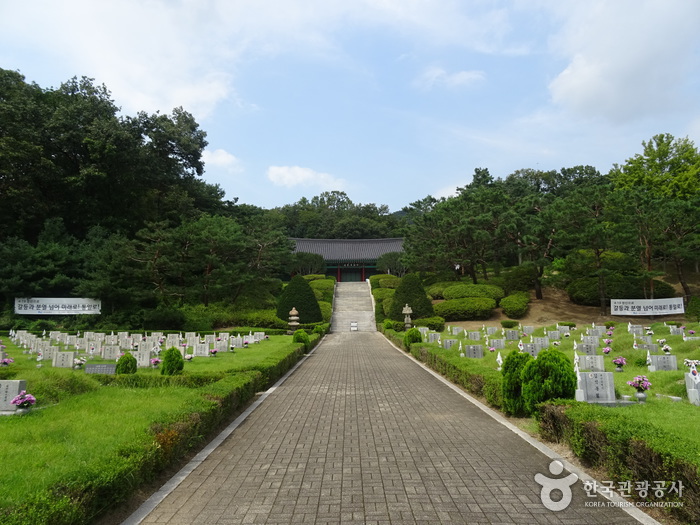
April 19th National Cemetery (국립4.19민주묘지)
15.2Km 2023-01-02
17, 4.19-ro 8-gil, Gangbuk-gu, Seoul
Located at the foot of Bukhansan Mountain, the April 19th National Cemetery was established in memory of the 224 people who lost their lives during the 4.19 Revolution in 1960. The cemetery features a memorial hall and a traditional wooden structure that houses the grave of the historic figure Yu Yeongbong.
At the cemetery is a pond surrounded by sculptures such as "Symbolic Door," "Roots of Democracy," and "Sparks of Justice" and a memorial tower bearing an inscription for the brave patriots who lost their lives during the revolution. Groves of pine, juniper, yew, and maple trees and the well-kept hiking path add a natural charm to the overwhelming ambiance of peace and serenity. Many people visit to see the spring blossoms in May, and throughout the year to take in the glorious scene of the sunset over Bukhansan Mountain.
 English
 한국어
한국어 日本語
日本語 中文(简体)
 Deutsch
 Français
 Español
 Русский


