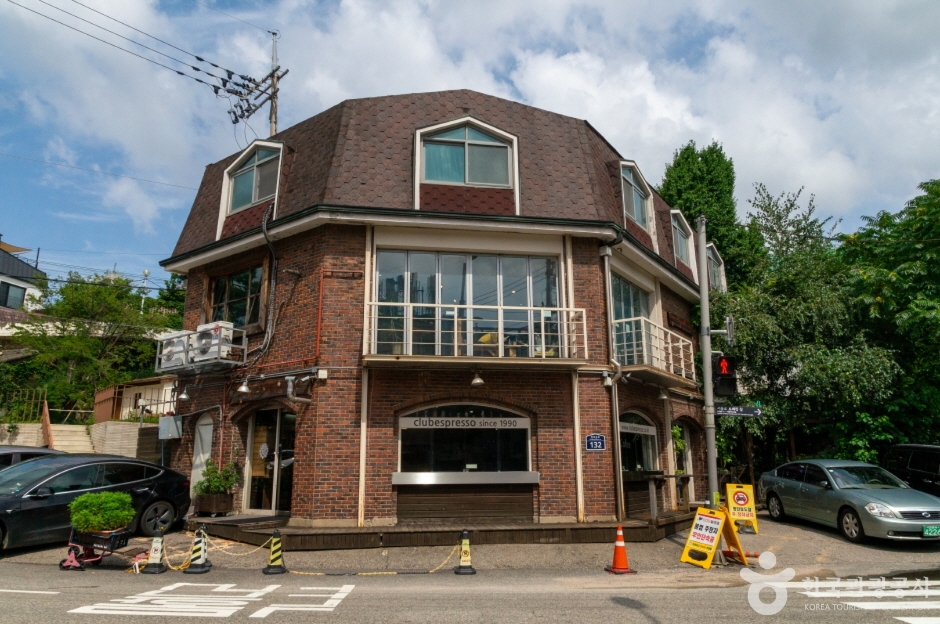
Club Espresso (클럽에스프레소)
4.3Km 2024-02-20
132 Changuimun-ro, Jongno-gu, Seoul
Club Espresso is a café that opened in 1990, constructed with red bricks. They roast their own coffee beans, offering a diverse coffee menu. The Moon Blend, a blend of Colombian, Brazilian, Ethiopian, and Guatemalan beans, is a favorite among regulars and is made with the coffee bean ratio favored by former President Moon Jae-in. Nearby attractions include the Yun Dongju Hill (Cheongun Park) and the Yun Dong-ju Literary Museum, dedicated to the poet beloved by Koreans.
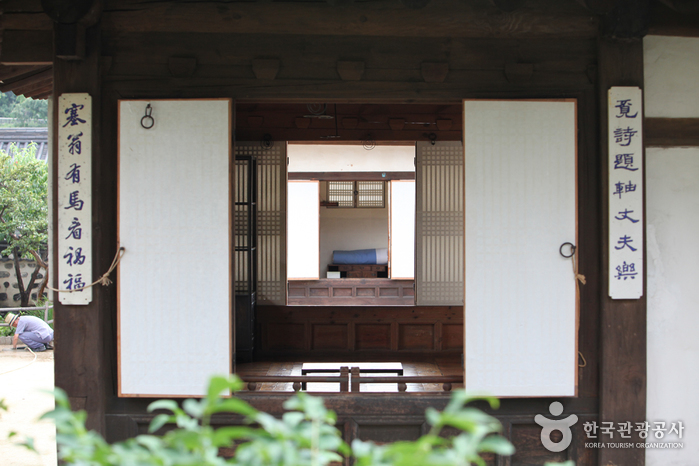
Haepungbuwongun Yun Taekyeong's Jaesil (해풍부원군윤택영댁재실)
4.3Km 2021-11-10
28, Toegye-ro 34-gil, Jung-gu, Seoul
+82-2-3396-5882
Haepungbuwongun Yun Taekyeong's Jaesil is a shrine house built by the father-in-law of King Sunjong of Joseon dynasty in 1906 when his daughter was proclaimed the crowned princess of Joseon and entered Changdeokgung Palace to later become Queen Sunjeong. Red pine trees salvaged from the demolition of Gyeongungung Palace were used to construct the house. It was originally located in Jegi-dong, Dongdaemun-gu, but was later restored and moved to its present location. The shrine of the house that was destroyed in 1960 was also restored.
Because the house is more of a shrine rather than residential living quarters, it has many unique features. For example, unlike other houses, it has the anchae (women’s quarters) located across from sarangbang (men’s quarters) with daecheong (living room) positioned between them.
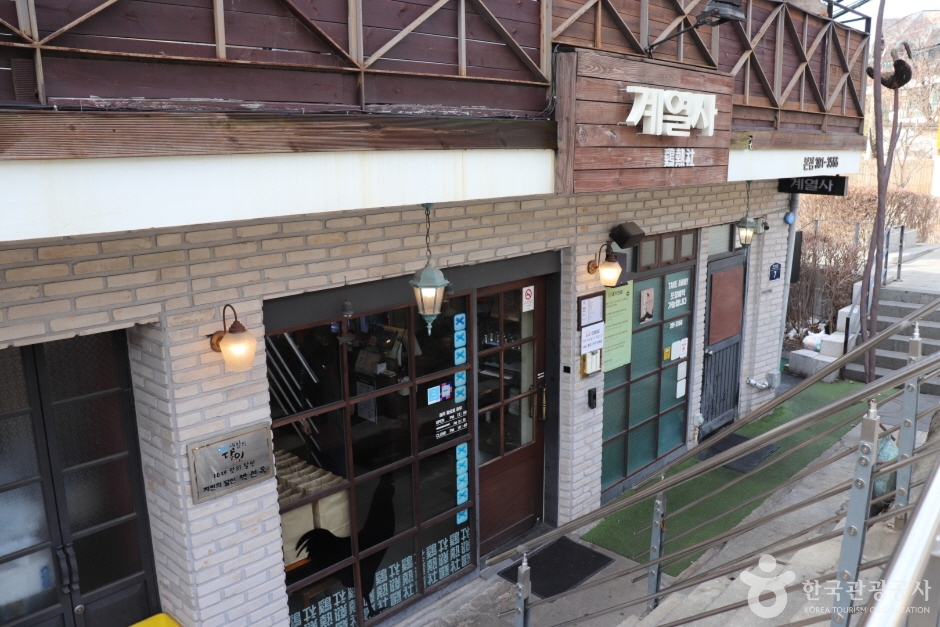
Buam-dong Gaeyeoalsa (부암동 계열사)
4.3Km 2024-02-21
7 Baekseokdong-gil, Jongno-gu, Seoul
Buam-dong Gaeyeoalsa is a chicken place that has received recognition in the Blue Ribbon Survey, the first restaurant guide in Korea. The representative menu is the fried chicken served in a bamboo tray with wedge potatoes. The chicken has a thin and crispy coating. Nearby attractions include the Yun Dongju Hill (Cheongun Park) and the Yun Dong-ju Literary Museum, dedicated to the poet beloved by Koreans.
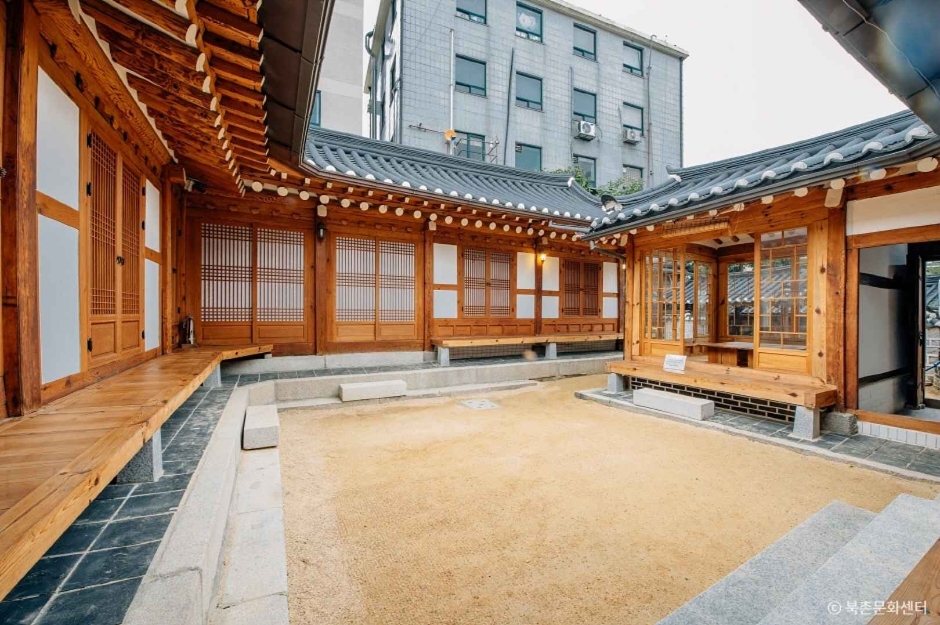
Bukchon Cultural Center (북촌문화센터)
4.3Km 2025-06-19
37 Gyedong-gil, Jongno-gu, Seoul
Bukchon Cultural Center, located in a hanok, was established to offer traditional cultural experience opportunities for visitors to the area. The programs include tea ceremony, handicraft, and gugak as well as a Public Relations Exhibition Hall introducing Bukchon culture and hanok. Also, the center houses a space and a pavilion for visitors to relax while traveling.

Eight Scenic Views of Bukchon (북촌 8경)
4.3Km 2024-03-18
37, Gyedong-gil, Jongno-gu, Seoul
+82-2-2148-4161
The Eight Scenic Views of Bukchon can be found at the Bukchon Hanok Village between Gyeongbokgung Palace and Changdeokgung Palace. Bukchon was historically a district where the aristocracy of Joseon had resided in, so it is still home to a large number of traditional dwellings, called hanok in Korean. The eight views are as follows: No. 1, view of Chengdeokgung Palace; No. 2, view of Wonseo-dong Handicraft Road; No. 3, view of the Gahoe-dong area; No. 4, view from the hill at Gahoe-dong (Bukchon Observatory); No. 5, the view of the road uphill at Gahoe-dong; No. 6, the view of the road downhill at Gahoe-dong; No. 7, the view at house number (beonji) 31, Gahoe-dong; No. 8, the view of the stone stairway at Samcheong-dong.
London Bagel Museum Anguk Main Store (런던베이글뮤지엄 안국점)
4.4Km 2024-02-20
20 Bukchon-ro 4-gil, Jongno-gu, Seoul
London Bagel Museum is a bagel specialty shop adorned with a wooden-tone interior and a garland in the shape of the British flag. The bagels are made using the traditional British method of fermenting the dough, boiling it, and then baking it in the oven. Jambon butter sandwich bagel, made with sesame bagel filled with ham and butter, is a signature menu item.
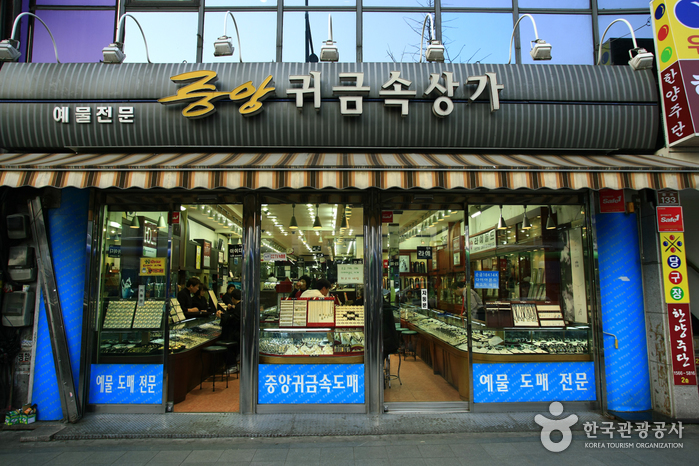
Jongno 3(sam)-ga Jewelry District (종로3가 귀금속 전문상가)
4.4Km 2025-06-30
Jongno3-ga, Jongno-gu, Seoul-si
There is an enormous selection of wholesalers and retail jewelry stores in this district, spread throughout Jongno 3(sam)-ga and 4(sa)-ga. The glittering showcases here are especially popular amongst young people and foreign tourists looking to find fine jewelry at affordable prices. Stores in the jewelry district have a selection of designs that are extraordinarily diverse and prices that are 20 to 40% lower than at other jewelry outlets in Korea.
![DAHMSOJUNG[Korea Quality] / 담소정[한국관광 품질인증/Korea Quality]](http://tong.visitkorea.or.kr/cms/resource/92/2477092_image2_1.png)
DAHMSOJUNG[Korea Quality] / 담소정[한국관광 품질인증/Korea Quality]
4.4Km 2025-01-06
16-2, Bukchon-ro 9-gil, Jongno-gu, Seoul
010-3749-9550
Dahmsojung, meaning ‘a house full of laughs’, is a hanok guesthouse that provides sincere services and comfortable relaxation. Located in the middle of Seoul’s city center, this hanok hotel-class guesthouse was built using traditional hanok construction materials including the 200-years-old Korean land pine from Gyeongju, and clay for rooms. The owner originally bought the land to build the residential area for the family, but wishing to promote the charms of the hanok building to foreigners, it was opened as a guesthouse in October 2012. This hanok guesthouse with modern elements is decorated with refined interior items. It provides a special breakfast that consists of steamed rice wrapped in a lotus leaf and tasty side dishes without any artificial seasonings. All the vegetables used for the meals are organic and cultivated by the owner. It also uses refined objects including high quality tableware, bedding (cotton bedclothes with colored stripes), authentic ceramics, lacquered painting by an artisan, and artistic living items. It carries out a cleaning and disinfection process every day as well. In particular, Hinoki cypress with a subtle scent was used for the bathroom. The home bar was installed especially for foreign guests who find it difficult to sit on the floor in the kitchen. These detailed consideration and decorations have attracted many guests including foreign diplomats, VIPs, and so on.
It also operates a hands-on programs including ‘calligraphy’ and ‘making a fan’ that are held on the main floored room and are popular among foreign guests. Dahmsojung offers guests sophisticated services and comfortable facilities with a clean and traditional atmosphere that attracts many domestic and foreign guests.
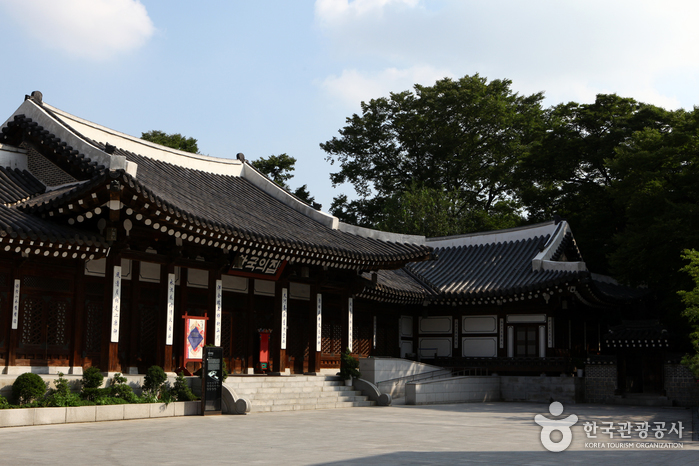
Korea House (한국의집)
4.4Km 2025-10-23
10, Toegye-ro 36-gil, Jung-gu, Seoul
The Korea House was opened in 1981. It is a traditional Korean building that introduces the culture and lifestyle of Koreans, where you can experience traditional architecture and a classical atmosphere. The building was built in the style of the Joseon Dynasty's Jagyeong-jeon building at the Gyeongbok Palace. It is the only building built in the traditional architectural style. You will feel its antiquity as you enter the building.
It is divided into the Haerin-gwan (a space for people to get acquainted with each other), the Traditional Theater, and three annex buildings (Munhyang-ru, Nokeum-jeong and Cheongwu-jeong). At Haerin-gwan, you can enjoy traditional music at Garak-dang and try traditional food at Sohwa-dang. In the square of Garak-dang you can view a traditional wedding (on the weekends) or people playing folk games. Also, at the Traditional Theater, about 156 seats are available, and in the afternoons Human Cultural Assets or members of the National Center for Korean Traditional Performing Arts and the National Corps members present traditional music and dances. Sinayui, Salpuri, Pansori, the Drum Dance and the Bongsan Mask Dance are the most popular programs for foreigners. The programs are all explained in English and Japanese.
In the Cultural Gift Shop you can view various crafts made by traditional craftsmen. It is always open and the crafts are for sale as well. There are pottery, ceramics, golden crafts, knots and embroidery etc; approximately 500 pieces of artwork made by craftsmen from 20 different fields. Next to the House of Korea is the Namsan-gol Hanok Village where visitors can explore traditional houses.
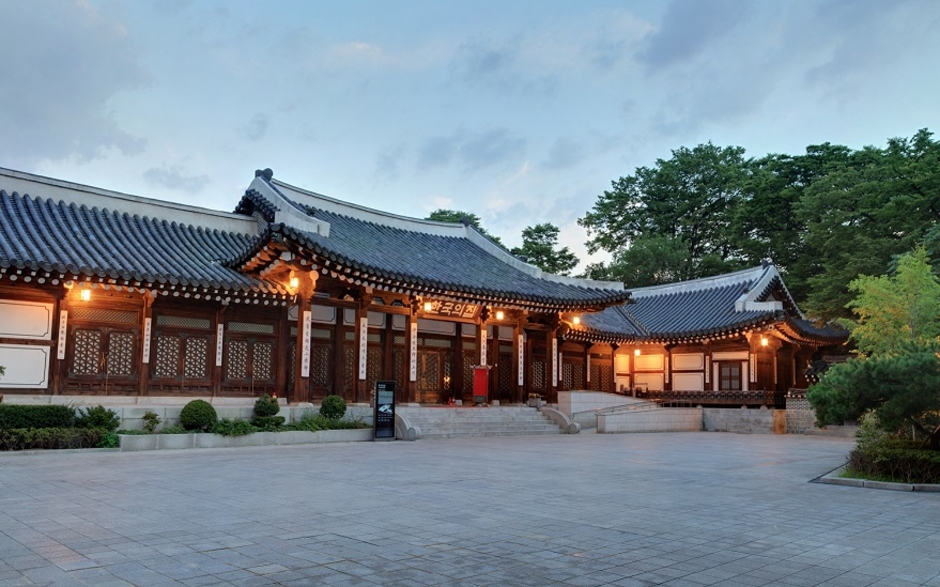
Korea House (한국의집)
4.4Km 2024-03-05
10 Toegye-ro 36-gil, Jung-gu, Seoul
+82-2-2266-9101
Located in the center of Seoul, Korea House is a must-visit tourism spot as a high-end cultural complex offering Hanjeongsik (Korean table d'hote), traditional refreshments, traditional performance arts, and traditional weddings, allowing visitors to feel the beauty of Korean culture and the taste of Korea. Guests can also enjoy the elegant beauty of hanok.
 English
 한국어
한국어 日本語
日本語 中文(简体)
 Deutsch
 Français
 Español
 Русский


