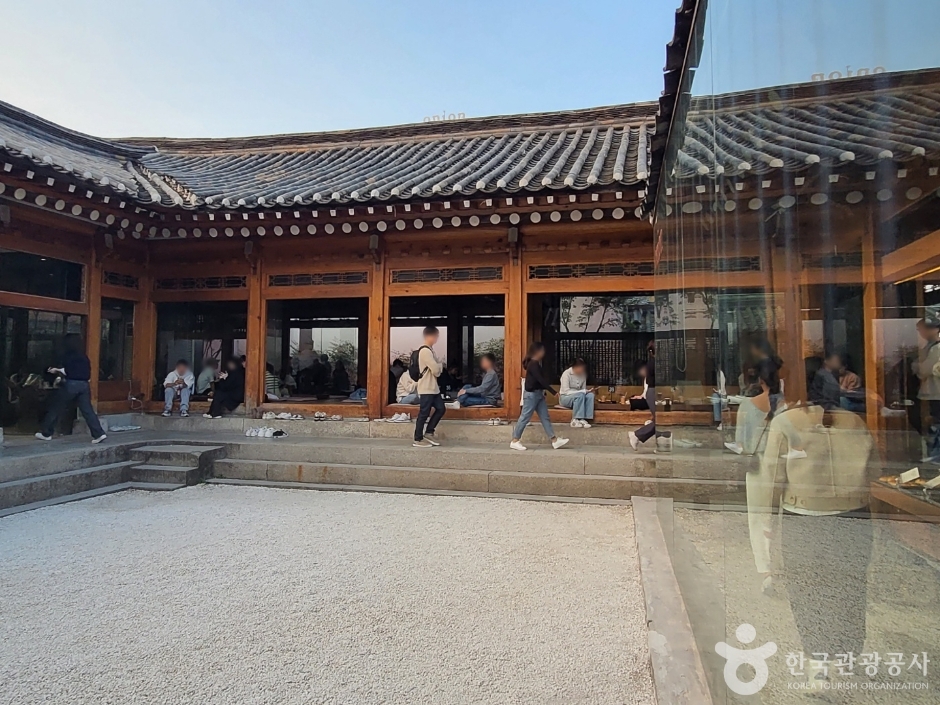
Onion Anguk Branch (어니언 안국)
18.0Km 2024-02-20
5 Gyedong-gil, Jongno-gu, Seoul
Onion is a café situated in a hanok dating back to the 1920s. Renovated with careful preservation of the daecheongmaru and madang, the café offers a glimpse into traditional Korean architecture. The signature menu item is the vanilla bean latte, and popular desserts include pandoro and salty butter bread. Its proximity to nearby attractions such as Gyeongbokgung Palace, Changgyeonggung Palace, and Changdeokgung Palace makes it a convenient stop for those exploring Seoul's major palaces.

![Lotte Mart - Juyeop Branch [Tax Refund Shop] (롯데마트 주엽점)](http://tong.visitkorea.or.kr/cms/resource/41/2887841_image2_1.jpg)
Lotte Mart - Juyeop Branch [Tax Refund Shop] (롯데마트 주엽점)
18.0Km 2024-04-22
1496, Jungang-ro, Ilsanseo-gu, Goyang-si, Gyeonggi-do
-
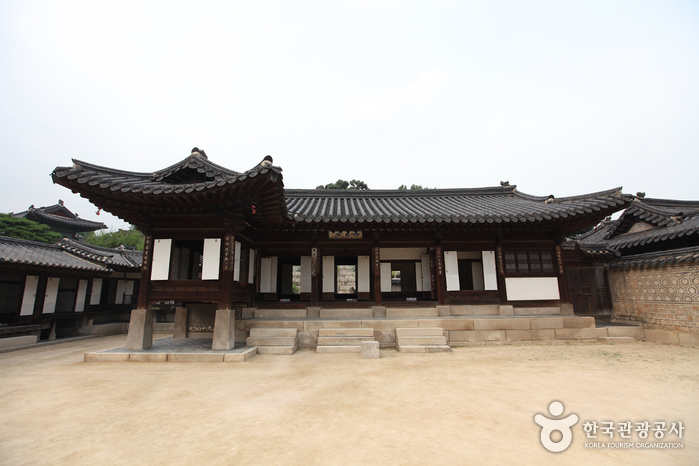
Nakseonjae Hall (낙선재)
18.1Km 2021-09-30
99, Yulgok-ro, Jongno-gu, Seoul
+82-2-2148-1822
Located inside Changdeokgung Palace, Nakseonjae Hall is a one-story structure built in ikgong style (bird wing-shaped eaves placed on top of the pillars) with a hip tiled and gable roof. It has 6 kan in the front and 2 kan (traditional unit of measurement of the space between pillars) to the sides. It originally belonged to the nearby Changgyeonggung Palace, but came to be considered a part of Changdeokgung Palace in more recent years.
The hall was constructed in 1846 (12th year of King Heonjong’s reign) and it is collectively called Nakseonjae together with the adjacent Seokbokheon Hall and Sugangjae Hall.
Behind the building is a flower garden made of stacked large stones. The chimney, the flowers, and the oddly shaped stones harmoniously blend into one another to create an outstanding landscape gardening.
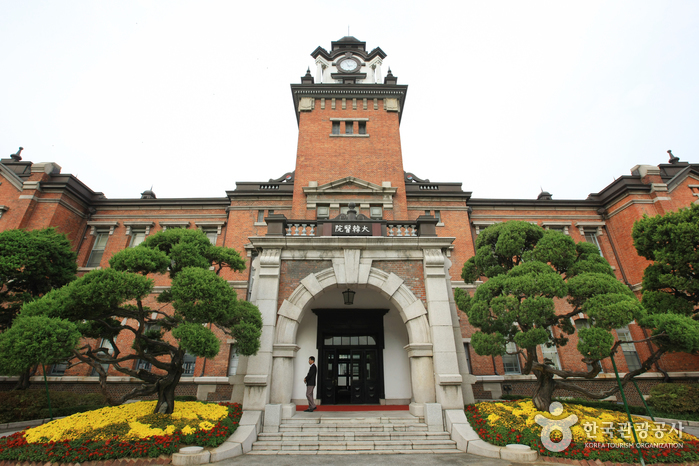
Seoul Daehan Hospital (서울 대한의원)
18.1Km 2021-12-23
101, Daehak-ro, Jongno-gu, Seoul
+82-2-2148-1842
Daehanuiwon (Daehan Medical Center) is an antique two-story brick building within the grounds of Seoul National University Hospital. It was established under the direct administration of the Uijeongbu (State Council), combining the Gwangjewon (under the Home Ministry), Gyeongseong Medical School and the Korean Red Cross Hospital (under the Royal Household).
Built in the Madubong Hill area, this location where Hamchunwon, the outer garden of Changgyeonggung Palace, once stood in 1484 (15th year of King Seongjong), was also once the site of Gyeongmogung Palace, where King Jeongjo enshrined the mortuary tablet of his birth father Crown Prince Sado Seja in 1776 (the year King Jeongjo ascended to the throne).
These places that held importance for the royal family were destroyed as the Japanese built Gyeongseong Empire University in its place. In 1907, with the announcement of the plan to establish Daehan Medical Center, construction began on the main building, seven wards and affiliated buildings. Construction was completed in November 1908.
The Daehan Medical Center opened in Gwangjewon, but upon Japanese colonization in 1910, its name was changed to the Japanese Viceroyalty Hospital. In 1926, it was included as a part of Gyeongseongjeguk University to become a university hospital. Since the liberation of Korea in 1945, it has been a hospital affiliated with Seoul National University.
 English
 한국어
한국어 日本語
日本語 中文(简体)
 Deutsch
 Français
 Español
 Русский


