
WENERD Corp. (주식회사 위너드)
2.7Km 2025-10-23
#201, Saul Building, 21 Seongmisan-ro 1-gil, Mapo-gu, Seoul
Wenerd provides a total care solution through “Wenerd Care”, combining premium wellness tourism with health check-ups to comprehensively manage clients’ health and beauty.
![Cheongun SP [Tax Refund Shop] (청운에스피)](http://tong.visitkorea.or.kr/cms/resource/06/3312906_image2_1.jpg)
Mangwon Market (망원시장)
2.8Km 2025-07-11
27 Poeun-ro 6-gil, Mapo-gu, Seoul
Mangwon Market is one of the representative traditional markets of Seoul. Its proximity to both Mangnidan Street and Hangang Park makes it a great place to do some shopping in preparation for a riverside picnic. The market isn’t very large, but it is packed with delicious treats. One can find classics like the deep-fried and braised chicken, braised pigs' feet, crispy deep-fried green chili pepper, and other snack fare there, along with stores offering food and lifestyle items for some browsing.
![Zara - Lotte Seoul Station Branch [Tax Refund Shop] (자라 롯데 서울역점)](http://tong.visitkorea.or.kr/cms/resource/25/2878425_image2_1.jpg)
Zara - Lotte Seoul Station Branch [Tax Refund Shop] (자라 롯데 서울역점)
2.8Km 2024-04-22
378, Cheongpa-ro, Yongsan-gu, Seoul
-
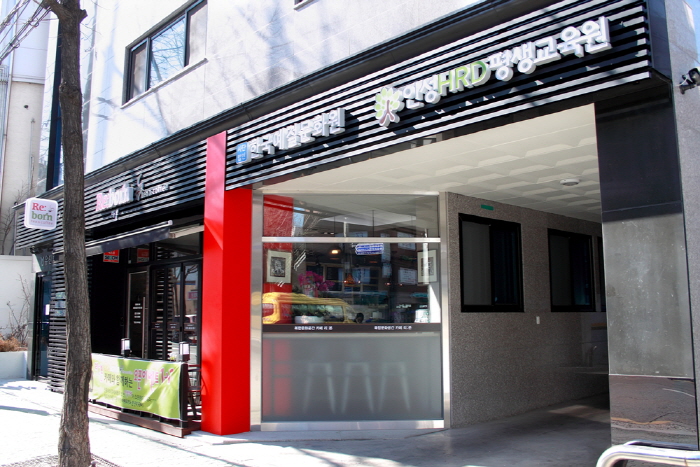
Korea Etiquette Institute (한국예절문화원)
2.8Km 2022-07-08
43 , Gajaeul-ro 4-gil, Seodaemun-gu, Seoul
+82-2-391-1988
Korea Etiquette Institue is dedicated to observing, researching, developing and passing down Korea's etiquette. Education programs are also available.
Jungin Myeonok Main Store (정인면옥 본점)
2.9Km 2024-03-15
1F, 10 Gukhoe-daero 76-gil, Yeongdeungpo-gu, Seoul
+82-2-2683-2615
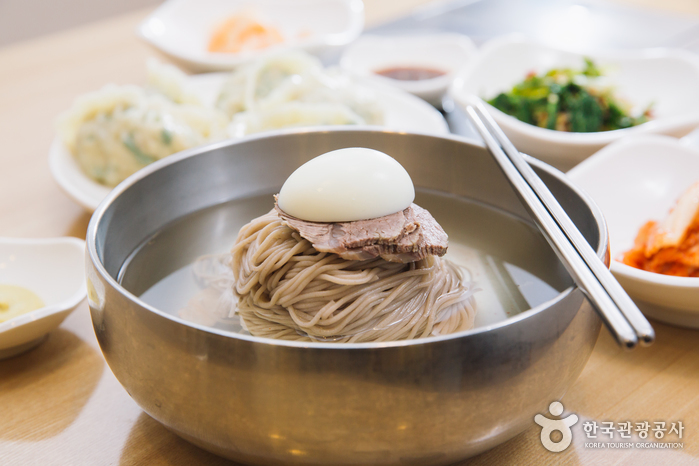
Jungin Myeonok, situated near Yeouido Hangang Park, is a culinary destination specializing in Pyeongyang naengmyeon (Pyeongyang cold buckwheat noodles). The restaurant offers two types of naengmyeon: the traditional Pyeongyang naengmyeon, which combines buckwheat with starch for a chewier texture, and sunmyeon, crafted purely from buckwheat. Both varieties are served in a deep, flavorful meat broth, complemented by the springy texture of the noodles, providing an authentic and satisfying dining experience.
Seodaemun Prison History Museum (서대문형무소역사관)
2.9Km 2024-12-02
251 Tongil-ro, Seodaemun-gu, Seoul
Seodaemun Prison was built under the Japanese administration to imprison independence movement activists. It first opened on October 21, 1908 under the name Gyeongseong Prison. Eventually, so many activists were imprisoned that the building had to be expanded. At that time, the name changed to Seodaemun Prison on September 3, 1912. Eighty years later, the prison was turned into Seodaemun Independence Park on August 15, 1992 to commemorate the Korean patriots who were tortured in prison, giving their lives for freedom. Of the many buildings, only seven were preserved for their historical significance, among which three prison buildings and the execution site were designated as a Historic Site. In 1998, the park underwent another transformation into today's Seodaemun Prison History Hall to educate the public on the importance of Korea's independence and the sacrifices of those who fought to achieve it.
New York New York (Kensington Hotel) (뉴욕뉴욕(켄싱턴호텔))
2.9Km 2024-02-28
16 Gukhoe-daero 76-gil, Yeongdeungpo-gu, Seoul
New York New York is a steakhouse located near Yeouido Hangang Park. Situated on the first floor of the Kensington Hotel, it offers authentic New York-style steaks. The signature course is called 'Love in New York,' featuring dishes such as ceviche with marinated king prawn, scallop bouillabaisse, grilled angus beef tenderloin, and steamed abalone. When ordering for two or more, a complimentary bottle of red wine and cake are provided. Nearby attractions include the The National Assembly of the Republic of Korea and Yeouido Saetgang Ecological Park.
Mangnidan Street (망리단길)
2.9Km 2025-05-20
Poeun-ro, Mapo-gu, Seoul
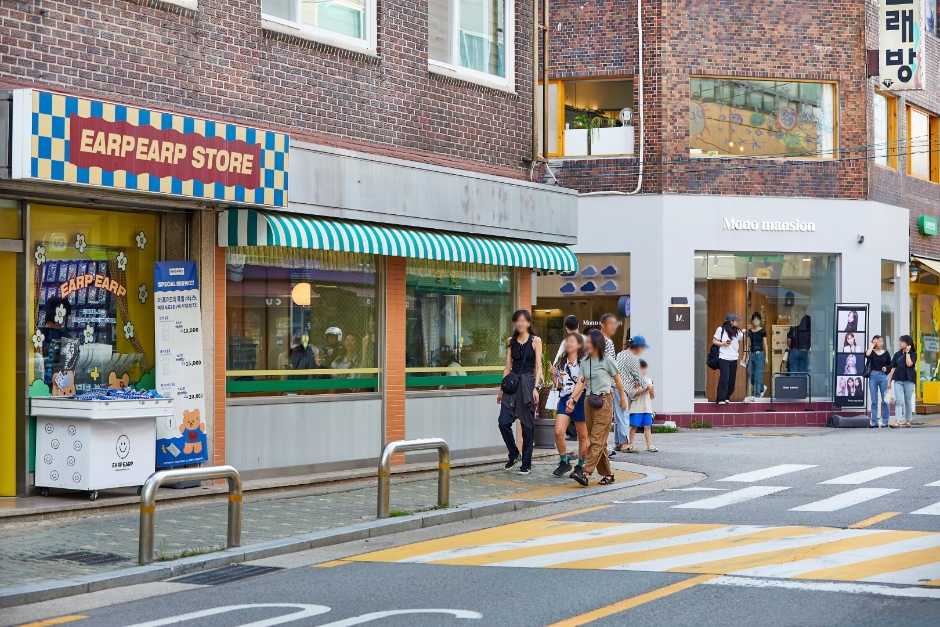
Mangnidan Street is located near Poeun-ro, which can be reached in about 6 to 8 minutes of leisurely walk toward Mangwon Hangang Park from Exit 2 of Mangwon Station on Subway Line 6. Its name comes from the combination of Mangwon-dong and the Gyeongnidan Street in Itaewon, meaning the “Gyeongnidan Street of Mangwon-dong.” There are a variety of restaurants, cafes, dessert shops, and other small shops, each with their own charm, making it a great place to take the kids shopping or just get some rest. This place is quite close to Mangwon Market, so visitors can stop by the market if time allows. Another way to fit this area into the itinerary is as a pit stop for desserts or some shopping before heading to Mangwon Hangang Park.
Dongnimmun Gate (독립문)
2.9Km 2022-12-15
251, Tongil-ro, Seodaemun-gu, Seoul
Dongnimmun stands at the location originally known as Yeongeun, where envoys were once treated. When a Chinese envoy visited, the King would go out through this door to greet. In 1898, to announce the independence from Japan, Dongnimun was constructed with the fund collected by the citizens. The traces of the past still remain on Dongnimmun with two pillars in front of Dongnimmun being the remains of Yeongeunmun.
The Arc de Triomphe in France can be recalled in comparison to Dongnimmun. Dongnimmun was built using granite with a passageway x_height of 14.28 meters. On the top it is written ‘Dongnimmun’ in Korean with the national flag drawn on each side. On the inner-left side there are stone stairs leading to the attic. The national flower Mugunghwa are planted around Dongnimmun. Now it is surrounded by roads and it is eye-catching to view when passing by.
 English
 한국어
한국어 日本語
日本語 中文(简体)
 Deutsch
 Français
 Español
 Русский


