![Zen - Myeong-dong Branch [Tax Refund Shop] (ZEN 명동)](http://tong.visitkorea.or.kr/cms/resource/63/2888763_image2_1.jpg)
Zen - Myeong-dong Branch [Tax Refund Shop] (ZEN 명동)
8.6Km 2024-04-16
5-8F, 62, Myeongdong-gil, Jung-gu, Seoul
-

![G-Cosmo - Itaewon Branch [Tax Refund Shop] (지코스모 이태원)](http://tong.visitkorea.or.kr/cms/resource/47/2878447_image2_1.jpg)
G-Cosmo - Itaewon Branch [Tax Refund Shop] (지코스모 이태원)
8.6Km 2024-04-23
195, Itaewon-ro, Yongsan-gu, Seoul
-
Boan1942 (보안1942)
8.6Km 2023-08-17
33 , Hyoja-ro, Jongno-gu, Seoul
Prior to becoming an art space in 2007, Tongui-dong Boan served as a place for rest for travelers from 1942 to 2005. After a short suspension, the place was renovated into a cultural space in 2017 to carry on the historical legacy and provide creative inspiration under the concept of "Boanstay."
Boan1942 is divided into a cultural space consisting of a cafe, project workshop, book shop, and exhibition area, and Boanstay on the 3rd and 4th floors that offer temporary lodging services to the cultural nomads. Located in Seochon, the center of culture, history, and convenient traffic in Seoul, Boanstay offers a splendid view of Seoul's historical and cultural assets such as Gyeongbokgung Palace, Cheong Wa Dae, and Seochon Hanok Village.
<Credit: Boanstay>
Seowon (서원)
8.6Km 2024-03-11
141, Toegye-ro, Jung-gu, Seoul
+82-2-776-0214
Located in Myeongdong Street, Seowon focuses on porridge. It boasts a wide variety of porridge made with abalone, chicken, samgye (chicken and ginseng) mushrooms, oysters, shrimp, vegetables, etc. They also have Korean-style juices made with ginseng, fruits, and vegetables that goes well after finishing porridge. The restaurant opens early in the morning, so it's a great place to grab a quick breakfast.
Itaewon Special Tourist Zone (이태원 관광특구)
8.6Km 2024-11-27
196 Itaewon-ro, Yongsan-gu, Seoul
Itaewon was the first special tourist zone in Seoul, designated in 1997. It is a multicultural place where over 20,000 foreigners live and is widely recognized by international visitors.
The name Itaewon started to spread worldwide in the 1980s when Korea hosted the 1986 Seoul Asian Games and the 1988 Seoul Olympic Games, as well as many international conferences. Since then, Itaewon has become a popular travel destination. Clothes and accessories with unique designs, and leather products in particular are famous. This is a go-to place for both shopping and entertainment. The street is crowded with shops selling clothes and bags, as well as hotels, restaurants, entertainment facilities and travel agencies. With about 2,000 shops and stores lining every street, visitors can experience a multicultural atmosphere. Also famous in the district is Antique Furniture Street where more than 100 shops selling furniture and antiques stretch from Hamilton Hotel toward Bogwang-ro.
Travelers can taste authentic cuisine and experience culture from around the globe on World Food Street where there are 40 restaurants operated by foreigners. Since the late 1990s, an increase in the number of tourists from Southeast Asia and the Middle East has transformed the streets from being US Army-oriented into culturally diverse. Various performances and events are held in the area. In particular, Itaewon Global Village Festival, held every October, is a famous festival. Tourists can pay in US dollars, Japanese yen, or another currency freely. In addition, visitors can use various languages like English, Japanese, and Chinese with the sellers.
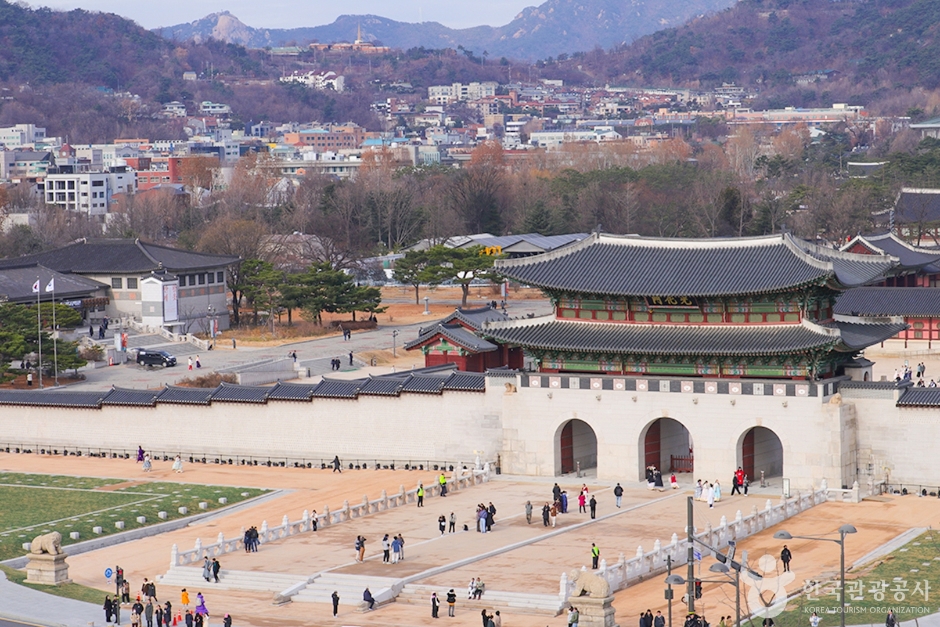
Gwanghwamun Gate (광화문)
8.6Km 2024-12-04
161 Sajik-ro, Jongno-gu, Seoul
+82-2-3700-3900
Built in 1395 under the reign of King Taejo, the first king of the Joseon dynasty, Gwanghwamun Gate is the southern gate of Gyeongbokgung Palace. It is also the main gate of the palace, therefore larger and fancier in comparison to the other gates. Gwanghwamun Gate consists of three arched gates; the center gate was used by the king, while the other two were used by the crown prince and royal officials. The tall granite walls of the gate serve as a platform for the wooden gate tower that watches over the city. The gate has a sign with its name written at the top center of the gate tower.
Gwanghwamun Gate went through several damages and restorations over the course of history. It was first severely damaged during the Imjin War (1592-1598) and was not restored until the reconstruction of Gyeongbokgung Palace in 1864. Under the Japanese administration, the gate was demolished and relocated to the north of the palace's eastern gate, followed by series of damages during the Korean War (1950-1953). In 1968, Gwanghwamun Gate was relocated back to the south of the palace and was rebuilt using concrete; however, the gate’s position was shifted a few meters away from its original location. In 2006, a major reconstruction project took place to restore Gwanghwamun Gate to its original state and location, disassembling the structure completely and replacing concrete with granite and wood. After three years and eight months of construction, Gwanghwamun Gate was fully restored to its original form and was open to the public on August 15, 2010.
Youngpoong Bookstore - Jongno Branch [Tax Refund Shop] (영풍문고 종로점)
8.7Km 2024-04-18
41, Cheonggyecheon-ro, Jongno-gu, Seoul
-
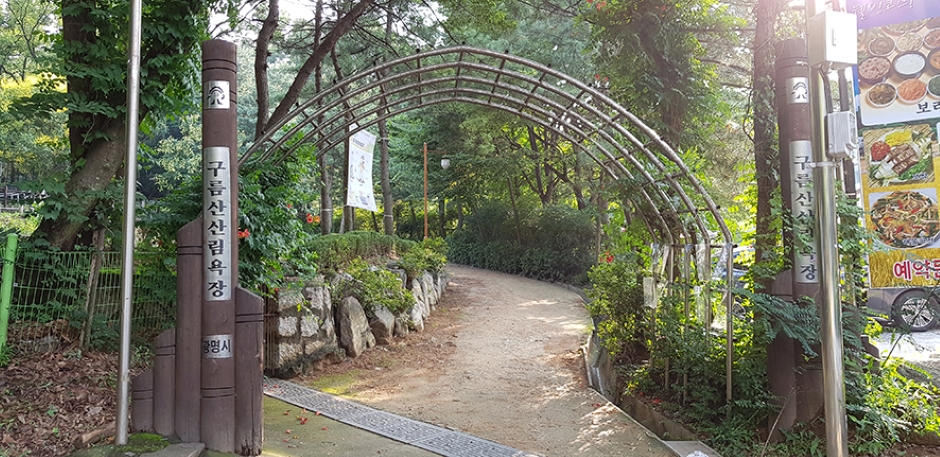
Gureumsan Forest Park (Gureumsan Urban Forest Park) (구름산 산림욕장 (구름산 도시자연공원) )
8.7Km 2024-04-08
27 Ori-ro 619beon-gil, Gwangmyeong-si, Gyeonggi-do
Gureumsan Forest Park is densely populated with trees that are 20 meters high. The forest park has a playground and wooden benches, and has the highest phytoncide concentration out of all the 13 forest parks in Gyeonggi-do. This hiking trail has been developed with 356 fir trees and an 184-meter red clay trail to provide citizens and tourists with a relaxing barefoot walking experience. Most of the forest paths in the park area are covered in wood chips, making it easier to walk.
Kimganae Seolleongtang [Kimganae Gamasot Seolleongtang(김가네가마솥설렁탕)
8.7Km 2024-03-20
1F, 56 Banghwadong-ro, Gangseo-gu, Seoul
Kimganae Seolleongtang is a Korean restaurant conveniently situated near Gimpo International Airport Station. Renowned for its commitment to quality, the restaurant sources high-quality beef directly from Hongseong's Cattle Market. A standout on the menu is the galbitang (galbi soup), known for its generous portions of tender ribs and rice cakes. The dish boasts well-seasoned galbi and a rich broth, free from any gaminess. Additionally, on Thursdays, patrons have the opportunity to savor additional delicacies such as liver and omasum. Nearby attractions include Lotte Mall Gimpo Airport and Gangseo Wetland Ecological Park.
 English
 한국어
한국어 日本語
日本語 中文(简体)
 Deutsch
 Français
 Español
 Русский


