![Belisian [Tax Refund Shop] (벨리시앙)](http://tong.visitkorea.or.kr/cms/resource/76/3312976_image2_1.jpeg)
![Vivien [Tax Refund Shop] (비비안)](http://tong.visitkorea.or.kr/cms/resource/63/3313263_image2_1.jpeg)
![Petillante [Tax Refund Shop] (뻬띠앙뜨)](http://tong.visitkorea.or.kr/cms/resource/33/3313133_image2_1.jpeg)
![S Market Kids [Tax Refund Shop] (S마켓키즈)](http://tong.visitkorea.or.kr/cms/resource/97/3314897_image2_1.jpg)
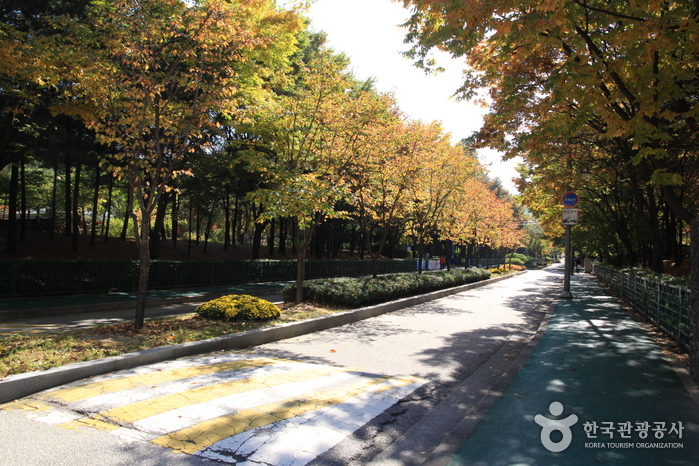
Bonghwasan Mountain - Seoul (봉화산 (서울))
17.6Km 2022-09-14
Sinnae-ro 21-gil, Jungnang-gu, Seoul
+82-2-2094-2353
Bonghwasan Mountain (alt. 160 meters) in Jungnang-gu, Seoul offers scenic views of Buramsan, Dobongsan, and Namsan mountains. From the mountain, hikers can even see as far as the Yangju area of Gyeonggi-do Province to the north. Officially designated a “neighborhood park” in July 1977, Bonghwasan Mountain has a variety of convenience facilities, not least of which is the beacon tower of Achasan Bongsudae (remolded in 1994) perched on the mountain summit. Also near the summit is Sansingak Shrine, which is the site of the annual Bonghwasan Dodanggut (Intangible Cultural Property of Seoul), a shamanistic rite performed on the third day of the third lunar month.

Seoul National Cemetery (국립서울현충원)
17.6Km 2024-03-07
210, Hyeonchung-ro, Dongjak-gu, Seoul
+82-2-813-9625
Seoul National Cemetery is a national cemetery for individuals who worked or fought for Korea and sacrificed their lives. It encompasses those who fought for Korea's independence from the late 19th century to the early 20th century, those who perished in the Korean War (1950-1953), and former presidents, totaling over 165,000 individuals. There are exhibition halls and parks with related artifacts. Shuttle buses are provided for the convenience of visitors.
AMORE Spa (아모레퍼시픽 스파)
17.7Km 2025-01-10
21, Apgujeong-ro 29-gil, Gangnam-gu, Seoul
+82-2-512-3067
AmorePacific, a Korean brand, initially gained popularity in New York since its opening of AMORE Beauty Gallery & Spa in Soho, New York. The AMORE Spa is a popular spa and treatment center frequented by many international celebrities.
The AMORE Spa Seoul branch, opened in April 2005, offers approximately 30 different kinds of programs. One of the most popular spa programs is Spa Therapy, which uses a diverse range of natural therapy materials including lotus flower, ginger and bamboo. Another popular program is the Halla Green Tea program, which uses green tea leaves grown in Jeju's Hallasan Mountain. Other programs include Gold & Silver Energy Healing therapy, Mystic Bamboo Forest, facial therapies, body slimming and massages.
![LG Best Shop - Gwanak Branch [Tax Refund Shop] (엘지베스트샵 관악점)](http://tong.visitkorea.or.kr/cms/resource/59/2880459_image2_1.jpg)
LG Best Shop - Gwanak Branch [Tax Refund Shop] (엘지베스트샵 관악점)
17.7Km 2024-04-18
210, Bongcheon-ro, Gwanak-gu, Seoul
-
Gimpo Art Village (김포 아트빌리지)
17.7Km 2023-02-06
170, Modamgongwon-ro, Gimpo-si, Gyeonggi-do
Gimpo Art Village features various culture and arts experience sites, an art center exhibition hall where high-quality exhibits can be enjoyed, an outdoor performing stage that can accommodate up to 1,000 people at once, and a traditional play experience ground. The Village also has a traditional hanok stay experience hall, multipurpose hall and practice rooms where art clubs and organizations can engage in creative activities to their heart's content, a VR (virtual reality) experience hall for people of all ages and genders, and many other spaces for culture and arts for citizens to enjoy in the midst of their lives.
Historical background: The Unyang-dong part of Modamsan Mountain where Gimpo Art Village is located is speculated to be the origin of the ancient country of Baekje. Seated before broad plains and Najincheon Stream, the art village also sits in front of Modamsan, the home of numerous Mahan tombs from which a 120-centimeter-long steel sword, crystal jade, and golden earrings, the oldest of its kind unearthed thus far, were once discovered. There have also been many discoveries of settlements from the New Stone Age and Bronze Age as well as dolmens from the Bronze Age so it is believed that a group with a powerful authority had been living in the Modamsan area since ancient times. In the Joseon period, the area became a part of Cheonhyeon-ri and Cheongsudong-ri, Seokhan-myeon. Modamsan is the home of the shrine and grave of Sim Ong, a military vassal from the early Joseon Dynasty who was a second-level meritorious vassal and had the positions of General Jeolchung and later Yeonguijeong, which was given after his death. Also located on the northern riverside of Hangang is Gambawi Rock where Jungbong Jo Heon, a civil vassal from the mid-Joseon period and leader of a righteous army, used to fish to soothe his patriotic sentiments.
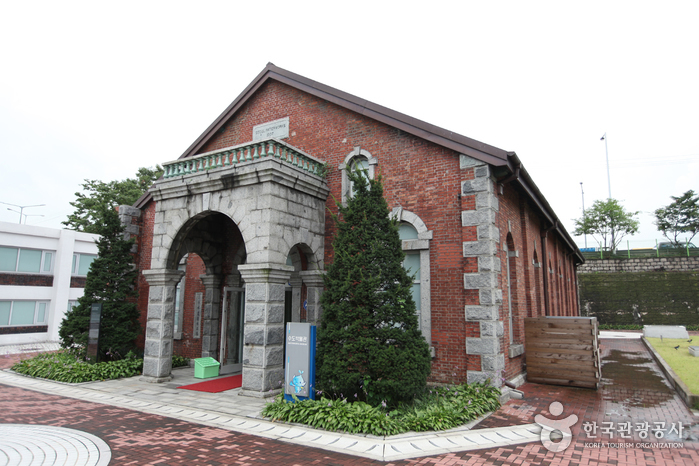
Waterworks Museum (수도박물관)
17.7Km 2025-01-17
27, Wangsimni-ro, Seongdong-gu, Seoul
+82-2-3146-5936
The Ttukseom Water Purification Plant (Waterworks Museum and Slow Sand Filtration Basin) was completed in August 1908 as the first water purification plant ever built in Korea. In 2008, it celebrated 100 years of history with the opening of the Waterworks Museum, which showcases the history and value of Seoul's public waterworks. The museum was recognized for its modern architectural design and designated Tangible Cultural Asset of Seoul No.72.
 English
 한국어
한국어 日本語
日本語 中文(简体)
 Deutsch
 Français
 Español
 Русский


