
Honinji Pond (혼인지)
10.8Km 2022-12-26
39-22, Honinji-ro, Seogwipo-si, Jeju-do
+82-64-710-6798
Honinji Pond is connected to a myth of how agriculture and farming started on Jeju Island. Despite its small size, the pond is said to have been the location of the wedding between the Samsinin (three founding demi-gods) and three princesses of the East Kingdom. Next to the pond is Samseonghyeol, three caves that served as bridal homes. Honinji Pond and Samseonghyeol are great places to trace the origin of the founders of Jeju Island. In the summer, the area is in full bloom with red lotus flowers.
Jeju Stone Park (제주돌문화공원)
10.9Km 2025-10-23
2023 Namjo-ro, Jocheon-eup, Jeju-si, Jeju-do
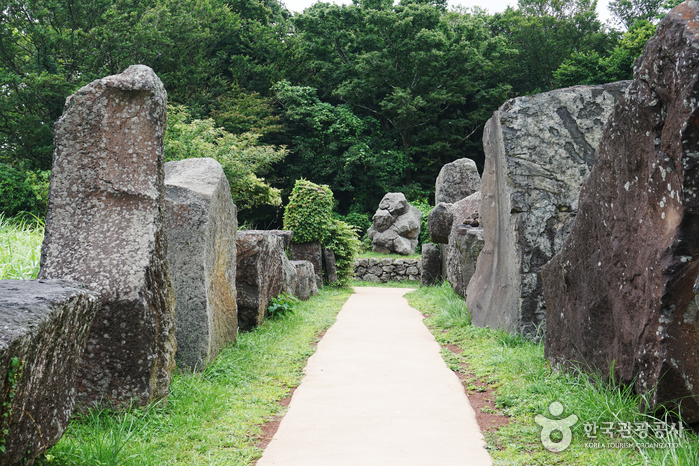
Located in Jocheon-eup, Jeju-si, Jeju Stone Park was inspired by Jeju's culture and applications of stones. The main theme focuses on the foundation and identity of Jeju Island, based on the myth of Seolmundae Halmang (Grandmother Seolmundae), who created Jeju Island and the stones of Obaek Janggun (Five Hundred Generals). The park serves as a historical and cultural space where collected stones respresent Jeju's foundation and culture.
Gyorae Natural Recreation Forest (교래자연휴양림)
10.9Km 2025-09-16
2023, Namjo-ro, Jocheon-eup, Jeju-si, Jeju-do
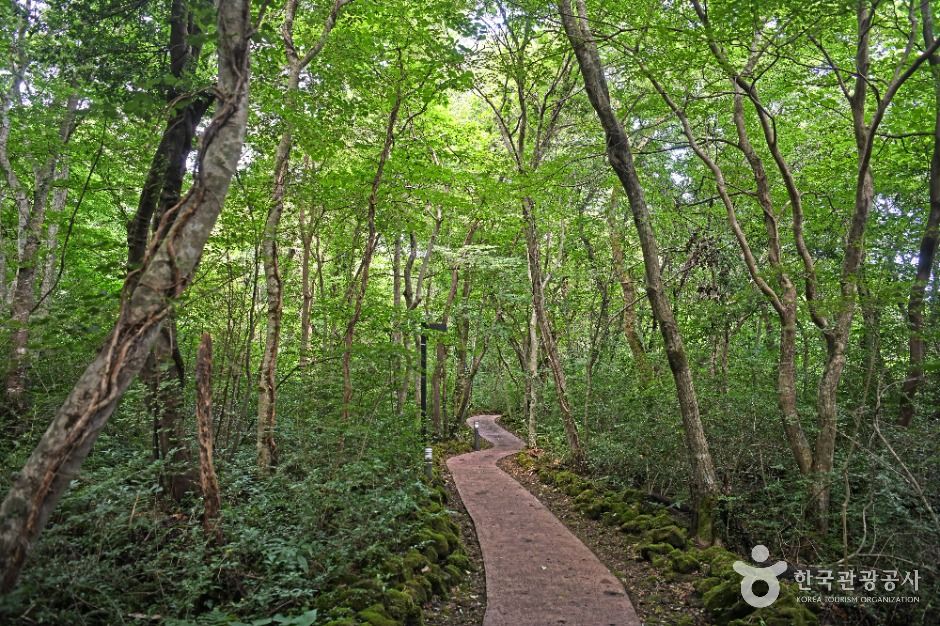
Gyorae Natural Recreation Forest, located in Jeju’s Gotjawal region, is a forest park divided into four zones. The recreation zone features forest thatched cottages and an outdoor performance venue. The camping zone includes campgrounds, an outdoor stage, and a futsal field. The ecological experience zone offers opportunities to observe the Gotjawal ecosystem. The forest bathing zone has a 3.5-km Oreum trail leading to Keunjigeuri Oreum. The forest is recognized as healing and relaxation space for people to unwind and find relief from the stresses of daily life.
Olive Young - Jeju Sehwa Branch [Tax Refund Shop] (올리브영 제주세화점)
11.0Km 2024-06-27
1F, 3126, Iljudong-ro, Gujwa-eup, Jeju-si, Jeju-do
-
![Gimnyeongsagul Cave [UNESCO World Heritage] (김녕사굴 [유네스코 세계자연유산])](http://tong.visitkorea.or.kr/cms/resource/37/1618237_image2_1.jpg)
Gimnyeongsagul Cave [UNESCO World Heritage] (김녕사굴 [유네스코 세계자연유산])
11.1Km 2022-12-29
34, Manjanggul-gil, Jeju-si, Jeju-do
+82-1600-0064
Gimnyeongsagul Cave is located close to Manjanggul Cave in the northeastern part of Jeju Island. The name of the cave, "Sagul," comes from the snake-like formation of the cave ("sa" meaning serpent). The entrance of the cave is wide like a serpent holding its mouth wide open, but once inside, the tunnel narrows resembling the body of a snake. Gimnyeongsagul Cave is a highly protected area and has been designated as Natural Monument along with Manjanggul Cave.
Seongsan Bom Juk Kalguksu(성산봄죽칼국수)
11.1Km 2024-03-12
2, 1F, 33 Hwanhaejangseong-ro, Seongsan-eup, Seogwipo-si, Jeju-do
+82-64-784-3331
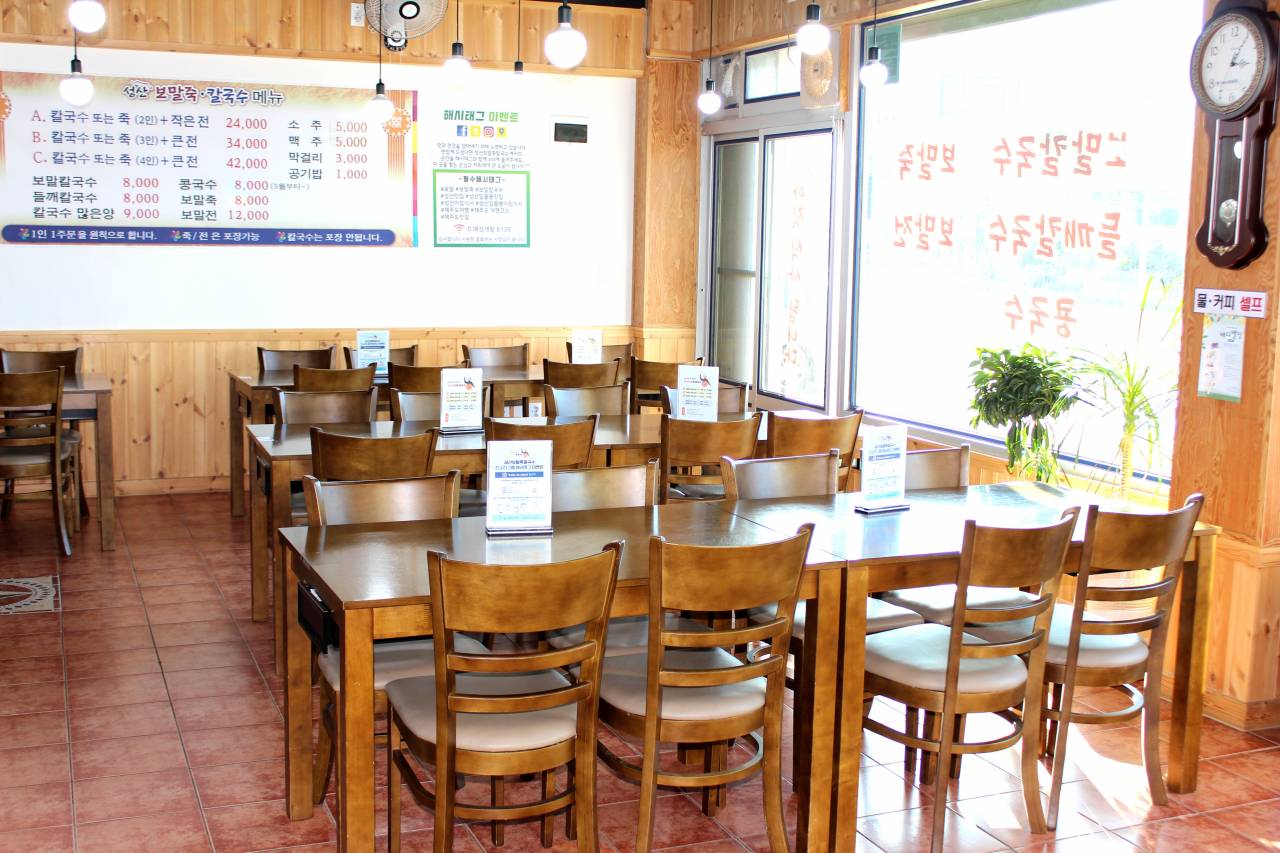
Seongsan Bom Juk Kalguksu is a specialty restaurant located in front of Sinsan Elementary School in Jeju. It specializes in kalguksu (noodle soup), made with shellfish known as "bomal" in Jeju dialect. The signature dish is the bomal kalguksu (noodle soup with brown turban shell), and bomaljuk (brown turban shell porridge) is also popular. The noodles are made with tangerine, giving them a chewy texture and a yellowish color. Nearby attractions include Seongsan Ilchulbong Tuff Cone and Cape Seopjikoji.
Gwangchigi Beach (광치기해변)
11.6Km 2025-04-07
Goseong-ri, Seongsan-eup, Seogwipo-si, Jeju-do
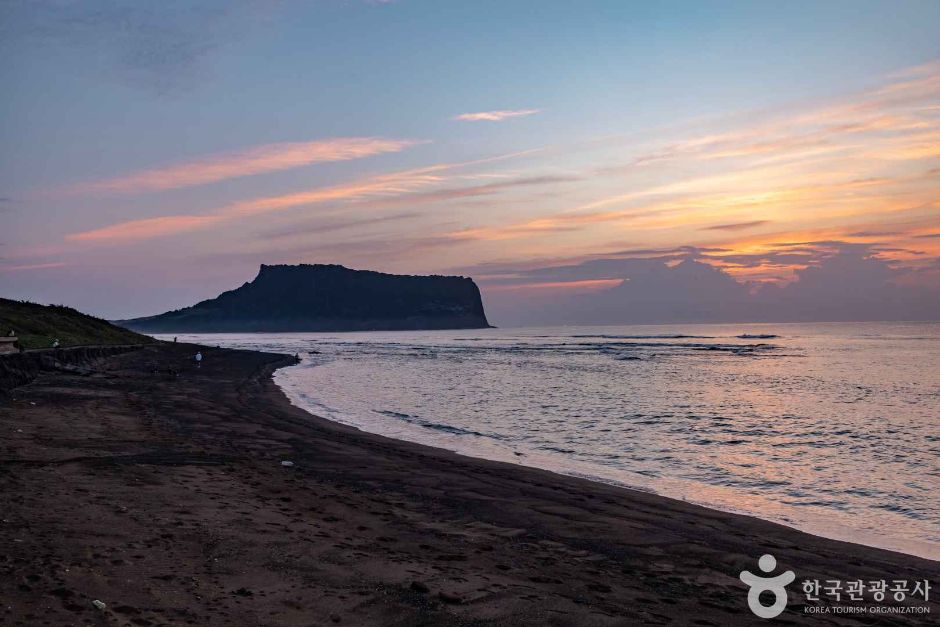
Located on the way from Seongsan Ilchulbong Tuff Cone to Seopjikoji, Gwangchigi Beach marks the end point of Jeju Olle Trail Route 1 and the starting point of Route 2. It is known for its unique geological formation, where hot lava cools down immediately upon meeting the sea. During low tides, visitors can see hidden scenic spots. The frozen lava covered with green moss, creates a spectacular view. In particular, the stunning sunrise view with Seongsan Ilchulbong Tuff Cone in the backdrop attracts a lot of visitors. The beach is also known for its black sand. (Information courtesy: Visit Jeju)
Sehwa Beach (세화해변)
11.6Km 2023-01-17
Sehwa-gil, Jeju-si, Jeju-do
+82-64-740-6000
Sehwa Beach, located in Sehwa-ri in Gujwa-eup, is a white sandy beach with black basalt that harmonizes perfectly with the emerald waters. Sehwa Beach is well-known in Jeju Island due to its close proximity with Bellongjang Market and Sehwa Folk Fifth-day Market, opening right next to Sehwa Beach, as well as the flea market at Bellongjang Market attracting many visitors.
Haenyeo Museum (해녀박물관)
11.7Km 2025-03-15
26 Haenyeobangmulgwan-gil, Gujwa-eup, Jeju-si, Jeju-do
+82-64-782-9898
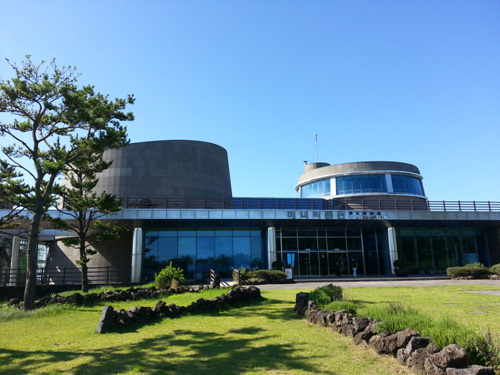
The culture of Jeju's female divers, known as haenyeo, which has been inscribed as a UNESCO Intangible Cultural Heritage of Humanity. It exhibits the history of Jeju's haenyeo culture dating back to ancient times, with all the exhibits donated by the haenyeo themselves. The museum even features a replica of a haenyeo's house and provides detailed exhibitions on their food culture, upbringing, semi-agricultural and semi-fishing culture, yeongdeunggut, and more.
Myeongjin Jeonbok (명진전복)
11.7Km 2024-03-18
1282 Haemajihaean-ro, Gujwa-eup, Jeju-si, Jeju-do
+82-64-782-9944
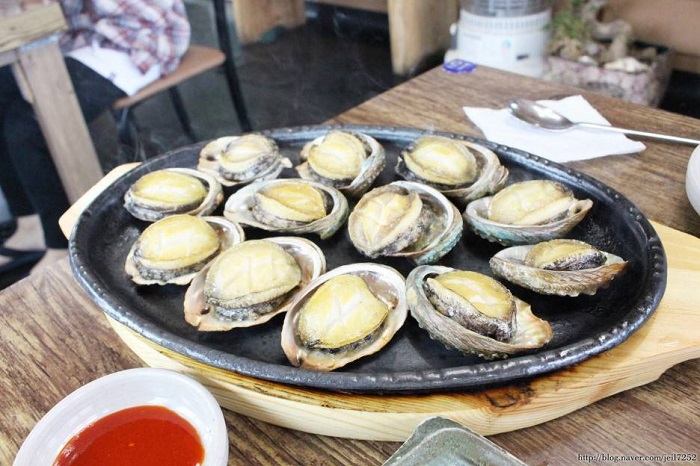
Myeongjin Jeonbok specializes in fresh abalone dishes, using abalones sourced directly from its adjoining farm. The menu features a variety of offerings including jeonbok gui (grilled abalone), jeonbokjuk (abalone porridge), jeonbokhoe (sliced raw abalone), and jeonbok dolsotbap (abalone hot stone pot rice). Ther restaurant's signature dish is the jeonbok dolsotbap (abalone hot stone pot rice), a savory hot stone pot rice topped with abalone, pumpkin, and sweet potatoes. Having been featured on numerous TV shows, Myeongjin Jeonbok is popular among both locals and tourists.
 English
 한국어
한국어 日本語
日本語 中文(简体)
 Deutsch
 Français
 Español
 Русский


