Baekje Cultural Museum (백제문화체험박물관)
19.3Km 2024-02-23
43-24 Janggok-gil, Daechi-myeon, Cheongyang-gun, Chungcheongnam-do
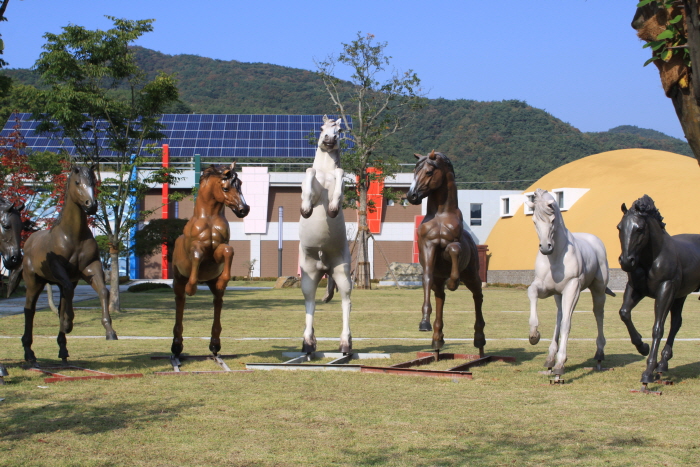
Designed to mimic the traditional kilns of the Baekje period, the Baekje Cultural Museum is a unique space that blends historical elegance with immersive exhibits. It showcases five key masterpieces: the historic Baekje kiln site that’s over 1,500 years old, exquisite blue tiles, an evocative painting of Choi Ik-hyeon's exile, an intricate rubbing of the Confucius statue, and a resplendent golden turtle. Additionally, the museum offers a variety of interactive centers like a gold mine exploration area, an agricultural culture center, an exhibition hall that transports viewers back to the 1960s. There are also Han Sang-don Memorial Hall, Yoo Sang-ok Donation Room, and Jeongseung Park. On weekends, the museum becomes even more lively, offering hands-on activities such as pottery and cup making, as well as the chance to dress in traditional Baekje attire.
Gwangcheon Cave Salted Shrimp Market (광천 토굴새우젓시장)
19.6Km 2024-02-26
8-20, Gwangcheon-ro 285beon-gil, Gwangcheon-eup, Hongseong-gun, Chungcheongnam-do
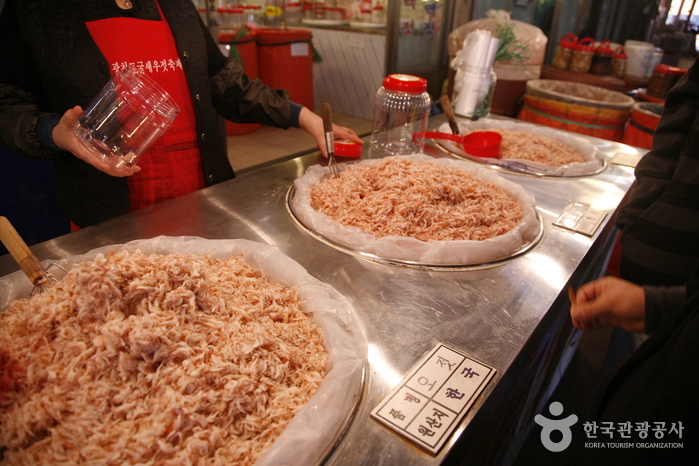
Gwangcheon Cave Salted Shrimp Market is a traditional market located in Gwangcheon, between Hongseong and Boryeong. Gwangcheon’s proximity to the Yellow Sea makes it a famous place for jeotgal (salted seafood), made using seafood and shrimp caught from the Yellow Sea, and laver seaweed. Gwangcheon’s saeujeot (salted shrimp) is stored and aged in a cave tunnel, so it has great quality. The market also offers agricultural goods, seafood, clothing, and sundry items.
Chilgapsan Jangseung Park (칠갑산 장승공원)
19.9Km 2021-08-18
Janggok-ri, Cheongyang-gun, Chungcheongnam-do
+82-41-940-2194
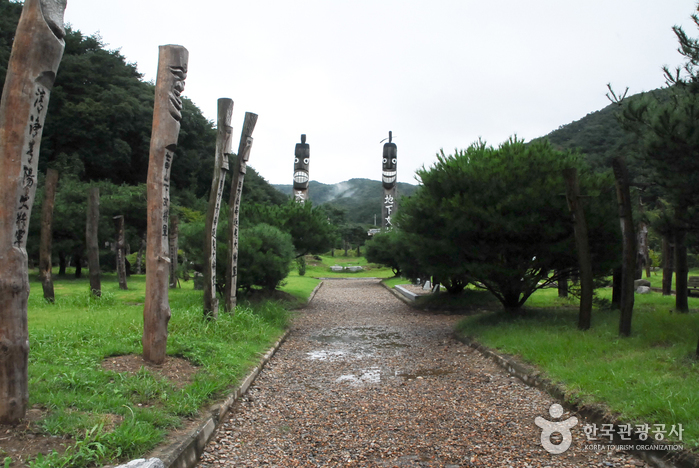
Jangseung Park on Chilgapsan Mountain is the largest preservation area for "jangseungs," the ancient wooden or stone totem poles that were usually placed at the village entrance to ward off evil spirits. It was established in May 1999 to counter the dwindling awareness of the artifacts, and houses some of Korea's tallest jangseungs (11.5 m) as well as replicas of indigenous totem poles from across the world. Today, it continues to host the Annual Chilgapsan Mountain Jangseung Festival, and serves as an important site of Korean history learning.
 English
 한국어
한국어 日本語
日本語 中文(简体)
 Deutsch
 Français
 Español
 Русский


