13.5Km 2025-01-09
78-6, Darakgol-gil, Cheongyang-gun, Chungcheongnam-do
+82-41-943-8123
Julmudeom refers to the unmarked graves of anonymous Catholic martyrs in Darakgol, Cheongyang in Chungcheongnam-do. Darakgol is also the birthplace of St. Choi Gyeong-hwan and Choi Yang-eop (the second Catholic priest in Korea) was also martyred in Gwacheon, Gyeonggi-do. Because the grave is of more than one individual, it was given the name Julmudeom (group graveyard).
Although the exact number of martyrs and their exact cause of death is unknown, they were buried by family resulting in the 37 mounds in three sections. In 1982, Cheongyang Cathedral established monuments to commemorate the unidentified martyrs, and Julmudeom became a well-known site for Catholic pilgrimages. In 1986, the remains of St. Choi Gyeong-hwan Francisco were relocated to the Jeoldusan Martyrs’ Shrine reducing the total number of mounds at Julmudeom to 36.
13.7Km 2024-06-05
10 Yeollinbada 1-gil, Boryeong-si, Chungcheongnam-do
Muchangpo Beach was a military site during the Joseon dynasty and was the first beach to open on the west coast in 1928. The beach has a length of 1.5 kilometers and x_width of 50 meters. The water level is 1-2 meters and the water temperature is approximately 22 degrees Celsius. The surrounding pine forest is lush and beautiful. In particular, there is a fishing spot with a large rock formation in front of the beach. For one to two days each month, there is a phenomenon known as "Moses' Miracle," where the tides subside and reveal a 1.5-kilometer-long path in the middle of the sea. This mysterious sea road was thought to only appear during summer, however it was later revealed that it actually occurs every lunar month. In 1996, the beach was open to the general public.
The red lighthouse towering at the end of the long breakwater is as impressive as a picture. The pretty pensions right in front of the sandy beach add to the scenery. Also, Daecheonhang Port is a 20 minutes drive away, and there visitors can enjoy fresh seafood and grilled shellfish at an affordable price.
14.3Km 2022-07-22
531, Oseosan-gil, Boryeong-si, Chungcheongnam-do
+82-41-936-5465
Oseosan National Recreational Forest was opened on September 22, 2001 around Myeongdaegyegok Valley in Boryeong-si, Chungcheongnam-do. The area is separated from the city area, making it perfect for peaceful retreats into nature. There is a training center and many walking paths through the forest. The trail leading to the summit of Oseosan Mountain is popular among families and couples for its view of the sunset.
17.1Km 2024-02-21
Chungcheongsuyeong-ro, Ocheon-myeon, Boryeong-si, Chungcheongnam-do
Chungcheong Suyeongseong Fortress in Boryeong is a stone fortress built by the Joseon dynasty (1392-1897) in the 16th century to defend against invasions through the Hwanghae Sea. It offers a picturesque view of the Hwanghae Sea and several islands. The entrance to the fortress, called Manghwamun Gate, showcases stone artistry with its polished granite arch. This site also has historical significance as a place where Catholic persecution occurred in the 19th century.
17.2Km 2024-02-21
Soseong-ri, Ocheon-myeon, Boryeong-si, Chungcheongnam-do
Ocheon Port is located in the northern part of Boryeong-si, where the Hwanghae Sea and Gwangcheoncheon Stream meet. It was once an important regional administrative center during the Joseon dynasty (1392-1897). Today, the port still retains its function, and visitors can explore and purchase various seafood caught in the Hwanghae Sea at the market. Ocheon Port Ferry Terminal operates ferry services to nearby islands such as Woldo Island and Yukdo Island.
18.0Km 2024-02-26
119, Gwangcheon-ro, Gwangcheon-eup, Hongseong-gun, Chungcheongnam-do
Gwangcheon Cave Salted Shrimp Complex is a collection of shops offering saeujeot (salted shrimp), a specialty of Gwangcheon. Gwangcheon’s proximity to the Yellow Sea makes it a famous place for jeotgal (salted seafood), particularly those made with shrimp. Gwangcheon’s saeujeot (salted shrimp) is stored and aged in a former mine cave tunnel, so it has great quality. There is even an exhibition hall dedicated to Gwangcheon cave salted shrimp. The Gwangcheon Cave Salted Shrimp & Dried Laver Festival is held in October.
19.3Km 2024-02-23
43-24 Janggok-gil, Daechi-myeon, Cheongyang-gun, Chungcheongnam-do
Designed to mimic the traditional kilns of the Baekje period, the Baekje Cultural Museum is a unique space that blends historical elegance with immersive exhibits. It showcases five key masterpieces: the historic Baekje kiln site that’s over 1,500 years old, exquisite blue tiles, an evocative painting of Choi Ik-hyeon's exile, an intricate rubbing of the Confucius statue, and a resplendent golden turtle. Additionally, the museum offers a variety of interactive centers like a gold mine exploration area, an agricultural culture center, an exhibition hall that transports viewers back to the 1960s. There are also Han Sang-don Memorial Hall, Yoo Sang-ok Donation Room, and Jeongseung Park. On weekends, the museum becomes even more lively, offering hands-on activities such as pottery and cup making, as well as the chance to dress in traditional Baekje attire.
19.9Km 2021-08-18
Janggok-ri, Cheongyang-gun, Chungcheongnam-do
+82-41-940-2194
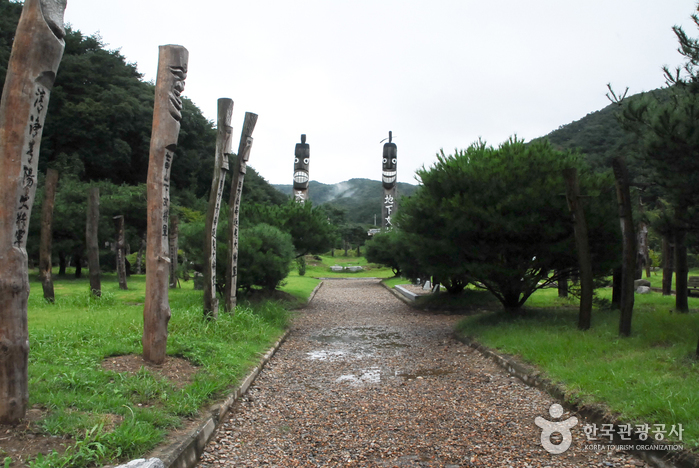
Jangseung Park on Chilgapsan Mountain is the largest preservation area for "jangseungs," the ancient wooden or stone totem poles that were usually placed at the village entrance to ward off evil spirits. It was established in May 1999 to counter the dwindling awareness of the artifacts, and houses some of Korea's tallest jangseungs (11.5 m) as well as replicas of indigenous totem poles from across the world. Today, it continues to host the Annual Chilgapsan Mountain Jangseung Festival, and serves as an important site of Korean history learning.