
Hakindang / 학인당
11.9Km 2025-08-12
45, Hyanggyo-gil, Wansan-gu, Jeonju-si, Région Jeonbuk
+82-63-284-9929
Hagindang was built by the same master builder and carpenter who took part in building the palaces. It's the oldest traditional Korean house in Jeonju Hanok Village and a city/province-designated Folklore Heritage No. 8 situated in Hyanggyo-gil. It has a tall gate in the middle of high walls on either side, behind which are a large front yard with a pond as well as trees surrounding the pond. The house behind this pond is in perfect harmony with the landscape. Right next to the tall gate are a detached building called “sarangchae” and an area designated for experiencing Korean tradition, including another detached building called “byeoldangchae” behind the main building named “Hagindang.” Bonchaedaegwan, which consists of three rooms named “Baekbeomjisil,” “Haegongjisil,” and “Injaejisil” exude elegance and grace The “sarangchae” is a stand-alone building with two rooms with an open living room called "daecheong" in between, making it a perfect place for an entire family to stay. The "byeoldangchae" has a total of three rooms, and the first one (Room No. 1) has a tea room with three windows made of thin wooden frames on three sides. Hagindang serves traditional Korean breakfast like the head family.
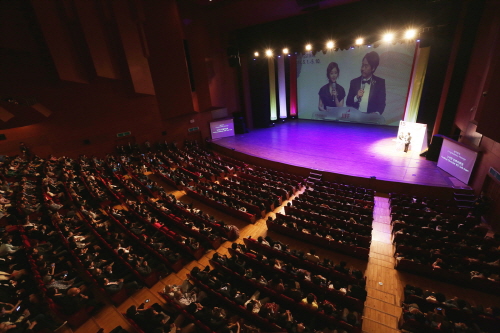
Festival International du Film de Jeonju (전주 국제영화제)
11.9Km 2025-07-09
22, Jeonjugaeksa 3-gil, Wansan-gu, Jeonju-si, Jeonbuk-do, Republic of Korea
Secrétariat de Jeonju +82-63-288-5433
Le Festival International du Film de Jeonju, excitante combinaison entre le plaisir et le cinéma, est une fantastique sortie printanière de neuf jours proposant un grand nombre d’évènements et de films. Il se tient sur la « Movie Street » (Gosa-dong, Jeonju), une rue bourrée de cinémas. Durant les festivités, les rues s’animent de cette énergie contagieuse et de l’enthousiasme des aficionados. Venez vous amuser ce printemps durant la fête du cinéma de Jeonju !
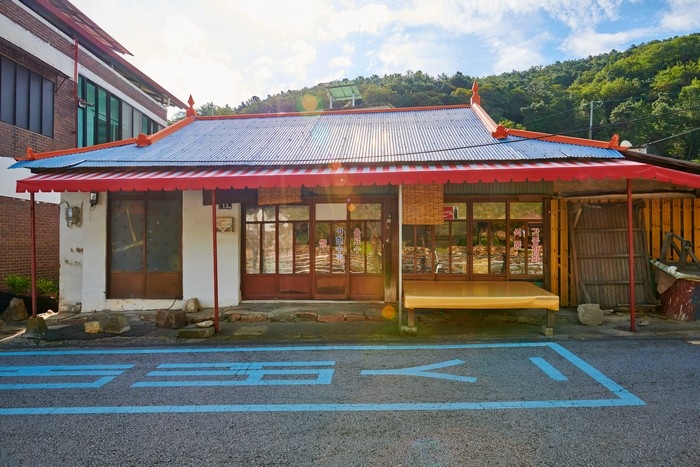
Petit supermarché Ahyeon (아현슈퍼)
12.0Km 2025-03-15
854-7, Dongseohak-dong, Wansan-gu, Jeonju-si, Jeonbuk
Le lieu est réputé comme set de tournage notamment pour son ambiance type année 1990.
Sanctuaire de Gyeonggijeon (경기전)
12.0Km 2024-04-08
44, Taejo-ro, Wansan-gu, Jeonju-si, Région Jeonbuk
+82-63-281-2790
Le sactuaire de Gyeonggijeon a été élevé en 1410 pour abriter le portrait du roi Taejo, fondateur de la dynastie Joseon. Ce lieu saint comporte Jinjeon où se trouve le portrait, et Jogyeongmyo abritant les plaques commémoratives de Han Lee et de sa femme, ancêtres de la famille royale Lee de Jeonju. Détruit en partie durant l’invasion des forces japonaises (1592-1598), le Gyeonggijeon qui existe actuellement a été rénové en 1614.
Veteran Kalguksu (베테랑칼국수)
12.0Km 2025-07-10
135, Gyeonggijeon-gil, Wansan-gu, Jeonju-si, Jeonbuk
Il s’agit d’un restaurant de nouilles traditionnelles aimé des habitants de Jeonju Hanok Village depuis plus de 40 ans, ouvert en 1977. L’établissement est réputé pour son bouillon épais et onctueux, mijoté longtemps, auquel sont ajoutés du perilla (sésame sauvage), de la viande et des œufs.
Les nouilles utilisées ne sont pas les larges nouilles ordinaires, mais des nouilles fines à la texture ferme et élastique. Le plat est garni de poudre de perilla, de piment et d’algues séchées, offrant un goût et une présentation constants au fil des années.
Outre les kalguksu (nouilles coupées au couteau), le restaurant propose des nouilles froides au soja (kongguksu) au goût riche et onctueux, ainsi que des mandu (raviolis) généreusement garnis, qui accompagnent parfaitement les nouilles. Avec chaque commande, du danmuji (radis mariné jaune) et du kimchi de radis en dés (kkakdugi) sont servis ; ce dernier est préparé maison avec des radis d’hiver de Jeju, ce qui lui confère un goût encore meilleur.
◎ Informations sur la Hallyu : ce restaurant est l’un des établissements fréquentés par les acteurs du drama Vingt-cinq, vingt et un. L’actrice principale, Kim Tae-ri, y est venue pour son petit-déjeuner lors du tournage de son vlog, attirant l’attention en dégustant son bol sans en laisser une seule nouille. Tout près se trouve aussi "2521 Guesthouse", la maison d’hôte ayant servi de résidence à Hee-do dans le drama, qui vaut une visite après le repas.
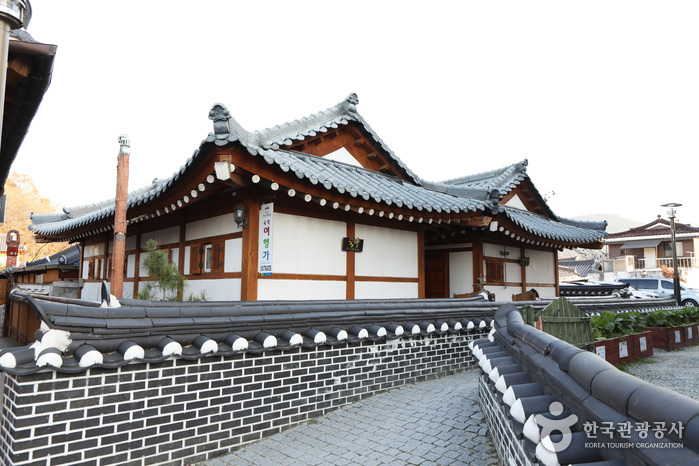
Yeohangga / 여행가
12.0Km 2025-08-12
74-11, Eunhaeng-ro, Wansan-gu, Jeonju-si, Région Jeonbuk
+82-63-231-3040, +82-10-7742-6738
Yeohangga is a guesthouse owned and run by a woman who majored in early childhood education and who has been teaching children for over 20 years. The name means "A home for a happy trip," she says. It’s a unique guesthouse since the owner offers various traditional educational games. The cozy and comfortable guesthouse is a traditional Korean house built in March 2013 at a site where an old house used to be. The main building and detached building are divided by the ridge of the roof with beautiful rafters. There is another meaning to the name of the guesthouse: "a house where the woman is happy." She named it as such for a good reason. She used to live in Seoul when her parents advised her to move to Jeonju and run a guesthouse, leaving her husband and child behind. At first, she considered accepting only female guests, but it wasn't an option since most of the people visiting Jeonju are couples and groups of friends. Instead, she made sure the guesthouse is safe for women while building the house. Many female tourists traveling alone find this a great feature of the guesthouse because they feel safer during their stay. For one, she installed three doors for the rooms (1 transparent door, 1 opaque glass door, and a traditional Korean door). Not only do the guests feel safer; the rooms are also well-insulated thanks to the triple doors. The floors and walls are covered with traditional Korean paper coated with soybean oil, which is very environment-friendly. In the four rooms named “Spring,” “Summer,” “Autumn,” and “Winter,” there are many toys and materials for traditional Korean cognition games, such as “Chilgyo Game,” “Gonu Game,” and “Mabangjin.” It’s very likely that even Koreans have never heard of these games. The owner of the guesthouse chose these games specifically because they are perfect for children to play in a traditional Korean house. She teaches her little guests how to play the games. “Chilgyo Game” involves making a shape with 7 to 20 pieces, whereas “Gonu Game” is similar to the game of Chinese chess. "Mabangjin" is a type of IQ game that involves laying down a total of nine different numbers in three rows and columns so that the sum of the three numbers is identical when added horizontally, vertically, or diagonally. Many guests find these games interesting, and the owner of the guesthouse finds joy in teaching these games to as many families as possible. She recently took over another traditional Korean guesthouse called "Samrakheon" near the Jeonju Oriental Medicine Center. It's a stand-alone guesthouse for groups and families, and she uses the place to teach traditional games to more people.
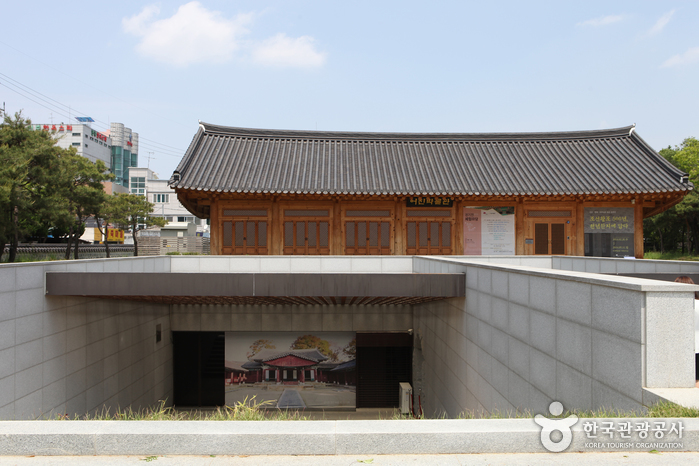
Musée des portraits royaux (어진박물관)
12.0Km 2024-04-24
Taejo-ro 44, Wansan-gu, Jeonju-si, région Jeonbuk
+82- 63-231-0090
[Temple Gyeonggijeon; le lieu où est conservé le portrait du roi Taejo]
Ouvert le 6 novembre 2010, le musée des portraits royaux est l'une des toutes nouvelles attractions touristiques de la ville de Jeonju, situé dans le palais Gyeonggijeon. Le musée constitue ainsi une ressource documentaire importante à la fois pour la ville de Jeonju tout comme pour le temple Gyeonggijeon qui renferme le portrait du roi Taejo. Le musée qui se compose d'étage en sous-sol et en surface occupe une surface de plus de 1000m2. On peut y apprécier le portait de 6 rois en Corée en plus du portrait du roi de Taejo. Depuis son ouverture, le musée vise à devenir une place centrale pour la vie culturelle de la région. Le musée propose également diverses activités pour se familiariser avec la culture de la royauté en Corée.
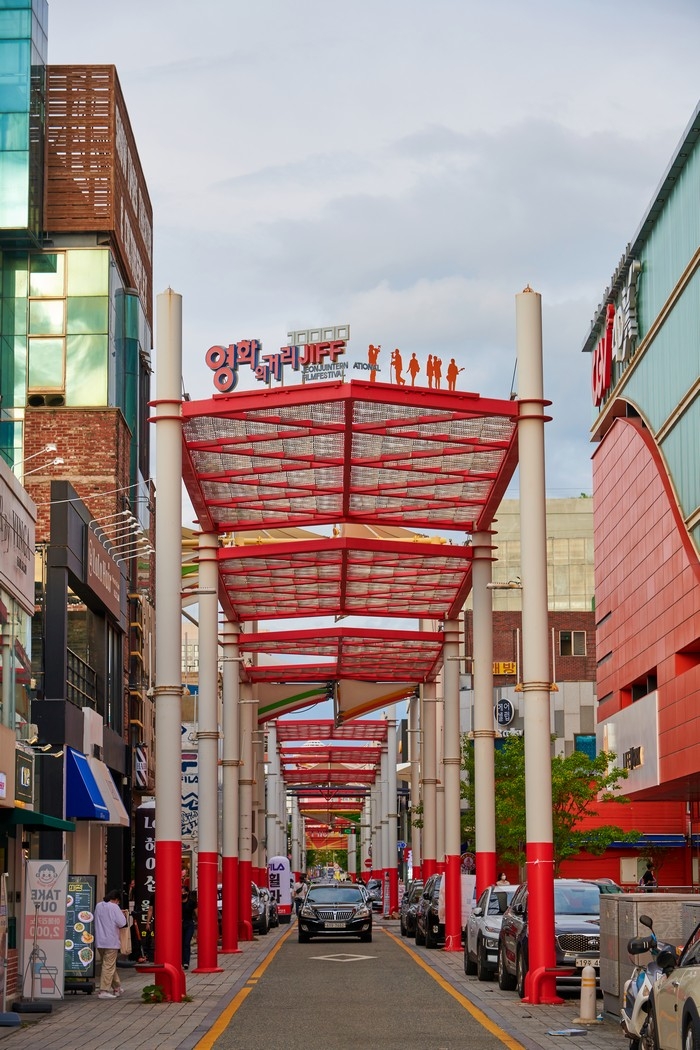
Rue du cinéma à Jeonju (전주 영화의 거리)
12.1Km 2024-07-09
Gosa-dong, Wansan-gu, Jeonju-si, Jeongbuk
La rue du cinéma de Jeonju est le lieu qui accueille le Festival international du film de Jeonju, une rue reliée à la rue Gaeksa réputée pour le shopping dans l'ancien centre-ville de Jeonju.
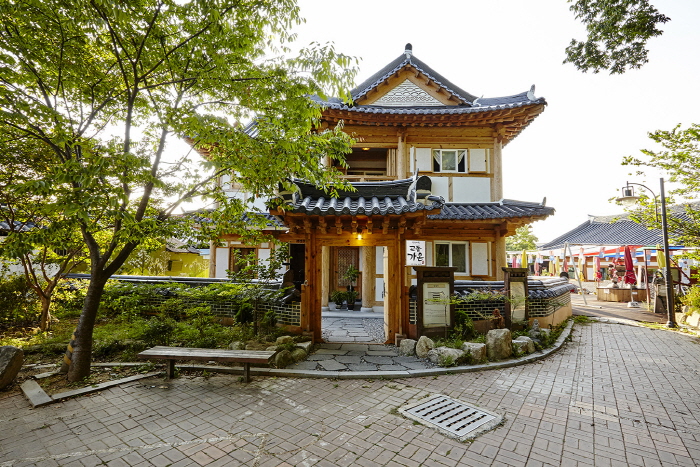
Gyodonggaon / 교동가온
12.1Km 2025-08-12
73-1, Eunhaeng-ro, Wansan-gu, Jeonju-si, Région Jeonbuk
+82-10-5106-3355
Gyodong Gaon is located right in the middle of the main street of Jeonju Hanok Village. The word "gaon" means "middle" in Korean. It's a two-story traditional Korean house that stands out among the rest of the traditional Korean houses in the alley leading to Omokdae. Just inside the gate is a yard with colorful flower trees, jars of sauces, and furnace. The mural on one of the walls is popular among the guests as a place to take photos.
The "numaru", or "loft" in Korean, overlooks the Hanok Village, and is one of the best places in the village to get a closer look at the 500 year old zelkova tree and the foot of the mountain nearby. Open to all the guests, the "numaru" is very popular during the winter as well as the summer. It's an open space with a wooden floor, so it's very cool during the summer, and it also serves as an observatory to enjoy the view of all the snow-covered trees and roofs in the Hanok Village during the winter while having a hot cup of tea.
The owner of the guesthouse has been living here for 37 years. He rebuilt his house and turned it into a hanok guesthouse in 2014 while making sure the rooms are well insulated and comfortable to stay.
He built a two-story building to make an efficient use of the space, and focused on making all the rooms look different. The house has five rooms, and only the “Meomulda Room” on the first floor is the only rooms with a living room separated from the bedroom. All you have to do is open the door to enjoy the view of the yard, Hanok Village, and Omokdae. The “Nanuda Room” on the second floor is the largest one that can accommodate more than five people, making it the most popular choice among families. The "Damda Room" and "Kkumkkuda Room" both have an attic that can be reached by a ladder. The attic is big enough to sleep two adults, and some guests actually sleep there for a unique experience. One of the walls of the attic is finished with cypress wood which has a pleasant scent. The “Geurida Room” has the best view through the two windows on the either side of the room, in addition to warm sunlight and cool wind that come through the window. Modern, not traditional, doors are installed in all the rooms for better sound proofing and insulation.
Gyodong Gaon offers a number of experience programs, such as traditional games like “gulleongsoe”, “tuho", and “Korean top”, As well as “sabang chigi”, “sampalseon”, and “ttangttameokgi”.
Many Korean adults are familiar with these games, while children and foreigners can find these games interesting. All these traditional Korean games are free to play.
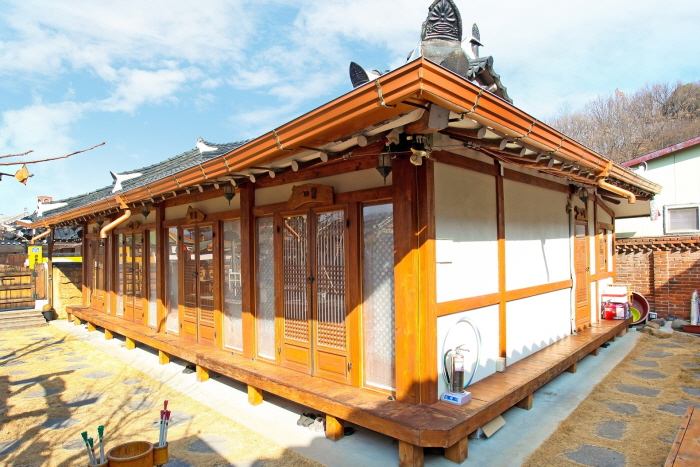
Siwon/ 시원
12.1Km 2025-03-05
45-41, Omokdae-gil, Wansan-gu, Jeonju-si, Région Jeonbuk
+82-10-6520-7840
Situated within Jeonju Hanok Village, Siwon is a hanok experience hall designated by the local government. The names of its individual rooms carry such meanings as “a wish for a life full of love, health and joy”. Each room (except the Gadeukbang) has a small attic where guests can have fun climbing up and down a ladder.
The clay structure with a wood shingle roof is the source of many fond memories for the owner, a permanent fixture of the village, who was born and grew up in the house. The house was once called “the house of persimmon trees in Ssangsiam alley”.
Although the framework of the house was completed in 1954, it has only been open to tourists since it was repaired and renovated in 2014. The house has been fully insulated against draughts and sound-proofed, transforming into a comfortable, cozy guest house that retains the unique beauty of a traditional Korean hanok.
The house’s yard contains a small flower garden and a swing, as well as a space where guests can play tuho, a traditional game in which the players try to throw sticks into a canister, jaegichagi, and other traditional games. In addition, guests can try their hand at woodcraft by cutting and carving pieces of wood into artworks of their own making.
A number of attractions are within walking distance of Siwon, including Gyeonggijeon Shrine, which contains the portrait of King Taejo Seong-gye Yi, the founder of the Joseon Dynasty; Jeondong Cathedral, which features a European architectural design; Omokdae, where King Taejo defeated the Japanese army and held a banquet; Jeonjuhyanggyo Local Confucian School; Namcheon Bridge and Cheonyeonru Pavilion; Nambu Market, a foodies’ paradise; and the Youth Mall
 Français
 한국어
한국어 English
 日本語
日本語 中文(简体)
 Deutsch
 Español
 Русский


