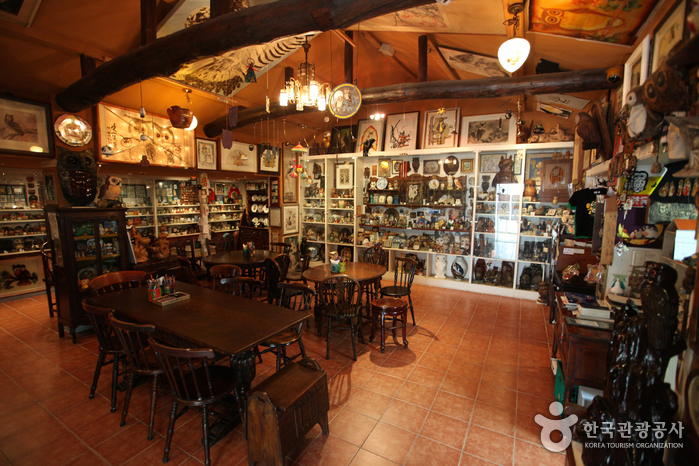
Musée des chouettes (부엉이박물관)
1.4Km 2022-09-19
143, Bukchon-ro, Jongno-gu, Seoul-si
Si vous êtes un passionné des chouettes et que vous aimez l’art des pliages, nous vous conseillons le musée des chouettes. Ce musée ayant pour thème les chouettes, comporte nombre d’oeuvres d’art, de pliages, d’objets utilitaires et accessoires en tout genre. Ces objets proviennent de 70 pays tels que la Chine, les Etats-Unis, la République Tchèque ou la Pologne. Plus de 2,000 pièces y sont exposées.

Festival des Arts de Corée 2025 (2025 대한민국 미술축제)
1.4Km 2025-07-31
57, Daehak-ro 5-gil, Jongno-gu, Seoul
070-7575-0980
Le Festival des Arts de Corée 2025 est une marque culturelle fédératrice qui promeut et connecte douze grands événements artistiques – biennales et foires d’art – organisés dans les principales villes du pays. Rendez-vous en septembre 2025 pour une célébration artistique d’envergure à travers toute la Corée !

Observatoire de Jeongdong (정동전망대)
1.4Km 2022-08-18
15, Deoksugung-gil, Jung-gu, Seoul
L'observatoire Jeongdong se situe au 13ème étage de la tour Seosomun de l'hôtel de ville. On trouve dans l'observatoire un café où chacun peut profiter d'une boisson rafraîchissante. Sur les murs ducafé, les visiteurs peuvent apprécier d'anciennes photos de Jeongdong. L'observatoire est connu pour offrir de belles vues sur le palais Deoksugun.
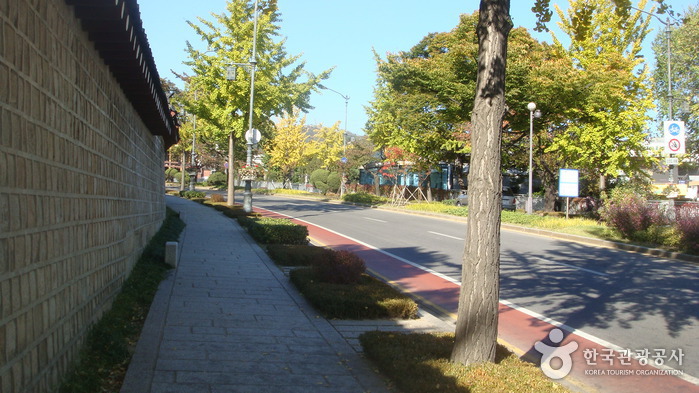
Rue de Cheongwadae (청와대 앞길)
1.5Km 2025-08-20
Gungjeong-dong, Jongno-gu, Séoul
La rue de Cheongwadae a été créée avec l’instauration du gouvernement civil, et s’étend depuis le carrefour de Hyoja à Hyoja-dong jusqu’au carrefour de Palpan à Palpan-dong. En suivant la rue Hyoja depuis la station de métro Gyeongbokgung, vous trouverez le Sarangbang de Hyoja, une fontaine, un bosquet d’hibiscus, le hall Yeonmugwan, le pavillon Daegogak et le hall Yeongbingwan.
Le Sarangbang de Hyoja est un petit bâtiment composé d’un rez-de-chaussée abritant une exposition relatant les 600 ans d’histoire de Séoul, et d’un étage où sont exposés des cadeaux d’hôtes étrangers prestigieux. Les visiteurs peuvent se reposer dans le jardin de derrière. Au Daegogak se trouve un tambour offert au président Kim Yeong-san en souvenir de l’ancien tambour Sinmungo. Le hall Yeonmugwan est l’endroit où le personnel des services de sécurité s’entraîne aux arts martiaux. On y trouve également une citadelle en pierre naturelle, ainsi qu’un espace de repos. Derrière le bosquet d’hibiscus siègent l’ambassade du Vatican et le pavillon Chilgung.
Bordée d’arbres touffus et de parterres fleuris, la rue de Cheonwadae est l’endroit rêvé pour une belle promenade. La résidence présidentelle Cheonwadae (qui signifie « Maison Bleue ») se trouve juste en face de la porte Sinmumun du côté Nord du palais Gyeongbokgung, et la rue se termine sur la porte Chunchumun, où se trouve le centre de presse de Cheonwadae. Un peu plus loin, la rue Samchongdong-gil s’étend depuis la porte Chunchumun jusqu’à la porte Geonchunmun (porte principale du palais Gyeongbokgung). De nombreuses galeries de peinture y sont installées (galerie Gukje, galerie Growrich, galerie Hyundai, etc) , ce qui en fait un lieu de prédilection pour tous les amateurs d’art.
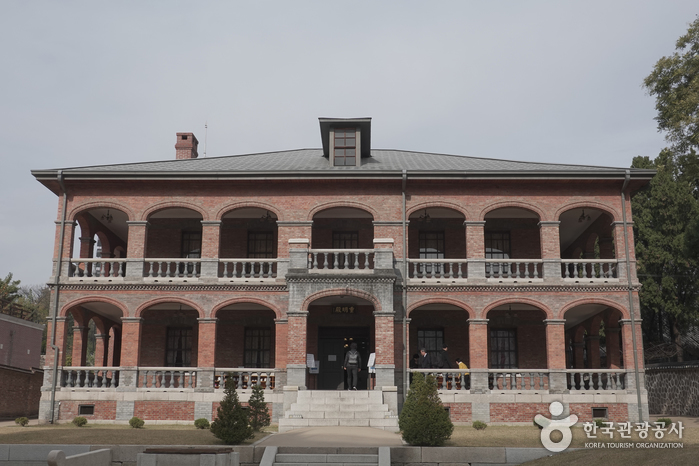
Hall de Jungmyeongjeon (중명전)
1.5Km 2024-12-18
41-11, Jeongdong-gil, Jung-gu, Seoul-si
Le Hall Jungmyeongjeon est situé à côté du théâtre Chongdong. On peut y accéder facilement en longeant le mur de pierre du Palais Deoksugung. Ce bâtiment de trois niveaux de style occidental, conçu par l’architexte russe Seredin Sabatin, a accueilli la bibliothèque impériale entre 1897 et 1901. Il était connu à l’origine sous le nom de Suokheon.
Après l’incendie du Palais Deoksugung, le Hall Jungmyeongjeon est devenu le bureau principal de l’empereur Gojong pour y discuter des affaires nationales et y accueillir les dignitaires étrangers. Ce bâtiment a également été le témoin des heures les plus tragiques de l’histoire, avec la signature de l’infâme traité de Eulsa, instaurant le protectorat entre le Japon et la Corée.
Le Hall Jungmyeongjeon se trouvait à l’origine dans l’enceinte du Palais Deoksugung, mais il a été ensuite séparé du palais lorsqu’un mur de pierre a été construit entre les deux. Il présente un style architectural coréen moderne, mais malheureusement, il a perdu une grande partie de sa structure originale à l’exception de son extérieur à cause d’un incendie en 1925. Après la libération du joug japonais le 15 août 1945, le Hall Jungmyeongjeon a eu différents usages. En septembre 2006, la propriété du Hall Jungmyeongjeon est passée à l’Administration des Biens Culturels, et il a été classifié comme appartenant au Palais Deoksugung en tant que Site Historique n° 124 en février 2007.
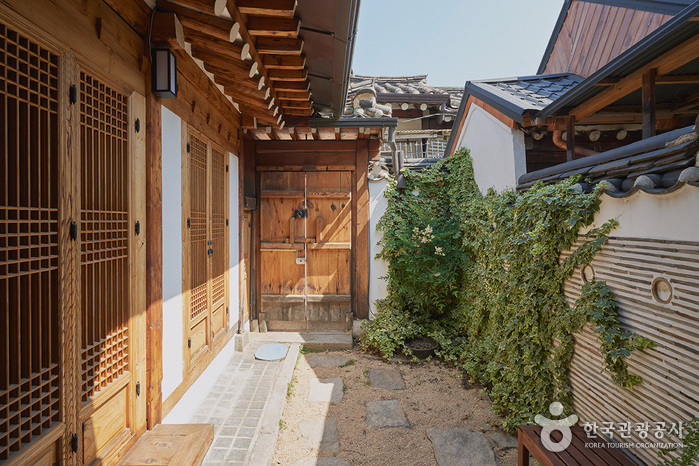
Haeunjae / 하은재
1.5Km 2025-08-12
68-10, Jahamun-ro, Jongno-gu, Seoul
Haeunjae (下隱齋), meaning “hermit’s residence,” is a hanok (traditional Korean house) residence located in Seochon Hanok Village, near Gyeongbokgung Station on Seoul Subway Line 3. It is dedicated to the ideal of “movies and rest,” and takes after the characteristic form of modern hanok with a small courtyard. The entire house is rented out at once, with a queen bedroom, kitchen, movie room, and two restrooms. Up to 4 guests can reserve the house, with each additional guest above the standard of 2 having access to additional bedding.
The movie room is furnished with a Bose sound system, beam projector, and screen, along with a mobile foot bath. The kitchen is equipped with a refrigerator, hand drip coffee maker, toaster, electric kettle, and utensils. A 10% discount is available for guests staying for more than 2 nights on weekdays, and towel replacement and cleaning services are offered for guests staying for more than 3 nights.
The residence is located close to tourist sites like Tongin Market, Gyeongbokgung and Changdeokgung Palaces, and Samcheong-dong area.
Hanok Guesthouse Dongchonchae / 한옥 게스트하우스 동촌재
1.5Km 2025-08-12
21-10, Jahamun-ro 11-gil, Jongno-gu, Seoul
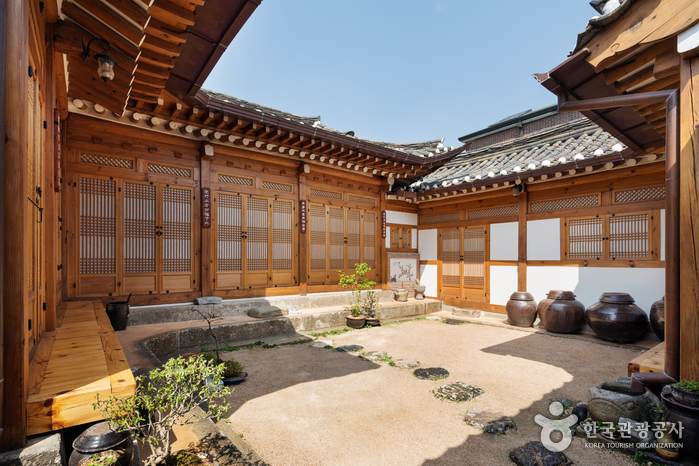
Built in 1939, Dongchonchae was designated as Seoul Well Hanok by the Seoul Metropolitan City in 2016. In 2020, this hanok (traditional Korean house) received the Certificate of KOREA QUALITY from the Korea Tourism Organization in the Heritage Hanok field in recognition of its historicity and quality of services. Dongchonjae is located in the western side of Gyeongbokgung Palace, at Seochon. When one passes through its main gate, one sees the yard, with anchae (women's quarters), sarangchae (men's quarters), and byeolchae (detached quarters) surrounding the plot. Anchae has four rooms, daecheong (wood-floored main hall), a kitchen, and a restroom. One of the rooms is used for tea ceremonies as well. Outside of the sarangchae and byeolchae, which are the living spaces for the owners, visitors have free access to the numaru (raised open floor) and the yard. The anchae’s rooms “Bom” and “Yeoreum” can accommodate 2 to 3 adults each, while the rooms “Gaeul” (Tea Room) and “Gyeoul” are optimal for two. The building is rented out as a whole, so no more than one group may stay in the building at any given time. Standard occupancy is four persons, and eight is the maximum number. There are two restrooms, one within the anchae building, one out in the backyard.
Cooking is not allowed in the kitchen, but guests are free to bring in outside food. Experience programs on offer include nighttime exploration of Seoul City Wall, tea ceremony, folk songs, and rice cake making. Additional payment is only required for rice cake making. Guests may choose between two types of complimentary breakfast: Korean, which comes with rice, soup, and three side dishes; and Western, which comes with bread, salad, and coffee. There are a 100-in screen and mini projector for film watching in the yard or daecheong. Towels, toiletries, hair dryer, bottled water, traditional tea, and capsule coffee are included. The kitchen is equipped with kitchen utensils, a microwave, and a coffee pot, enough for instant foods. Guests also have access to refrigerator and washing machine
Myeongdong Guesthouse Como / 명동게스트하우스 꼬모
1.6Km 2025-08-12
12, Toegye-ro 24-gil, Jung-gu, Seoul
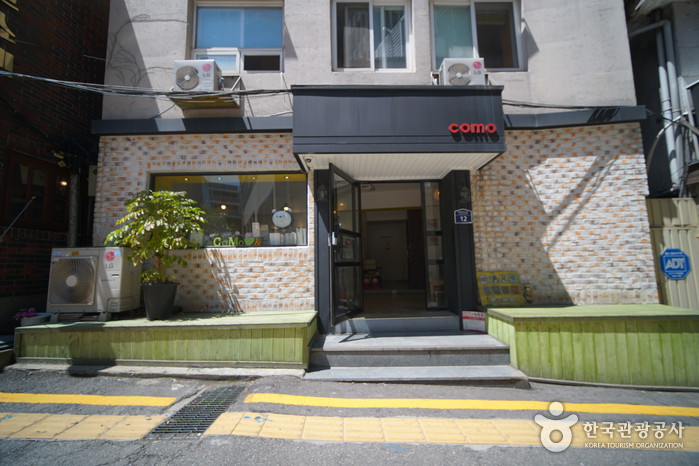
This guesthouse is located only 3 min away by foot from the Myeongdong Station on Seoul Subway Line 4. It is a particularly popular guesthouse for international travelers, assisted by front staff proficient in English and Chinese. The guesthouse offers free luggage storage services.
Even though Como is a guesthouse, it occupies a sizable 4-story building. The first-floor lobby offers breakfast in the morning hours, while the rooftop offers a panoramic view of the Seoul city center.
Bedrooms are fitted with lemon-colored walls and white bedding. Excellent amenities like WiFi, TV, air conditioning, and refrigerator are designed for the benefit of the guests. In particular, guests have access to bathrooms with shower in each of the rooms. There are five types of rooms in total, ranging from the Standard Single to Standard Quad for 4, offering a variety ideal for all arrangements.
The guesthouse also offers excellent walkable access to Myeongdong, one of the most popular shopping districts in Seoul, as well as major sights like N Seoul Tower, Sungnyemun Gate, and Namdaemun Market being reachable in 10 min by car.
Musée d’art de Séoul (서울시립미술관)
1.6Km 2023-10-17
61, Deoksugung-gil, Jung-gu, Seoul
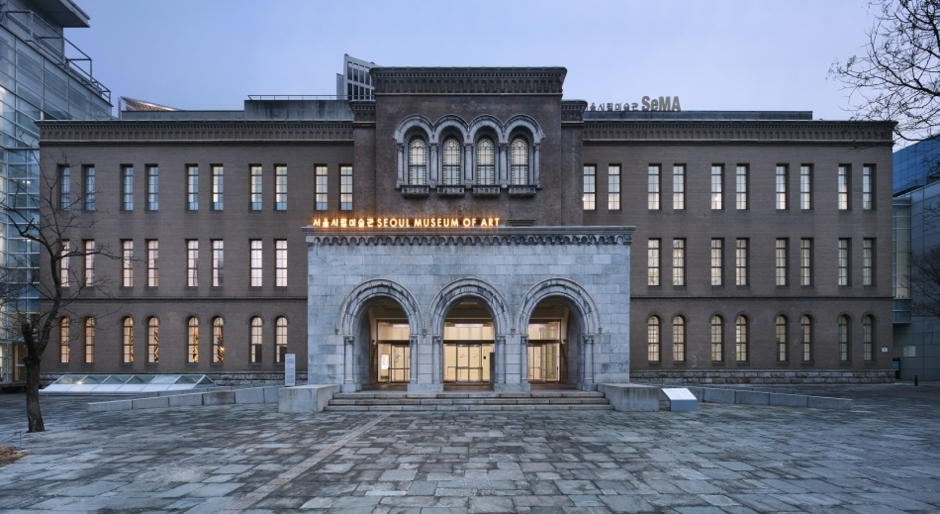
Le Musée d'Art de Séoul met à l'honneur l'art moderne coréen et international à travers ses six galeries. De grandes expositions internationales s'y tiennent tous les cinq à six mois. Depuis mai 2002 se tient en exposition permanentes autour des oeuvres de l'artiste coréenne Chon Kyung-ja. Des visites guidées en anglais de l'exposition permanente sont possibles les samedis et dimanches. Après la visite du musée, vous pourrez vous balader le long du mur en pierre du palais Deoksugung, visiter le théâtre Chongdong pour voir un spectacle traditionnel ou aller voir le spectacle Nanta au théâtre Nanta.
Of one book and stay / 일독일박
1.6Km 2025-08-11
11-1, Pirundae-ro 3-gil, Jongno-gu, Seoul
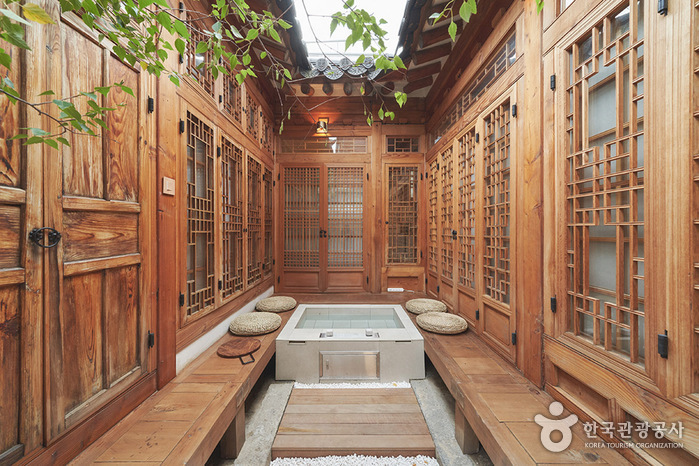
This hanok (traditional Korean house) is located in Seochon Village near Gyeongbokgung Palace. It is a modern C-shaped hanok centered around the inner courtyard, which is the first thing that the guests see after entering through the gate. While it is not expansive, white pebbles and a foot bath make this hanok a unique one. One can enjoy a foot bath while sitting on the porch.
The bedroom, which is located beyond the living room, is furnished with a queen-sized bed. Opening the screen doors brings one to the view of the kitchen area beyond the inner courtyard. A large table, plush sofa, and a small bookcase make the space ideal for books and discussions. Climbing the wooden ladder to the side of the kitchen brings one to the attic, which also doubles as a Korean-style room with a skylight. The kitchen is furnished with a refrigerator, microwave oven, gas stove, electric kettle, toaster, pots, utensils, wine glasses, and bottled water. There is a restroom with a bathtub. The standard occupancy of the house is 4 people.
 Français
 한국어
한국어 English
 日本語
日本語 中文(简体)
 Deutsch
 Español
 Русский


