
Gwanghwamun Hanokjip (광화문한옥집)
1.2Km 2025-07-18
7, Saemunanro 5ga-gil, Jongno-gu, Seoul
Gwanghwamun Hanokjip offers an authentic Korean dining experience while serving traditional Korean cuisine and keeping its traditional atmosphere alive. The best menu at the restuarant is kimchi cabbage wraps with pork. The restaurant is located near the Gwanghwamun Gate, Seoul.
Ilpumdang Premium (일품당프리미엄)
1.2Km 2025-07-18
7, Saemunan-ro, 5ga-gil, Jongno-gu, Seoul
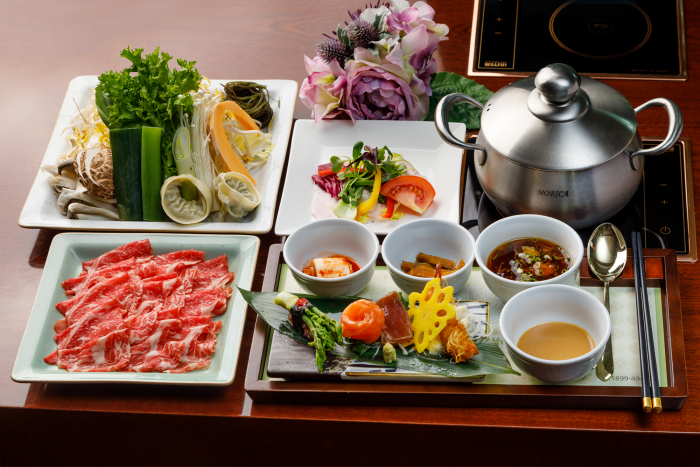
A shabu-shabu specialty restaurant located in Gwanghwamun Gate, Seoul. A store with rooms. The most famous menu is shabu-shabu.
Santuario Munmyo y Complejo Sungkyunkwan en Seúl (서울 문묘와 성균관)
1.2Km 2021-06-24
Sungkyunkwan-ro 31, Jongno-gu, Seúl.
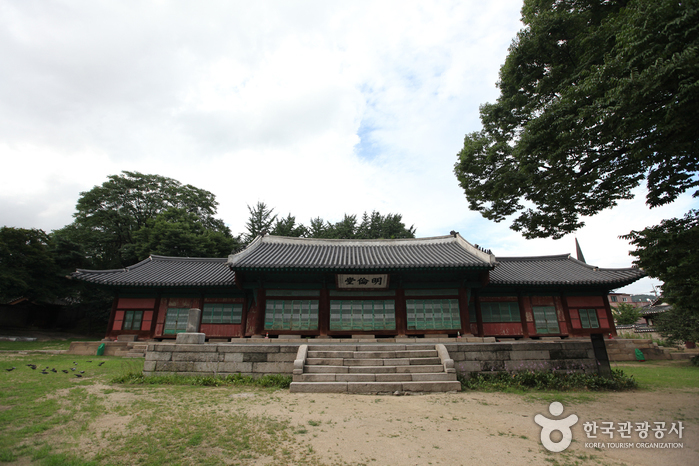
Munmyo es un santuario en honor a Confucio, cuyas enseñanzas son la base del confucionismo. Está dedicado a sus discípulos y a otros eruditos también. Munmyo no solo es un santuario sino que también fue la institución educativa más importante de la dinastía Joseon.
El complejo contiene dos áreas principales: el Daeseongjeon, que alberga santuarios; y el Myeongryungdan, que tiene salones para seminarios y otras instalaciones. También hay dos dormitorios, Dongjae y Seojae, que en conjunto se denominan Sungkyunkwan. Frente al Myeongnyundang se yergue un gingko que es Monumento Natural N°. 59. En primavera y otoño se celebra un rito conmemorativo en honor de Confucio y sus discípulos.
Gomguksijib (곰국시집)
1.3Km 2025-05-15
24, Mugyo-ro, Jung-gu, Seoul
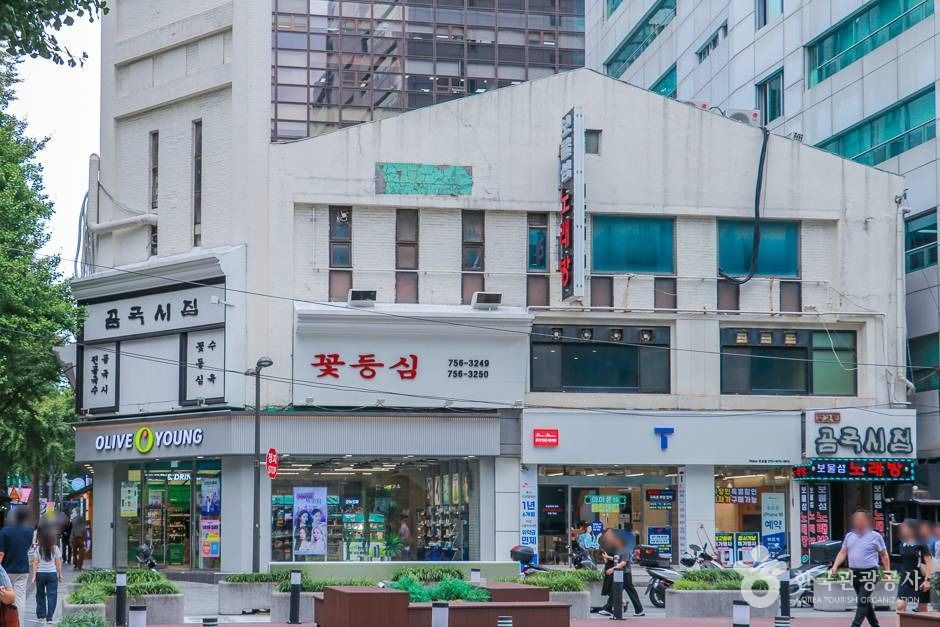
Gomguksi is a soup consisting of handmade noodles and beef slices in a thick and rich beef broth. Gomguksi became famous through word-of-mouth by tourists from the neighboring country of Japan. These days the restaurant is always crowded with people. Also, the side dishes that accompany Gomguksi are extremely delicious.
Calle de la Gastronomía de la Aldea Sejong (세종마을 음식문화거리)
1.3Km 2025-05-27
Chebu-dong 194-2, Jongno-gu, Seúl
Anteriormente conocido como Mercado Geumcheongyo, en 2011 este lugar cambió su nombre por Calle de la Gastronomía de la Aldea Sejong. Ubicado en pleno centro de Seúl, su nombre "Sejong" fue puesto en honor al rey Sejong el Grande de dinastía Joseon. Aunque lleva un nombre relacionado con la realeza, el ambiente del lugar es propio de una aldea de plebeyos en la antigüedad. El encanto de esta zona es que alberga armoniosamente establecimientos de larga data, de la época del Mercado Geumcheongyo, y nuevos espacios administrados por dueños jóvenes que siguen tendencias actuales. Hoy en día, hay muchos restaurantes gourmet únicos no solo en el callejón principal sino también en cada recoveco. Se recomienda empezar el recorrido de la calle desde la salida 2 de la Estación de Gyeongbokgung de la línea 3 del metro.
Haeunjae / 하은재
1.3Km 2025-08-12
68-10, Jahamun-ro, Jongno-gu, Seoul
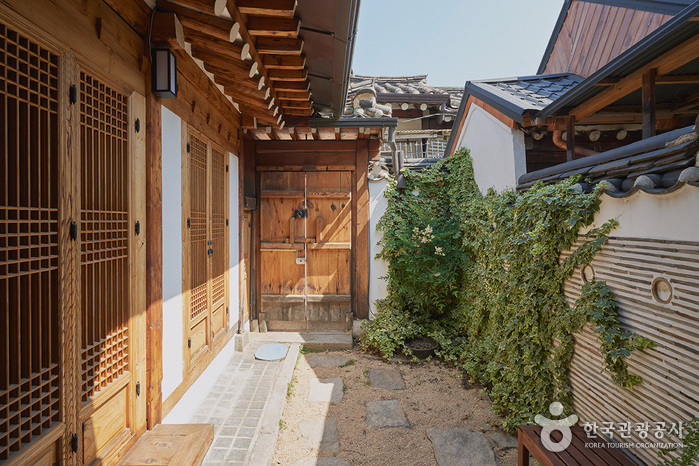
Haeunjae (下隱齋), meaning “hermit’s residence,” is a hanok (traditional Korean house) residence located in Seochon Hanok Village, near Gyeongbokgung Station on Seoul Subway Line 3. It is dedicated to the ideal of “movies and rest,” and takes after the characteristic form of modern hanok with a small courtyard. The entire house is rented out at once, with a queen bedroom, kitchen, movie room, and two restrooms. Up to 4 guests can reserve the house, with each additional guest above the standard of 2 having access to additional bedding.
The movie room is furnished with a Bose sound system, beam projector, and screen, along with a mobile foot bath. The kitchen is equipped with a refrigerator, hand drip coffee maker, toaster, electric kettle, and utensils. A 10% discount is available for guests staying for more than 2 nights on weekdays, and towel replacement and cleaning services are offered for guests staying for more than 3 nights.
The residence is located close to tourist sites like Tongin Market, Gyeongbokgung and Changdeokgung Palaces, and Samcheong-dong area.
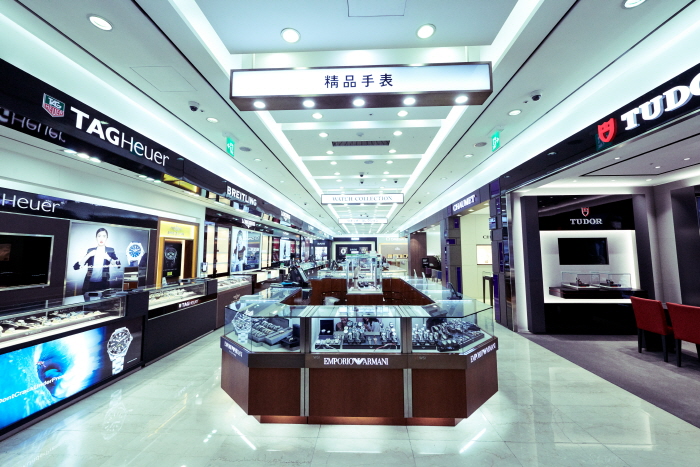
Dongwha Duty Free (동화면세점)
1.3Km 2025-08-04
Sejong-daero 149, Jongno-gu, Seúl.
Dongwha Duty Free solo tiene en venta las mejores marcas del mercado. Puede encontrar las últimas marcas con más tendencia de perfumes, cosméticos, accesorios, entre otros. Aparte de marcas coreanas y extranjeras, puede también encontrar productos de especialidad coreana u objetos tradicionales de todo el mundo.
Choryuhyang (초류향)
1.3Km 2025-05-19
24-10, Dadong-gil, Jung-gu, Seoul
This restaurant's feature items are its Samseon-nurungjitang, Dongpayuk, and Seafood Galbi. Seafood is plentiful in the Samseon-nurungjitang, making for a delicous soup base to which nicely browned rice is added later. When the browned rice is added to the soup base, a loud crackling noise is heard, which signals the beginning of a delicious meal.
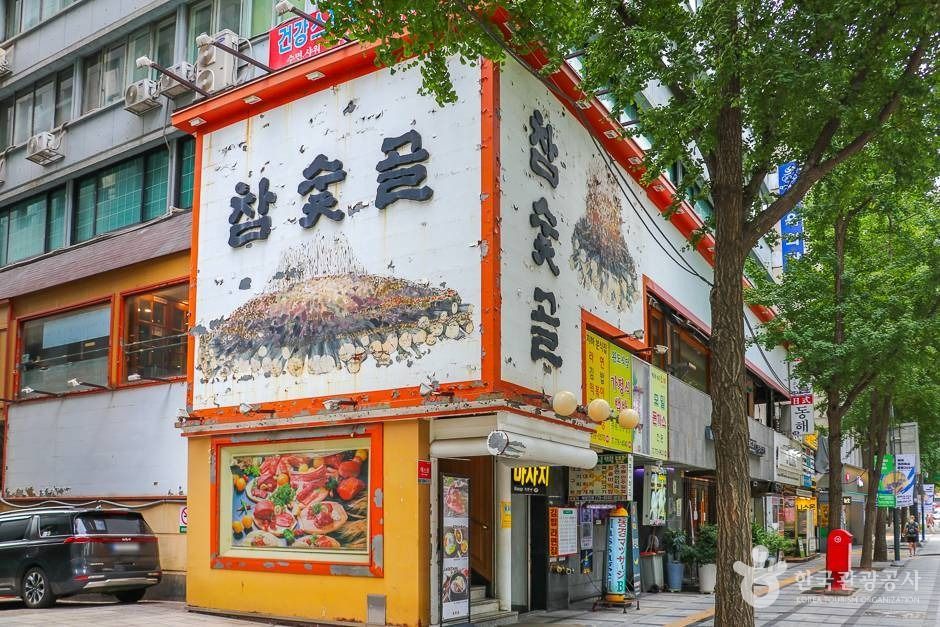
Chamsutgol (참숯골)
1.4Km 2025-05-13
16, Mugyo-ro, Jung-gu, Seoul
Located in Mugyo-dong in Jung-gu, Seoul, Chamsutgol (참숯골) is an upscale restaurant serving hanu beef dishes. The restaurant uses only top quality hanu beef from young cattle (two years old or younger) raised on farms in Jeolla-do Province. For freshness and tenderness, the restaurant serves only fresh meat (not frozen) of A+ grade or higher. To bring out its juiciness and tenderness, the meat is grilled on a charcoal fire.
The elegant ambience and décor and the variety of rooms in different sizes make the restaurant a favorite choice for special events. It is also regularly visited by international tourists. Popular dishes are the sirloin steak and marinated ribs, doengjang soup, and yeongyang dolsotbap (rice served in a hot stone bowl).
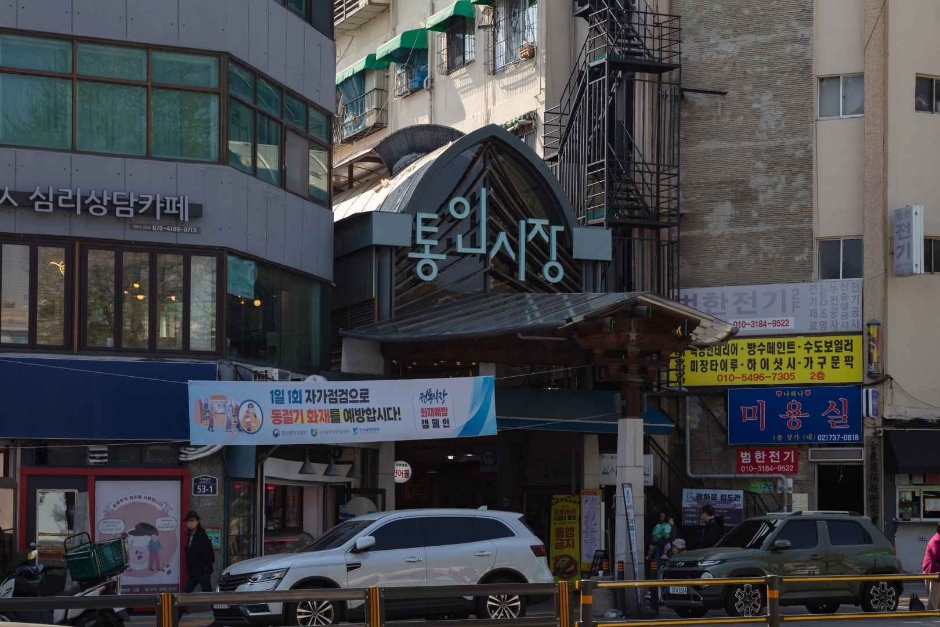
Mercado Tongin (통인시장)
1.4Km 2025-08-08
Jahamun-ro 15-gil 18, Jongno-gu, Seúl.
El Mercado Tongin tiene su origen en el mercado público establecido para los residentes japoneses cerca del barrio Hyoja-dong de Seúl en junio de 1941, cuando Corea aún estaba bajo el dominio nipón. Tras la Guerra de Corea (1950-1953), la nación experimentó un gran crecimiento de la población, que también aumentó el consumo y la demanda, estimulando el establecimiento de tiendas y vendedores callejeros. El Mercado Tongin consiste en 75 tiendas, la mayoría de las cuales son restaurantes y pequeños supermercados. Las tiendas venden productos pesqueros y agrícolas como hortalizas, frutas y pescados. También hay algunas tiendas que venden ropa o calzado, y algunos talleres de reparación de ropa y zapatos.
 Español
 한국어
한국어 English
 日本語
日本語 中文(简体)
 Deutsch
 Français
 Русский


