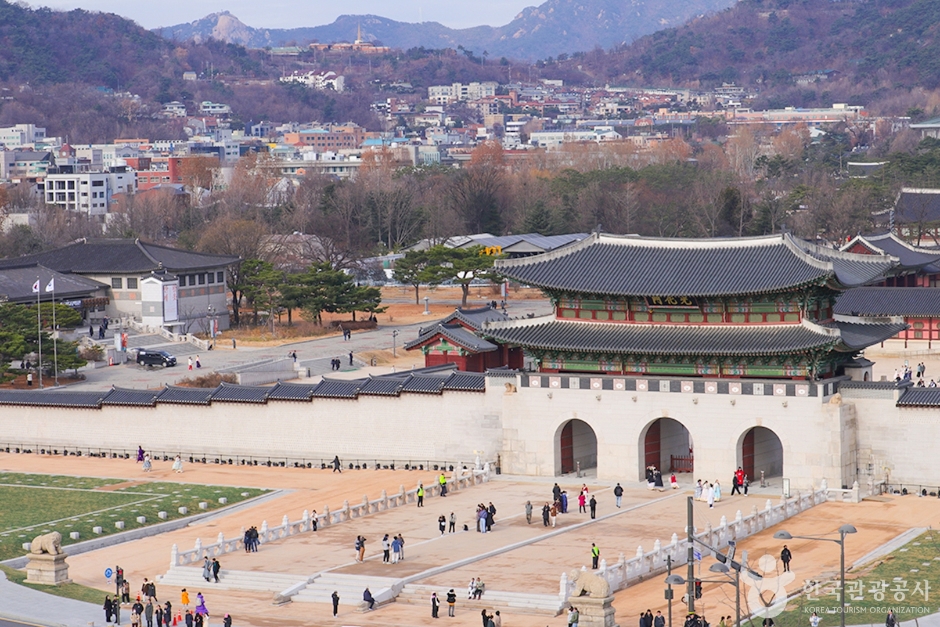
Puerta Gwanghwamun (광화문)
945.7M 2025-08-08
Sajik-ro 161, Jongno-gu, Seúl.
La puerta Gwanghwamun es la entrada principal del palacio Gyeongbokgung, levantada en 1395 por Taejo, el primer rey de la dinastía Joseon. Es la puerta sur de las cuatro puertas de la antigua ciudad de Hanyang (Seúl), levantadas sobre los cuatro puntos cardinales. Su nombre significa “la luz de la civilización iluminará el mundo”, y contiene los altos propósitos que la dinastía Joseon tuvo al ser establecida. Gwanghwamun había sido construida de granito. En el centro se halla una entrada que se asemeja al arco iris, denominado Hongyemun, y arriba está la torre del portal. Gwanghwamun guarda un recuerdo amargo de la historia de Corea. Durante la ocupación de Corea por los japoneses (1910-1945), el gobierno de ocupación destruyó la puerta con el objetivo de suprimir la nación coreana, y en su emplazamiento levantó el Edificio de la Gobernación de Corea. Hacia el año 1968, el gobierno coreano construyó de nuevo la puerta Gwanghwamun, pero usando concreto. Sin embargo, en el año 2010 se completaron los trabajos de restauración total en madera, que es la que se ve actualmente.
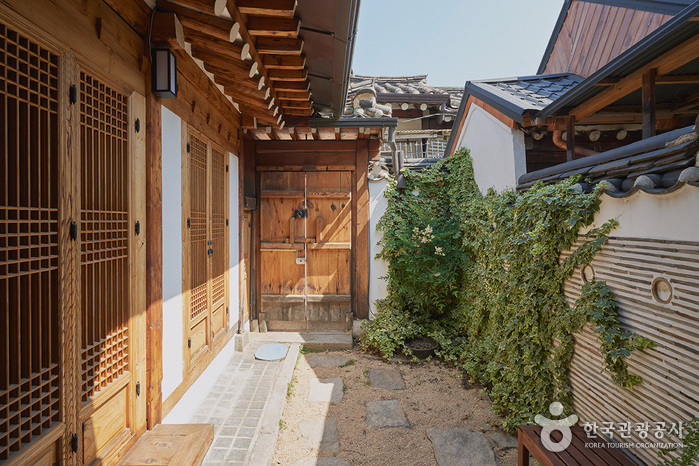
Haeunjae / 하은재
946.3M 2025-08-12
68-10, Jahamun-ro, Jongno-gu, Seoul
Haeunjae (下隱齋), meaning “hermit’s residence,” is a hanok (traditional Korean house) residence located in Seochon Hanok Village, near Gyeongbokgung Station on Seoul Subway Line 3. It is dedicated to the ideal of “movies and rest,” and takes after the characteristic form of modern hanok with a small courtyard. The entire house is rented out at once, with a queen bedroom, kitchen, movie room, and two restrooms. Up to 4 guests can reserve the house, with each additional guest above the standard of 2 having access to additional bedding.
The movie room is furnished with a Bose sound system, beam projector, and screen, along with a mobile foot bath. The kitchen is equipped with a refrigerator, hand drip coffee maker, toaster, electric kettle, and utensils. A 10% discount is available for guests staying for more than 2 nights on weekdays, and towel replacement and cleaning services are offered for guests staying for more than 3 nights.
The residence is located close to tourist sites like Tongin Market, Gyeongbokgung and Changdeokgung Palaces, and Samcheong-dong area.

Sarangchae (사랑채)
982.3M 2025-05-14
6, Insadong 16-gil, Jongno-gu, Seoul
Sarangchae is located in Insa-dong, one of the most famous neighborhoods visited by tourists. Majority of the restaurant's customers are foreigners, and they offer reasonably priced Korean dishes that are highly popular among foreign visitors.
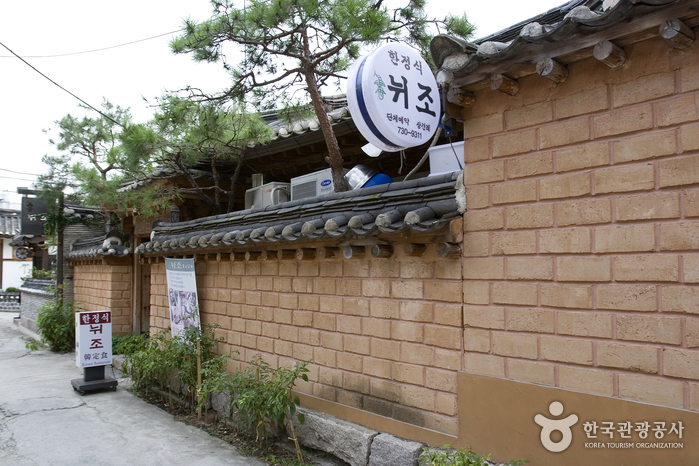
Nwijo (뉘조)
989.1M 2024-11-28
27, Insadong 14-gil, Jongno-gu, Seoul
Nwijo (뉘조) is a Korean restaurant specializing in wild vegetable cuisine. The name ‘Nwijo’ means ‘the god of the silkworm,’ and likens wild vegetables to silkworms in that both can be eaten in their entirety. The restaurant serves original full-course Korean meals that are prepared using hundreds of kinds of wild vegetables, including special seasonal vegetables.
A typical full-course meal starts with delicious pumpkin porridge, followed by seasoned wild vegetables, root vegetable ssam (condiments wrapped in vegetable leaves), slices of boiled meat, and steamed lotus leaf-wrapped rice served with jjigae (Korean stew) and various side dishes. This kind of traditional feast is pleasing to both the eye and the palate and is topped off with sikhye (traditional sweet rice drink). Lunch specials are also available.
Groundseesaw Seochon (그라운드시소 서촌)
1.0Km 2024-04-19
Jahamun-ro 6-gil 18-8, Jongno-gu, Seúl
Groundseesaw es un espacio cultural combinado que presenta la productora de exposiciones MEDIA & ART en Seochon, Jongno, donde convergen la historia, el arte y la cultura, y ha sido diseñado por el estudio de arquitectura SoA y el estudio de paisajismo Loci Studio. En Groundseesaw Seochon podrá encontrar diversas exposiciones.
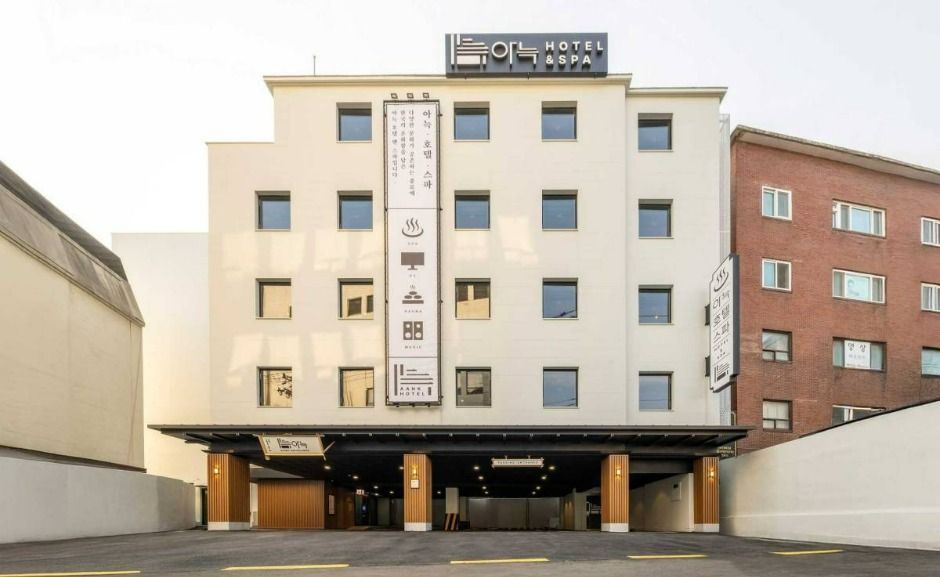
Aank Hotel & Spa Jongno Unni Branch (아늑호텔 앤 스파 종로운니점)
1.1Km 2025-04-25
89, Donhwamun-ro 11ga-gil, Jongno-gu, Seoul
Aank Hotel & Spa Jongno Unni Branch embodies the warmth and charms of Korea. Guests are welcome to unwind with diverse room options to choose from such as the msuic room, signature spa room, desktop 2-PC room, and standard room. It's location in the heart of Seoul makes it a great place for tourists as well as well.
 Español
 한국어
한국어 English
 日本語
日本語 中文(简体)
 Deutsch
 Français
 Русский


