
Complejo Recreativo Jisan (지산유원지)
11.8Km 2025-06-16
Jiho-ro 164-beongil 23, Dong-gu, Gwangju
El Complejo Recreativo Jisan fue reabierto al público en diciembre de 2016 junto al monorraíl, a 11 años de su cierre. El movimiento característico del monorraíl que recorre una sola vía hace gritar de emoción a los pasajeros. Al subir al monorraíl, se puede ver a primera vista el panorama de la urbe de Gwangju y la cima del monte Mudeungsan. El monorraíl parte desde la mitad del monte, a 50 m del destino final de la telesilla, y hace el recorrido de ida y vuelta hacia la cima del monte del Complejo Recreativo Jisan, donde se encuentra el pabellón Palgakjeong. Desde su reapertura, se hizo popular entre la generación joven a través de redes sociales y recomendaciones como una instalación recreativa peculiar del monte Mudeungsan de Gwangju.
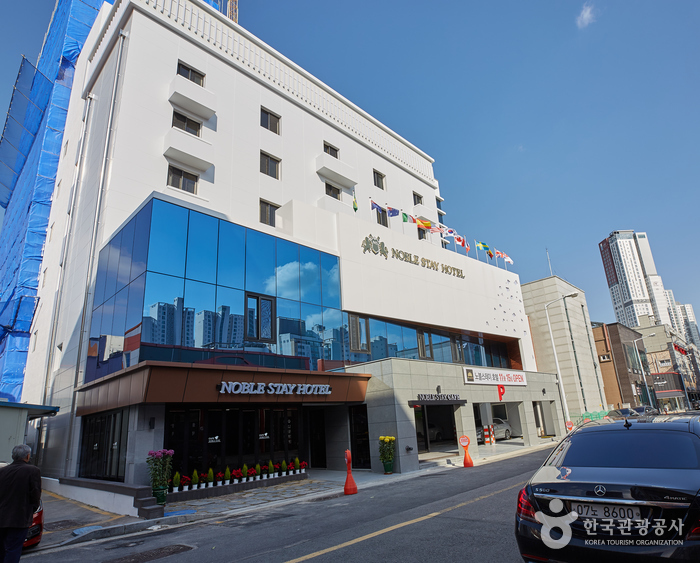
Noble Stay Hotel / 노블 스테이 (Noble Stay)
12.0Km 2025-08-12
19-7, Imbangul-daero 826beon-gil, Gwangsan-gu, Gwangju
Noble Stay is a business hotel equipped with 94 rooms, a breakfast buffet, and a sky lounge. There is a food street and large supermarkets nearby, which are very popular among travelers with its large, stylish exterior and interior. White and wood tone are used in each guest room, with air purifiers and stylers equipped to provide a comfortable stay for all visitors. On the very top floor of the hotel, a sky lounge is available to be enjoyed. Breakfast can be eaten at the sky lounge while observing the scenery of Gwangju at a glance.
Doraemi House (도래미하우스)
12.6Km 2025-07-18
18-26, Dongnyeok-gil, Dado-myeon, Naju-si, Jeollanam-do
Doraemi House in Dorae Village, Naju, Jeollanam-do, is a hanok stay with a bonchae (‘main house’), a sarangchae (men’s house) and a byeolchae (‘reception room’). The bonchae has two bedrooms with a hidden attic space. The sarangchae has a living room with bedrooms on either side; while the byeolchae, atop a low hilll, has a single cozy room. A walk along a forest road takes you to a pavilion by a pond. Next to the bonchae is a quiet and tranquil reading room.
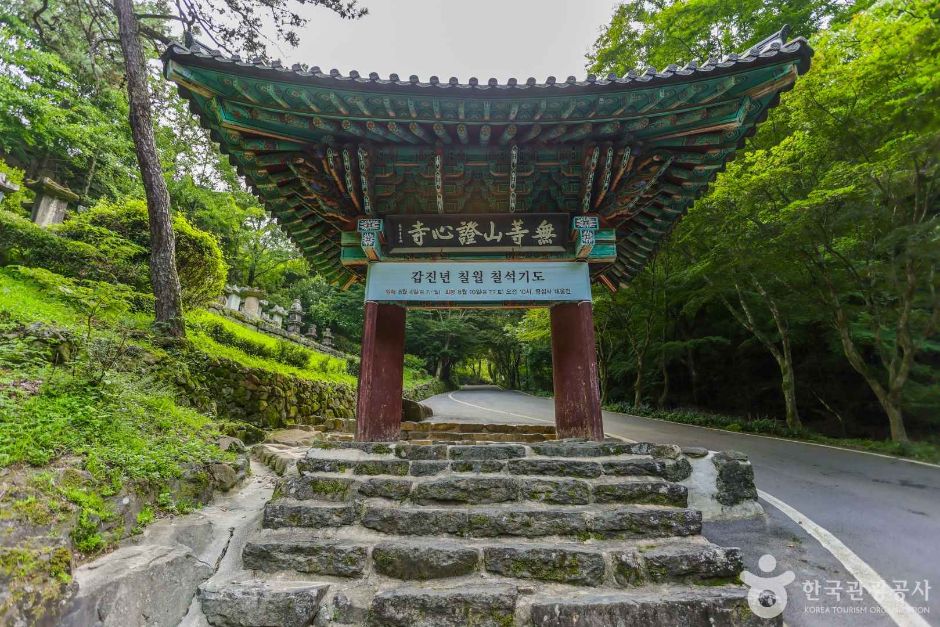
Templo Jeungsimsa en Gwangju (증심사(광주))
13.0Km 2025-07-02
Jeungsimsa-gil 177, Dong-gu, Gwangju
Ubicado en las faldas occidentales del monte Mudeungsan, Jeungsimsa es un templo budista representativo de Gwangju. Fundado en sus orígenes por el monje Cheolgamseonsa Do Yun en 517 (durante el reino de Silla), fue remodelado por el monje Hyesoguksa en 1094 (durante la dinastía Goryeo) y de nuevo por Kim Bang en 1443 (durante la dinastía Joseon). El templo se incendió durante la Guerra de Imjin, a fines del siglo XVI, y fue reconstruido en 1609 por tres monjes: Seokgyeong, Sujang y Dogwang. Sufrió varias restauraciones adicionales antes de ser destruido de nuevo por un incendio durante la Guerra de Corea (1950-1953). El 1º de noviembre de 1986 fue designado como Patrimonio Cultural de Gwangju. La mayoría de los pabellones existentes, incluido el Pabellón Daeungjeon (el principal del templo), se reconstruyeron en la década de 1970.
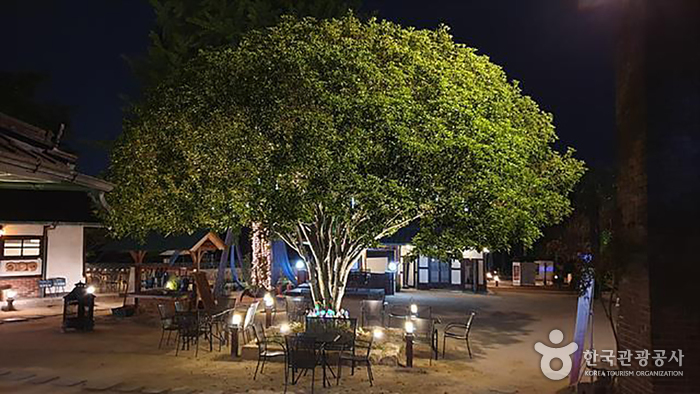
3917 Majung / 3917 마중
13.3Km 2025-08-13
42-16, Hyanggyo-gil, Naju-si, Jeollanam-do
Located in Gyo-dong, Naju-si, Jeollanam-do, 3917 Majung is a cultural space combining a hanok (traditional Korean house) cafe, modern cultural experiences, and hanok guesthouse. The name “3917 Majung” refers to its goal of “welcoming (majung) the modern culture of Naju in 1939 anew in the year 2017.” Spread out on a wide land area of 13,223 m2 are four buildings of Nanpajeong, Sarangchae, Mokseowon, and Siseoheon. All buildings take after the unique combination of Japanese- and Western-style housing commonly seen in the late Korean Empire period.
Nanpajeong is a pavilion constructed during mid-Joseon period, named after its most famous guest Jeong Seok-jin (pen-name: Nanpa), a scholar who led an uprising against Japanese imperialism in late Joseon period. There are two ondol (under-the-floor heating system) rooms in total, separated by a central wooden-floor hall (daecheong), one supporting 3 to 4 guests, one ideal for 2 to 3 guests. The restroom, which is also fitted with a shower booth, is located outside the building.
Eunhaengmok Room 1 and 2, which are housed in the Sarangchae building, are tatami rooms with balcony. Sarangchae’s shower and restroom is located in the building. Mokseowon is likewise made up of three tatami rooms, separated by open floor space and an attic. The shower and restroom is located outside the building. Siseoheon houses a 4-person room and the largest room in the complex, capable of supporting more than 10 guests. There are 2 restrooms and 2 restrooms with shower facilities, making the building ideal for group events.
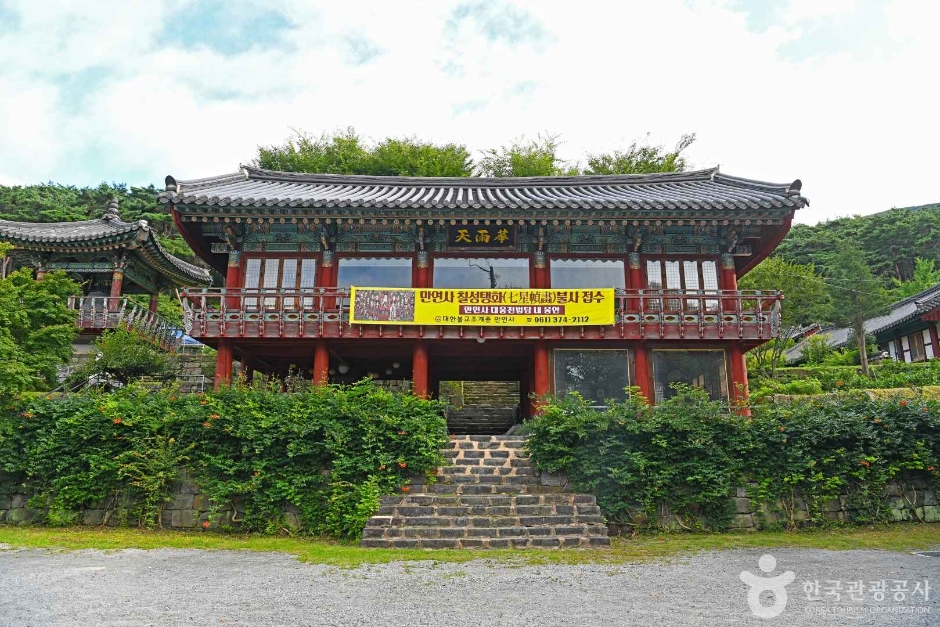
Templo Manyeonsa (만연사)
14.4Km 2025-10-23
Jingak-ro 367, Hwasun-eup, Hwasun-gun, Jeollanam-do.
Se cree que este templo fue fundado hacia el año 1208, los tiempos del rey Heejong, de la dinastía Goryeo. Hasta la Guerra de Corea se conservaban varios de sus pabellones más antiguos, pero muchos fueron destruidos. Recién en 1978 se levantaron nuevamente varios de ellos. En las cercanías, a exactamente 2 km hacia el este están las Cascadas Manyeon y hay un bosque que atrae a muchos turistas de pícnic y campamento.
 Español
 한국어
한국어 English
 日本語
日本語 中文(简体)
 Deutsch
 Français
 Русский


