![The House of Yehbon [Korea Quality] / 예본의 집 [한국관광 품질인증]](http://tong.visitkorea.or.kr/cms/resource/08/2557408_image2_1.jpg)
The House of Yehbon [Korea Quality] / 예본의 집 [한국관광 품질인증]
2020-09-03
1 FL, 64, Gaepo-ro 118-gil, Gangnam-gu, Seoul
+82-10-3908-1617, I have a what's app.
The house of Yehbon(예본의 집) is a guesthouse in a single-story residential house. The owner of the guesthouse has stayed at many guesthouses in the US while traveling and loved how they decorated the rooms according to the unique characteristics of the region. This is why she furnished the rooms with a traditional Korean cabinet inlaid with mother-of-pearl and other furniture that are more than 100 years old and covered with mantles that she herself embroidered. The antique furniture is one of the outstanding features of this guesthouse, which has two guestrooms, living room, kitchen, and two bathrooms. Many guests are from India, Canada, America, Netherlands, and Russia, including Koreans living abroad, and they say they find this place very comfortable. It's like homestay, but the owner of the guesthouse tries to provide enough privacy for those who wish to be left alone as well. It’s very conveniently located in Gangnam with access to public transportation within the vicinity and close to the subway station(3rd Daecheong station).
I give my guests space but I am available when needed. Privacy is protected. You can always communicate with the host. The guests stay in the 1st floor, and the host lives in the 2nd floor. You can cook and enjoy a meal together in a spacious kitchen. You can take a shower but no bathtub in the bathrooms. It's very easy to find my place. Parking: Just next to the gate. (20 steps) There're a lot of delicious inexpensive restaurants and a CU convenience store just in front of the house.
![Seoul Naksan Stay [Korea Quality] / 서울 낙산 스테이 [한국관광 품질인증]](http://tong.visitkorea.or.kr/cms/resource/00/2574600_image2_1.jpg)
Seoul Naksan Stay [Korea Quality] / 서울 낙산 스테이 [한국관광 품질인증]
2023-04-13
Samseongyo-ro 4-gil, Seongbuk-gu, Seoul
Seoul Naksan Stay is a guesthouse in a downtown area. The owner, who originally ran a guesthouse in Yongin, Gyeonggi-do, opened this guesthouse after moving to Seoul. Naksan Stay is located at the low end of the fortress wall of Naksan Park, which is a great place to enjoy the night view of Seoul. The guesthouse has two gates: one leading to the small building where the owner and her family reside, and the other one leading to a bigger building that serves as a guesthouse with a spacious two-story room. Majority of the guests are from France and Russia. It’s a great place to stay for those wishing to enjoy the daytime and nighttime views of the city.
![Moonguesthouse [Korea Quality] / 문게스트하우스 [한국관광 품질인증]](http://tong.visitkorea.or.kr/cms/resource/09/2577509_image2_1.jpg)
Moonguesthouse [Korea Quality] / 문게스트하우스 [한국관광 품질인증]
2020-09-09
31-18, Samil-daero 32-gil, Jongno-gu, Seoul
+82-2-745-8008, +82-10-8704-9981
The Moon Guesthouse is situated near a number of interesting tourist destinations including Unhyeongung Palace (3min on foot), Bukchon Hanok Village (5min on foot), Changdeokgung Palace (5min on foot), and Changgyeonggung Palace (10min on foot). The guesthouse was named ‘moon’ (‘door’ in English) because it has many 176 doors and windows. Upon entering by the gate, visitors will see a ‘ㄷ’-shaped hanok building in the courtyard, in which a wooden bedstead and a table are placed. On the opposite of the hanok building there is a wall roofed with tiles engraved with Korean patterns such as deer, pine, turtle, etc. Flowers in the flowerbed lined up along the wall are in bloom and the bonsai are also well-kept in the house. Renovated and opened as a guesthouse in September 2011, Moon Guesthouse consists of a bonchae (main building) and a byeolchae (detached house). The rooms are decorated with red clay and hanji (traditional Korean paper handmade from mulberry trees), and have under-the-floor heating (ondol). Each room is equipped with an air-conditioner, and has a 40cm-thick layer of red clay over the ceiling for insulation, making the rooms cool in summer and warm in winter. The house has seven individual guestrooms and five modern bathrooms, but the entire building (bonchae or byeolchae) can be rented, too. In particular, the unhyeondang of the bonchae is very popular as it can be converted into one large space for special events, group workshops, etc. simply by opening all the sliding doors (Bunhapmun – Goryeo construction style). This room, which is decorated with a flower-patterned windscreen, a landscape painting, and calligraphy, has been used as a shooting location for various TV programs including KBS2’s TV reality program Man’s Qualification and its variety show The Human Condition. The guestrooms are also equipped with traditional furniture including a cabinet inlaid with mother-of-pearl. The guesthouse also provides a variety of experience programs from 11am to 3pm, including tea ceremony, wearing Hanbok (traditional Korean clothes), making kimchi and gochujang (red chili paste), playing a traditional musical instrument, making a rubbing of a stone inscription, calligraphy, drawing orchids on a fan, and so on. The house has about seventy hanbok and other clothing accessories, as well as a royal costume. Its calligraphy and drawing orchid programs are run directly by the owner, who used to work as a classical Chinese teacher at a high school.
LikeU (라이크유)
2025-06-18
53, Wausan-ro 35-gil, Mapo-gu, Seoul
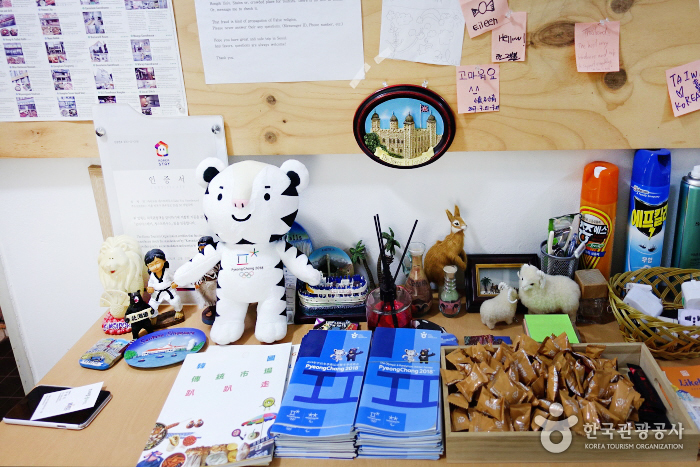
LikeU is a guesthouse in Seogyo-dong, Mapo-gu, Seoul, one of the downtown areas of Seoul that’s popular among young people. It's within a 2-minute walk from Hongik Univ. Station on Subway Line 2. For this reason, majority of the guests are young people from Hong Kong and Singapore. The owner of the guesthouse goes the extra mile to make sure that the rooms, beds, sheets, and blankets are clean, so the minimum length of stay is 3 days. All the guestrooms are two-story rooms for more space. There is a washing machine in each of the rooms for the convenience of the guests. Use of the washing machine is free.
GnB Hotel (지엔비호텔(GnB호텔))
2025-07-18
19, Heukgyo-ro, Jung-gu, Busan
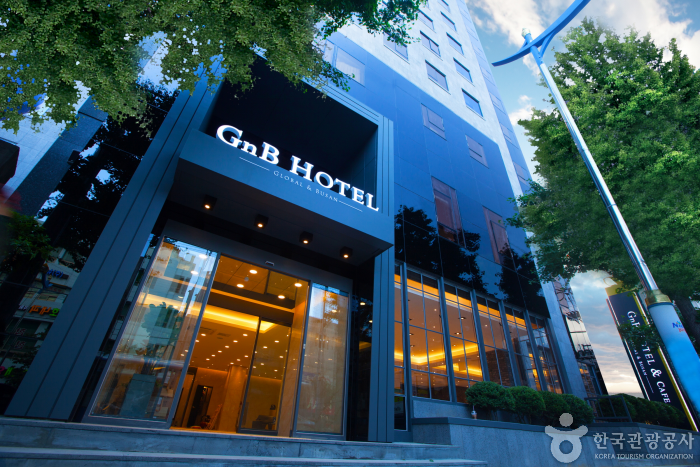
GnB Hotel is a large-scale hotel located 10 minutes' walk from Jagalchi Station on the Busan Subway. It offers a wide range of room types, including Standard, Deluxe, Suite, and Penthouse. Specifically, the Penthouse and Penthouse+ rooms, which are the pride of the hotel, feature whirlpool spas where you can relax after a long journey while taking in the scenery of downtown Busan. They are also equipped with an induction cooktop and kitchenware. The restaurant on the B1 floor serves breakfast. The business center on the first floor provides guests with free access to a printer and scanner.
![Central Park Hotel [Korea Quality] / 센트럴파크 호텔 [한국관광 품질인증]](http://tong.visitkorea.or.kr/cms/resource/77/2669477_image2_1.jpg)
Central Park Hotel [Korea Quality] / 센트럴파크 호텔 [한국관광 품질인증]
2025-01-02
20, Haegwan-ro, Jung-gu, Busan
+82-51-243-8001
Central Park Hotel is located in the middle of Jungang Station and Nampo Station on Busan Metro Line 1. It’s a 15-story building with a total of 67 rooms in different sizes, and some of the rooms have a view of the ocean. The cafeteria serving breakfast is a few steps up from the first floor. There is an indoor terrace right next to the elevator with a table next to the window, and it's free to use for all the guests. The hotel has a parking tower for the guests to park. The lobby is open 24 hours with staff to provide services, with maps and booklets for tourists. The hotel offers luggage storage service for guests who have arrived before the check-in hour or who plan to stay in the area after the check-out hour. Nearby tourist destinations include Yongdusan Park, Gwangbokro Fashion Street, Changseondong Meokja Golmok, Bupyeong Jokbal Golmok, and BIFF. It's easy to get to the downtown area from the hotel.
The Park Guesthouse (더파크 게스트하우스)
2025-06-04
151, Gwangnam-ro, Suyeong-gu, Busan
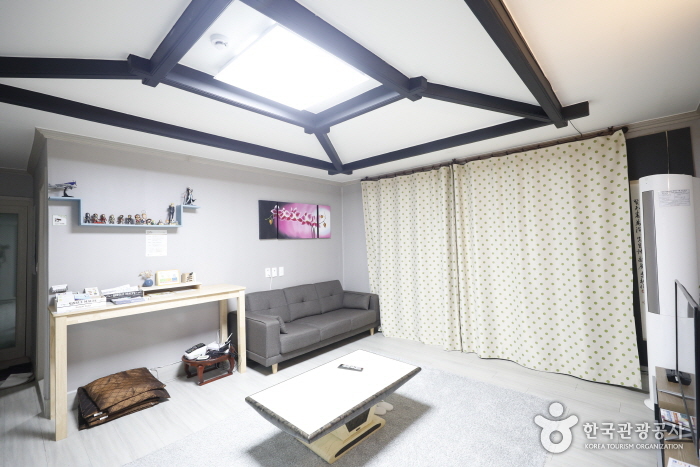
The Park Guesthouse is an affordable homestay in the Gwangalli Beach area of downtown Busan, where guests will meet tourists from many other countries. Accomodation consists of bedrooms with toilets plus a large shared living room with kitchen, bathroom. and laundry facilities. The kitchen is adequate for basic cooking. The guesthouse is not far from Gwangan subway station, and Gwangalli Seafood, Busan Millak Sashimi Restaurant Street, and Pojangmacha Street are all close by.
Gyeongjuhanok 1st (경주한옥1번가)
2025-07-24
20, Cheonwon 1-gil, Gyeongju-si, Gyeongsangbuk-do
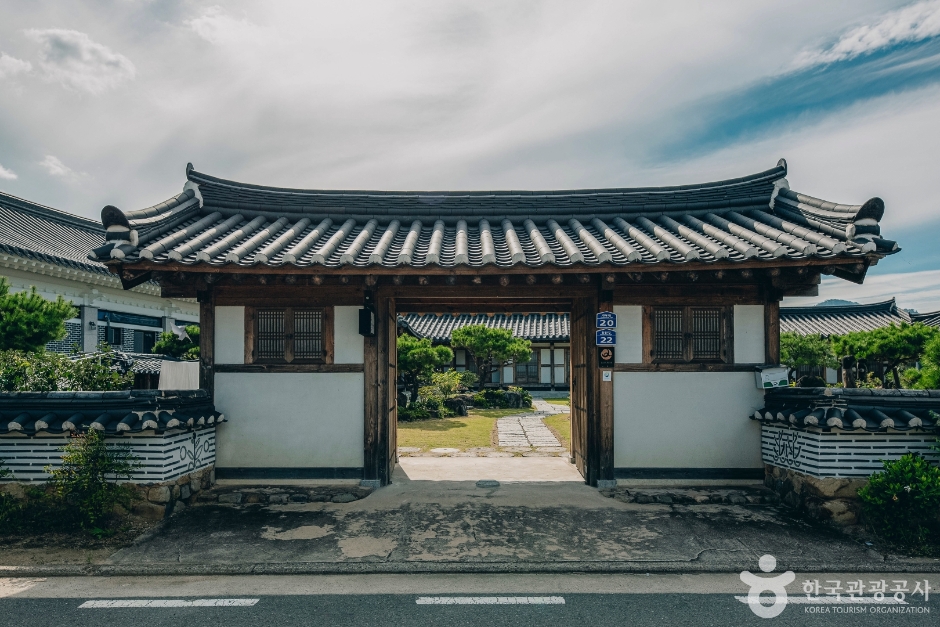
Standing at the entrance of Cheonwon Village in Gyeongju, Gyeongsangbuk-do, Gyeongju Hanok First is a hanok stay combining the beauty of tradition with modern convenience. All rooms are Korean-style with comfortable bedding on the floor, and all have a toilet and bathroom. One guestroom has its own kitchen, while the others have basic cooking facilities in a shared kitchen. The spacious yard is decorated with figurines in traditional clothes. Nearby tourist attractions include Anapji Pond, Cheomseongdae Observatory, and Gyeongju Museum.
![Bukchondeak [Korea Quality] / 하회 북촌댁 [한국관광 품질인증]](http://tong.visitkorea.or.kr/cms/resource/74/2626274_image2_1.jpg)
Bukchondeak [Korea Quality] / 하회 북촌댁 [한국관광 품질인증]
2020-09-08
7, Hahoebukchon-gil, Pungcheon-myeon, Andong-si, Gyeongsangbuk-do
+82-54-853-2110, +82-10-2228-1786
Located in Hahoe-ri (Pungcheon-myeon, Andong-si, Gyeongsangbuk-do), Hahoe Bukchondaek House is a hanok stay that was originally built by a civil official named Ryu Sa-chun in 1797 (the 21st year of the reign of King Jeongjo of the Joseon dynasty). It consists of a small sarangchae (men’s quarters) with two wing buildings at sides. As the anchae (women’s quarters), large sarang, daemungan (gate building), and shrine were built by Ryu’s great-grandson, Ryu Do-seong (who served as a governor of Gyeongsang-do), in 1862 (the 13th year of the reign of King Cheoljong), the house displays the typical features of a Joseon nobleman’s house and is the largest in Hahoe. The large sarangbang, Bukchonyugeo (measuring 7-kan* at the front, 3-kan at the sides), consists of two 2-kan rooms, two 1-kan rooms, a 4-kan daecheong (wooden floor), a 3-kan numaru (upper floor), a 3-kan kitchen, a 3-kan garret, a 5-kan toe (the narrow wooden veranda running along the outside of the building), and a jjokmaru (narrow wooden veranda). The entire building can be converted into a single space simply by opening the sliding doors between the rooms and the doors between the rooms and the daecheong. The medium-sized sarang, Hwagyeongdang, consists of a 2-kan room, a 1-kan daecheong, a 3-kan toe, and a jjokmaru, while the small sarang, Susinwa, consists of a 1-kan room, a 1-kan daecheong, and a 2-kan toe. The anchae has a courtyard in the middle, a kitchen, a main room, a daecheong, a gobang (storeroom), a witsangbang (upper room), a toenmaru (a narrow wooden porch running along the outside of the building), an araetsangbang, a jungmun that links to the large sarang, an araetgwang (storeroom), a dwiju (grain-chest), and a munganbang (gate building room). The munganchae (gate building) and shrine are also situated within the grounds of the house, along with a 300-year-old pine tree that is known for its curved shape, which is said to resemble the Nakdonggang River as it meanders around the village of Hahoe. The house contains valuable cultural heritages including Doseongpaldojido (Map of the Eight Provinces of Korea), which is estimated to date from the seventeenth century, and is regarded as an invaluable historic material as it includes Dokdo Island and Jiandao as part of the Korean territory, and a painting titled ‘Sehwa,’ which is believed to have been given to Ryu Yi-jwa (pen-name: Hakseo, 1763-1837) by the king as a New Year’s present. Bukchondaek House was built by one of the richest families in Hahoe, who are well known for their generosity as they have helped local people on many occasions throughout history. *kan: a unit of measurement referring to the distance between two columns.
![Cheong won dang [Korea Quality] / 청원고택 [한국관광 품질인증]](http://tong.visitkorea.or.kr/cms/resource/32/2528932_image2_1.jpg)
Cheong won dang [Korea Quality] / 청원고택 [한국관광 품질인증]
2021-04-05
3 Songsogotaek-gil, Pacheon-myeon, Cheongsong-gun, Gyeongsangbuk-do
+82-10-3530-6119 / +82-54-872-6119
Under joint management with the Korean Tea Association’s Yeongeun Culture Center, Chungwon Gotaek is a great place to enjoy traditional Korean tea time while experiencing a traditional Korean house where you will see all the features of an old Korean house as well as how people lived a slow and leisurely life in the past. Since Chungwon Gotaek only has one stand-alone guestroom that can be booked by only one couple/group at a time, it’s the perfect place to stay for leisure. The guesthouse has a separate tea room managed by the Yeongeun Culture Center, where you can enjoy traditional Korean tea while learning the proper way to drink tea in Korea, which is quite different from that of other Asian countries. Many Korean guests will agree that they feel at home. The guesthouse also serves Korean-style breakfast, which includes various side dishes that vary by season.
 Español
 한국어
한국어 English
 日本語
日本語 中文(简体)
 Deutsch
 Français
 Русский


