![Boeun Beopjusa Temple [UNESCO World Heritage] (보은 법주사 [유네스코 세계문화유산])](http://tong.visitkorea.or.kr/cms/resource/58/1731558_image2_1.jpg)
Boeun Beopjusa Temple [UNESCO World Heritage] (보은 법주사 [유네스코 세계문화유산])
2021-10-23
405, Beopjusa-ro, Boeun-gun, Chungcheongbuk-do
Built in 553 during the 14th year of Silla King Jinheung's reign, Beopjusa Temple is located on Songnisan Mountain. However, many of the original buildings were destroyed during the Imjin War (1592-1598), with the current structures having been rebuilt in 1624. The temple features many beautiful and important Buddhist relics and artworks, centered around the main hall, Daeungbojeon Hall.
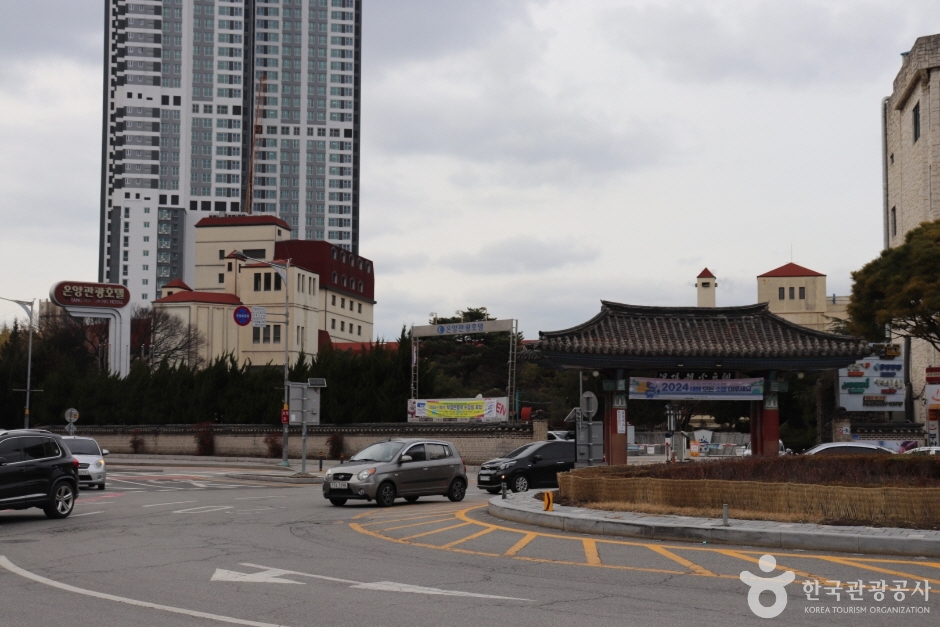
Onyang Hot Springs (온양온천지구)
2024-03-28
1459 Oncheon-daero, Asan-si, Chungcheongnam-do
Onyang Hot Springs is the oldest hot springs complex in Korea, a place where the kings of Joseon (1392-1897) recuperated and bathed, thanks to its proximity to Seoul. In the 1970s and 1980s, it was a popular honeymoon destination. The water here has a temperature of about 44-60℃ and contains substances that are beneficial for the human body. The area boasts a large number of hotels and water parks.

Chungjuho Lake (충주호)
2024-03-08
Jodong-ri, Dongnyang-myeon, Chungju-si, Chungcheongbuk-do
Chungjuho Lake is the nation’s largest lake, and was formed after the construction of Chungju Dam. When constructing the dam, an area of approximately 66.48 ㎢ was submerged throughout three regions in Chungju, Danyang and Jecheon. Even though nearly 50,000 people lost their hometown, the lake became a famous regional tourist spot, along with Woraksan National Park, Songgye Valley, Cheongpung Culture Center, Eight Sceneries of Danyang, Gosu Cave, Guinsa Temple, Suanbo Hot Springs, Nodong Cave and other spots.
Tourists can enjoy the scenic area on five ferry docks from Chungjunaru, main ferry dock of Chungju Dam, Cheongpungnaru, Janghoenaru where Gudambong Peak and Oksunbong Peak are located, Danyangnaru in Danyang-eup, and Woraknaru located near the beautiful scenery of Woraksan Mountain. From Chungju Dam to Janghoenaru, it takes approximately 1 hour 30 minutes, making it a long-distance course and offers special sightseeing on board. This course also holds great views of Chungjuho Lake and Yeongbong Peak of Woraksan Mountain, the surrounding scenery of Woraknaru, and two scenic spots of Danyang which are Gudanbong and Oksunbong Peak featuring uniquely-shaped rocks and peaks. This course is the most attractive among Chungjuho ferry excursion routes.
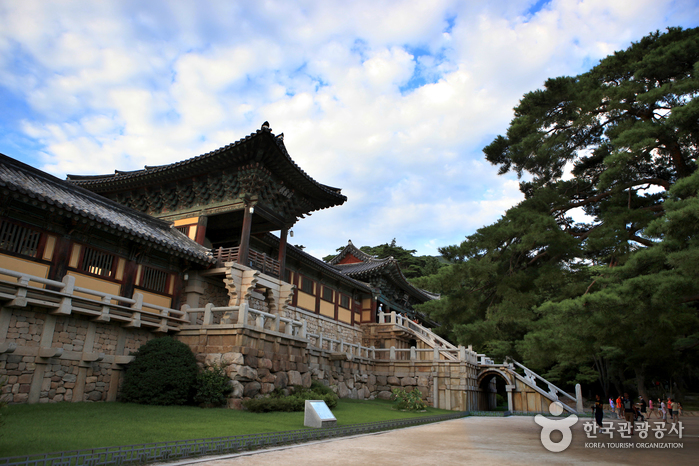
Gyeongju National Park (경주국립공원)
2024-02-27
12 Cheonbungnam-ro, Gyeongju-si, Gyeongsangbuk-do
Gyeongju National Park, designated as a national park in 1968, holds a special status as Korea's only historical national park. The park spans 136.55㎢ across eight districts, including Tohamsan Mountain, home to the exquisite Buddhist treasures of Bulguksa Temple and Seokguram Grotto, as well as Namsan Mountain, known as the "Buddhist Museum," showcasing the pinnacle of Buddhist culture. The park boasts significant relics from the Silla dynasty alongside breathtaking natural landscapes. Recognized by UNESCO in 1979 as one of the top ten historic sites globally, it stands as a world-renowned cultural heritage site.
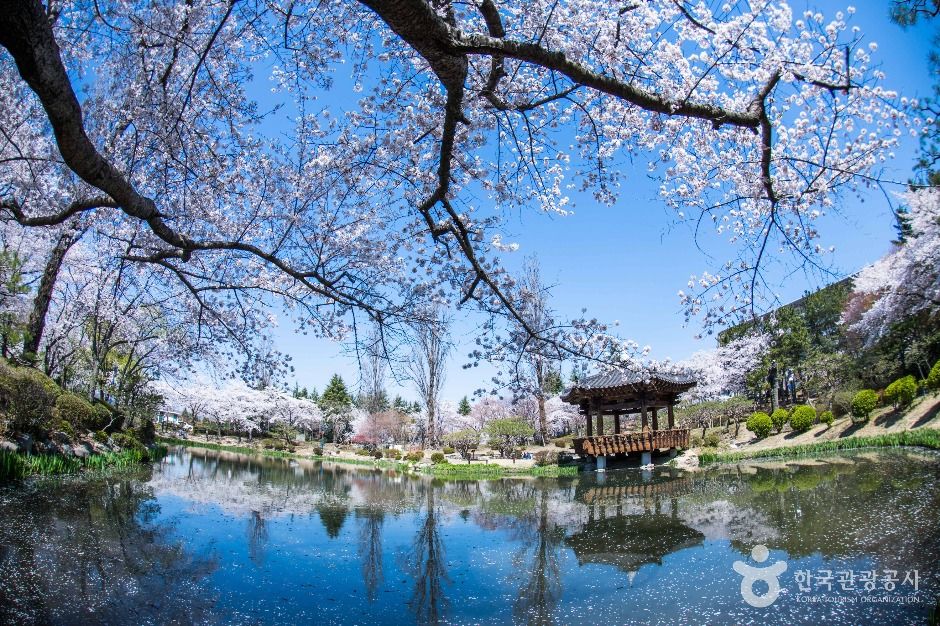
Bomun Tourist Complex (경주 보문관광단지)
2025-09-24
Sinpyeong-dong, Gyeongju-si, Gyeongsangbuk-do
Bomun Tourist Complex is the international tourist district of Gyeongju. This tourist district is formed with Bomunho Lake at its center, located about 10 kilometers east of downtown Gyeongju. The area spans approximately 8,000 km², and contains an international-scale luxurious hotel, family-friendly condos, golf range, and pleasant walking passages that are designed to suit the diverse needs of tourists. The tourist complex attracts crowds of visitors in April, when cherry blossoms are in full bloom. The sight of cherry blossoms around Bomunho Lake and Bulguksa Temple are popular even among domestic travelers.
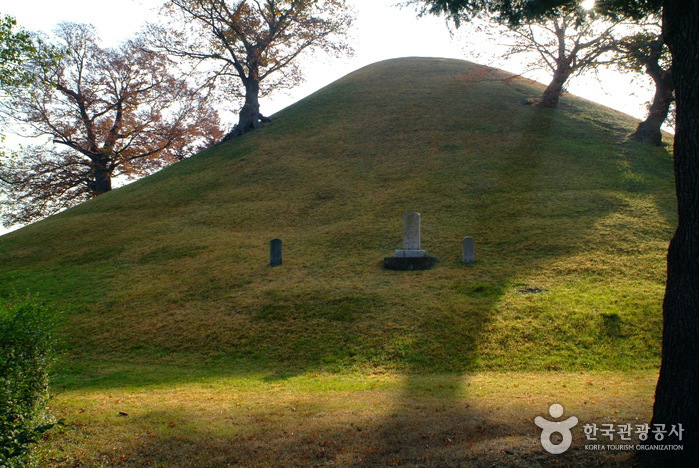
Geumgwanchong Tomb (금관총)
2020-03-18
Noseo-dong, Gyeongju-si, Gyeongsangbuk-do
+82-54-779-6100
Geumgwanchong, located in Noseo-dong, Gyeongju, is a tomb from the Silla Kingdom (B.C. 57∼A.D. 935). It is one of the three tombs that belong to the Noseo-dong Tombs in downtown Gyeongju.
Geumgwanchong Tomb is regarded as the tomb of a king before or after the reign of King Ji-Jeung during the early 6th century (500~514). It is not known exactly to whom this tomb belongs.
It was found in September 1921, when the fief was chopped while a civilian was leveling the ground to widen his building land. The first relic found in this tomb was a gold crown, geumgwan, and so
the tomb took its name. Ornaments such as gold belts, earings, bracelets, saddlers and crockery of the Three Kingdoms Era (when Goguryeo, Baekje and Silla were separated, later unified by Silla in 676 AD) were dug up from the tomb. There were numerous relics, with beaded relics alone numbering over 30,000.
The original structure of Geumgwanchong was 13m high with a 50m diameter. The relics from this tomb were moved and are now
preserved at the Gyeongju National Museum.

Magoksa Temple [UNESCO World Heritage] (마곡사 [유네스코 세계문화유산])
2026-01-29
966 Magoksa-ro, Sagok-myeon, Gongju-si, Chungcheongnam-do
Situated at the foot of Taehwasan Mountain in Gongju, Magoksa Temple was established in 640 during the reign of Queen Seondeok of the Silla dynasty. It was originally founded as a grand temple, but only few major halls and gates remain preserved today along with several significant cultural relics and heritages. The temple site was used as a refuge site during times of war, and it survived the the Imjin War (1592-1598) and the Korean War (1950-1953).
Oeam Folk Village (외암민속마을)
2026-05-19
13-2 Oeamminsok-gil 9beon-gil, Songak-myeon, Asan-si, Chungcheongnam-do
Oeam Folk Village, located in Asan, boasts a history spanning over 500 years. This agricultural village has preserved its ancient houses and cultural heritage remarkably well. At the entrance, visitors are greeted by a recreation of a traditional market. The village offers Hanokstay programs, allowing guests to stay in traditional Korean houses, and provides interactive experiences that recreate traditional Korean agricultural practices and crafts.◎ Travel Information to Discover Hallyu’s Charm - K-Drama "Missing: The Other Side 2 (2023)"The main filming location for the K-Drama "Missing: The Other Side 2" is Oeam Folk Village. As the protagonists investigate the truth in a village of souls that only they can see, the peaceful scenery of Oeam Folk Village provides a mysterious backdrop, adding depth and immersion to the series.
Woraksan National Park (월악산국립공원)
2023-03-24
1647, Mireuksonggye-ro, Jecheon-si, Chungcheongbuk-do
Woraksan National Park is located along the Baekdudaegan Mountain Range between Sobaeksan and Songnisan Mountains. The rugged mountain is softened by the waterfalls and small pools found within the valleys. The area was designated as a national park on December 31, 1984. The mountain is surrounded by Chungjuho Lake to the north, the Eight Scenic Views of Danyang and Sobaeksan Mountain to the east, and Mungyeongsaejae Pass and Songnisan Mountain to the south. The main peak of Woraksan National Park is Yeongbong Peak, reaching an altitude of 1,097 meters above sea level. The path there is steep, with sections of rock stretching 150 meters in x_height. There is also a 4-kilometer-long path circling the base rock.
May 18th National Cemetery (국립 5·18 민주묘지)
2026-06-30
200 Minju-ro, Buk-gu, Jeonnam-Gwangju Special Metropolitan City
The May 18th National Cemetery in Gwangju is a symbol of freedom and democracy. The cemetery holds the graves of 764 victims of the May 18th Democratic Uprising in 1980, seven structures, and many monuments.
 English
 한국어
한국어 日本語
日本語 中文(简体)
 Deutsch
 Français
 Español
 Русский


