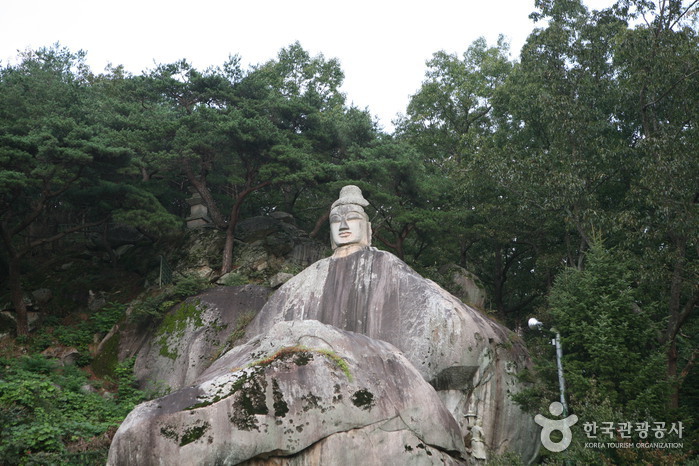
Rock-carved Standing Buddha in Icheon-dong, Andong (안동 이천동 마애여래입상)
2020-04-03
Icheon-dong, Andong-si, Gyeongsangbuk-do
+82-54-840-5225
Maaekseobulsang (Rock-carved Standing Buddha) in Icheon-dong, Andong is also referred to as Jebiwon Statue due to the small temple of the same name nearby. This statue is unique as the head and the body are not carved from the same rock. The head was carved from a different rock then placed over a large rock relief of the Buddha's body. This type of technique is frequently found in those built during the Goryeo dynasty. The distinct features and carving methods that can be observed from this particular statue are speculated to be from the 11th century. Although there is a small amount of damage on the back of the head, the statue is well-preserved overall.
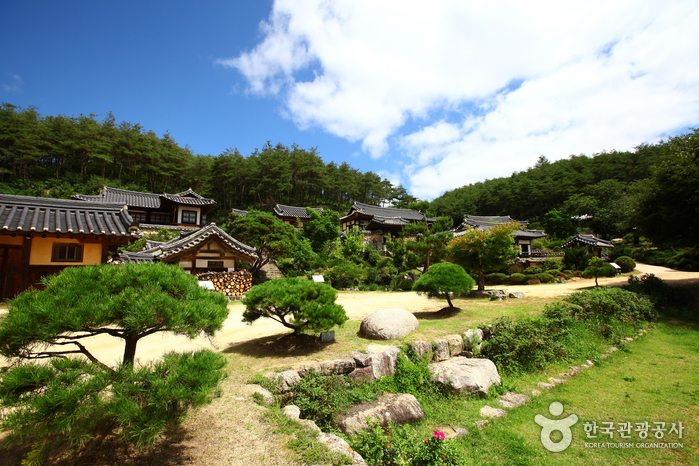
Andong Gunja Village (Ocheon Historic Site) (안동 군자마을(오천유적지))
2026-05-27
29 Gunjari-gil, Waryong-myeon, Andong-si, Gyeongsangbuk-do
Andong Gunja Village is a cluster of around twenty hanok. During the Joseon dynasty, this area produced many scholars, hence earning the name Gunja Village, meaning a village where many learned scholars reside. Designated cultural heritage sites include Takcheongjeong Historic House, and Shrine of the Gwangsan Kim Clan. Visitors can experience hanok stay, immersing themselves in the ambiance of historic houses and traditional customs. ◎ Travel information discovering the charm of Hallyu - Drama Hwawonjae is the place where the story begins, as Gu San-yeong inherits her father’s hair ribbon heirloom. Hujodang Head House in Andong Gunjamaeul Village, which was used as the filming location for Hwawonjae, is a traditional house with over 600 years of history. It is recommended to experience the traditional beauty of Korea and enjoy a stay in this historic house, located in a village that has been home to families for over 20 generations.
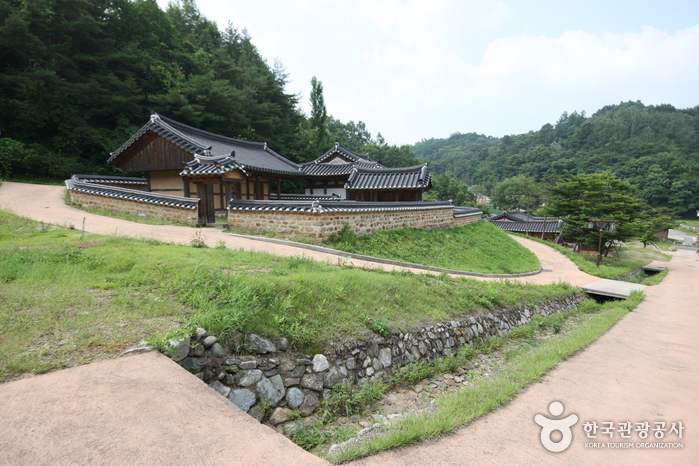
Andong Folk Village (안동민속촌)
2024-05-30
Seonggok-dong, Andong-si, Gyeongsangbuk-do
On the other side of the subsidiary dam of Andong Dam, thatched houses can be sparsely seen on a hilltop. The area is practically an outdoor museum, displaying traditional houses that were moved to safety prior to the construction of Andong Dam. Two jangseung (traditional Korean totem poles) are raised at the entrance of the outdoor museum, followed by a monument inscribed with the poem of famous Andong poet and democracy activist, Lee Yuk-sa. On the monument, his most noted work “Gwangya” (Wild Plain) is carved.
Nearby attractions include Andong Museum, Lee Yuk-sa Monument, a filming site of “Taejo Wang Geon (2000)," and Andongho Lake.
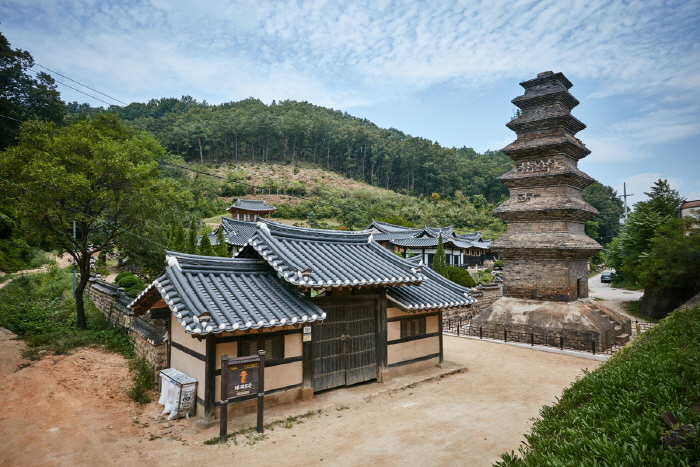
Head House of the Tapdong Branch of the Goseong Yi Clan (법흥동 고성이씨탑동파종택)
2022-12-21
103, Imcheonggak-gil, Andong-si, Gyeongsangbuk-do
Head House of the Tapdong Branch of the Goseong Yi Clan, located in Andong, serves as a residential house of the Yi descendents even to this day. Constructed in 1685, this house has all of the beautiful features that represent Joseon-style architecture. After this period, additional structures were added periodically. Across from the house is the Seven-story Brick Pagoda at Beopheungsa Temple Site.
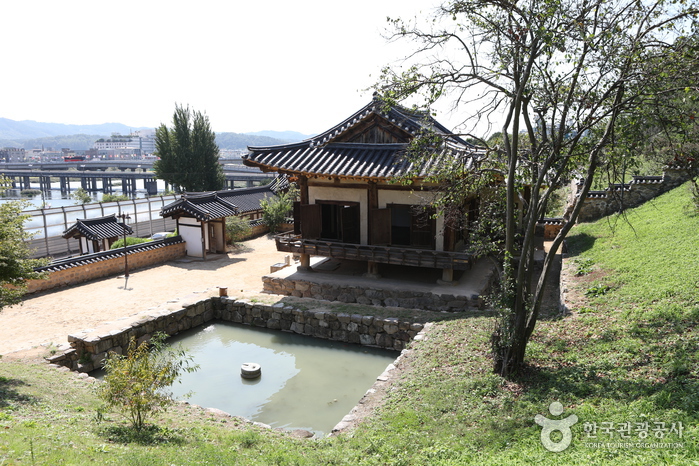
Imcheonggak House (안동 임청각)
2021-11-09
63, Imcheonggak-gil, Andong-si, Gyeongsangbuk-do
Imcheonggak House is the largest remaining household from the Joseon dynasty, holding a history of over 500 years. The house was built for one aristocratic family’s love of the scenic beauty in the surrounding area. It was originally built with a total of 99 kan (traditional measurement of space between pillars) but only 70 remain. The most famous structure on this property is the annexed pavilion, Gunjajeong. An autograph of the famous Confucian scholar Lee Hwang can be found hanging outside the pavilion.
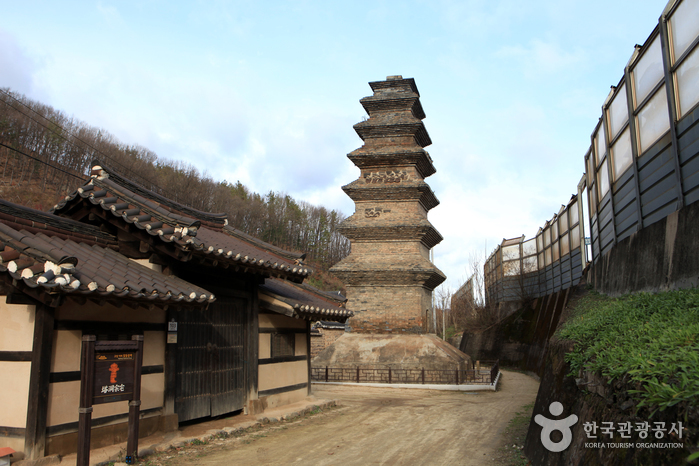
Sinsedong Chilcheung Jeontap - Sinsedong 7 stories Brick Pagoda (안동 법흥사지 칠층전탑)
2021-07-13
Beopheung-dong, Andong-si, Gyeonsangbuk-do
Designated National Treasure No.16, Sinsedong Chilcheung Jeontap is Korea's oldest and largest stone pagoda.
The pagoda measures 16.8 meters high with a x_width of 7.75 meters. The pagoda was originally built at Beopeungsa Temple during the eighth century of the Unified Silla Kingdom [654-935] and is the only remaining relic from the temple.
The pagoda is presently located on the estate of the head house of the Goseong Lee family. The sangryunbu, the ornamental top portion of the pagoda, has been totally lost, but the lower tiered portions are intact with beautiful carvings of Buddhist tutelary deity. Traces of tiled roof were found on each story of the tower. Historical records show that the tower was rebuilt in 1487 and that around the same period, three parts of the temple remained.
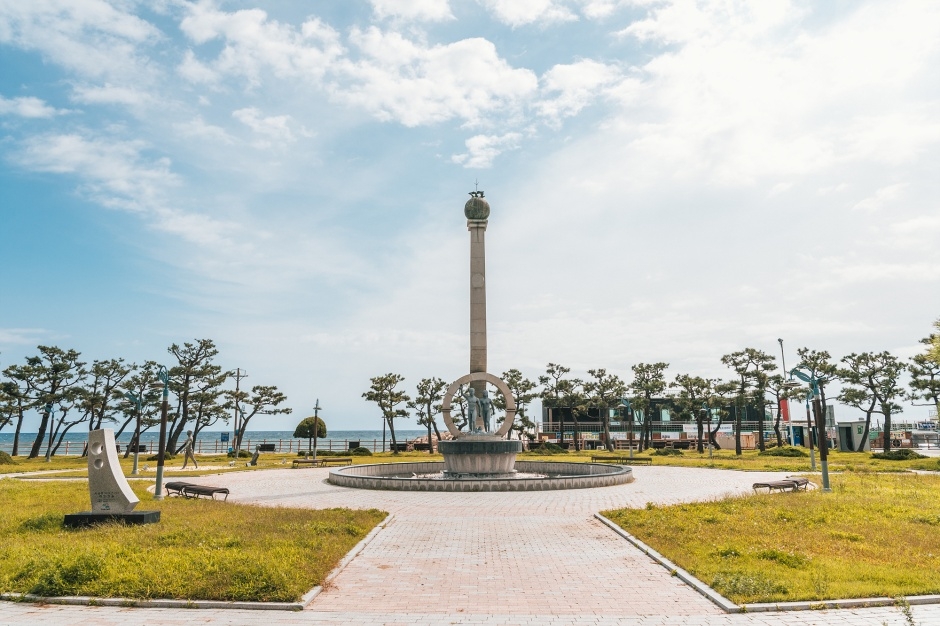
Sokch Seorak Sunrise Park (속초 설악해맞이공원)
2025-01-21
3664 Donghae-daero, Sokcho-si, Gangwon-do
Referred to as "Namulchi," Sokcho Seorak Sunrise Park is located in the area of National Highway 7, the main point toward Daepohang Port, Yangyang, and Seoraksan Mountain. The park is perfect for enjoying a sunrise trip. The park area includes Sunrise Plaza, Lover’s Road, Happy Road, Love Road, other various themed sculptures, symbolic sculptures of Seoraksan Mountain, and light fountains, making it a great place to take a walk.

Seoul Plaza (서울광장)
2024-06-19
110 Sejong-daero, Jung-gu, Seoul
Seoul Plaza in front of Seoul City Hall is a historic site where the March 1, 1919 (Samil) Independence Movement and the pro-democracy movement in June 1987 were held. It is also a well-known place where tens of thousands of Korean soccer fans gathered together to watch the 2002 World Cup Games. Being located within the center of the city and surrounded by many historic attractions, including Deoksugung Palace, Seoul Plaza has become a representative attraction of Seoul.
World Cup Park (월드컵공원)
2024-10-23
243-60 World Cup-ro, Mapo-gu, Seoul
Opened on May 1st, 2002, the Wolrd Cup Park was once a 15-year-old landfill that held over 92 million tons of garbage. The park is located near Seoul World Cup Stadium, and is made up of five smaller parks - Pyeonghwa (Peace) Park, Haneul (Sky) Park, Noeul (Sunset) Park, Nanjicheon Park, and Nanji Hangang Park.
* Pyeonghwa Park: Closest to Seoul World Cup Stadium, it holds a pond, garden, children’s playground, and forest. As a representative park of World Cup Park, the park was designed in hopes of peace and harmony between mankind and nature. It is often used as a picnic area and place for nature studies.
* Nanji Hangang Park: Nanji Hangang Park was developed on the banks of the Hangang River. In contrast to other Hangang River parks, Nanji Hangang Park is a water-friendly park that has a gradual slope towards the riverbank. The park consists of a camping ground, soccer field, basketball court, grass field, cruise ship port, and an area for nature studies.
* Haneul Park: Haneul Park consists of vast grassland located at the highest elevation of the five parks. The park's pasture is covered with eulalias and wild flowers in their most natural state. In addition, 30,000 butterflies of different species were introduced in 2000 to stabilize the ecosystem. Five wind-powered generators provide power to the park and the park’s maintenance office. Once a mountain of garbage, it is now a green hill with 22 lookout points offering breathtaking views of Seoul, including the N Seoul Tower, Bukhansan Mountain, and Hangang River. Tall trees are line the park to provide shades and serve as resting spots for visitors. As a popular spot to enjoy the sight of eulalias, the park usually remains open until late in the evening during the Eulalia Festival period.
* Noeul Park: In order to prevent the vast area of land of what was once a wasteland from becoming an unnecessary chunk of land, a nine-hole golf course was constructed in what is now known as Noeul Park. The golf course serves as an environment friendly entertainment park to visitors while stabilizing the geographical formation and has an urban park nearby that offers scenic views of the Hangang River and beautiful sunset. Located west of the golf park is Noeul Square, decorated with shrubs and flowers.
* Nanjicheon Park: Nanjicheon Park was developed from the Nanji Stream, which flowed under Haneul Park. It was once overflowing with sewage runoff from a nearby landfill, but it has since been beautifully restored into a park with clear water. The park is built to serve as a recreational spot for those with for youths, elders, and people with disabilities.
Dosan Park (도산공원)
2022-12-16
20, Dosan-daero 45-gil, Gangnam-gu, Seoul
Located in Sinsa-dong, Seoul, Dosan Park, a neighborhood park, was built in 1973 to pay tribute to Dosan Ahn Chang-ho’s patriotism. Dosan Ahn Chang-ho’s tomb was moved here from Manguri Public Cemetery as well as his wife, Lee Hyeryen, whose tomb was moved from Los Angeles. The tribute was extended by naming the boulevard from Cheongdam-dong to Nonhyeon-dong, as Dosan-daero. Visitors can find a bronze statue, monument with quotations, epitaph headstone and more within the park. Commemoration event is held on March 10th of every year.
 English
 한국어
한국어 日本語
日本語 中文(简体)
 Deutsch
 Français
 Español
 Русский


