![Goyang West Five Royal Tombs [UNESCO World Heritage] (고양 서오릉 [유네스코 세계문화유산])](https://tong.visitkorea.or.kr/cms/resource/20/3527720_image2_1.jpg)
Goyang West Five Royal Tombs [UNESCO World Heritage] (고양 서오릉 [유네스코 세계문화유산])
2026-03-23
334-32 Seooreung-ro, Deogyang-gu, Goyang-si, Gyeonggi-do
Goyang West Five Royal Tombs is an important historical site comprising a cluster of five royal tombs from the Joseon dynasty, located in the western region. This significant group include the tombs of Crown Prince Uigyeong (1438-1457), the eldest son of King Sejo, at Gyeongneung; King Yejong at Changneung; Crown Prince Sunhui at Sunchangwon; Queen Ingyeong at Ingneung; King Sukjong at Myeongneung; and Queen Jeongseong at Hongneung. Touring these sites typically takes about an hour. Additionally, there's a walking trail behind Ingneung, allowing visitors to enjoy the surrounding forest in spring and summer, as well as the vibrant maple trees in autumn.
![Goyang West Three Royal Tombs (The tomb of Queen Janggyeong) [UNESCO World Heritage] (고양 서삼릉(장경왕후) [유네스코 세계문화유산])](http://tong.visitkorea.or.kr/cms/resource/85/1150385_image2_1.jpg)
Goyang West Three Royal Tombs (The tomb of Queen Janggyeong) [UNESCO World Heritage] (고양 서삼릉(장경왕후) [유네스코 세계문화유산])
2024-02-07
233-126 Seosamneung-gil, Deogyang-gu, Goyang-si, Gyeonggi-do
Goyang West Three Royal Tombs is a significant historical site comprising three major royal burial grounds in the western area. Huireung Royal Tomb is dedicated to Queen Janggyeong (1491-1515), the consort of King Jungjong during the Joseon dynasty. Hyoreung Royal Tomb is the resting place of King Injong (1515-1545) and his queen, Inseong. Yereung Royal Tomb holds the remains of King Cheoljong (1831-1864) and his queen, Cheorin. This area is home to numerous tombs and relics belonging to various members of the Joseon royal family.
![Namyangju Sareung Royal Tomb [UNESCO World Heritage] (남양주 사릉(정순왕후) [유네스코 세계문화유산])](http://tong.visitkorea.or.kr/cms/resource/44/2480844_image2_1.jpg)
Namyangju Sareung Royal Tomb [UNESCO World Heritage] (남양주 사릉(정순왕후) [유네스코 세계문화유산])
2023-06-22
180, Sareung-ro, Namyangju-si, Gyeonggi-do
Sareung Royal Tomb is the tomb of Queen Jeongsun (1440-1521), a consort to King Danjong. She was perhaps the most tragic royal woman of the Joseon dynasty.
In 1453, she was selected to be queen out of many candidates and actually became the queen two years later. However, when King Danjong was forced to abdicate from the throne in 1457 and was exiled to Yeongwol in Gangwon-do, Queen Jeongsun was deprived of her title as well.
After King Danjong died, she built a thatched-roof house outside Seoul’s Dongdaemun Gate and lived there for the rest of her life, continuing to mourn her husband. The tomb’s name, Sareung, came from the fact that she had missed her dead husband so much.
Unlike other royal tombs, Sareung looks very simple. Its size is relatively small.
![Gwangneung Royal Tomb [UNESCO World Heritage] (남양주 광릉(세조, 정희왕후) [유네스코 세계문화유산])](http://tong.visitkorea.or.kr/cms/resource/79/2364479_image2_1.jpg)
Gwangneung Royal Tomb [UNESCO World Heritage] (남양주 광릉(세조, 정희왕후) [유네스코 세계문화유산])
2021-01-22
354, Gwangneungsumogwon-ro, Namyangju-si, Gyeonggi-do
+82-31-527-7105
Gwangneung, located in Namyangju in Gyeonggi-do is the royal tomb of King Sejo (1417-1468, reign 1455-1468) and Queen Jeonghui (1418-1483). The king and queen are enshrined separately. The tomb on the left is King Sejo’s and the one on the right is Queen Jeonhui’s with a pavilion standing between the two tombs. Requested by King Sejo on his will, the simple design of the tomb and the surrounding compare to the past tombs saved cost and manpower required to finish the work, which became the model for future royal tomb design. Gwangneung is surrounded by forests where an abundance of wild plants grow. It is famous for being the habitat of the Korean redheaded woodpecker (Natural Monument No. 11).
![Hongneung and Yureung Royal Tombs [UNESCO World Heritage] (남양주 홍릉(고종과 명성황후)과 유릉(순종과 순명,순정 황후) [유네스코 세계문화유산])](http://tong.visitkorea.or.kr/cms/resource/20/2005620_image2_1.jpg)
Hongneung and Yureung Royal Tombs [UNESCO World Heritage] (남양주 홍릉(고종과 명성황후)과 유릉(순종과 순명,순정 황후) [유네스코 세계문화유산])
2021-07-19
352-1, Hongyureung-ro, Namyangju-si, Gyeonggi-do
Hongneung and Yureung Royal Tombs is Historic Site No. 207. Hongneung Tomb is the resting place of Emperor Gojong and his wife Empress Myeongseong, while Yureung Tomb is the resting place of Emperor Sunjong, his first wife Empress Sunmyeonghyo, and his second wife, Empress Sunjeonghyo. Hongneung and Yureung look different from other royal tombs. When the name of the country changed from the Joseon dynasty to the Daehan Empire, the rulers of Korea were called emperors. Therefore, the tombs of the two emperors were modeled after the tomb of the Ming dynasty’s ruler, King Taizu (Zhu Yuanzhang). Surrounding Hongneung and Yureung are statues carved in the shape of animals such as giraffes, elephants, and lions, which can’t be seen at the other royal tombs of the Joseon dynasty. The stonework of Hongneung tomb was made in a traditional way, while the stonework of Yureung tomb shows a more realistic and advanced technique.
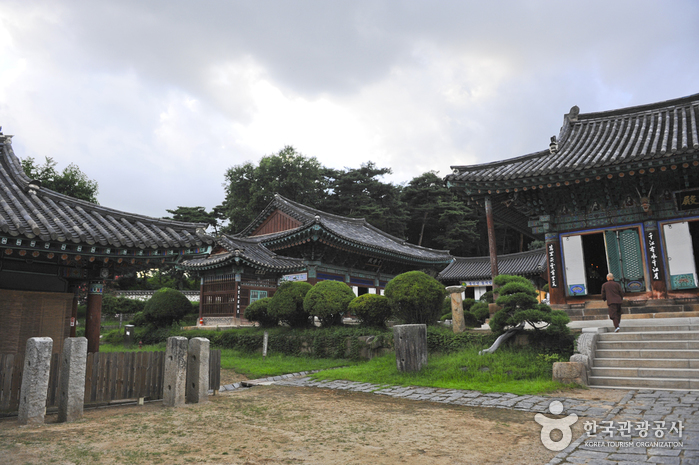
Hwaseong Yongjusa Temple (용주사(화성))
2021-12-21
136, Yongju-ro, Hwaseong-si, Gyeonggi-do
Yongjusa Temple is located near Yungneung and Geolleung Royal Tombs. This site was originally the location of Garyangsa Temple, which was constructed in 854, during the 16th year of King Munseong of the Silla Kingdom. The temple was very famous as it was surrounded by beautiful mountains and crystal clear waters. However, the temple was destroyed by fire during the Manchu War of 1636.
During the Joseon dynasty, King Jeongjo moved the tomb of his father to this spot, and built Yongjusa Temple here to pray for the repose of his father’s soul. It is said that one night before the temple was completed, King Jeongjo dreamt of a dragon ascending to the sky holding a magic ball in its mouth. He therefore named the temple “Yongjusa,” which means the temple of a dragon with a magic ball in Korean.
The courtyard of the temple contains the Bronze Bell of Yongjusa Temple, a National Treasure; a stone pagoda; Daeungbojeon (the main hall); and Cheonboru Pavilion. Visitors to Yongjusa Temple can also find the “Bumoeunjunggyeong” books, which were written by King Jeongjo on the subject of filial affection and respect for one’s parents. These days, Yongjusa Temple and the Yungneung and Geolleung Royal Tombs are highly valued for their cultural heritage.
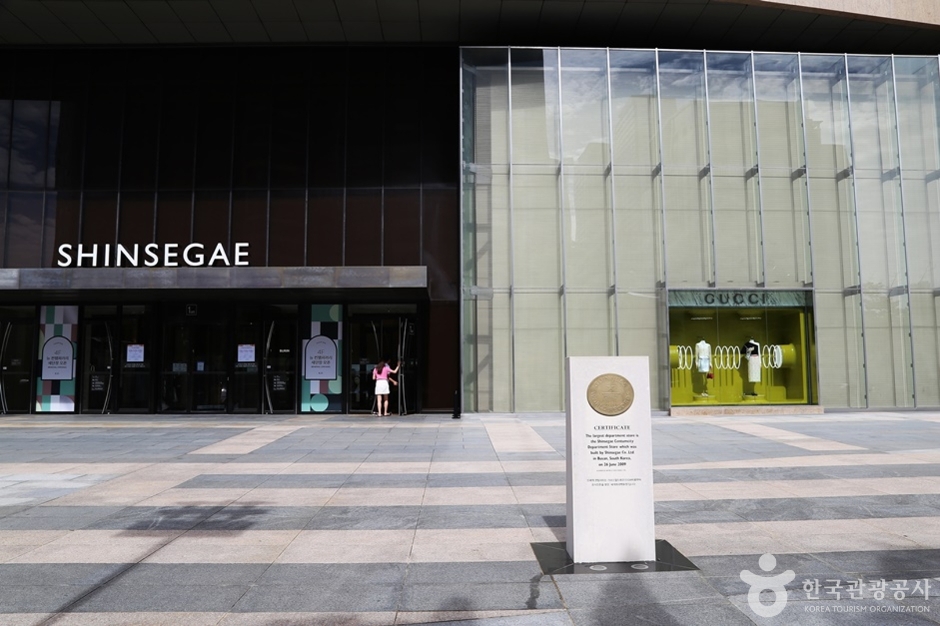
Shinsegae Centum City (신세계 센텀시티)
2024-05-23
35 Centum nam-daero, Haeundae-gu, Busan
Shinsegae Centum City Department Store is registered in the Guinness World Records as the largest shopping complex in the world, offering a full range of entertainment options, from an ice rink to movie theater, golf range, and spa. Shops offer everything from womenswear and menswear to childrens clothing brands, cosmetic shops, sporting goods, and more.
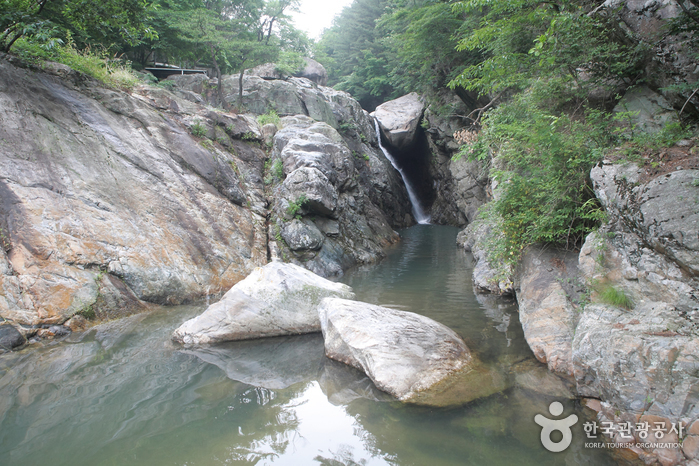
Seonyudonggyegok Valley (Sancheong Section) (선유동계곡(산청))
2022-08-10
Suwol-ro, Sancheon-gun, Gyeongsangnam-do
Seonyudong means the place where fairies come down from heaven to play. It has been said that fairies would often come down to the valley to make liquor and store them in flagons. There are some leftover depressions in the boulders which demonstrate there may be some truth to the legend.
Near Seonyudonggyegok Valley, they say that the bamboos and pine trees stay green all year long and wood nymphs fly down to play with each other under the Suwolpokpo Falls in Suwol Village.

Yeongneung & Nyeongneung Royal Tombs [UNESCO World Heritage] (여주 영릉(세종·소헌왕후)과 영릉(효종·인선왕후) [유네스코 세계유산])
2025-06-30
269-10 Yeongneung-ro, Sejongdaewang-myeon, Yeoju-si, Gyeonggi-do
The Royal Tombs of the Joseon Dynasty are the only royal tombs in the world that remain largely intact from a single dynasty spanning more than 500 years, making them a UNESCO World Heritage Site. Yeongneung is the combined tomb of the 4th ruler of Joseon dynasty, King Sejong (1397-1450) who created the Korean alphabet, and his wife Queen Soheon. Nyeongneung is the royal tomb of the 17th ruler of the Joseon dynasty, King Hyojong (1619-1659, reigned 1649-1659), and of his wife Queen Inseon (1618-1674). The Wangneung Forest here boasts spectacular fall foliage.
Hwaseong Yungneung and Geolleung Royal Tombs (화성 융릉과 건릉)
2024-03-06
21, Hyohaeng-ro 481beon-gil, Hwaseong-si, Gyeonggi-do
Yungneung and Geolleung Royal Tombs refer to a pair of royal tombs. The complex also contains the History Center. Yungneung houses the remains of King Jangjo (1735-1762; also known as Crown Prince Sado) and Queen Heongyeong (1735-1816; Lady Hyegyeong of the Pungsan Hong clan), while Geolleung houses the remains of King Jeongjo (1752-1800), King Jangjo’s son, and Queen Hyoui (1753-1821). King Jeongjo is said to have expressed his wish to be buried here to stay close to his father.
 English
 한국어
한국어 日本語
日本語 中文(简体)
 Deutsch
 Français
 Español
 Русский


