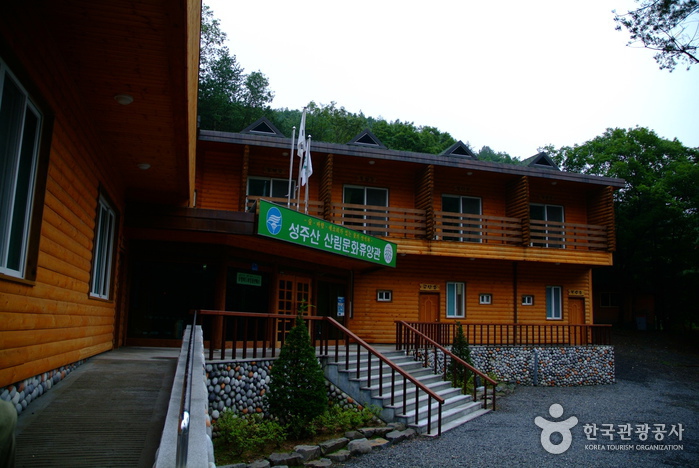
Seongjusan Recreational Forest (성주산자연휴양림)
2022-12-27
57-228, Hwajanggol-gil, Boryeong-si, Chungcheongnam-do
Seongjusan Recreational Forest in Boryeong, Chungcheongnam-do is especially popular in spring because of its cherry blossoms and beautiful wildflowers. Also, the observatory 100 meters below the mountain peak (680 meters in elevation) offers a great view of Seongju-myeon and Oesan-myeon. Roundtrip hike to the peak takes approximately 2-3 hours.
Nearby tourist attractions include the Seongjusaji Temple site and a coal museum (15 minutes on foot), as well as Daecheon Beach and Muchangpo Beach (20-30 minutes by car).
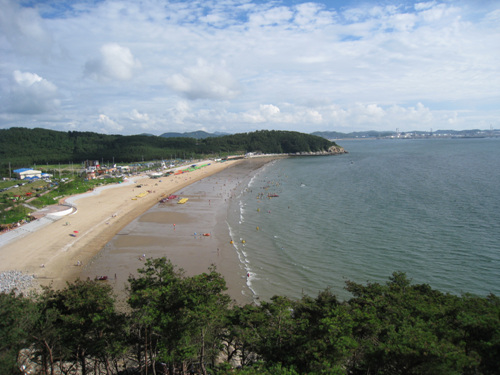
Nanjiseom Beach (난지섬해수욕장)
2021-07-14
67, Nanji 1-gil, Dangjin-si, Chungcheongnam-do
Nanjiseom Beach on Nanjiseom Island in Dangjin, Chungcheongnam-do features soft white sand over a 700 meter-long, 50 meter-wide area. The water is shallow, clean and relatively warm, and a pine grove surrounds the beach. Nanjiseom Beach offers various convenience facilities such as campsites, showers, drinking fountains and bathrooms. The rocky coast in the northwest is a great spot for catching fish, such as rock cod and spotty belly greenling. By taking a boat, visitors can enjoy scenic ocean views as they pass beautiful islands, such as Yeongheungdo, Palmido, Seonjaedo, Gukhwado, Yukdo and Pungdo.

Nonsan Gwanchoksa Temple (관촉사(논산))
2026-08-18
25 Gwanchok-ro 1beon-gil, Nonsan-si, Chungcheongnam-do
Gwancheoksa Temple is a historic Buddhist temple on the eastern foothills of Banyasan Mountain in southern Nonsan. One of the city’s Top 8 Scenic Views, it is best known for the 18-meter-tall Stone Standing Maitreya Bodhisattva, known as Eunjin Mireuk. The statue’s gentle, compassionate expression has earned it the nickname “the Smile of Baekje.” Other notable relics include a stone lantern, five-story stone pagoda, and stone gate in front of the statue. Several of the temple’s relics are designated national or provincial cultural heritage, including the Maitreya Bodhisattva statue as a National Treasure and the stone lantern as a Treasure. From the temple courtyard, visitors can also take in sweeping views of the fertile Nonsan Plain.
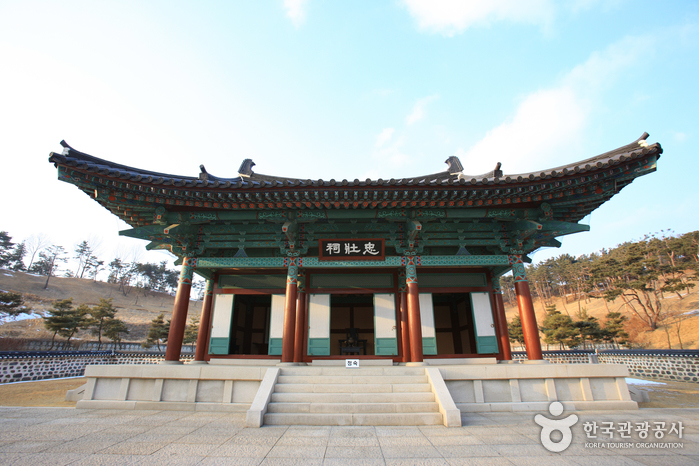
Historic Site of General Gyebaek (계백장군 유적지)
2020-06-18
Sinpung-ri, Nonsan-si, Chungcheongnam-do
+82-41-746-8431
Gyebaek (? - 660) was a general in the ancient Korean kingdom of Baekje. This historic site is not far from Hwangsanbeol, the last battlefield of General Gyebaek who fell defending Baekje at the end of its days. Allied troops from Silla and Tang attacked Tanhyeon and Baekgang, strategic sites held by Baekje, in 660 (the 20th year of King Uija’s reign).
General Gyebaek and his 5,000 soldiers fought against General Kim Yu-sin and his 50,000 soldiers. General Gyebaek successfully defeated the allied troops four times, but was ultimately unable to overcome the insurmountable numbers brought to bear by his foe. The Baekje army was finally defeated, and the last general of Baekje, Gyebaek, died in the battle.
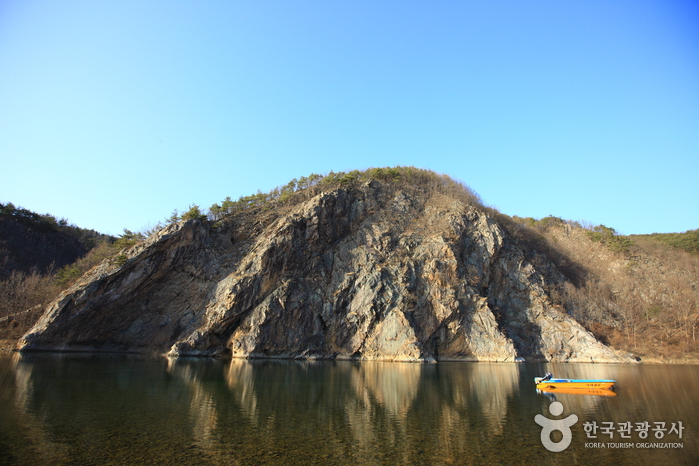
Jeokbyeokgang River (적벽강)
2021-02-01
697, Jeokbyeokgang-ro, Geumsan-gun, Chungcheongnam-do
+82-41-750-2371
The primary source of the Geumgang River is a spring located on Ddeunbong Peak in Subun-ri, Jangsu-gun, Jeollabuk-do, which flows to the north. At Changnam, it changes direction and enters Bangu-ri, Buri-myeon, Geumsan-gun. From here, the river flows through steep mountains. At Sutong-ri, the precipitous cliffs of a mountain named Jeokbyeok tower proudly above, and where the river runs under these steep cliffs it is called the Jeokbyeokgang River.
Jeokbyeok literally means "red walls" in Korean. The Geumgang River under Jeokbyeok is as calm as a peaceful lake with long sandy shores. This riverbank is alive with beautiful flowers in spring, green pine trees in summer, and in fall, the green gives way to an autumnal tint, until lovely snowscapes blanket the area in winter.
Daedunsan Recreational Forest (대둔산자연휴양림)
2020-11-18
6, Daedunsan-ro, Geumsan-gun, Chungcheongnam-do
+82-41-753-4242
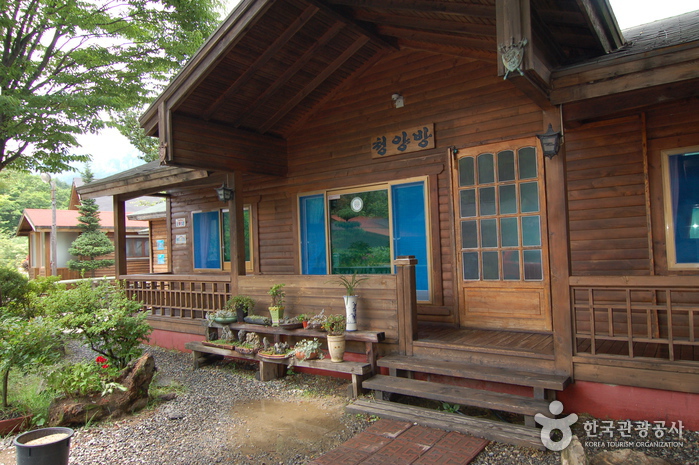
Daedunsan Recreational Forest contains deep valleys and magnificent peaks. The new-growth forest on the lower half of the mountain is in perfect harmony with its idyllic surroundings. Nearby tourist attractions include Daedunsan Provincial Park, Taegosa Temple, and a battlefield from the Imjin War (1592-1598).

Cheongju Jungang Park (청주 중앙공원)
2026-01-30
117 Namsa-ro, Sangdang-gu, Cheongju-si, Chungcheongbuk-do
Located at the heart of Cheongju city center, Jungang Park is a relaxing space full of cultural heritage and things to do. Its most famous feature is the massive ginkgo tree that has stood here for nearly a thousand years. Ginkgo trees are famously long-lived, so this 30-meter high tree with an 8-meter circumference is majestic and welcoming at once. Its nickname, Apgaksu, is said to originate from its leaves resembling a duck foot. Mangseollu Pavilion, a nugak (a building built to have a view of the surrounding areas without any doors or walls) built during the Goryeo period, is the oldest wooden structure in Cheongju. Another cultural site is the Byeongma Jeoldosa Yeongmun Gate, a door that served as the entrance to the office of Byeongma Jeoldosa. Byeongma Jeoldosa was a Joseon-period position tasked with quelling rebellions. The park also hosts musical concerts and presentations.

Seodong Park and Gungnamji Pond (서동공원과 궁남지)
2024-06-04
52 Gungnam-ro, Buyeo-gun, Chungcheongnam-do
Gungnamji Pond, a Historic Site located in Seodong Park, is Korea’s first artificial pond and was created by King Mu from the Baekje dynasty, who fell in love with and eventually married Princess Seonhwa. Gungnamji, literally means a pond in the south of the royal palace in Korean, was the given name according to the Samguksagi records.
According to a record in the Samguksagi, the History of the Three Kingdoms, King Mu dug this lake south of his palace in the 35th year of his reign (634) and connected it by a 7800-meter long waterway to the water source. The king then had willow trees planted around the bank and had an artificial mound constructed in the middle of the lake.
Boryeong Mud Museum (보령머드박물관)
2018-10-18
897-15, Daehae-ro, Boryeong-si, Chungcheongnam-do
+82-41-931-4021
Boryeong Mud Museum is comprised of a mud shower booth, mud massage room, mud-related exhibition and hands-on programs as well as mud cosmetics. It is located in front of Daecheon Beach, making it convenient to visit after spending time on the beach. Visitors can enjoy various cosmetics and health-related experiences.
Cheongju Sangdangsanseong Fortress (청주 상당산성)
2025-10-23
70 Seongnae-ro, Sangdang-gu, Cheongju-si, Chungcheongbuk-do
Sangdangsanseong Fortress in Cheongju, Chungcheongbuk-do is a fortress built along the natural slopes close to downtown Cheongju. It was comprehensively improved in 1596 (29th year of King Seonjo’s reign) during Imjinwaeran (Japanese invasion of Korea in 1592) and later remodeled into a stone fortress during the 42nd year of King Sukjong’s reign.
This 4.2km-long, 3-4m-tall fortress was built with stones of various sizes, earth and sand. The fortress has three gates, located in the east, west and south respectively. The three gates remain almost intact, and all still have their gate towers. The front gate in the south, named ‘Gongnammun Gate,’ is crescent-shaped while the East and West gates are square. The East and West Command Posts also stand within the confines of the fortress itself. This fortress was designated as Historic Site No. 212 in 1970. Additionally, visitors can sample Jujube Wine (Korean traditional wine) as well as a variety of local cuisine.
 English
 한국어
한국어 日本語
日本語 中文(简体)
 Deutsch
 Français
 Español
 Русский


