Baegunsan Eochigyegok Valley (백운산 어치계곡)
2021-06-01
531, Baekhak-ro, Gwangyang-si, Jeollanam-do
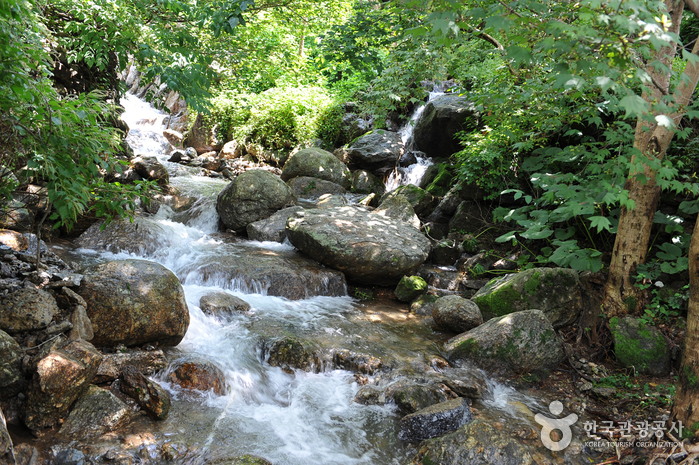
Eochigyegok Valley, located in Eochi-ri, Jinsang-myeon, is 7 kilometers long, and is a valley with clear water flowing through the lush forest with rocks in all sizes that provide a resting spot. In particular, it is home to Orodae Rock, cool enough to form dew even in the middle of the day and Gusipokpo Falls with a legend of a flying horse.
The valley is located ten minutes away from the Seomjingang River Maehwa Village, and plum trees cover the valley in spring with plum blossoms. In autumn, the countless oak trees in the forest become an acorn factory for its habitats. Baegunsan Eochigyegok Valley is worth visiting at any time of the year and provides various agricultural products to local residents. Orodae Rock, located in the uppermost stream, refers to a rock that looks like a large courtyard. An inscription remains, saying that it is named Orodae because it is cool enough to form dew even in the midday of the summer. Legend says that Gusiso Pool at the base of Gusipokpo Falls is so wide that it will not dry up even in a draught.
Baegunsan Recreational Forest (백운산자연휴양림)
2026-06-30
337 Baekgye-ro, Gwangyang-si, Jeonnam-Gwangju Special Metropolitan City
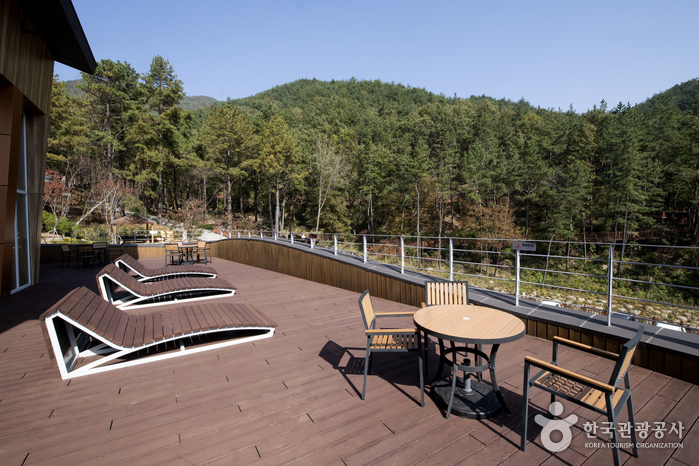
Located in Baegunsan Mountain is a recreational forest that is a testament to Korea's rich ecosystem. Home to many rare fauna and flora, the area brims with diverse attractions. Come springtime, visitors can find the maple sap, a mineral-rich liquid from a local deciduous tree of the maple family, known for its medicinal benefits. Indeed, this is a recreational forest cradled in the arms of nature. With the towering Baegunsan peak, scaling 1,222 meters, as its crown jewel, the landscape unfolds like a tapestry woven with harmonious blends of man-made and natural pine forests. Journey through the cedar and cypress woods, and one will find the valley that evokes sheer wonder. Close by, history whispers through the ancient Ongnyongsa Temple Site, where Doseonguksa dedicated 35 years to ascetic practices. As February turns to March, over 7,000 camellias blossom around this sacred site, painting the area in vibrant hues.
Gwangyang Maehwa Village (광양 매화마을)
2026-06-30
1563-1 Seomjingangmaehwa-ro, Gwangyang-si, Jeonnam-Gwangju Special Metropolitan City
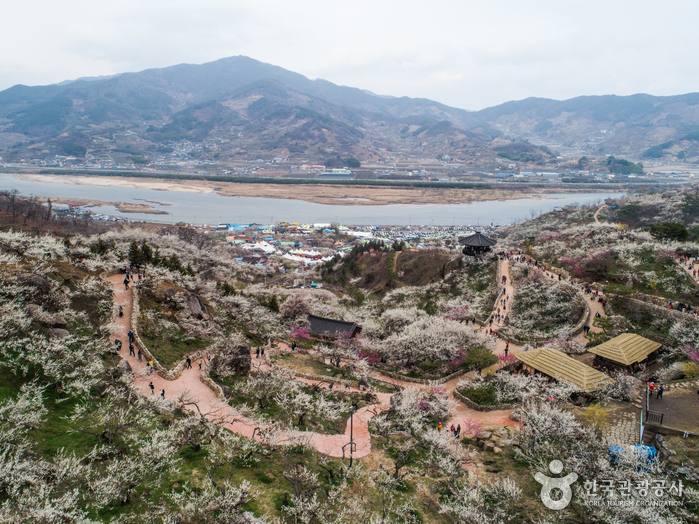
Following the Seomjingang River flowing down the outskirts of Jirisan Mountain is a village filled with plum trees. This village, Seomjin Village, is also known as the Maehwa (plum) Village for its abundant number of plum trees. Instead of crops and grains, plum trees are cultivated on farmlands, boasting white snow-like blossoms in March and bearing ripe plums in June. The annual Plum Blossom Festival takes place in the village every March when the plum blossoms are in full bloom.
Seomjingang Train Village (섬진강기차마을)
2026-06-30
232, Gichamaeul-ro, Gokseong-gun, Jeonnam-Gwangju Special Metropolitan City
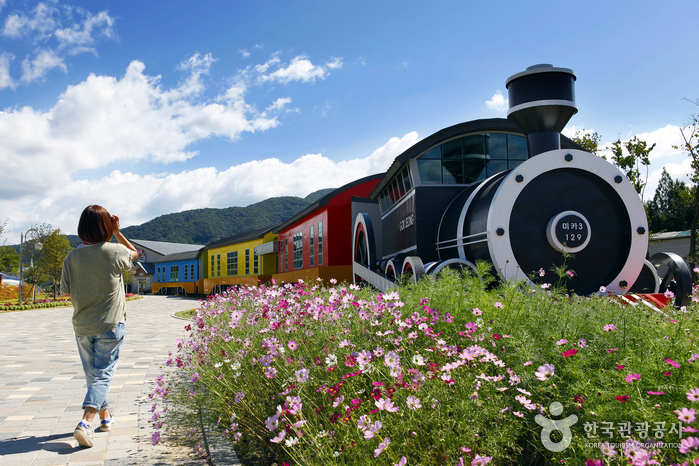
Since its development in April 1999 as a part of government efforts to boost regional tourism, Seomjingang Train Village has established itself as a popular attraction in Gokseong. A replica of the region's old steam engine train runs 10 kilometers between the old Gokseong Station in Seomjingang Train Village and Gajeong Station. The train runs along the old tracks at a moderate speed, allowing passengers to enjoy the scenic view along the tracks.
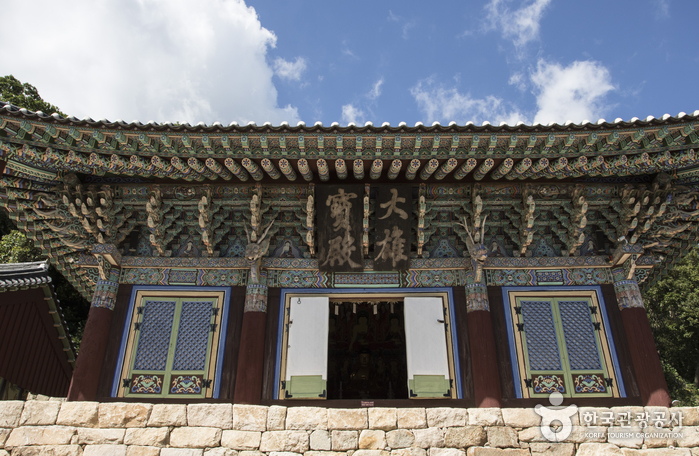
Gangjin Baengnyeonsa Temple (백련사 (강진))
2020-04-04
145, Baengnyeonsa-gil, Gangjin-gun, Jeollanam-do
+82-61-432-0837
The original name of Baengnyeonsa Temple was Mandeoksa Temple, said to have been built by Preceptor Muyeom during the reign of Silla King Munseong. Later, Preceptor Wonmyo rebuilt it in the old site during the reign of King Huijong (7th year) during the Goryeo period. He gained fame as Baengnyeongyeolsa so the temple began to be called Baengnyeonsa Temple. Baengnyeongyeolsa has produced eight preceptors of Goryeo and flourished throughout 120 years. In addition, the area is famous as the place where Dasan Jeong Yak-yong and Master Hyejang connected and developed companionship regardless of religious and age differences during Jeong was exiled to Gangjin.
The temple’s most popular attraction is Forest of Common Camellias, designated as Natural Monument No. 151. The Camellia trees, skirting the road to the temple, make up a forest covering the area of 9,917 ㎡ over the ruined Haenghotoseong Earthen Fortification next to a memorial stone. In the forest, four stupas of Goryeo and Joseon Era are scattered like hide-and-seek. The forest features a tranquil ambience all year long even in daytime, thanks to the thick, green leaves. From November, the camellia flowers are in full bloom and the forest becomes red, beautiful enough to inspire visitors. After passing the forest on the way to Dasan Chodang, visitors can glimpse a colony of tea fields and wild tea produced by Baengnyeonsa Temple. The mountain where Baengnyeonsa Temple is situated has had wild tea fields grown from Goryeo Era so that it was called "Dasan." For this reason, Jeong Yak-yong’s pen name is "Dasan" which holds the valuable meaning of his banishment here.
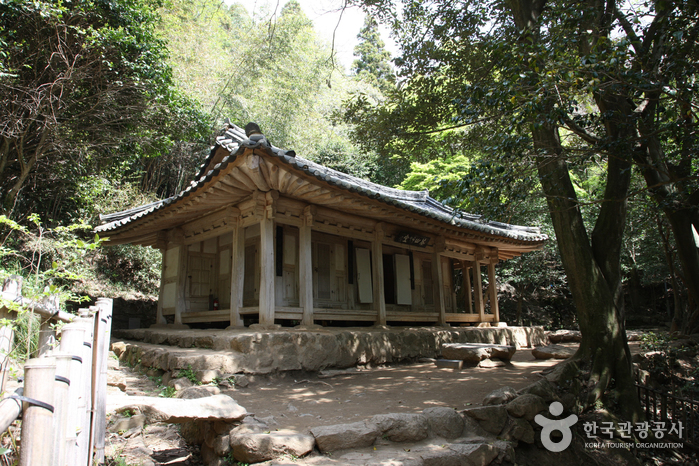
Dasan Chodang (Historic Site Related to Jeong Yak-yong) (다산초당 (다산 정약용 유적지))
2026-06-30
68-35, Dasanchodang-gil, Gangjin-gun, Jeonnam-Gwangju Special Metropolitan City
Dasan Chodang is the house where Jeong Yak-yong (pen-name Dasan, 1762-1836) lived during his exile. He was a scholar of the late Joseon dynasty and is noted for his great contributions to the development of practical learning in Korea. After he was expelled to Ganjin for writing a secret letter of appeal for religious freedom, which later was named ‘the Hwang Sa-yeong Baekseo’, he lived in the house for 18 years while studying practical learning (‘Silhak’ in Korean). Most of his famous books were written in Dasan Chodang. While walking along a road near Dasan Chodang, you can see the Cheonilgak pavilion, which offers a great view of beautiful Gangjin Bay. Not far from Dasan Chodang is the Dasan Museum, where visitors can learn about the life of Dasan.
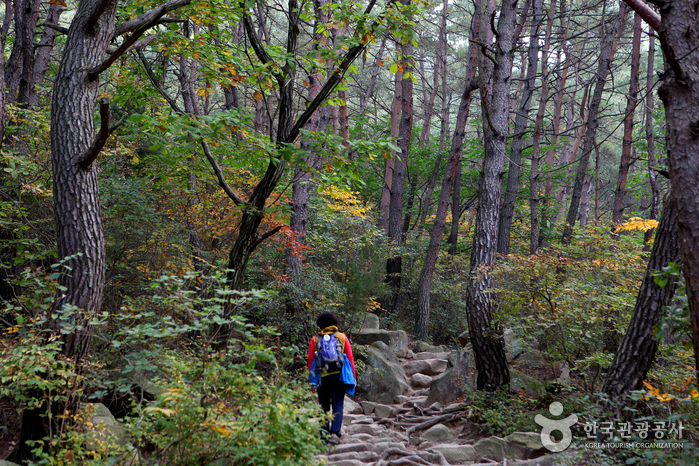
Gyeongju Namsan Mountain (경주 남산)
2024-02-27
Namsan Mountain of Gyeongju (경주 남산)
Namsan Mountain of Gyeongju is a 466-meter mountain located south of the Gyeongju city center. Gyeongju was the capital of the Silla dynasty (BC 57-AD 935) from its inception to its end. The Silla people revered this mountain, considering it sacred, and left many traces of their presence, resulting in numerous cultural relics that still exist today. Therefore, visitors can enjoy both hiking and cultural heritage sightseeing on this mountain.

Bogyeongsa Temple (보경사)
2026-02-09
523 Bogyeong-ro, Songna-myeon, Buk-gu, Pohang-si, Gyeongsangbuk-do
Bogyeongsa Temple is a historic Buddhist temple founded in 603 during the Silla Dynasty by the monk Jimiyeong after his studies in Chen dynasty. It is a branch temple of Bulguksa Temple, the head temple of the 11th district of the Jogye Order of Korean Buddhism. According to legend, the temple was built on a site believed to protect the nation after a sacred eight-sided mirror was buried beneath the main hall. The temple complex includes major halls such as Daejeokgwangjeon Hall, Daeungjeon Hall, Yeongsanjeon Hall, and Palsangjeon Hall. Bogyeongsa Temple is home to several nationally and provincially designated cultural treasures.

Gyeongsangbuk-do Arboretum (경상북도수목원)
2026-02-09
647 Sumogwon-ro, Jukjang-myeon, Buk-gu, Pohang-si, Gyeongsangbuk-do
Located at the foothills of Naeyeonsan Mountin in Pohang, Gyeongsangbuk-do Arboretum is the second largest arboretum in Korea that represents Gyeongsangbuk-do. The arboretum preserves and exhibits local plants from Gyeongsangbuk-do, and creates an eco-friendly environment where citizens can observe and learn about the various plant species native to Korea. The arboretum has total of 26 gardens, including the Alpine Botanical Garden, Ulleungdo Native Plant Garden, Needle-leaf Tree Garden and more.

Homigot Sunrise Square (호미곶 해맞이광장)
2025-07-21
20 Haemaji-ro 150beon-gil, Nam-gu, Pohang-si, Gyeongsangbuk-do
Homigot is located at the easternmost end of the Korean peninsula, in what would be considered to be the tail, if thinking of the Korean peninsula as a tiger. When Kim Jeongho made the Daedongyeojido Map, he visited this place seven times to confirm this area is in fact the easternmost part of Korea. Following the resources of Korea Astronomy and Space Science Institute, the sunrise time of Homigot on January 1 is at 7:32 am, making it the earliest first sunrise of each year in Korea. The plaza was built to commemorate these research findings with the national Sunrise Festival. Nearby attractions include Korea's largest lighthouse, Homigot Lighthouse, established in 1908; Lighthouse Museum; Monument to Commemorate Lee Yuk-sa’s Patriotism; and Daebo Seawater Bath, using pure seawater of the East Sea.
When completed, Homigot Tourism Complex and Homigot Specialized Ocean Leisure Complex will be the largest tourism complex in the eastern coast district. It will include an ocean aquarium, Ocean Ecological Park, Youth Training facilities, beach dome, accommodation facilities, and other various stores as well.
Sangsaeng’s Hand, a two-part bronze sculpture shaped like a pair of hands, was constructed in December 1999. It is a signature symbol of the sunrise festival. The left hand is on the land and the right hand is in the ocean. It was built to give the message that all people are living together by helping one another like Sangsaeng, meaning coexistence in Korean. The base of the platform is an image of the sun and its two round rings refer to harmony. These two hands have memorial sprits of reconciliation and coexistence for celebrating a new millennium.
 English
 한국어
한국어 日本語
日本語 中文(简体)
 Deutsch
 Français
 Español
 Русский


