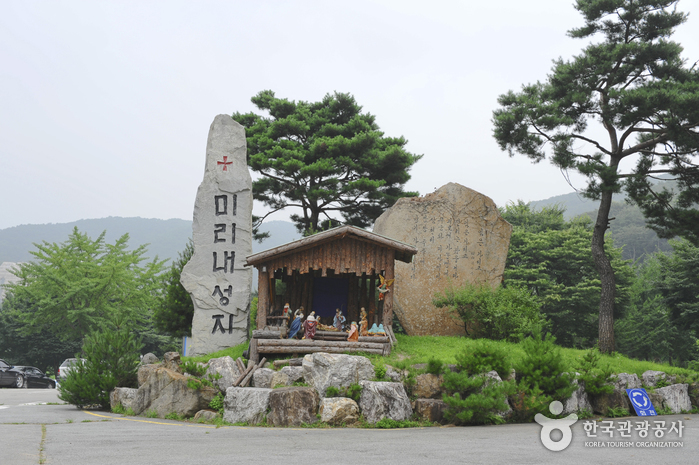
Mirinae Holy Site (미리내 성지)
2024-02-29
420 Mirinaeseongji-ro, Yangseong-myeon, Anseong-si, Gyeonggi-do
Mirinae Holy Site in Anseong is the final resting place of Saint Andreas Kim Daegeon, Korea’s first Catholic saint, along with his mother Ursula, Bishop Ferréol—the third head of the Joseon parish who ordained Priest Kim—and Vincentius Lee Minsik, who buried Saint Kim’s body. The name ‘Mirinae,’ meaning ‘Milky Way’ in Korean, adds a celestial significance to the site. Saint Andreas Kim Daegeon, who was martyred at the age of 26, was buried here 40 days after his execution. Sanctification efforts began in earnest in 1972 and have since resulted in the establishment of a memorial church, a statue of Saint Kim, and a serene garden for reflection.
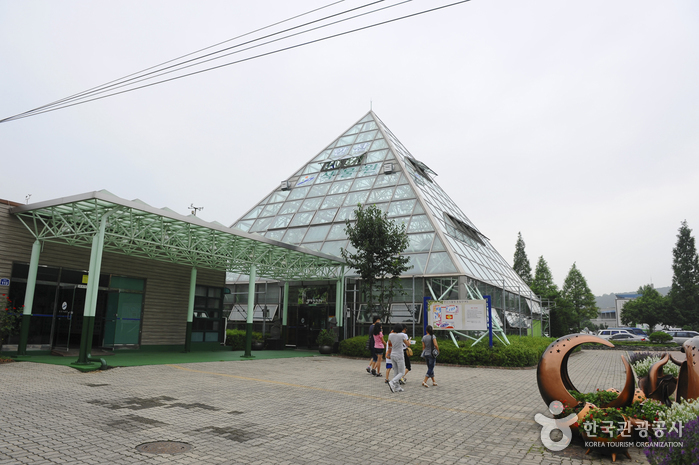
Ansan Botanical Garden (안산식물원)
2021-05-07
113, Seongho-ro, Sangnok-gu, Ansan-si, Gyeonggi-do
+82-31-481-3168
Opened in 2001, the Ansan Botanical Garden has three halls. The first hall (382.81㎡) is a tropical garden, home to 98 species, including palm trees. The second hall (846㎡) features 177 species in 11 families of floral plants, such as irises. The third hall (846㎡) features 177 species in 4 families of marsh plants. Outside gardens include a rose garden, fruit tree garden, wild plant garden, plant succession garden, and a pond featuring a total of 46 plants including red momo botan lotus. The botanical park has a pyramid-shaped, modern greenhouse that is a source of pride for Ansan City. The park is also connected to Seongho Park.
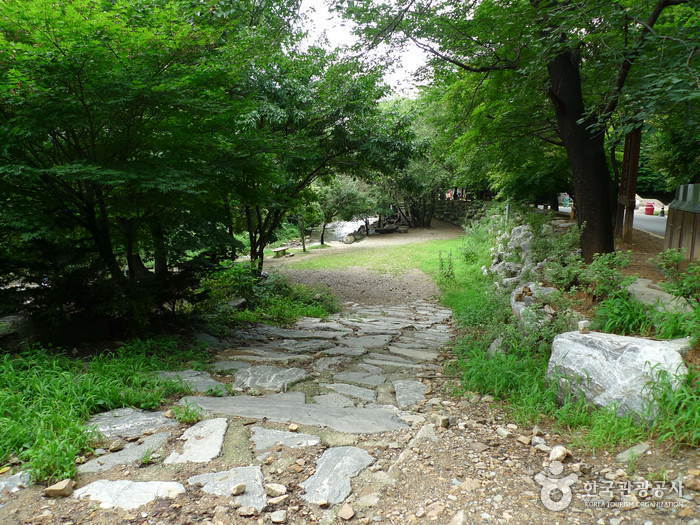
Soyosan Tourist Site (소요산국민관광지)
2021-06-21
148-20, Pyeonghwa-ro 2910beon-gil, Dongducheon-si, Gyeonggi-do
Soyosan Mountain (altitude 587.5 meters) features exquisite rock formations and artistic valleys and forests. The tourist site includes the Freedom & Peace Museum, the site of Princess Yoseok's villa palace where she spent time with Monk Wonhyo, Jajaeam Hermitage, Cheongnyangpokpo and Wonhyopokpo Falls, and many more historic sites.
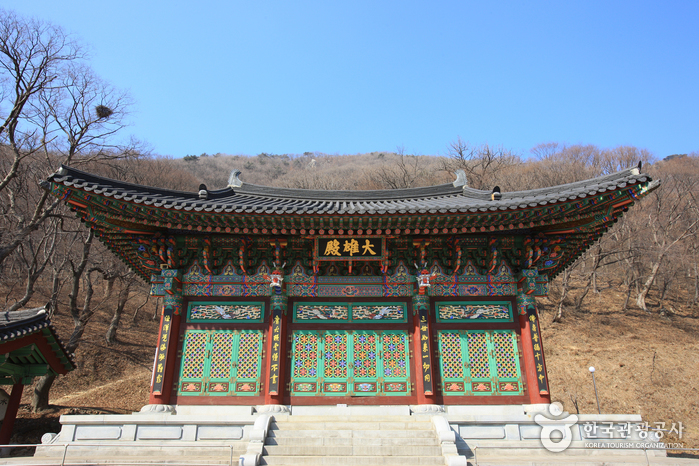
Surisa Temple - Gyeonggi (수리사 - 경기)
2020-03-25
347-181, Sokdal-ro, Gunpo-si, Gyeonggi-do
+82-31-438-1823
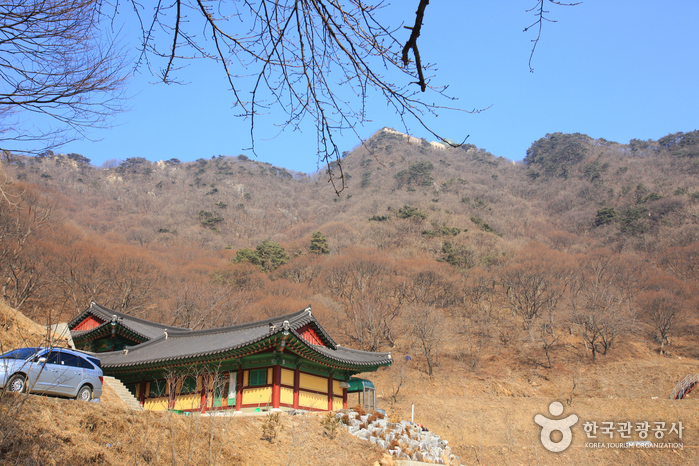
Located halfway up the southwestern side of Surisan Mountain, the eponymously named Surisa Temple was built under the reign of King Jinheung of the Silla Kingdom during the 6th century. The mountain was also called bulgyeon, which means “seeing Buddha,” as it was said that a member of the royal family had a vision of the Buddha while praying at the temple. The temple used to be larger, maintaining 36 buildings on the premises and 132 hermitages spread over the mountain, but these facilities were completely destroyed during the Japanese invasions of Korea from 1592-1598 and the Korean War from 1950-1953. The temple that stands today was reconstructed in 1955. The road leading to the entrance of Surisa Temple offers gorgeous scenery with a beautiful forest and valley lining its sides; it is as if the mountain itself surrounds the temple like a painted screen.
Surisan Provincial Park (수리산도립공원)
2025-01-08
347-4, Sokdal-ro, Gunpo-si, Gyeonggi-do
Surisan Mountain, a provincial park of Gyeonggi-do, surrounds Gunpo and is also easily accessible from Anyang and Ansan. Surisan Mountain is said to be named because there is a rock in the shape of an eagle. Another legend says it is named after the nearby Surisa Temple.
Surisan Mountain is part of the Gwangju Mountain Range along with Cheonggyesan, Gwanggyosan, Gwanaksan, and Baekunsan mountains. The mountain has four peaks and the highest is Taeulbong Peak (489 m).
Grand old trees that range from 100 to 300 years old make for picturesque scenery. The mountain also won first place in the 2002 Beautiful Forest contest hosted by the Korea Forest Service.
Guri Hangang Park (Cosmos Park) (구리시민한강공원 (코스모스공원))
2021-09-15
Topyeong-dong, Guri-si, Gyeonggi-do
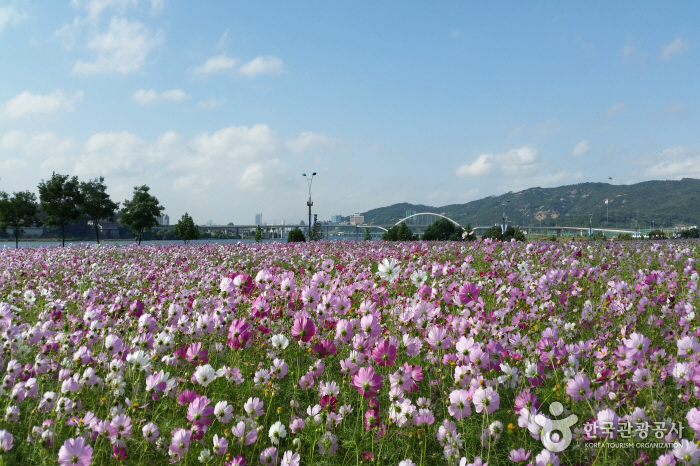
Guri Hangang Park offers a perfect rest area for visitors where visitors can feel the cool breeze coming off the river and rest amidst the beautiful natural scenery. The park’s bounties of flowers are at their peak in May with field of canola flowers, and in September when the cosmos bloom.

Anyang Art Park (안양예술공원)
2025-10-23
7 Yesulgongwon-ro 131beon-gil, Manan-gu, Anyang-si, Gyeonggi-do
Anyang Art Park, formerly known as Anyang Recreational Park, is an easily accessible, well-maintained cultural space. It has been revitalized with updated features such as artificial waterfalls, an outdoor stage, a plaza, walking paths, and enhanced lighting facilities. The park promotes art projects by displaying 50 artworks from renowned Korean and international artists throughout various locations. Nearby, visitors can explore additional local attractions including hiking trails through dense forests, traditional temples such as Anyangsa Temple and Yeomburam Hermitage, the treasure-designated Flagpole Supports at Jungchosa Temple Site, and the Kimchungup Architecture Museum, all of which contribute to a rich area experience.
Wolgot Harbor (월곶포구)
2025-05-08
Wolgot-dong, Siheung-si, Gyeonggi-do
"Got" in the name of Wolgot means peninsula and the area was considered an important strategic point during the Joseon dynasty. In 1991 a land reclaimation project succeeded in creating a new recreation site. Now there are many seafood restaurants, various auxiliary facilities, and an amusement park that rest on reclaimed land. Because the inlet is located on the west coast where the difference in the water level between high and low tide is great, fishing boats avoid the area during the shifting tides. But, whenever the boats return, visitors can enjoy fresh sushi and other seafood. The Marine World facilities have authentic European-style restaurants, an outdoor seawater pool that can be used free of charge, and a barbecue facility along with other amenities.
Oido Island (오이도)
2025-05-08
175 Oido-ro, Siheung-si, Gyeonggi-do
Located off the western coast of the city of Siheung, Oido Island was originally an island and then connected to the mainland during the Japanese occupation as its tidal flats were used as a salt plant. During the day, the blue sea and the red lighthouse, the symbol of Oido, create a picturesque scene. In the evening, visitors can enjoy the spectacular sight of red sunsets over the sea. It also includes the largest prehistoric site on the west coast. The expansive tidal flats are home to a wide variety of creatures, attracting seasonal migratory birds.
Gimpo Munsusanseong Fortress (김포 문수산성)
2022-12-20
Ponae-ri, Gimpo-si, Gyeonggi-do
Munsusanseong Fortress was built on Munsusan Mountain in 1694, during the 20th year of the reign of King Sukjong, the 19th king of the Joseon dynasty. The fortress as designed to defend Gwanghwado Island from marine invasion. At the time, the fortress had north, west, and south gates, but they were destroyed in a fire during the Byeong-in Yangyo (1866). The north gate was restoryed in 1995 and the south gate in 2002. The fortress walls span 6 kilometers in length, 4 kilometers of which remain unrestored. Surrounded by beautiful scenery, the top of the fortress commands a spectacular view spanning from North Korea to the Hangang River inlet, and from Samgaksan Mountain to the sea off Incheon in the distance. It is often referred to as the Geumgangsan Mountain of Gimpo as it boasts superb scenery throughout all four seasons. The mountain is home to Munsusa Temple, established during the reign of Silla King Jinseong.
 English
 한국어
한국어 日本語
日本語 中文(简体)
 Deutsch
 Français
 Español
 Русский


