Boryeong Jukdo Island (죽도 (보령))
2021-06-02
408-54, Nampobangjoje-ro, Boryeong-si, Chungcheongnam-do
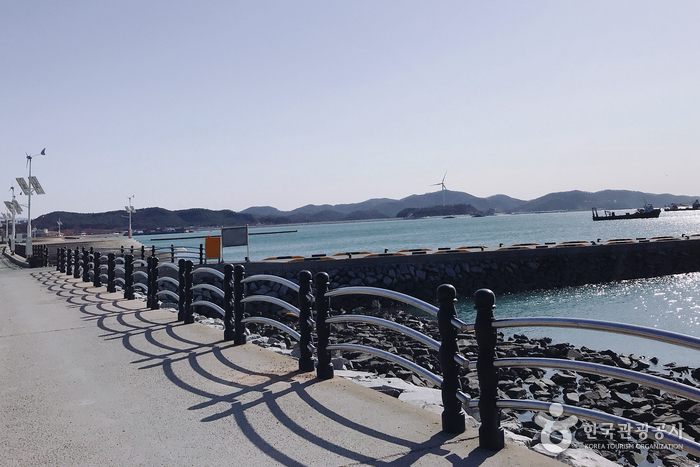
Although called Jukdo Island, the island today is technically not an island as it has been connected to the mainland since the construction of Nampo Embankment in 1999. Along the entrance of the island are many fresh hoe (sliced raw fish) restaurants lining the street. This unpopulated fishing island is also called Daeseom (Bamboo Island) for its dense groves of bamboo trees.
Ulsan Naewonam Hermitage (내원암(울산))
2026-03-19
382 Daeunsangdae-gil, Onyang-eup, Ulju-gun, Ulsan
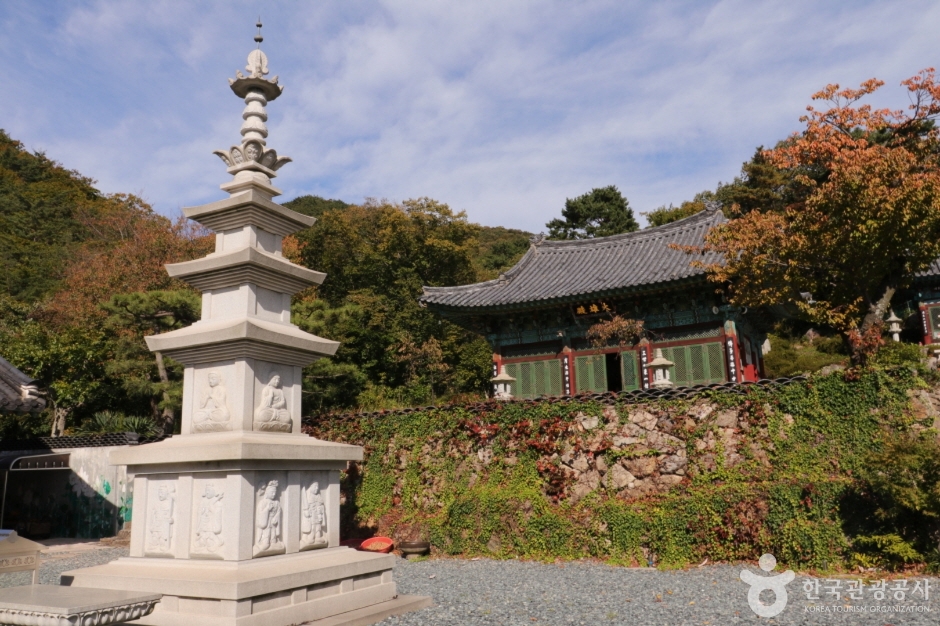
Naewonam Hermitage is located on Daeunsan Mountain in Ulsan. Daewonsa Temple, the once head temple of this hermitage, was located at the entrance to the complex, but only the remains exist today. The valley around the hermitage is famous for its clean and clear waters. The 500-year-old nettle tree within the hermitage grounds catches the eye for resembling an elephant. An annual music concert performed by Buddhist monks from Ulsan City takes place at Naewonam Hermitage.
Yeongchuksan Mountain (영축산)
2021-06-14
Jisan-ri, Yangsan-si, Gyeongsangnam-do
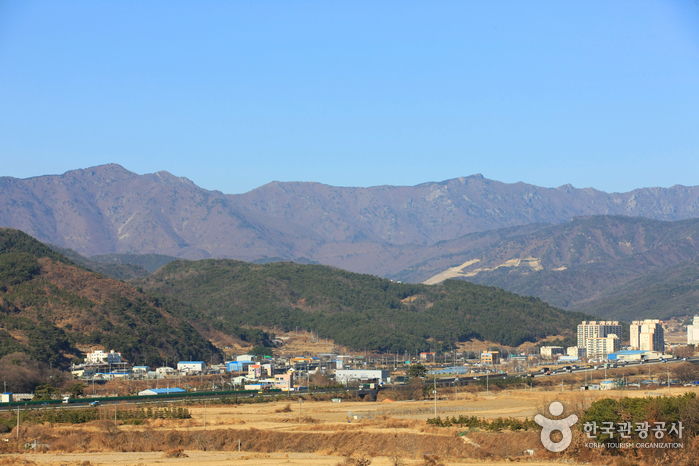
Located in Gajisan Provincial Park, Yeongchuksan Mountain has an elevation of 1,059 meters. The name of the mountain “Yeongchuk” is known to have originated from the name of a mountain in the ancient kingdom of Magadha in central India. The mountain is also called Chwiseosan and has such beautiful scenery that it is often referred to as the Alps of Yeongnam. The broad valley that extends at the foot of Yeongchuksan Mountain provides a great walk to the hermitages scattered around the famous Tongdosa Temple.
Yeongchuksan Mountain is considered the best of the eight beautiful places in Yangsan City. The other seven places are Cheonseogsan Mountain, Naewonsagyegok Valley, Hongnyongpokpo Falls, Baenaegol Valley, Cheontaesan Mountain, Imgyeongdae Terrace on Obongsan Mountain, and Tapgol Recreational Forest on Daeunsan Mountain.
Daedunsan Provincial Park (Geumsan Section) (대둔산도립공원 (금산))
2025-01-13
2, Daedunsan-ro, Geumsan-gun, Chungcheongnam-do
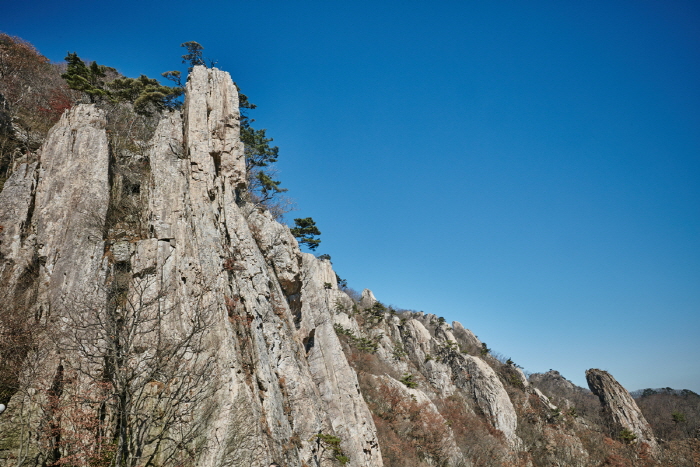
While the Wanju section of Daedunsan Provincial Park is more developed and rather larger than the Geumsan section, Geumsan has the distiction of being home to Taegosa Temple, the most important hertiage of the mountain. Daedunsan Mountain features many unique rock formations and small peaks with a clean environment. There are lush forests and beautiful valleys that turn crimson with the arrival of fall. Additional attractions of the park include a battlefield from the Imjin War (1592-1598), and Seokmun Gate, a stone gate before Taegosa Temple.
Cheonsuman Bay - Migratory Bird Sanctuary (천수만(철새도래지))
2021-05-21
Buseok-myeon & Gobuk-myeon, Seosan-si, Chungcheongnam-do
+82-41-661-8054
Cheonsuman Bay emerged as a habitat for migratory birds as a result of a reclamation project that was undertaken in 1984. A breakwater was built around this area, which created Ganwolho Lake and Bunamho Lake. Moreover, a vast agricultural land spanning 6,400 hectares was formed on what used to be a mud flat. The monthly average temperature of Cheonsuman Bay area between October and March is about 1.2 degree Celsius higher than inland areas at the same latitude because of its oceanic climate. Such geographical conditions have made Cheonsuman Bay an ideal wintering site for migratory birds.
Cheonsuman Bay is located midway along the migration route of birds migrating from northern Siberia or Manchuria to Southeast Asia. As a result, Cheonsuman Bay has become home to nearly 200 different species of migratory birds that can be watched all year round. In winter, the area becomes a wintering site for over 300 thousand ducks and wild geese, as well as a wide variety of endangered species like storks, spoonbills, mute swans, and white-naped cranes. Lucky birdwatchers might be able to witness the great spectacle created by tens of thousands of migratory birds flying in a flock over the Cheonsuman Bay area.

Gobok Natural Park (고복자연공원)
2025-05-20
586, Dosingobok-ro, Sejong-si
Gobok Natural Park spans an area of 1,840,000 square meters and nearby attractions include a forest, Yonggul Cave, Sinheungsa Temple, and an outdoor sculpture park on Obongsan Mountain. A 3.65-kilometer-long deck circles the reservoir. The neighboring village is home to orchards for growing grapes, peaches, and pears. The park has a large meeting square and the outdoor sculpture park features works by Ewha Woman's University art professor Kang Tae-seong, attracting many visitors. The park is especially popular in summer when the outdoor swimming pool is open. In spring, people flock to Millakjeong Pavilion to view the cherry blossoms. There are many restaurants nearby specializing in galbi (ribs), Hanbang ori (duck with medicinal herbs), and megi maeuntang (spicy catfish stew), as well as cafes overlooking the natural scenery.
Cheoyongam (처용암)
2020-02-05
Hwangseong-dong, Nam-gu, Ulsan
+82-52-229-6350
Cheoyongam is a very small rocky island sitting in the middle of Gaeunpo Inlet in front of Saejuk Village in Hwangseong-dong, Nam-gu, Ulsan.
It is a historic islet related to the famous folktale of Cheoyong. The tale is about a dragon that emerged from the east sea along with his seven sons at the end of the Silla Kingdom (57BC - 935AD). One of the dragon’s sons named Cheoyong came to the capital and married a beautiful woman. One night, he found an evil spirit trying to attack his wife so he sang and danced, whereupon the spirit presented itself and kneeled in apology. Since then, people have used the image of Cheoyong to dispel evil spirits.
The dance that Cheoyong is said to have performed has been titled Cheoyongmu and has been designated as an Important Intangible Cultural Property. Cheoyongam is the sacred rock where the dragon in the tale is said to have appeared. There are many attractions nearby including Mokdo Island (Natural Monument No. 65), which offers magnificent lush greenery all year round.
Ulsan Wild Flower Learning Center (울산 들꽃학습원)
2021-06-08
52, Dusan-ro, Ulju-gun, Ulsan
The Wild Flower Learning Center in Ulsan is a nature-friendly education facility, where students of all levels can learn about the beauty and importance of flowers. Here students can plant vegetation that they have learned about in textbooks, as well as the wild flowers that grow in the Ulsan area. The center also serves as a training center for teachers to learn about plants introduced in textbooks, and a place for Ulsan citizens to relax.
Taehwagang National Garden (태화강 국가정원)
2026-05-27
5 Saetgangnam-gil, Jung-gu, Ulsan
The Taehwagang River cuts across the heart of Ulsan and flows into Ulsan Bay, which is connected to the East Sea. The river basin, which stretches 36 kilometers from east to west and 28 kilometers from north to south, is mostly comprised of mountainous terrain, but there is fertile land on both sides of the river and at the southern end of the river. The river is presently an important source of drinking water for the citizens of Ulsan.The field around the midpoint of Taehwagang River was left abandoned for a long time before it was founded as Taehwagang National Garden, preserving nature while providing a resting spot to the citizens of Ulsan. The garden is over twice the size of Yeouido Park in Seoul, and consists of natural water and a lush bamboo forest, known as Simnidae Forest, along with canola and forage barley fields. Simnidae Forest was once in danger of demolition as part of the government's flood control plans but remains preserved thanks to community efforts. Preservation efforts led to turning the area into Taehwagang National Garden of today, which was recognized as Korea's second national garden in 2019.◎ Travel information to meet Hallyu’s charm - TV series"Death's Game"This is the place that Yee-jae, reborn as his mother, visited to remember his mother by. There are six thematic gardens along the Taehwagang River, all beautiful in their own unique ways. The view created a strong contrast with Yee-jae’s sad expression, creating a memorably tragic scene.
Daedunsan Provincial Park (Nonsan Section) (대둔산도립공원 (논산))
2024-07-09
Surakgyegok-gil, Nonsan-si, Chungcheongnam-do
Daedunsan Mountain offers spectacular views and various scenic spots like Gunjigyegok Valley, Surakpokpo Falls, Macheondae Seonnyeopokpo Falls, Nakjodae Peak, Surakgyegok Valley, and more. In particular, the one-kilometer-high cliff and the unique rock formations at Surakpokpo Falls provide great scenery.
Surakpokpo Falls and Gunjigyegok Valley are at the entrance of the hiking trail that leads up to Daedunsan Mountain. It is about a two-hour hike from Surakgyegok Valley to Macheondae Peak on Daedunsan Mountain.
 English
 한국어
한국어 日本語
日本語 中文(简体)
 Deutsch
 Français
 Español
 Русский


