Sebang Village (세방마을)
2026-06-30
6, Sebang-gil, Jindo-gun, Jeonnam-Gwangju Special Metropolitan City
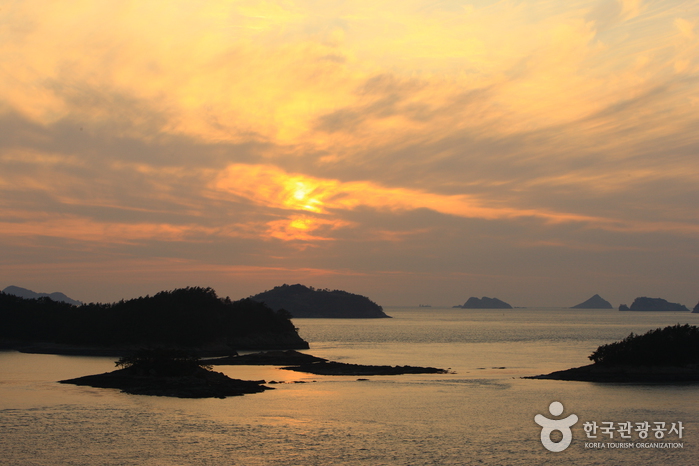
Known as the home to the most beautiful sunset, the town of Sebang-ri is quickly becoming a popular spot in Jindo-gun. Visitors can overlook at the Dadohaehaesang National Park from the observatory and enjoy the scenery of many islands that appear and disappear under the sea fog. View of a sunrise above the islands is stunning.

Doripo (도리포)
2026-08-20
Songseok-ri, Haeje-myeon, Muan-gun, Jeonnam-Gwangju Special Metropolitan City
A great sunrise and sunset spot, Doripo Park is situated in Doripo on the northwestern end of Haejebando Peninsula, which forms the boundary between Muan-gun, Yeonggwang-gun, and Hampyeong-gun Counties. The long sandy beach and the dense pine tree grove offer a nice environment for sunbathing. A little farther down from the sandy beach, is the Doripo Port. The port protrudes towards the sea, so people can view the sunrise from there. On the other side of the port towards Chilsan Sea, people can also view beautiful sunset glows. Just like other famous sunrise spots on the West Coast, Doripo watches the sun rise from the sea in Hampyeong in the winter and from the mountain in Yeonggwang in the summer. Every year, a special sunrise event is held on the first day of the New Year. Another attraction of Doripo is fishing for sea bream and sea bass in Chilsan Sea, which nearby Yeonggwang-gun and Hampyeong-gun Counties. A total of 639 relics from the Goryeo Era have been found in the area, including historical relics like blue celadon bowls unearthed in October 1995, resulting in the area being designated a Historical Site no. 395 of Jeonnam-Gwangju Special Metropolitan City. Nearby, tourist sites include Bongdaesan Mountain (195 meters) and Wongapsa Temple.
Mohang Beach (모항해수욕장)
2024-04-07
22, Mohang-gil, Buan-gun, Jeonbuk-do
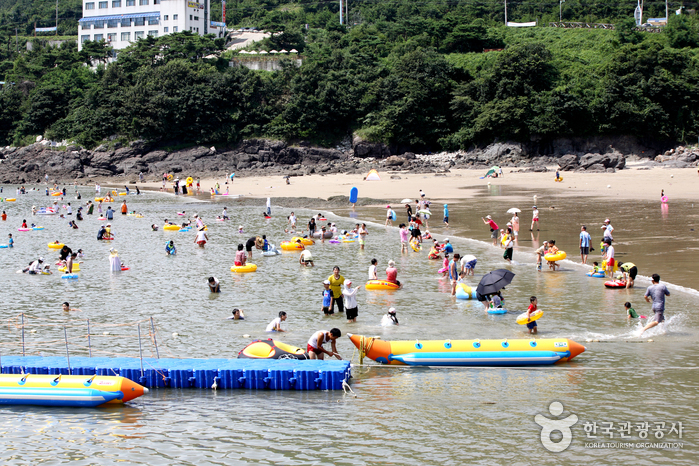
Mohang Beach is situated in Byeonsan-myeon, Buan-gun, Jeollabuk-do. It is set against the beautiful mountains of Byeonsanbando National Park and the clear waters of the west coast. Unlike many beaches along the west coast, white sand can be found even at low tide and the beach is great for fishing.
Designated a tourist site in December of 2000, the area has been equipped with a family hotel, camping sites, and a seaside cafe. Nearby, there is a mud flat, a population of horned holly trees (Natural Monument No. 122), and a scenic drive.

Baeksu Coastal Road (백수해안도로)
2026-08-20
Daesin-ri, Yeonggwang-gun, Jeonnam-Gwangju Special Metropolitan City
Baeksu Coastal Road, a section of National Highway 77 and Provincial Highway 14, is one of the best scenic drives in Jeonnam-Gwangju Special Metropolitan City. While driving on this road, one can encounter dynamically changing landscapes, including splendid rock formations along the coastal cliffs. The road is approximately 16.8 kilometers long, connecting Giryong-ri and Seokgumi Village in Baeksu-eup, Yeonggwang. The coastal road offers a great view of Chilsanbawi Rock, especially during the sunset.
Windy Hill (바람의 언덕)
2024-03-06
San 14-47, Galgot-ri, Nambu-myeon, Geoje-si, Gyeongsangnam-do
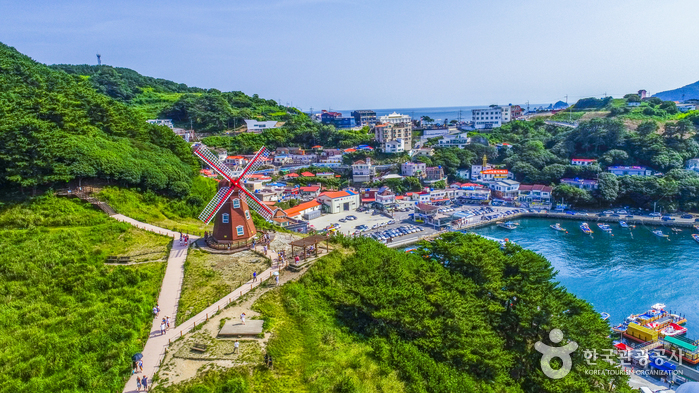
The Windy Hill refers to a hill at the end of the fishing village of Dojangpo, located at the entrance to the Haegeumgang Islets, upon which a windmill can be found. Its name comes from the area being very windy, thanks to its geographical features. The plants that grow on the hill also tend to be short in stature because of the wind. Many cafés and restaurants take advantage of the hill’s remarkable view. Windy Hill is also close to other tourist sites, like Sinseondae Terrace, Haegeumgang Islets, Hammok Beach, and a camellia habitat.
Somaemuldo Island (소매물도)
2021-01-12
65, Somaemuldo-gil, Tongyeong-si, Gyeongsangnam-do
+82-55-650-0580
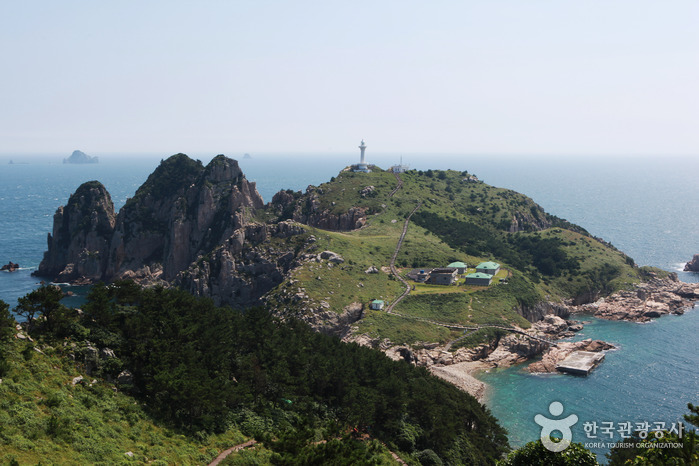
One of the magnificent sights here is the breathtaking combination of bizarre rocks and the stratified bluffs of Deungdaeseom Island and Somaemuldo Island. At low tide, one can walk from one island to the other.
Yongbawi Rock (Dragon Rock), Bucheobawi Rock (Buddha Rock), Geobukbawi Rock (Turtle Rock), Chotdaebawi Rock (Candlestick Rock) and Geulssingigul Cave are absolute masterpieces created by Mother Nature. Another must-see is the view of Somaemuldo Island from Deungdaeseom Island. From there, the rock formations look like a sitting dinosaur.
Nammaebawi Rock (brother and sister rock) is made up of two rocks, one at the top and the other at the bottom. The name of the rock was inspired by a folk tale of a twin brother and sister. The upper rock is also known as Sutbawi Rock (charcoal rock) as it is bigger and darker than the other, while the bottom one is called Ambawi Rock.
Somaemuldo Island was named as such due to its small size ("so" means small) in comparison to Maemuldo Island right next to it. In 1904, the island was settled by the Kim family from Gimhae, who came from the mainland as they heard that the island was so abundant in food that no one would starve. Now, the island is popular as a scenic tourist attraction.
* Composition: 1 main island, 2 islets
* Area: 330,000 ㎡ (including islets)
Chungnyeolsa Shrine (충렬사)
2025-02-04
251 Yeohwang-ro, Tongyeong-si, Gyeongsangnam-do
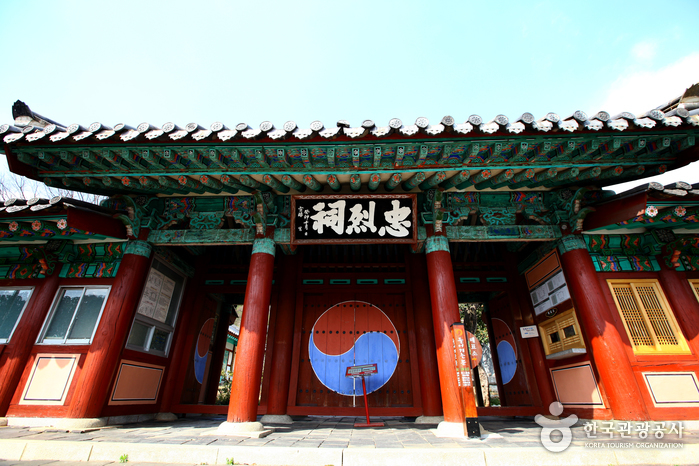
Chungnyeolsa Shrine in Tongyeong is dedicated to Admiral Yi Sun-sin, a national hero whose naval victories were crucial in repelling Japanese invasions of Korea in the 1590s. The shrine complex includes Dongjae and Seojae, where ritual ceremonies are prepared; a main shrine housing his spirit tablet and portrait; and an exhibit hall showcasing artifacts related to the Japanese Invasion of 1592. Rituals honoring the Admiral continue to be held every spring and fall to this day.
Dara Park (달아공원)
2021-01-14
1115, Sanyangilju-ro, Tongyeong-si, Gyeongsangnam-do
+82-55-650-4681
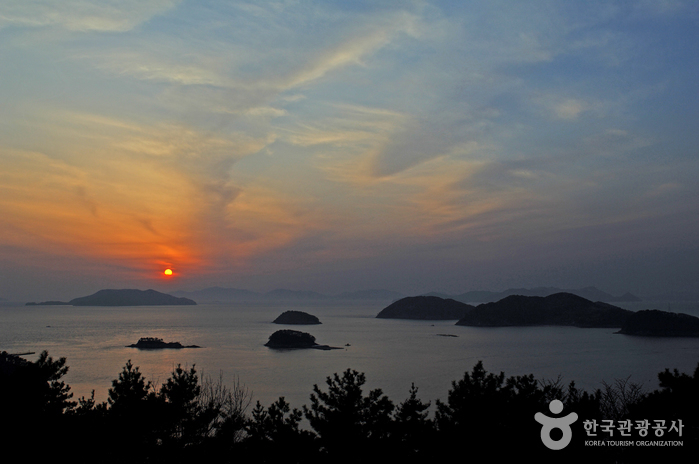
Located in the southern part of Mireukdo Island, Tongyeong-si, Gyeongsangnam-do, Dara Park was originally named for its resemblance to the tusk of an elephant. The name also means "A vista point for a view of the moon." On the path to the park is Gwanghaejeong Pavilion, which has an broad view of Hallyeohaesang National Park offers a prime location to watch the sunset.

Seoul Eungbongsan Mountain (응봉산(서울))
2024-07-05
1540 Geumho-dong 4-ga, Seongdong-gu, Seoul
From Eungbongsan Mountain, one can easily see the Hangang River, Seoul Forest, Jamsil Sports Complex and more in the eastern part of Seoul. With such a great view of the Hangang River, the mountain is often packed with visitors including many photographers. The mountain serves as a venue for diverse events, including a sunrise festival on New Year's Day and forsythia festival around April during the flowering season.
Yi Sun-Sin Park (이순신공원)
2021-03-18
205, Mendehaean-gil, Tongyeong-si, Gyeongsangnam-do
+82-55-642-4737
Yi Sun-sin Park is located at the foot of Mangilbong Peak. The name of the park was changed from Hansan Battle Memorial Park to Yi Sun-sin Park. The park has a statue of Admiral Yi Sun-sin, an observation deck, a walking-path, a traditional cultural hall, and Hagikjeong Pavilion.
 English
 한국어
한국어 日本語
日本語 中文(简体)
 Deutsch
 Français
 Español
 Русский


