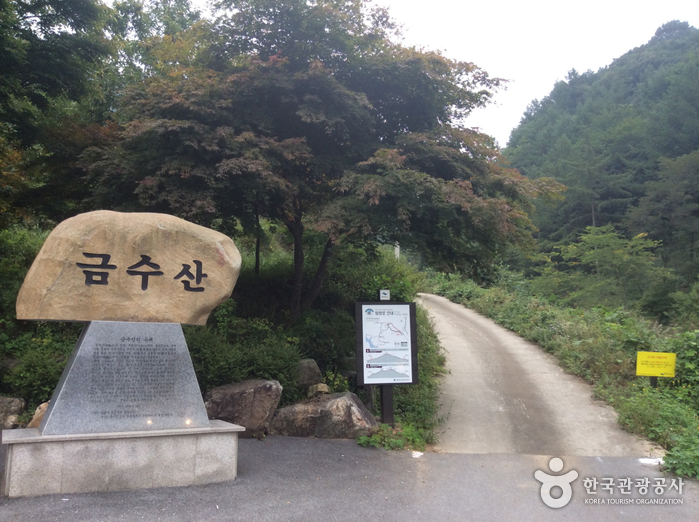
Geumsusan Mountain (금수산)
2021-05-28
210, Sanghak 1-gil, Danyang-gun, Chungcheongbuk-do
Geumsusan Mountain, originally called Baegamsan Mountain, was renamed by noted Joseon-period scholar Yi Hwang (pen name Toegye) when he was the chief governor of Danyang County, saying its graceful features matched the fineness of silk embroidery. The mountain is beautiful throughout the year with bright foliage in fall and an ice cave that stays frozen until early April. The view from the summit of the mountain resembles a pregnant woman lying on her side, and there is a legend that women who pray for a son here will have their wish come true.

Chungju Tangeumdae Height & Park (충주 탄금대와 탄금대공원)
2026-03-11
105 Tangeumdaean-gil, Chungju-si, Chungcheongbuk-do
Tangeumdae Height was originally a mountain named Daemunsan Mountain. The scenery is amazing with rocky cliffs, the nearby Namhangang River, and lush pine forests. The place was named Tangeumdae because it was where Ureuk, the celebrated musician of the Silla dynasty (57 BC-AD 935), used to play the gayageum (traditional stringed instrument).
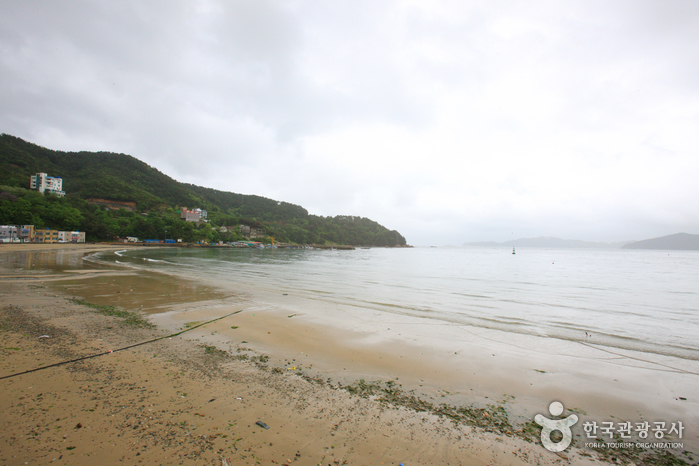
Deokpo Beach (덕포해수욕장)
2021-06-24
32-4, Deokpo 5-gil, Geoje-si, Gyeongsangnam-do
Deokpo Beach is a white sandy beach in the city of Geoje in Gyeongsangnam-do. The 450 meter-long and 40 meter-wide beach offers fine sand, clear waters, a gentle slope and old sea pine trees along the coast. Nearby attractions include the Okpo Great Victory Commemorative Park, which was built in 1996 to commemorate the victory of Admiral Yi Sun-sin, and the Okpo Shipyard of Daewoo Shipbuilding & Marine Engineering with a giant shipyard crane.
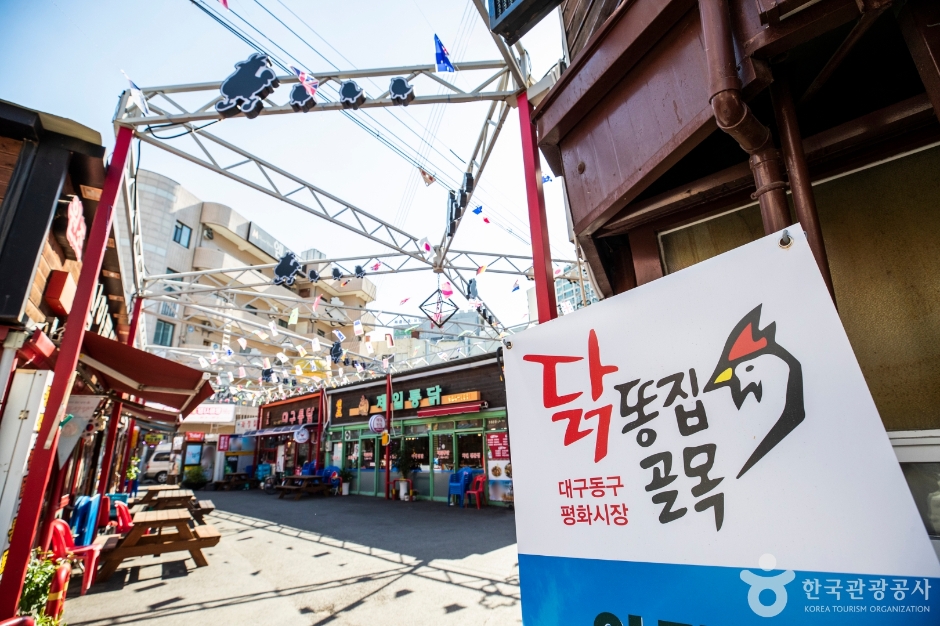
Pyounghwa Market Dakttongjip Street (대구 평화시장 닭똥집 골목)
2023-11-17
6 Ayang-ro 9-gil, Dong-gu, Daegu
Pyounghwa Market Dakttongjip Street was established with the opening of Samatongdak in 1972, and is a street specializing in chicken gizzard dishes. It is said that the dish was first offered as an affordable dish to accompany drinks, favored by blue-collar laborers who gathered at the early labor market in front of Pyounghwa Market in the 1970s. Inexpensive and delicious, the dish has remained popular.
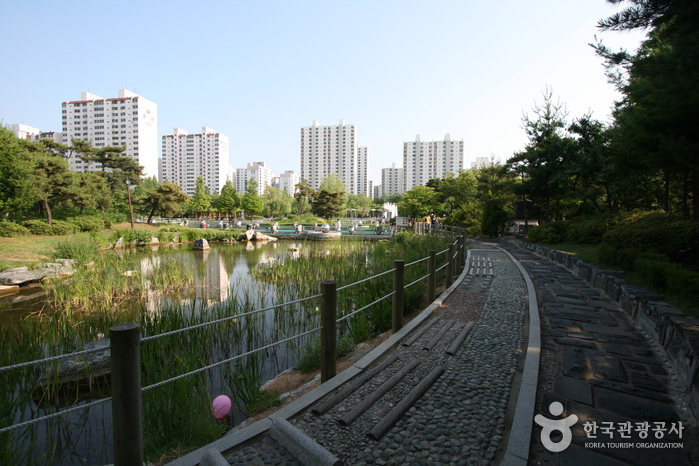
Bucheon Park (부천 중앙공원)
2020-07-10
162, Sohyang-ro, Bucheon-si, Gyeonggi-do
+82-32-625-4842
Located in Jung-dong, Wonmi-gu, Bucheon-si, Gyeonggi-do, Bucheon Park has the title of being the first Neighborhood Park in Korea. The park also has a title of Poetry Monument Park with monuments inscribed with poems within the park. Visitors can enjoy various facilities at the park such as walking around a large pond and fountain located at the center of the park, as well as gate ball court, outdoor concert hall, tower of Bucheon and more. The trees that fill the park make it feel like you are walking in an arboretum. The park has two themes with “Tree and Grass” on the western part of the park including the Peach Hill, and “Water” on the eastern part of the park with fountains and pond.
Cheonjedan Altar on Taebaeksan Mountain (태백산 천제단)
2022-09-13
168, Cheonjedan-gil, Taebaek-si, Gangwon-do
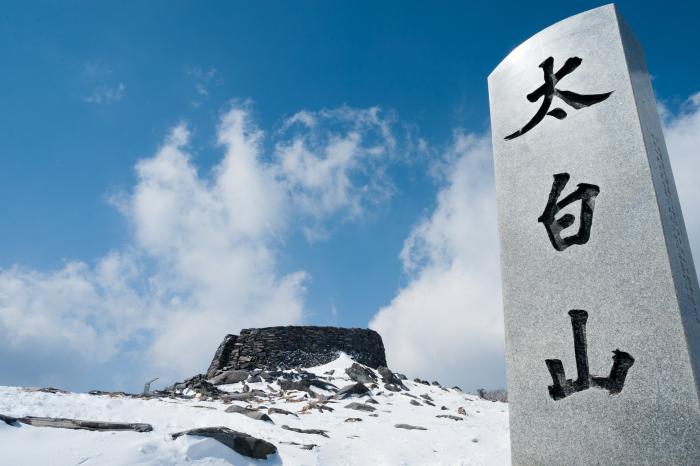
Cheonjedan Altar is a set of altars that were set up by people in the past to offer goods to the heavens. Old records such as the "Samguksagi (History of the Three Kingdoms)" state that the Silla kingdom organized rituals in Taebaeksan Mountain, as it was considered a sacred mountain.
Cheonjedan Altar consists of three altars with the main Cheonwangdan Altar at the center; Janggundan Altar to the north; and Hadan Altar (Lower Altar) to the south. The altars were built by stackings stones to serve as a holy fortress. Cheonwangdan Altar is made of natural stones. It has an oval shape and measures 27.5 meters in circumference, 3 meters in x_height.
Namsan Octagonal Pavilion (남산 팔각정)
2021-06-19
105, Namsangongwon-gil, Yongsan-gu, Seoul
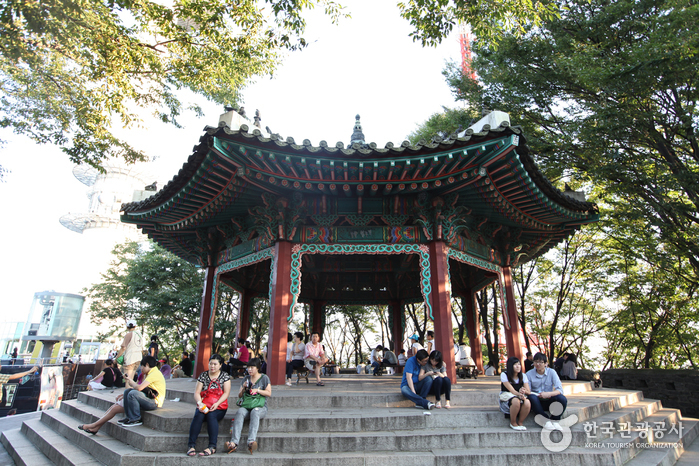
Originally known as Unamjeong Pavilion, the pavilion was built in 1959 to commemorate Rhee Syngman. It was demolished by the 4.19 movement in 1960 and was rebuilt on November 11, 1968. This pavilion now sits atop Namsan Mountain, with views covering the entirety of Seoul below. As it is a prime spot to view the first sunrise of the year, the annual sunrise festival takes place every New Year's Day.

Sangdong Lake Park (상동호수공원)
2021-08-17
15, Jomaru-ro 85beon-gil, Wonmi-gu, Bucheon-si, Gyeonggi-do
Sangdong Lake Park is the largest park in Bucheon. A 2.5-kilometer promenade runs along a man-made lake, providing a refreshing and cool environment for a light exercise. The park also offers a beautiful sight year round thanks to the seasonal flowers that decorate the area. Some of the park's main facilities include a fountain, park square, wildflower garden, and sports facilities.
Sail Spa Land (사일온천)
2019-09-26
458-64, Sail-ro, Yeongcheon-si, Gyeongsangbuk-do
+82-54-332-4141
Sail Spa Land is uniquely located at the top of a mountain. Sail Spa Land offers top-ranking hot spring water, and also has a whirlpool-equipped hotel-style family pool, the first of its kind in Korea, and an open-air bath about 330 square meters that is directly connected to a public bath.
Jeju Sanbangsan Carbonate Hot Springs (제주 산방산탄산온천)
2024-03-11
192, Sagyebuk-ro 41beon-gil, Andeok-myeon, Seogwipo-si, Jeju-do
Jeju Sanbangsan Carbonate Hot Springs is a carbonate hot spring that contains the main carbonic acid components (free carbonic acid, bicarbonate, sodium, etc.). It is said that this enhances blood circulation, lowering blood pressure and reducing the burden on the heart. It is also beneficial for skin care and fatigue recovery, making it a perfect place to relax after a long day of exploring Jeju. There is an indoor bath designed with glass inside as well as an outdoor open-air bath, so visitors can bathe while enjoying the view of Sanbangsan Mountain and the deep blue sea.
 English
 한국어
한국어 日本語
日本語 中文(简体)
 Deutsch
 Français
 Español
 Русский


